
Pre-Trip 4x4 Checklist

Quick answer: Run this before every trip that leaves pavement, not just the big ones — most trailside failures trace back to something a five-minute pre-trip check would have caught. Work through each section in order; a fluid or tire problem found in your driveway is an inconvenience, the same problem found 20 miles down a fire road is a recovery.
Why a Pre-Trip Check Actually Matters
Most trailside breakdowns aren't caused by exotic mechanical failures — they're caused by ordinary wear that a pre-trip check would have caught at home, where a fix is a five-minute job instead of a multi-hour recovery. A slow tire leak, a battery terminal working loose, or a coolant level that's crept down over the last few thousand miles are all things this checklist is built to surface before you're 20 miles from pavement.
How to Use This Checklist
Work through the sections in order: fluids and the engine bay first, then tires and wheels, drivetrain and undercarriage, electrical and lighting, and finally trip planning. Each box you tick is saved in your browser, so you can start a check, get interrupted, and pick back up later without losing your place. The Reset checklist button clears every tick for your next trip — the checklist itself doesn't expire or reset on its own.
Common Mistakes This Catches
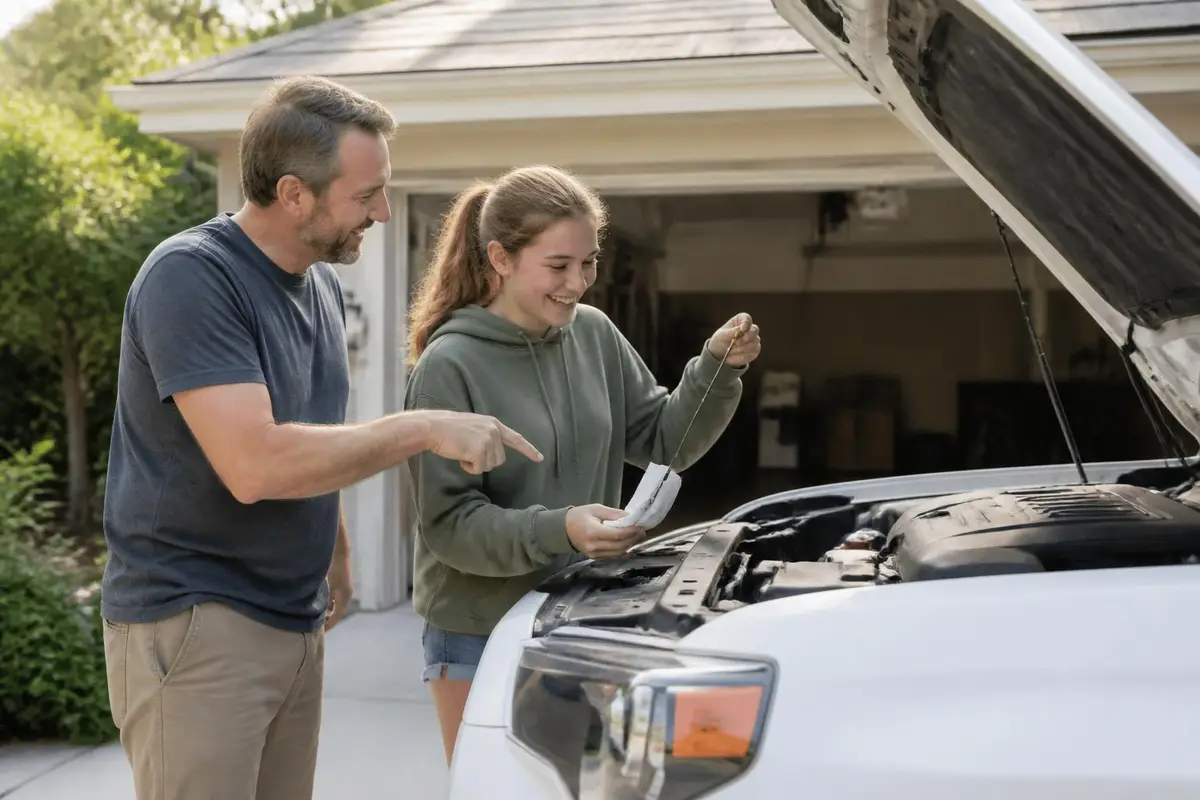
The items most commonly skipped are the ones that "worked last time": 4WD engagement, a locker that hasn't been tested since last season, or a spare tire nobody has actually aired up and checked in months. None of these take long to verify, and all of them are far easier to deal with in a driveway than on a trail. Fluid checks matter just as much — a milky tint in the oil can be an early sign of a coolant leak, and dark, cloudy brake fluid is worth flushing before a trip rather than after a problem shows up under braking on a descent.
Tread Depth and TPMS: What the Numbers Actually Mean
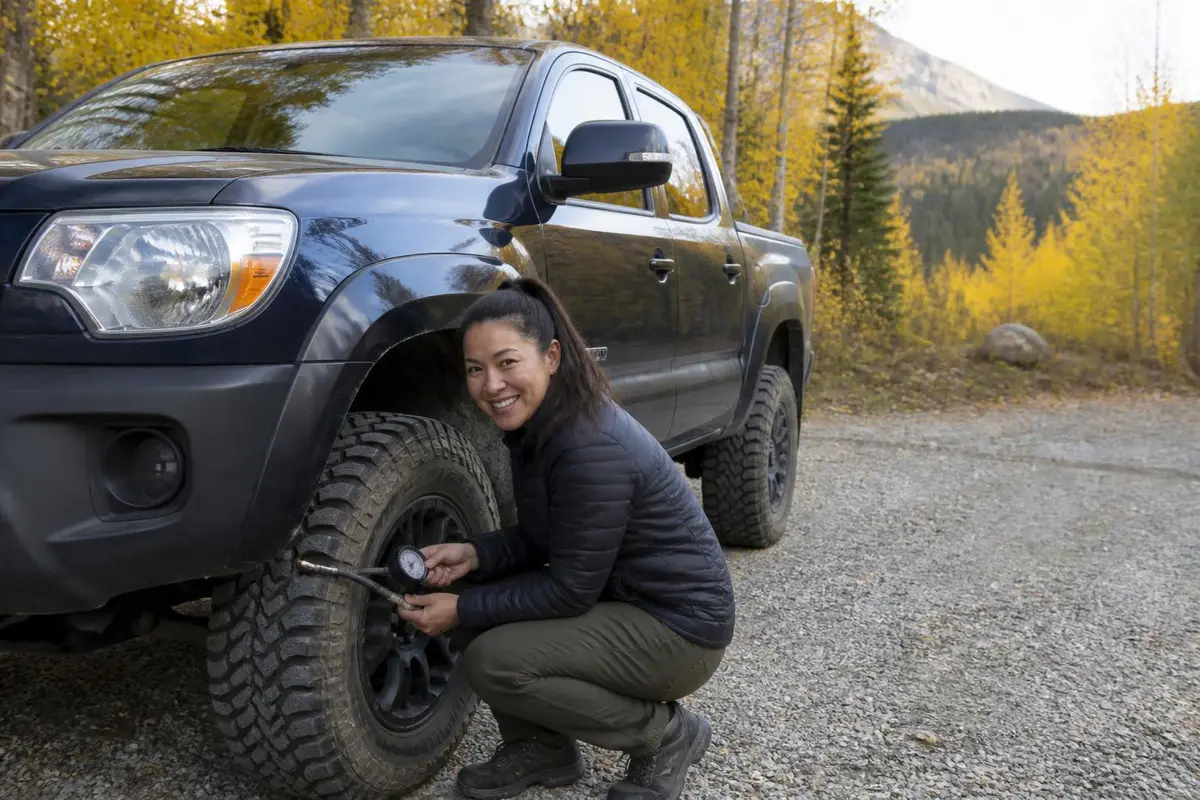
A tire's built-in wear bars sit at 2/32 of an inch — the same tread-depth floor 49 CFR 393.75 sets for commercial truck tires (steering-axle tires get a stricter 4/32-inch minimum), and the threshold most states also use to define a legally bald passenger tire. Check tread at several points across each tire, not just one spot, since uneven wear from an alignment or pressure problem can leave one section legal and another already below it. Separately, federal rule FMVSS 138 requires the TPMS warning light to switch on once a tire is 25% or more below its placard cold-inflation pressure — that's a real percentage, not a rough guess, so a lit TPMS light before a trip means a tire is meaningfully low, not just slightly soft.
Fluids & engine bay
Tires & wheels
Drivetrain & undercarriage
Electrical & lighting
Trip planning
Ticks are saved only in your browser on this device; never sent to us.
Get the Printable Checklist Pack
Leave your email and we'll add you to the list for the full printable checklist pack when it's ready. No spam, unsubscribe any time.
Recommended gear
A first recovery kit for any 4WD
Affiliate disclosure: As an Amazon Associate, we earn from qualifying purchases, at no extra cost to you. We research rather than test, and commissions never change our rankings. This site is reader-supported: those commissions pay for hosting, research and keeping every guide up to date, so if a guide helped you, buying through our links is an easy way to support it. How we rank · Full disclosure

Best for a complete strap, shackle and glove kit in one bag.
- Straps, shackles, gloves, damper and a recovery bag in one kit.
- Covers most vehicle-to-vehicle recoveries without buying parts separately.

Best for getting unstuck from sand, mud or snow without another vehicle.
- Nylon recovery boards that give spinning tires grip in sand, mud or snow.
- Double as a shovel to clear sand from in front of the tires.

Best for airing all four tires down to a set pressure at once.
- Automatic deflators preset between 6 and 30 PSI.
- Air all four tires down at once, then stop at the set pressure.

Best for airing back up before you hit pavement.
- Portable 12V compressor rated to 150 PSI.
- Sized for truck and SUV tires.
We research products from manufacturer specs and owner feedback; we don't test them ourselves. How we choose.
FAQ
How often should I run a pre-trip checklist?
Before every trip that leaves pavement, not only the big multi-day ones. A quick five-minute run-through of fluids, tires and lights catches the failures that most often turn into a trailside breakdown — the checks take longer to describe than to actually do once they’re routine.
What is the single most-skipped item on a pre-trip check?
Confirming 4WD/4Lo actually engages before you need it. It’s easy to assume a system works because it worked last time; a linkage, actuator or vacuum line issue often only shows up the moment you try to engage low range on the trail, which is the worst possible time to find out.
Do I need to check the spare tire too?
Yes — a spare that has slowly lost air over months of sitting unused is a common surprise. Check that it actually holds pressure and that its mount or carrier is solid, not just that it’s physically present.
Sources
- NHTSA — Vehicle Maintenance & Care — Tire pressure, tread depth and general pre-drive tire safety guidance.
- AAA — Car Care: Seasonal Vehicle Maintenance — General pre-trip fluid, battery and lighting check recommendations.
- Bureau of Land Management — Recreation Safety — Trip-planning basics: sharing a route/return time, checking conditions before remote travel on public land.
- 49 CFR § 393.75 — Tires (via Cornell LII) — The 2/32-inch minimum tread-depth threshold (4/32 for steering-axle commercial tires) used as the reference point for checking tread.
- 49 CFR § 571.138 (FMVSS 138) — TPMS (via Cornell LII) — The TPMS warning light must activate once a tire is 25% or more below its placard cold-inflation pressure.