

Affiliate disclosure: As an Amazon Associate, we earn from qualifying purchases, at no extra cost to you. We research rather than test, and commissions never change our rankings. This site is reader-supported: those commissions pay for hosting, research and keeping every guide up to date, so if a guide helped you, buying through our links is an easy way to support it. How we rank · Full disclosure
TL;DR
- Rated wading depth varies by more than 5 inches across common 4x4s — from 31.5 in. (base Ford Bronco) to 37 in. (Bronco Raptor) — so check your exact trim, not a general rule.
- A snorkel raises the air-intake wading limit only; it does nothing for the differential or transmission breather height, which is a separate, commonly overlooked failure point.
- Water entering the intake causes hydrolock, which can bend a connecting rod or crack the block on the very next stroke — never try to restart a stalled, submerged engine.
- Manufacturer figures assume still, level water; a current or another vehicle's bow wave can push the effective depth well above the number on paper.
- Enter slowly and steadily, keep a bow wave ahead of the vehicle rather than pushing it over the hood, and never stop mid-crossing.
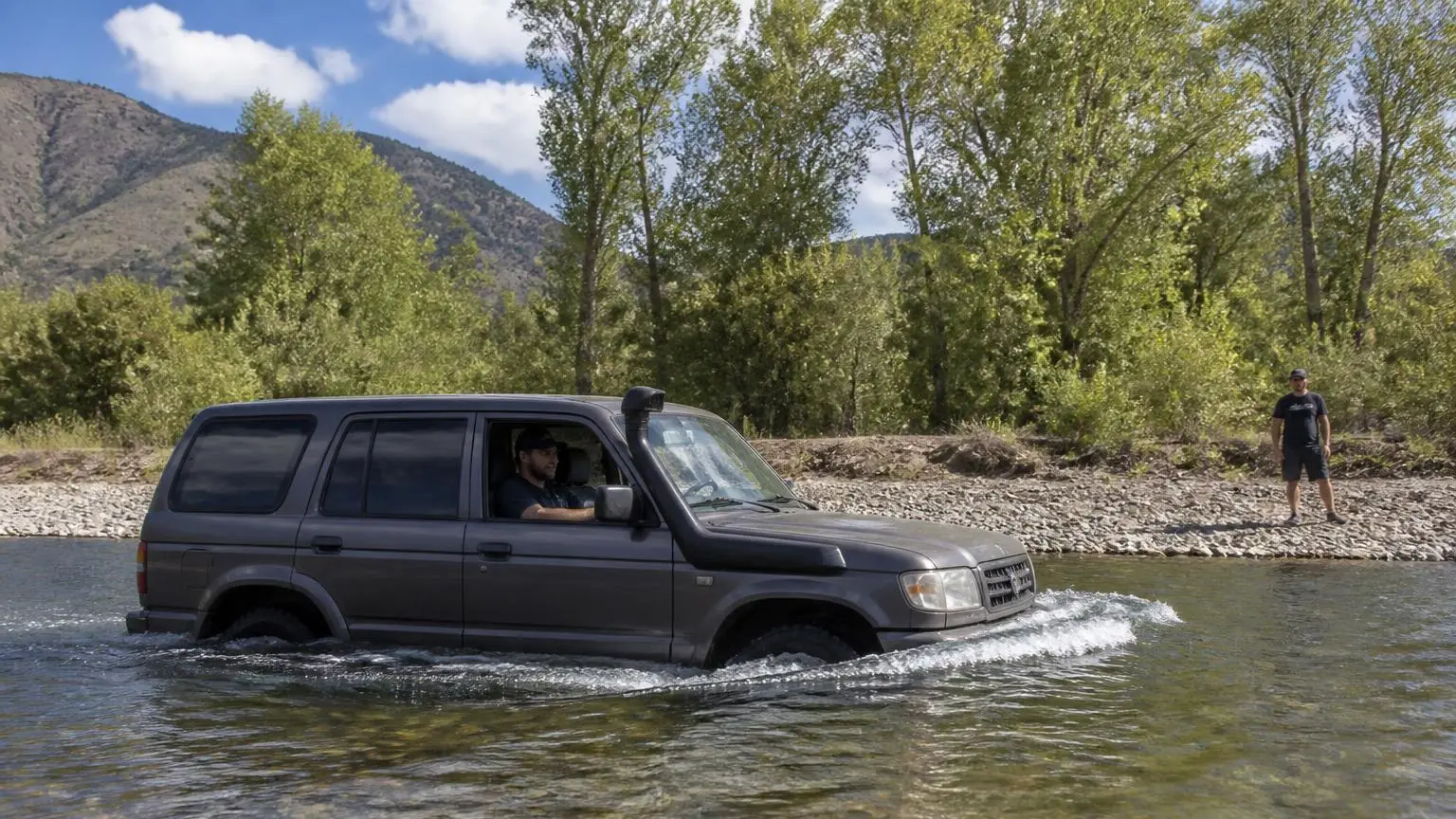
At a Glance: Rated Wading Depth by Vehicle
| Vehicle | Rated wading/fording depth | Source |
|---|---|---|
| Ford Bronco (no Sasquatch) | 31.5 in. | Ford |
| Ford Bronco (Sasquatch package) | 33.5 in. | Ford |
| Jeep Wrangler Rubicon 392 (2025) | 34.5 in. | Stellantis/Jeep |
| Land Rover Defender (air suspension, Wade Mode) | up to 900 mm (~35.4 in.) | Land Rover |
| Ford Bronco Raptor | 37 in. | Ford |
These are manufacturer-published figures for specific model years and trims, not a universal number for the nameplate — a base Bronco and a Bronco Raptor differ by more than 5 inches. Always confirm the figure for your exact trim and model year in the owner's manual.
Wading Depth and Water Crossing: What The Rated Number Actually Means
Manufacturer-rated wading depth (see FAQ) is measured to the point water reaches the lowest point on the air intake, and it is a stock-truck figure that varies widely across models and trims — check your specific vehicle's rating rather than assuming a figure from another truck. It also assumes still, level water. A moving current or another vehicle's bow wave can push the effective water level several inches above the number on paper. Owners crossing moving water consistently report treating the rated figure as a ceiling to stay well under, not a target to approach.
Electrical Component Height: The Third Wading Limit
Beyond intake height and breather height, a truck's low-mounted electrical connectors — starter motor, alternator, various engine-bay sensors — sit at their own height above the ground. Submerging them risks a short circuit or corrosion damage independent of whether the engine ever hydrolocks. Manufacturer-rated wading depth figures generally account for stock electrical component height already, but an aftermarket electrical accessory mounted low in the engine bay, such as a relocated fuse block or auxiliary battery, can introduce a new low point the factory rating never accounted for. Checking any aftermarket electrical addition's mounting height against the vehicle's rated wading depth, not just the factory components, closes a gap some owners discover only after a crossing causes an unrelated electrical fault.
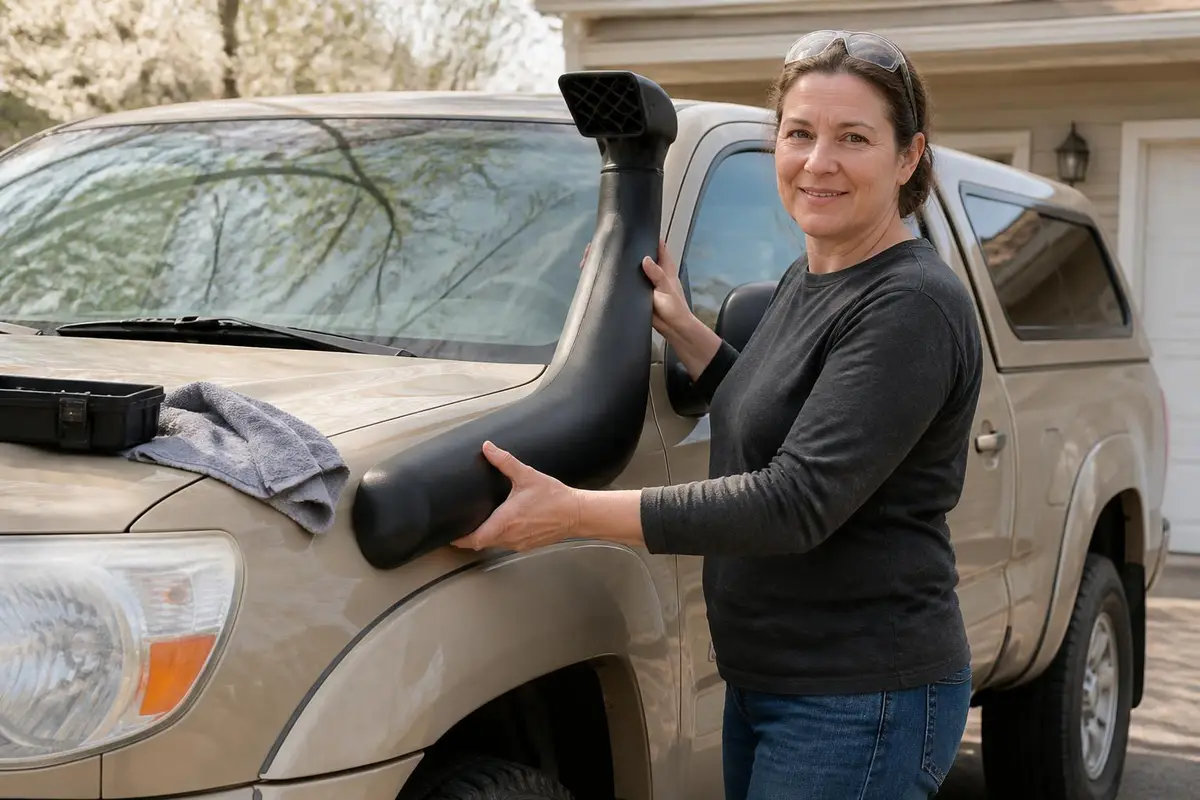
Snorkels and Hydrolock: What a Snorkel Actually Changes
A snorkel relocates the air intake from low in the engine bay to roof height, raising the effective wading depth for hydrolock purposes specifically. It does nothing for a differential's breather vent, the transmission's dipstick tube, or any other low-mounted component that can also draw in water. Installation quality matters as much as the part itself: a snorkel with a poor seal at the airbox connection can leak water into the intake even while mounted correctly, which is a recurring owner complaint traced to a rushed DIY install rather than a defective part. See is a snorkel worth it and how much does a snorkel cost for the full decision breakdown, and best snorkels for specific products ranked by aggregated owner reviews.
Differential Breather and a Diff Breather Kit: The Overlooked Failure Point
A differential breather kit (see FAQ) addresses a failure mode entirely separate from intake hydrolock. Owners who install a snorkel without also addressing breather height report it as the gap they discovered only after a differential started running milky, water-contaminated gear oil following a crossing that seemed to go fine at the time. A transmission breather is a less commonly relocated but analogous vent point on some platforms, worth checking against the same wading-depth logic. See snorkel vs raised air intake for how the two intake-side options compare, and off-road maintenance and DIY for the install-quality discipline a breather relocation shares with other underbody work.
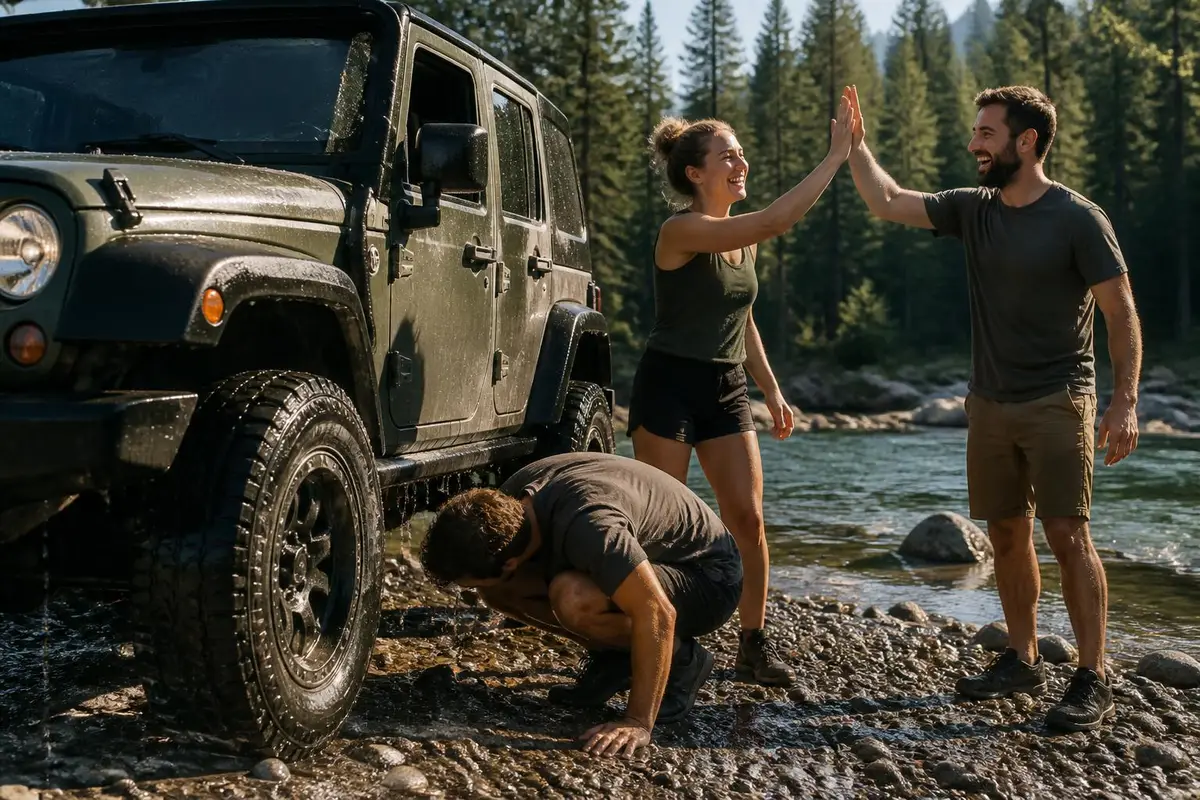
After a Crossing: What to Check Before Driving On
Checking the differential and transmission dipsticks for a milky, water-contaminated appearance immediately after a deep or borderline crossing catches a breather-related water intrusion before it causes bearing damage from running contaminated gear oil. Cycling the brakes gently for the first short stretch after a crossing helps dry the pads and rotors, restoring normal stopping distance faster than driving normally and hoping they dry on their own. A quick visual check for water inside the headlight housings or any other sealed-but-not-submersion-rated component is worth the extra minute, since a small amount of trapped moisture is far easier to address immediately than after it causes corrosion over subsequent trips.
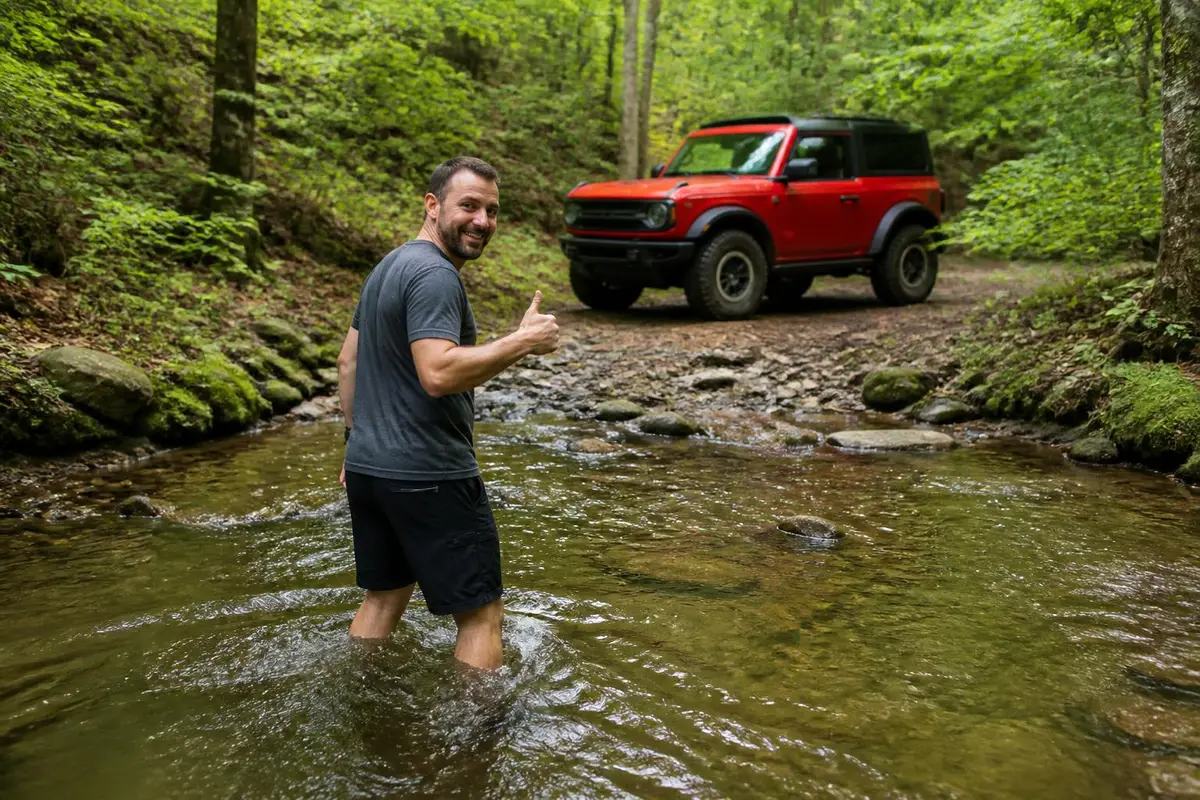
Crossing Technique: Speed, Line, Bow Wave and Electrical Sealing
Correct wading technique (see FAQ) is as much a factor in a safe crossing as the vehicle’s rated depth. Checking the crossing on foot first, entering at a slow and steady speed rather than stopping, and holding enough momentum to keep a bow wave pushed ahead of the vehicle rather than up over the hood are the three habits owners with extensive water-crossing experience report most consistently. A vehicle that stalls mid-crossing stays put until it is towed clear of the water first — restarting a hydrolocked engine is what actually causes the internal damage, not the water intrusion itself. See off-road driving tips for how a water crossing fits into a broader beginner trail-driving skill set.
Common Owner Complaints Across Water-Crossing Gear
A snorkel installed with a poor airbox seal, discovered only after water intrusion during an actual crossing, is the most frequently reported installation issue and is traced to sealant or gasket work rather than the snorkel body itself. A differential breather hose routed without a downward loop to shed water is a recurring cause of the hose itself siphoning water back toward the diff. Restarting a stalled, hydrolocked engine before towing it clear of the water is the single most expensive mistake reported across water-crossing incidents, converting a recoverable stall into a bent connecting rod.
Recommended gear
Gear for mud and wet trails
Affiliate disclosure: As an Amazon Associate, we earn from qualifying purchases, at no extra cost to you. Purchases through these links help keep this site running and up to date. Learn more

Best for a lower-cost set of traction boards for sand and mud.
- Traction tracks for sand, mud and snow recoveries.
- Sold as a pair, the budget alternative to MAXTRAX.

Best for a kinetic rope with matching soft shackles.
- 7/8 in x 30 ft kinetic rope plus two 7/16 in soft shackles.
- Comes with a waterproof storage bag.
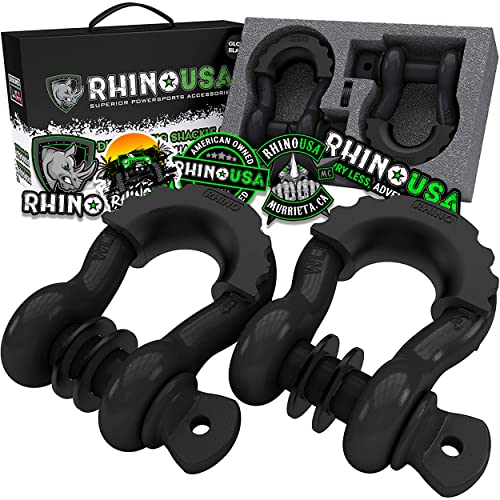
Best for rated connection points for straps and ropes.
- 3/4 in D-ring shackles, 41,850 lb listed break strength (2-pack).
- Connect straps to rated recovery points.

Best for solo self-recovery on steep or muddy trails.
- 12V winch with a 10,000 lb rated pull.
- Sized for full-size trucks and SUVs.
We research products from manufacturer specs and owner feedback; we don't test them ourselves. How we choose.
Sources
- Stellantis / Jeep — 2026 Wrangler Rubicon 392 Specifications — 34.5 in. rated wading depth and the Hydro-Guide air-induction system's 15-gallon-per-minute water diversion figure.
- Ford — 2026 Bronco Technical Specifications — 31.5 in. / 33.5 in. (Sasquatch) / 37 in. (Raptor) Bronco wading-depth figures by trim.
- Land Rover — Driving Through Water: Wading Depths — Defender wading depth up to 900 mm with air suspension raised, and how Wade Sensing measures water depth.
- MAXTRAX USA — MKII Recovery Boards — Cross-referenced recovery-gear context for what to carry regardless of a crossing's outcome.