

Affiliate disclosure: As an Amazon Associate, we earn from qualifying purchases, at no extra cost to you. We research rather than test, and commissions never change our rankings. This site is reader-supported: those commissions pay for hosting, research and keeping every guide up to date, so if a guide helped you, buying through our links is an easy way to support it. How we rank · Full disclosure
TL;DR
- The current Defender, introduced in September 2019, is built on Land Rover's D7x aluminum monocoque, not a separate frame.
- Three bodies: the 90 has a 101.9-inch wheelbase; the 110 and 130 share a 119-inch wheelbase, and the 130 adds 13.4 inches of length behind the rear axle.
- Coil springs or air suspension changes clearance, wading depth and which lift parts fit: on a 110, 8.9 vs 11.5 inches of off-road clearance and 33.5 vs 35.4 inches of wading.
- Roof ratings on Land Rover's US pages: 260 lbs while driving, 661 lbs parked. Land Rover lists no dynamic roof load for V8 models.
- US towing is up to 8,200 lbs for 90, 110 and 130, and Land Rover quotes a winch pulling force of up to 10,000 lbs.
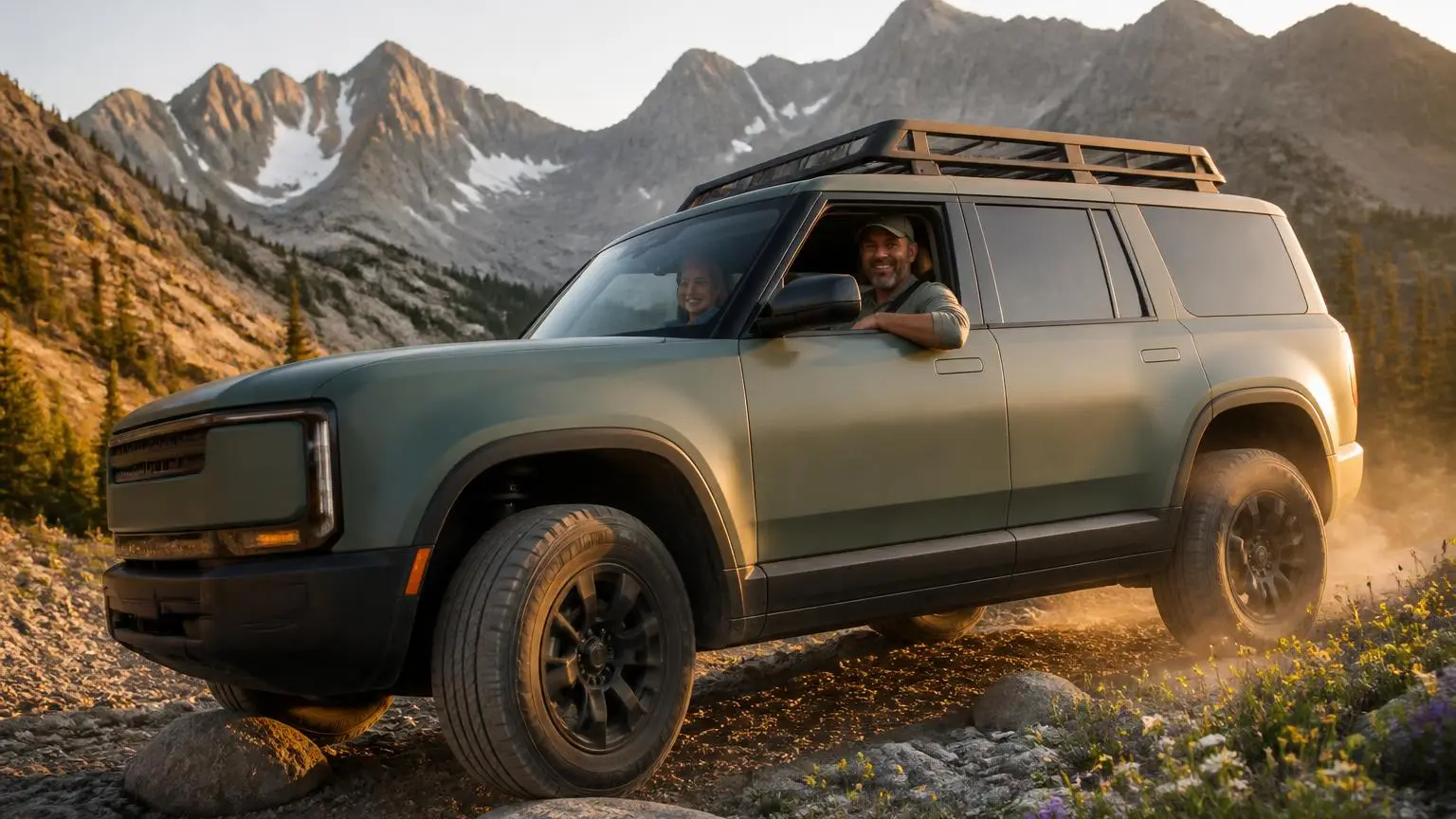
At a Glance
| Defender | Seats (US) | Cargo, max (US) | Fitment note |
|---|---|---|---|
| 90 | Up to 5 | 58.3 cu ft | Shortest wheelbase; 90-specific racks and steps |
| 110 | Up to 7 | 69.1 cu ft | Coil or air suspension; check which before buying lift parts |
| 130 | Up to 8 | 89 cu ft | Same wheelbase as the 110 but a longer rear; air suspension standard |
Construction: D7x Monocoque, Not Body-on-Frame
Land Rover introduced the current Defender in September 2019 on what it calls the D7x (for extreme) architecture, a lightweight aluminum monocoque. Land Rover claims it is three times stiffer than traditional body-on-frame designs and says the structure was built to support fully independent suspension. There is no separate ladder frame to bolt to, so recovery points, bumpers and underbody armor must attach to points Land Rover or the accessory maker has engineered for this body. A product listed for the original Defender, a different vehicle, won't fit the current one.

90, 110 and 130: Dimensions
| Measurement | 90 | 110 | 130 |
|---|---|---|---|
| Wheelbase | 2,587 mm (101.9 in) | 3,022 mm (119.0 in) | 119 in (US release) |
| Length with spare wheel | 4,583 mm (180.4 in) | 5,018 mm (197.6 in) | 5,358 mm (210.9 in) |
| Width, mirrors folded | 2,008 mm (79.1 in) | 2,008 mm (79.1 in) | 2,008 mm (79.1 in) |
| Front track, air suspension | 1,706 mm (67.2 in) | 1,706 mm (67.2 in) | 1,706 mm (67.2 in) |
| Turning circle, curb to curb | 11.3 m (37.1 ft) | 12.84 m (42.1 ft) | 12.84 m (42.1 ft) |
The 110 and 130 share a wheelbase and a turning circle; the 130's extra 340 mm (13.4 in) is all rear overhang, which Land Rover describes as extending the silhouette by 13.38 inches. Front-end parts often cross between bodies, but roof racks, side steps, rear cargo systems and anything spanning the wheelbase are length-specific. The 130 is covered in detail in Defender 130 dimensions.
Coil vs Air Suspension: Clearance and Lift Parts
At launch Land Rover made coil springs standard, with air suspension available on the 110; its launch release for the 130 lists Electronic Air Suspension on every 130. Air suspension can raise the vehicle to an off-road height, and the technical specification shows how much that changes the numbers on a 110:
| Measurement | Coil | Air, off-road height |
|---|---|---|
| Ground clearance | 226 mm (8.9 in) | 293 mm (11.5 in) |
| Approach angle | 32.0° | 37.6° |
| Ramp (breakover) angle | 22.2° | 27.9° |
| Departure angle | 37.7° | 41.9° |
| Maximum wading depth | 850 mm (33.5 in) | 900 mm (35.4 in) |
At standard ride height the air-sprung 110 sits at 218 mm against 228 mm on coils, so air suspension lowers the vehicle for the road and raises it by about 75 mm (3 in) for trails. Because ride height on an air-sprung Defender is set by the suspension system rather than by spring length, a lift product has to be made for either the coil or the air version. Confirm which one your Defender has before ordering; see suspension and lift kits for the general options.
Roof Load Ratings: Dynamic vs Static
Land Rover gives two roof numbers. The dynamic load is what the roof may carry while driving; the static load is what it may carry parked, such as a rooftop tent with people in it. Its US pages list 260 lbs dynamic and 661 lbs static for the 90, 110 and 130. Land Rover's international technical specification adds detail the US pages don't show:
- The dynamic rating includes the Expedition Roof Rack's own weight.
- It rises with off-road tires: on a 90 from 80 kg to 118 kg (about 260 lbs), and on a 110 or 130 from 100 kg to 168 kg (about 370 lbs).
- Defender V8 models have no dynamic roof load capacity, and OCTA's rating drops to 0 kg when OCTA mode is on.
- The static rating is 300 kg (661 lbs) across the range.
Add the rack, tent and cargo together and compare the total with the dynamic figure for your exact model before loading the roof.
US Powertrains and Weight
Land Rover's US model page for the 2027 Defender 110 lists a 3.0-liter six-cylinder engine with an 8-speed automatic and all-wheel drive on every regular trim, and the Defender OCTA uses a 626-hp V8. The international technical specification also lists diesel and plug-in hybrid versions (P300e, P400e) that don't appear in the US lineup, so fitment and weight figures from overseas sources may not match a US truck. Land Rover's US model pages list a twin-speed transfer box with a low range on the 110 and 130, and the company lists an Electronic Active Differential with Torque Vectoring by Braking on the 2027 Defender X and Trophy Edition.
Towing, Payload and Winch Ratings
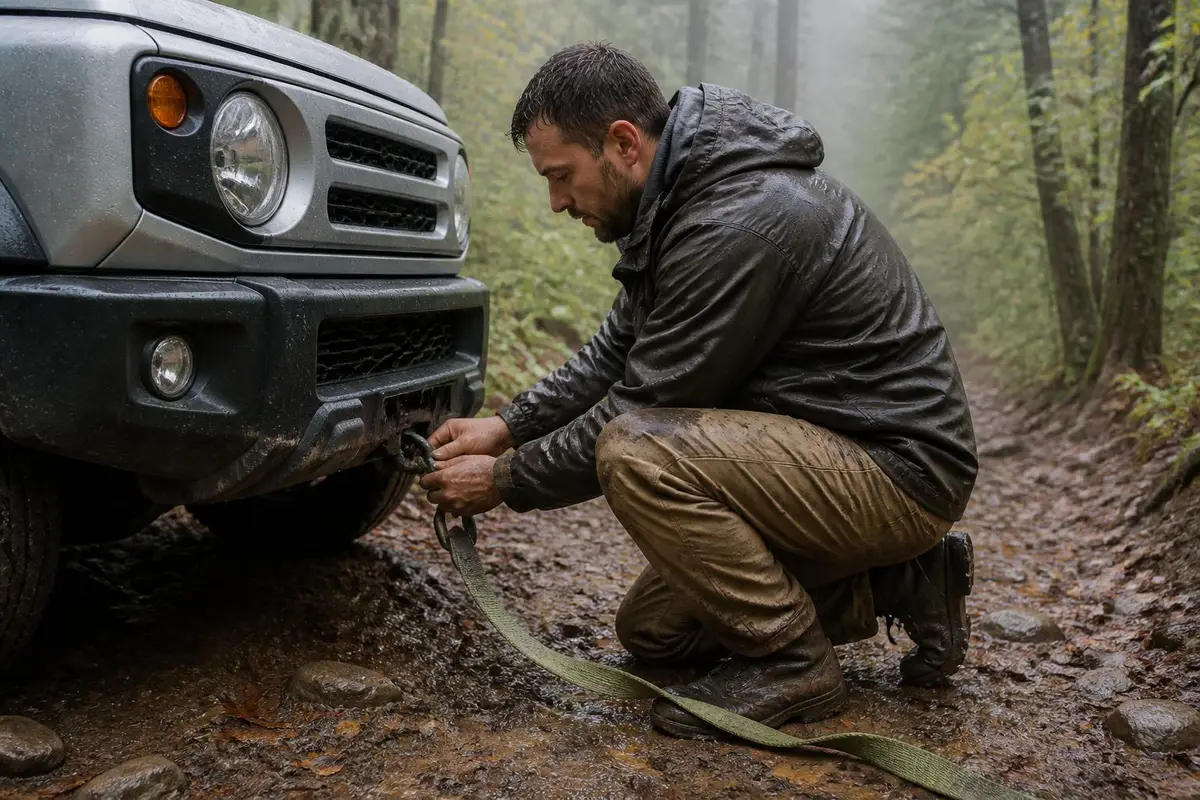
Land Rover's US pages quote towing of up to 8,200 lbs with a braked trailer for the 90, 110 and 130. The 130's US launch release gave a payload of up to 1,760 lbs; the international specification lists a maximum nose weight of 150 kg (331 lbs) on the 90 and 110 and 120 kg on the 130 in that market. Land Rover's US pages also quote a winch pulling force of up to 10,000 lbs. A winch, steel bumper and roof load all come out of payload, so add them up against the figure on your vehicle's door-jamb label. General winch sizing is on the recovery gear hub.
Terrain Response and Wading Aids
Terrain Response 2 adjusts the Defender's settings for the surface, and Land Rover's launch release introduced Configurable Terrain Response so experienced drivers can tune individual settings, with an Auto mode for everyone else. The same release lists a Wade program for water crossings and ClearSight Ground View, which shows the area under the hood on the center screen. Larger tires change the rolling diameter these systems work with, so check that any tire upsize is listed for your model and suspension.
How to Match a Part to Your Defender
Confirm the body (90, 110 or 130), the suspension (coil or air), the engine (six-cylinder or V8) and the model year before buying. Those four decide lift and tire fitment, roof-load limits and which recovery points apply. Figures on this hub come from Land Rover's US pages, its launch releases and its 2025 technical specification; we don't buy, install or test this gear ourselves. See how we rank.
Sources
- JLR Media — Overview: Introducing the New Land Rover Defender (10 September 2019) — D7x lightweight aluminum monocoque, claimed three times stiffer than body-on-frame; coil springs standard with air suspension available on the 110; Configurable Terrain Response, Wade program and ClearSight Ground View.
- Land Rover — Defender Technical Specification 2025 (PDF) — Wheelbases (2,587 and 3,022 mm), lengths, widths, tracks and turning circles for 90, 110 and 130; coil vs air clearance, angles and wading; dynamic roof loads by tire and body, no dynamic roof load on V8 models, 0 kg in OCTA mode; static 300 kg; nose weights; diesel and PHEV versions in the international range.
- Land Rover USA — The New Land Rover Defender 130 (launch release) — 130 wheelbase of 119 in, 13.38-in silhouette extension, Electronic Air Suspension on every 130, payload up to 1,760 lbs.
- Land Rover USA — Defender 90 — Up to 5 seats, up to 58.3 cu ft cargo, 260-lb dynamic roof load, towing up to 8,200 lbs, winch pulling force up to 10,000 lbs.
- Land Rover USA — Defender 110 — Up to 7 seats, up to 69.1 cu ft cargo, 260-lb dynamic and 661-lb static roof loads, towing up to 8,200 lbs, winch up to 10,000 lbs, 35.4-in wading, 626-hp V8 OCTA, Terrain Response 2.
- Land Rover USA — Defender 130 — Up to 8 seats, up to 89 cu ft cargo, 260-lb dynamic and 661-lb static roof loads, towing up to 8,200 lbs.
- Land Rover USA — 2027 Defender 110 Models & Specifications — 3.0-liter six-cylinder, 8-speed automatic and AWD on every 2027 110 trim; twin-speed transfer box; Electronic Active Differential with Torque Vectoring by Braking on Defender X and Trophy Edition.
- Land Rover USA — Defender 130 Models & Specifications — Electronic Air Suspension and twin-speed transfer box on the Defender 130.