

Affiliate disclosure: As an Amazon Associate, we earn from qualifying purchases, at no extra cost to you. We research rather than test, and commissions never change our rankings. This site is reader-supported: those commissions pay for hosting, research and keeping every guide up to date, so if a guide helped you, buying through our links is an easy way to support it. How we rank · Full disclosure
TL;DR
- Airing down increases the tire's contact patch for traction — the right pressure depends on terrain, tire size and vehicle weight, not one universal number.
- BFGoodrich's own tire FAQ sets 20 PSI as the practical floor on a standard (non-beadlock) wheel, and only at reduced speed — under roughly 15 mph.
- Beadlock wheels remove that floor by clamping the bead mechanically, which is what makes genuinely low rock-crawling and sand pressures safe to run.
- Any off-road pressure is well below the TPMS warning threshold set by federal rule FMVSS 138 (25% under placard pressure) — the dash light staying on is normal, not a fault.
- Air back up to the door-jamb placard pressure before sustained highway driving; staying aired down at speed overheats the sidewall and increases stopping distance.

Why Airing Down Improves Traction
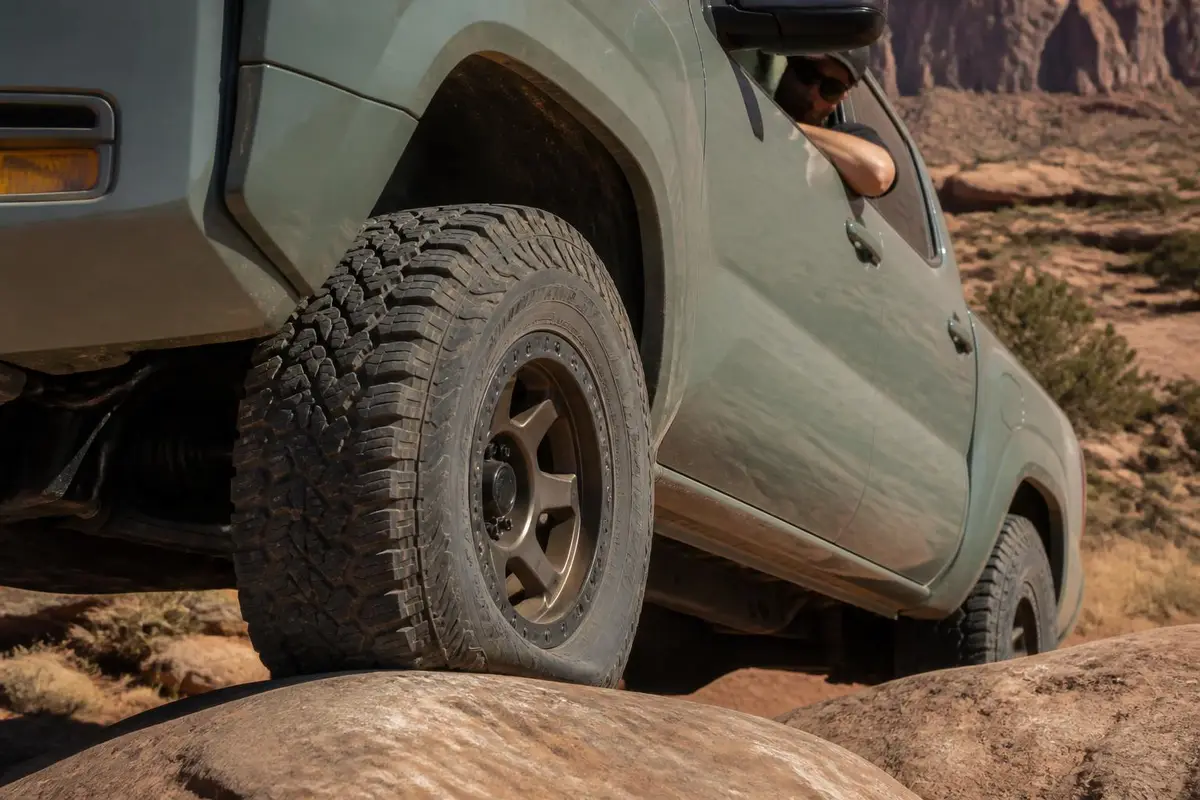
Lower tire pressure lets the tire’s sidewall flex and the tread flatten out, increasing the contact patch — the actual area of rubber touching the ground — without changing the tire’s overall size. A larger contact patch spreads the vehicle’s weight over more surface area, which is why a tire aired down for sand floats across the surface instead of digging in the way a fully inflated, narrow contact patch does.
At a Glance
| Terrain | What matters most | Pressure relative to on-road |
|---|---|---|
| Sand | Flotation — biggest possible contact patch | Lowest of any common terrain |
| Mud | Flotation, plus tread self-cleaning | Similar range to sand |
| Rock crawling | Sidewall conformity vs. puncture risk | Moderate reduction |
| Washboard gravel | Ride comfort and vibration, not traction | Smallest reduction |
| Highway | Heat, steering precision, stopping distance | Back to the door-jamb placard number |
Pressure by Terrain Type
Sand (see FAQ) generally uses the lowest pressures of any common off-road terrain, since flotation matters more than sidewall protection on a soft, yielding surface. Mud uses a similar range to sand for flotation, though a more aggressive mud-terrain tread pattern does more of the traction work than pressure alone. Rock crawling (see FAQ) uses a moderate range balancing sidewall conformity against puncture risk on sharp edges. Washboard gravel roads benefit from a smaller pressure reduction than technical terrain, mainly to reduce vibration and improve ride comfort rather than to maximize traction. BFGoodrich's own guidance is explicit that there's no single universal number across any of these — the right pressure depends on the specific tire's size and load capacity and the vehicle's weight, not just the terrain type.
Beadlock Wheels and the Low-Pressure Limit
A standard wheel relies on tire-pressure to hold the tire’s bead seated against the rim, and pressure dropped too low under lateral cornering load can unseat the bead, instantly deflating the tire. Beadlock wheels (see FAQ) mechanically clamp the bead in place with a ring and bolts, removing that limitation and allowing meaningfully lower pressures — a genuine advantage for dedicated rock-crawling builds, at the cost of added wheel weight and, on public roads in some states, legal restrictions on beadlock use.
Airing Back Up Before Pavement
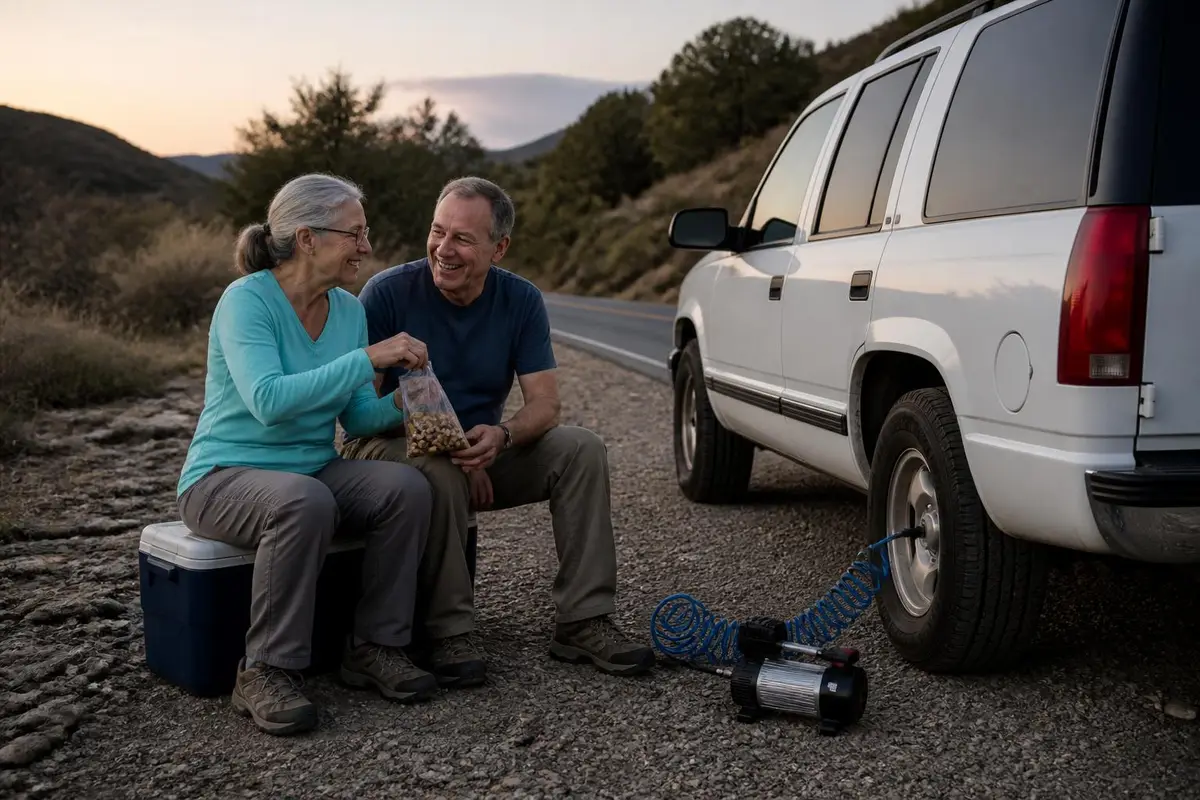
Driving on aired-down tires at highway speed (see FAQ) is the most commonly cited airing-down safety mistake, since the tire’s construction is not rated for sustained highway heat buildup at low pressure. A tire deflator with a built-in gauge speeds the airing-down process at the trailhead; a compressor rated with enough CFM output to refill the tire’s air volume in a reasonable time (see FAQ, and air compressors, tire deflators and repair for CFM sizing) matters just as much for the return trip.
TPMS Warnings After Airing Down
Federal rule FMVSS 138 sets the trigger point for a TPMS low-pressure warning: the telltale must light within 20 minutes of any tire reaching 25% below the vehicle's placard pressure (or a slightly higher floor set in the standard's own table, whichever is higher). Any off-road airing-down pressure — even the higher end of the ranges below — sits well past that 25% threshold, so expect the light on for the whole trail run. That's the system doing exactly what it's federally required to do, not a fault or a leak.
Snow and Winter Traction Pressure
Packed snow behaves more like a firm, low-traction surface than a soft, yielding one. Winter airing-down pressures generally sit closer to the rock-crawling range than the deep-sand range — enough contact-patch increase to bite into snow without the extreme flotation sand requires. Fresh, deep powder is the exception, calling for lower pressure closer to sand-level flotation to avoid sinking through the surface crust. See winter and snow 4WD for the fuller picture of cold-weather tire and traction setup beyond pressure alone.
Tools: Deflators vs Eyeballing It
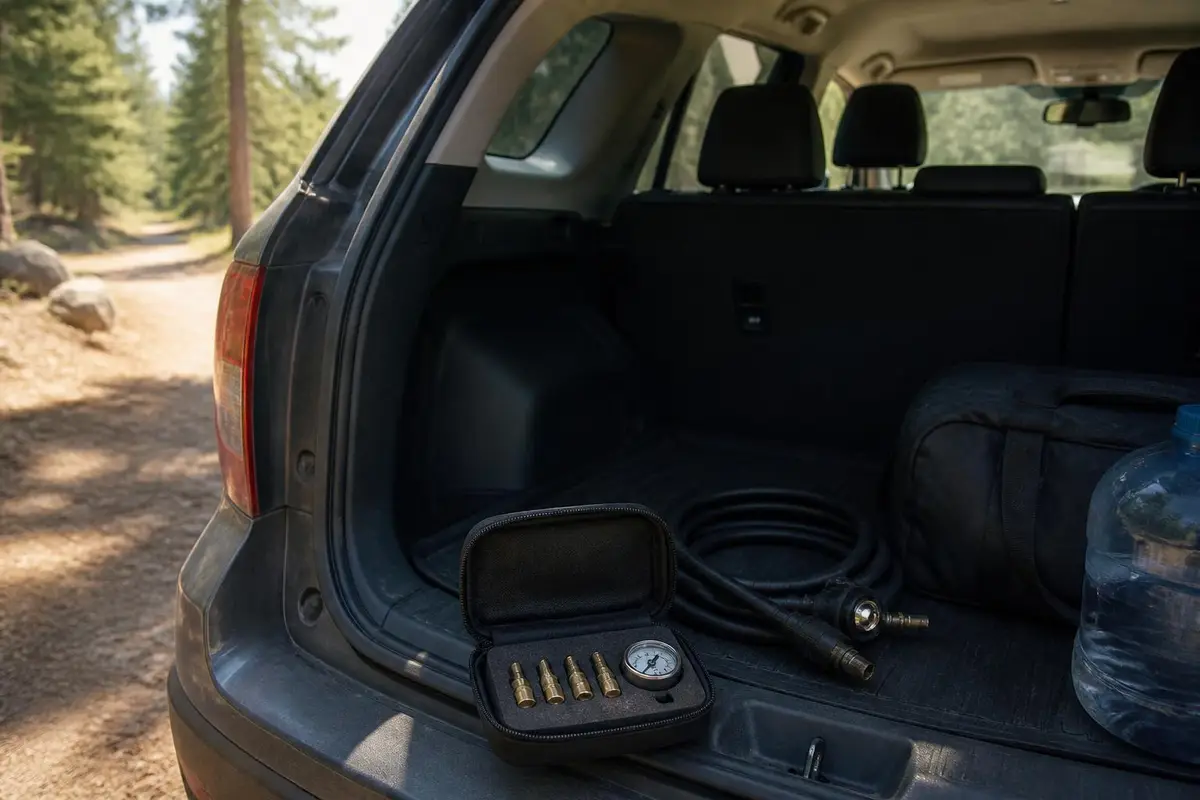
A dedicated tire deflator with a built-in gauge sets a target pressure once and releases air to that number automatically, more consistent across all four tires than reading a separate gauge while venting air by feel. A basic screw-in deflator, adjusted and checked with a standalone gauge, is a lower-cost alternative that takes longer per tire but reaches the same result for an owner airing down occasionally rather than on every trip. See air compressors, tire deflators and repair for how single-hose and multi-hose deflator kits compare on speed for a full set of four tires.
Common Mistakes When Airing Down
Forgetting to air back up before a highway stretch between trail sections is the most frequently reported mistake, usually caught only once a driver notices unusually soft, wandering steering at speed. Airing down too aggressively for the terrain — using sand-level pressure on rock, for example — increases sidewall pinch risk without a traction benefit that terrain actually needs. Setting a target PSI without first checking a compressor's real CFM output at working pressure (not its unloaded, 0-PSI spec-sheet number) is what leaves one tire under target right when the trail run is over; not checking pressure with an accurate gauge, relying instead on a visual estimate of tire bulge, causes the same problem going the other way.
Recommended gear
Gear for airing down and back up
Affiliate disclosure: As an Amazon Associate, we earn from qualifying purchases, at no extra cost to you. Purchases through these links help keep this site running and up to date. Learn more

Best for airing all four tires down to a set pressure at once.
- Automatic deflators preset between 6 and 30 PSI.
- Air all four tires down at once, then stop at the set pressure.

Best for budget-friendly airing down before sand or rock.
- Adjustable 4-pack of deflators, 10–30 PSI.
- Screw on, set the pressure, and they stop automatically.

Best for airing back up before you hit pavement.
- Portable 12V compressor rated to 150 PSI.
- Sized for truck and SUV tires.

Best for fast inflation of larger off-road tires.
- Heavy-duty 12V off-road compressor.
- Built for inflating larger off-road tires quickly.
We research products from manufacturer specs and owner feedback; we don't test them ourselves. How we choose.
Sources
- BFGoodrich — Tire FAQ — 20 PSI as the practical floor on a standard (non-beadlock) wheel, and the roughly 15 mph speed ceiling for pressures below the highway-recommended figure.
- BFGoodrich — Off-Road Guide: How to Choose the Right Tires — There is no single universal off-road PSI number — the right pressure depends on tire type, terrain and vehicle weight.
- NHTSA — Tire Pressure Monitoring System, FMVSS No. 138 (final rule) — TPMS warning-light trigger point: 25% below placard pressure (or the standard's own table value, whichever is higher), illuminated within 20 minutes.
- eCFR — 49 CFR §571.138, Tire pressure monitoring systems — Current federal standard text for the TPMS low-pressure warning requirement.
- NHTSA — Tire Safety (TireWise) — Underinflation increases heat buildup and blowout risk, and tires underinflated 25%+ are three times more likely to be involved in a tire-related crash — why airing back up before sustained highway driving matters.