

Affiliate disclosure: As an Amazon Associate, we earn from qualifying purchases, at no extra cost to you. We research rather than test, and commissions never change our rankings. This site is reader-supported: those commissions pay for hosting, research and keeping every guide up to date, so if a guide helped you, buying through our links is an easy way to support it. How we rank · Full disclosure
TL;DR
- Your roof's dynamic (driving) rating is the hard limit: the tent or cargo plus the rack itself must fit under it. Find it in the owner's manual.
- Static (parked) capacity is higher — Thule's guideline for its racks is about 3× the dynamic rating — and it is what holds sleepers in a rooftop tent.
- Worked example: a 165-lb iKamper Skycamp 3.0 leaves 55 lb for crossbars on a 2026 Outback (220-lb dynamic) and nothing on a Crosstrek Wilderness (165-lb dynamic).
- Crossbar spread and size matter as much as weight: Thule tents need bars at least 28 inches apart front to back.
- A blunt roof box can cut highway fuel economy 6–17% (DOE); a hitch-mounted box costs 1–5%.
At a Glance
| If you want to carry… | The number that limits you | Where to find it |
|---|---|---|
| A rooftop tent on the drive | Dynamic roof rating (tent + rack weight must fit under it) | Vehicle owner's manual and the rack's instructions |
| People sleeping in a rooftop tent | Static rating of roof, rack and tent | Rack maker's static figure and the tent maker's capacity |
| A cargo box, basket or bag | Dynamic rating, including the carrier's own weight | Owner's manual and the carrier's listed weight |
| A side awning | Rack capacity left after the awning's weight | Awning and rack instructions |
Static Load vs Dynamic Load: What Each Rating Covers
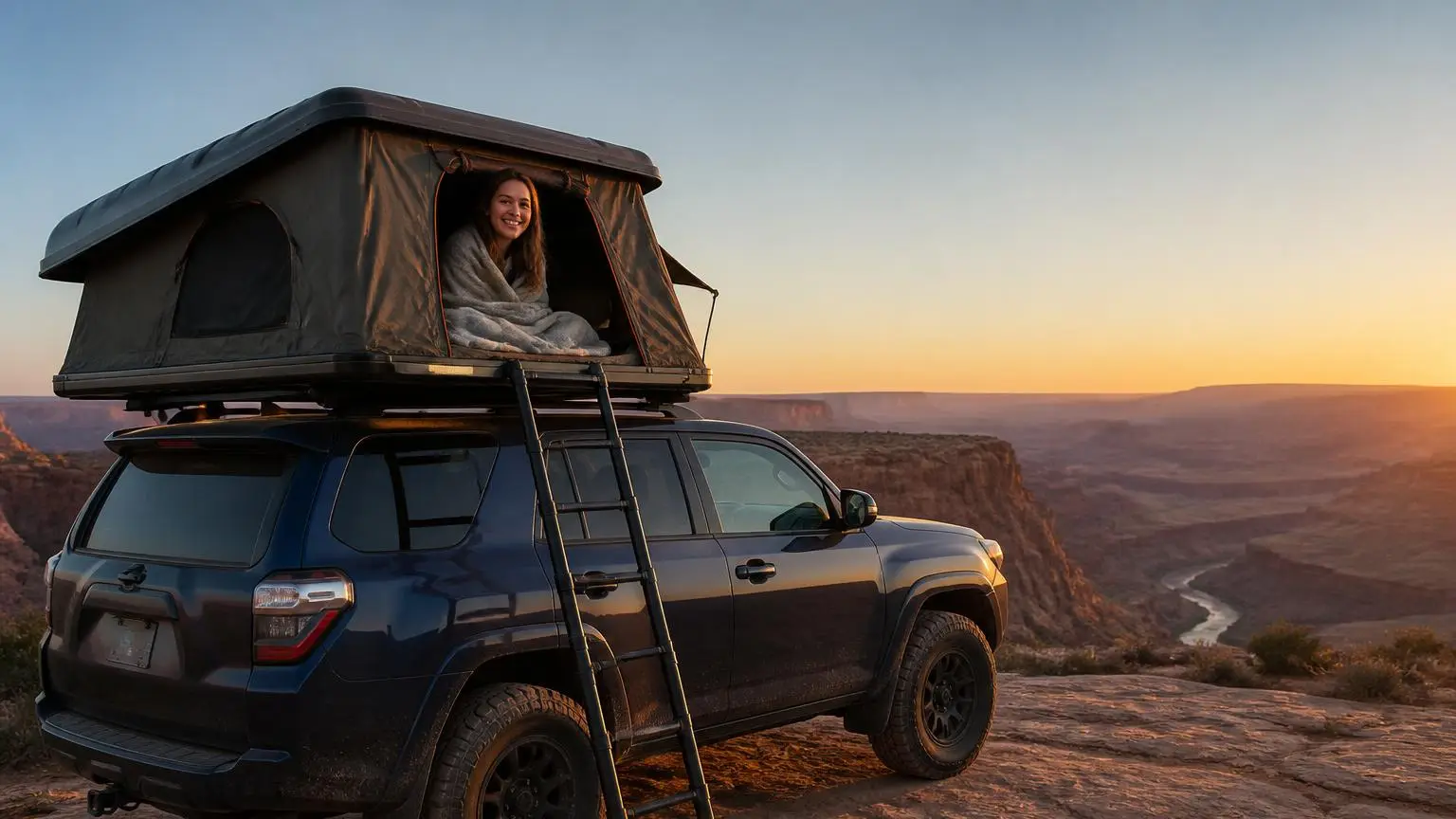
Thule's rooftop-tent guidelines define the two numbers this category turns on. Dynamic weight capacity is the most weight permitted on the roof while driving; the vehicle's owner's manual or dealer gives it for the roof, and every rack has its own dynamic rating too. Static weight capacity is what the tent can carry with people inside while the vehicle is parked. Thule says static weight can exceed dynamic weight and gives, as a guideline, a static capacity of about 3 times the dynamic rating for its own racks.
Two rules follow. First, the tent and the rack together must stay within the dynamic limit, because both ride on the roof while you drive. Second, the weakest link sets the limit: Thule notes that bars, feet and fit kits can carry different ratings, and the component with the lowest capacity decides what the whole system may carry.
Worked Example: Does a Hard-Shell Tent Fit Your Roof?
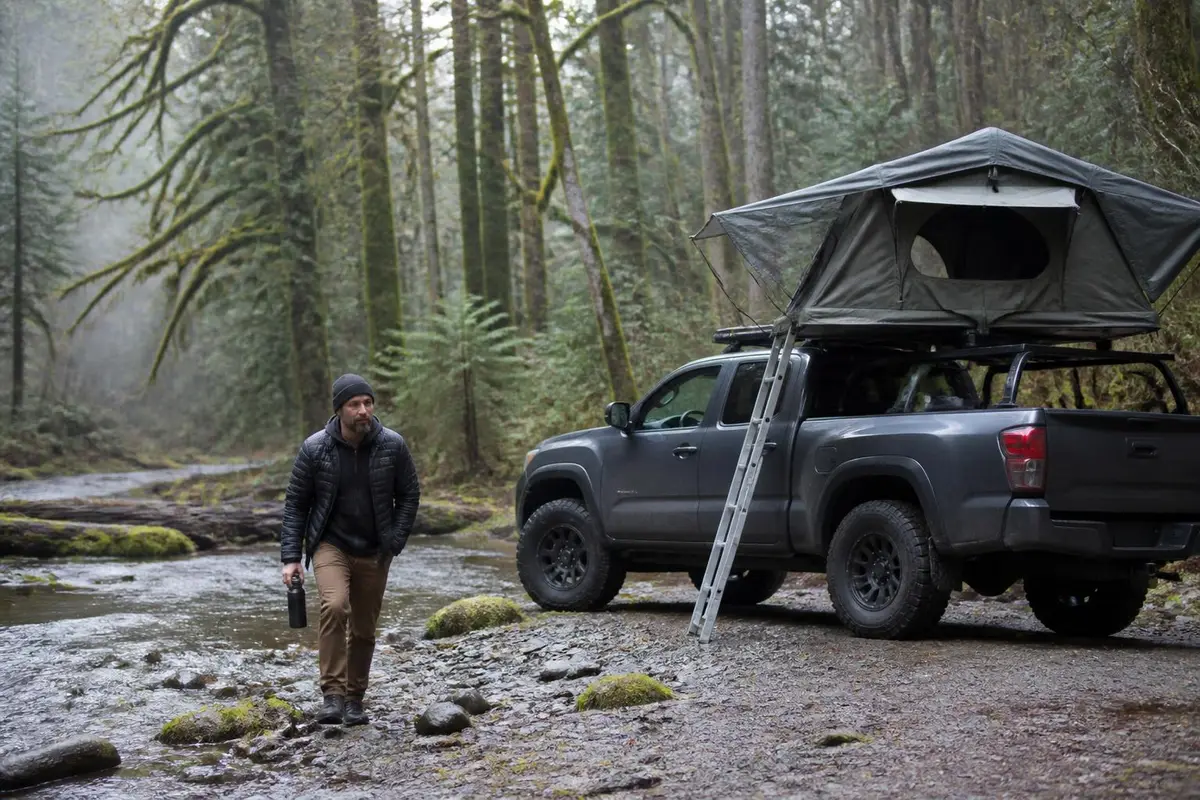
iKamper lists the Skycamp 3.0 at 165 lb (75 kg) and says the vehicle roof and rack need a dynamic rating of at least 165 lb; its lighter Skycamp 2X, Mini and X-Cover need at least 125 lb. Subaru publishes both ratings for its current rails, which makes a useful comparison:
| Vehicle (factory rails) | Dynamic | Static | Left for crossbars and hardware after a 165-lb tent |
|---|---|---|---|
| 2026 Subaru Outback | 220 lb | 800 lb | 55 lb |
| 2026 Subaru Forester Wilderness | 176 lb | 800 lb | 11 lb |
| Subaru Crosstrek Wilderness | 165 lb | 700 lb | 0 lb — the tent alone uses the whole rating |
The Crosstrek Wilderness can still take a tent that needs 125 lb of dynamic capacity, as long as the tent plus its rack stays at or under 165 lb. Parked, the math is about people: iKamper says its tents hold about 900 lb and the ladder about 330 lb, but the roof's and rack's static ratings still cap the total.
Roof Types: Raised Rails, Flush Rails, Fixed Points and Bare Roofs
Thule groups vehicles by roof design: raised rails, flush rails, fixed mounting points and smooth "naked" roofs, each needing its own rack feet. Two cautions from its guidance apply to any brand. Raised rails should carry a rooftop tent only if they are supported along their length; unsupported rails are usually too flexible for the static load of a tent with people inside, and crossbars should sit as close to the rail supports as possible. And on a glass or large panoramic roof, check with the vehicle maker that the roof can take a tent at all.
Rack compatibility is brand-specific too. Thule does not approve racks built on its Evo Clamp or Edge Clamp feet, its WingBar Edge racks or its SlideBar crossbars for its rooftop tents, because the static load of sleepers can damage the rack or the vehicle. For factory racks and other brands, Thule points owners to that rack's own manual.
Crossbar Spread and Profile
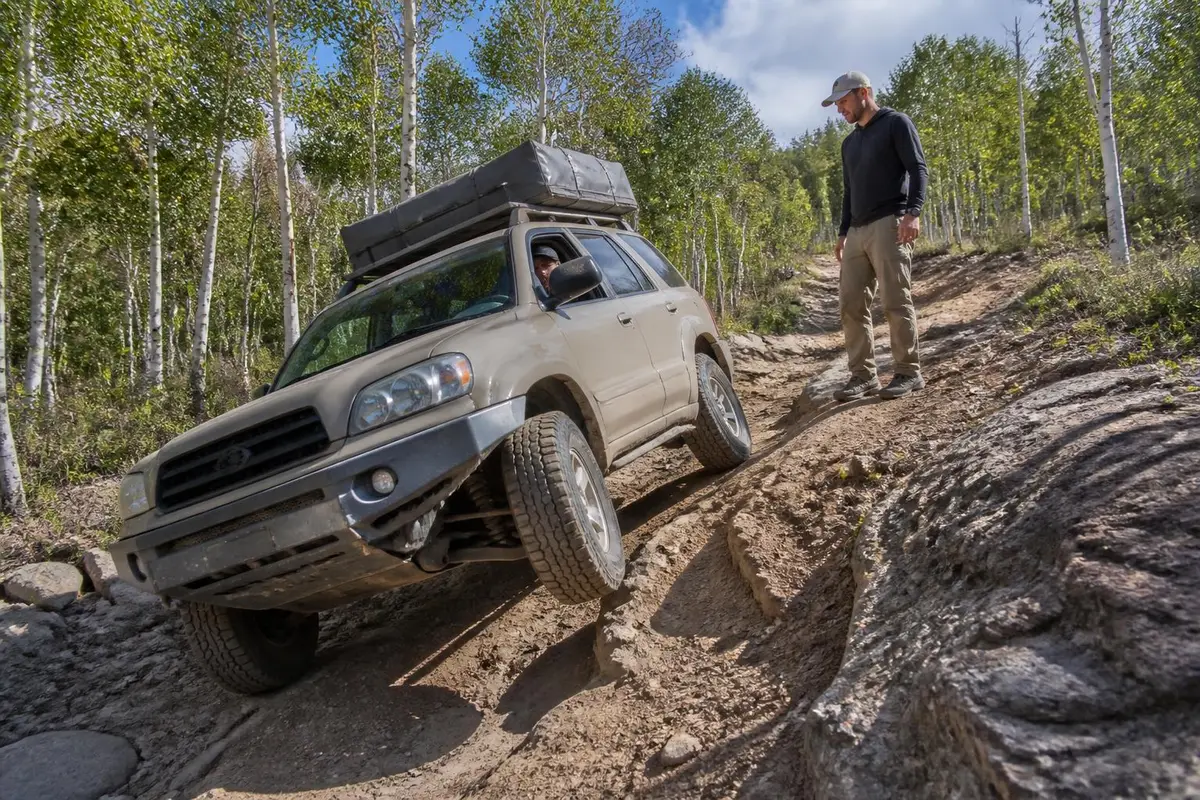
A tent's mounting brackets need bars in a set position and of a set size. Thule requires at least 28 inches (70 cm) between the front and rear bars for its tents and lists a minimum side-to-side spread for each model: 24 inches for the Foothill, 28 for the Approach S and Widesky, 31 for the Approach M/L and Autana 4, 32 for the Basin and 34 for the Kukenam. If the bars are too short, one of the tent's rails has to mount outside the rack foot, within 1 inch of it, which leaves the tent slightly off-center. iKamper lists a front-to-back range of 30 to 60 inches for the Skycamp 3.0.
Bar profile — round, square, aerodynamic wing or T-slot — matters because brackets clamp around the bar. Thule's guidelines cap the bar cross-section its brackets accept at 3.74 × 1.81 inches for the Approach, Basin and Widesky and 3.25 × 1.5 inches for the Foothill, Kukenam and Autana. Measure your bars against the tent's manual before buying either.
Soft-Shell vs Hard-Shell Rooftop Tents
Thule's guide describes soft-shell tents as lighter and often more budget-friendly, with expandable designs that offer extra space, and hard-shell tents as more aerodynamic, quicker to set up and built for long-term durability. For a roof-load decision, weight is the number to compare first. The iKamper Skycamp 3.0 hard shell weighs 165 lb and stands 13.5 inches tall closed, 48 inches open. See hard-shell vs soft-shell rooftop tents for the full comparison.
Cargo Boxes, Baskets and Fuel Economy
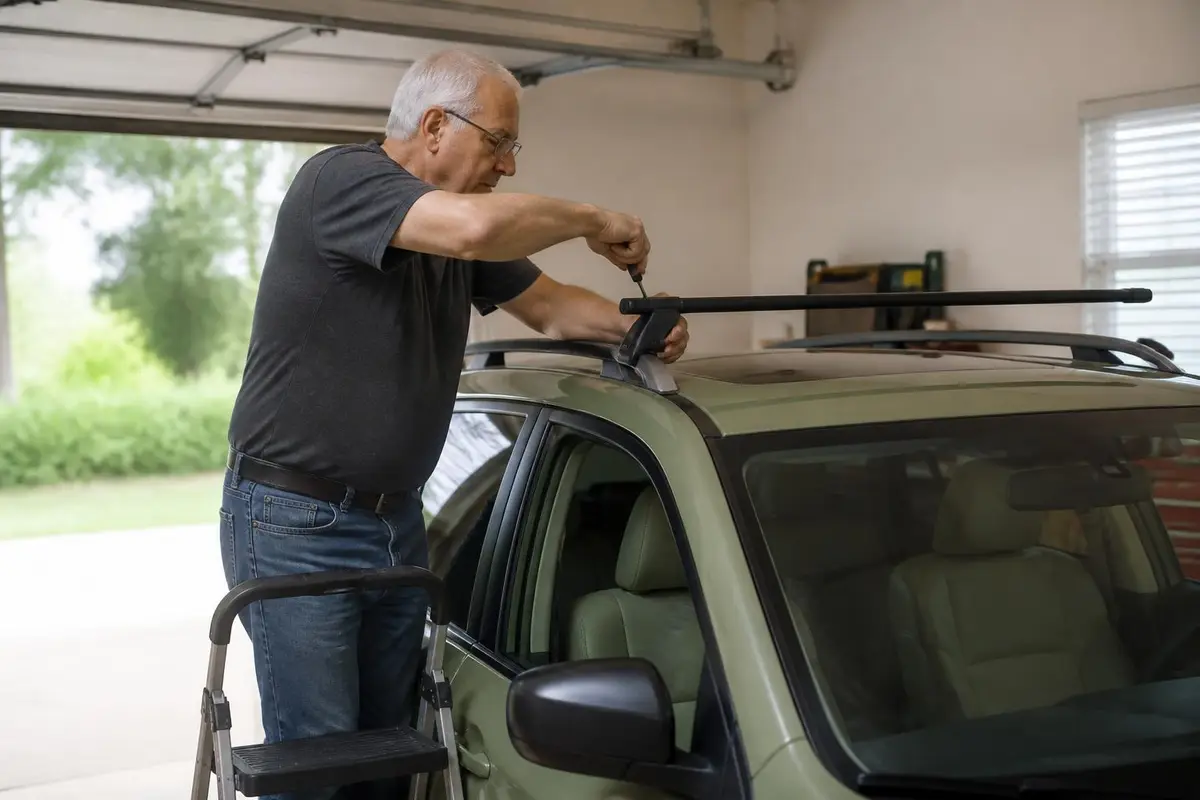
Every roof carrier counts against the dynamic rating twice: once for its own weight and again for what is in it. The U.S. Department of Energy's fuel-economy guidance puts numbers on the aerodynamic cost. A large, blunt roof-top cargo box can reduce fuel economy by about 2–8% in city driving, 6–17% on the highway and 10–25% at Interstate speeds of 65 to 75 mph. A rear-mount cargo box or tray costs much less: about 1–2% in the city and 1–5% on the highway. Those results come from an SAE study using a 20 × 40 × 50-inch box on a small sedan and a standard-size SUV, so other shapes will differ. If the gear doesn't need to ride on the roof, a hitch carrier is the more efficient place for it.
Roof Loads and Rollover Risk
NHTSA's rollover-resistance ratings measure how top-heavy a vehicle is from its center of gravity and track width, and the more top-heavy a vehicle, the more likely it is to roll over. NHTSA's consumer guidance on those ratings adds that any load on the roof sits above the vehicle's center of gravity and increases the likelihood of rolling over, and it tells owners to follow the vehicle maker's weight limits for any roof rack. A heavier roof load — a tent rather than a soft bag — raises the center of gravity more.
Awnings on a Roof Rack
A side awning bolts to the rack and rides on it full-time, so its weight comes off what the crossbars can carry; Rhino-Rack's Batwing instructions say the crossbar load capacity has to be adjusted once the awning is added. The same instructions advise stowing the awning in strong winds, not leaving it open and unattended, and avoiding setup in windy conditions. More on awning types in the overlanding gear hub.
How to Choose a Roof Setup
Start with the owner's manual: write down the roof's dynamic rating and note whether the rails are raised, flush or fixed-point. Subtract the rack's weight to find what's left for a tent or carrier, and check the rack's own dynamic and static ratings. Measure your crossbar spread and bar size against the tent maker's requirements. Then weigh the fuel cost of a roof load against a hitch-mounted option. Products on this hub are compared on those published ratings and on owner-reported reliability; we don't buy or test this gear ourselves — see how we rank.
Sources
- Thule — Rooftop Tent Guidelines (PDF) — Dynamic vs static weight capacity definitions; Thule racks' static capacity about 3× dynamic as a guideline; lowest-rated rack component sets the limit; supported raised rails only; glass roofs; excluded Thule feet and bars; 28-in. minimum front-to-back spread and side-to-side spread by tent; maximum crossbar cross-section by tent.
- Thule — Will a Rooftop Tent Fit My Car? — Roof limit is the dynamic (driving) load and tent plus racks must stay within it; static load is higher; roof types: raised rails, flush rails, fixed points and bare roofs.
- Thule — The Complete Guide to Rooftop Tents — Soft-shell tents are lighter and often more budget-friendly with expandable designs; hard-shell tents are more aerodynamic, quicker to set up and more durable.
- iKamper — Skycamp 3.0 Specifications and FAQ — Skycamp 3.0 weighs 165 lb, 13.5 in. closed and 48 in. open, 30–60 in. crossbar range; roof and rack need at least 165 lb dynamic (125 lb for Skycamp 2X, Mini, X-Cover); tents hold about 900 lb, ladder 330 lb.
- Subaru U.S. Media Center — All-New 2026 Outback — 2026 Outback standard raised roof rails: 800-lb static, 220-lb dynamic.
- Subaru U.S. Media Center — 2026 Forester Wilderness — Forester Wilderness roof rails: 800-lb static, 176-lb dynamic.
- Subaru U.S. Media Center — 2024 Crosstrek Wilderness — Crosstrek Wilderness ladder-type roof rack: 165-lb dynamic, 700-lb static.
- FuelEconomy.gov (U.S. DOE/EPA) — Driving More Efficiently — Roof-top cargo box fuel-economy loss of 2–8% city, 6–17% highway, 10–25% at 65–75 mph; rear-mount box or tray 1–2% city, 1–5% highway; based on SAE 2014-01-1614 with a 20 × 40 × 50 in. box.
- National Academies (TRB Special Report 265) — Rollover Information from NHTSA — NHTSA rollover ratings measure center of gravity and track width (how top-heavy a vehicle is); any roof load sits above the center of gravity and increases rollover likelihood; follow maker weight limits for roof racks.
- Rhino-Rack — Batwing Awning Fitting Instructions (PDF) — Crossbar load capacity must be adjusted for the awning's weight; stow the awning in strong winds, don't leave it open unattended, avoid setup in wind.