
Affiliate disclosure: As an Amazon Associate, we earn from qualifying purchases, at no extra cost to you. We research rather than test, and commissions never change our rankings. This site is reader-supported: those commissions pay for hosting, research and keeping every guide up to date, so if a guide helped you, buying through our links is an easy way to support it. How we rank · Full disclosure
TL;DR
- Most trucks sit 2–3 inches higher at the rear from the factory (MaxTrac); a leveling kit raises the front about 1–2.5 inches to even it out.
- A lift kit raises the whole truck about 2–6 inches or more; taller kits need control arms, knuckles or differential drops to keep geometry in range.
- Spacer-only lifts shorten shock travel: Bilstein says the shock can bottom out before the bump stop engages.
- Keep U-joint angles at 3° or less and equal within 1° at each end of the driveshaft (Spicer).
- Get an alignment right after any ride-height change, and re-torque hardware after the first miles.
- A lift doesn't raise tow or payload ratings, and some states cap frame height — California sets 27–31 inches for trucks by GVWR.
At a Glance: Leveling Kit or Lift Kit?
| If you want… | Choose | Typical height |
|---|---|---|
| To remove the nose-down look and fit a slightly bigger tire | Leveling kit | About 1–2.5 in. at the front |
| More clearance under the whole truck and noticeably bigger tires | Lift kit | About 2–6 in. or more |
| To keep tow-ready rake for regular heavy loads | Neither, or a smaller level | — |
| A lift that keeps full shock travel | Height-adjustable shocks or a full kit, not spacers alone | Depends on the shock |
Why Trucks Ship With Rake
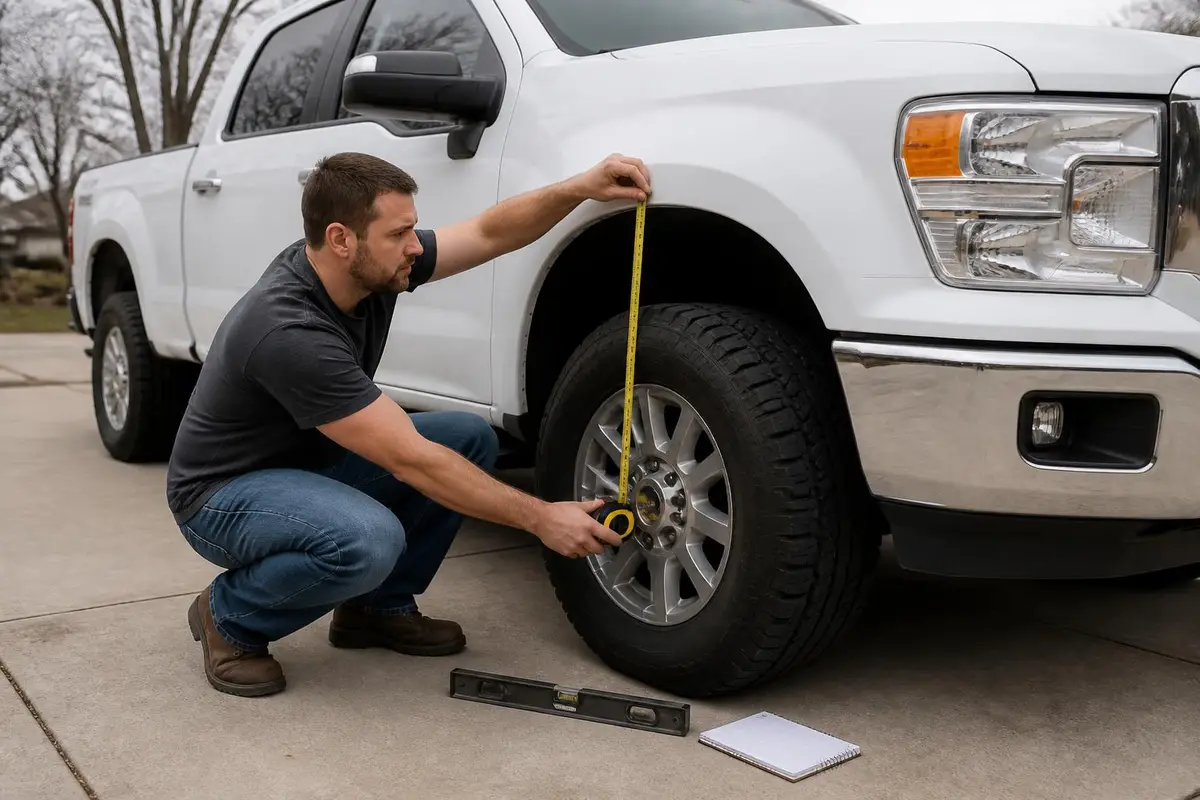
MaxTrac Suspension says most modern trucks leave the factory with about 2 to 3 inches of rake — the rear sitting higher than the front — and most SUVs with about 1 to 2 inches. Some single-cab trucks have up to 4 inches, and certain heavy-duty trucks, such as 2003–2008 Ram 2500/3500 models, 4 to 6 inches. The reason is load: trucks are built to carry payload and tow, and the extra rear height lets the truck settle to level when weight goes in the bed or on the hitch. Without it, MaxTrac says, the rear would squat, and headlight aim, braking and handling could suffer. That is the trade-off a leveling kit makes: Rough Country notes that if you remove most of the rake and then load the bed or hook up a trailer, the rear may sit lower than the front.
Leveling Kits: How They Work
A leveling kit raises only the front, commonly about 1 to 2.5 inches. Rough Country says its leveling kits use strut spacers, loaded struts, coil spacers or torsion-bar components depending on the truck, which is why two kits labeled "2-inch" don't always work the same way. Its 2-inch kit for the 2019–2026 Silverado and Sierra 1500, for example, is an upper-strut spacer, and it is not listed for the AT4, AT4X, Trail Boss or ZR2 because those trims already carry a 2-inch factory lift.
Spacers have a cost. Bilstein says a spacer adds length to the assembled shock, which reduces suspension travel and changes where the shock bottoms out — so the shock can bottom before the bump stop engages, which damages it — and that spacers can hurt suspension geometry. Its recommended alternative is a ride-height-adjustable shock such as the B8 5100, 6112 or 8112, which keeps the needed shock travel. See what is a leveling kit and spacer lifts.
Full Lift Kits: What Changes With Height
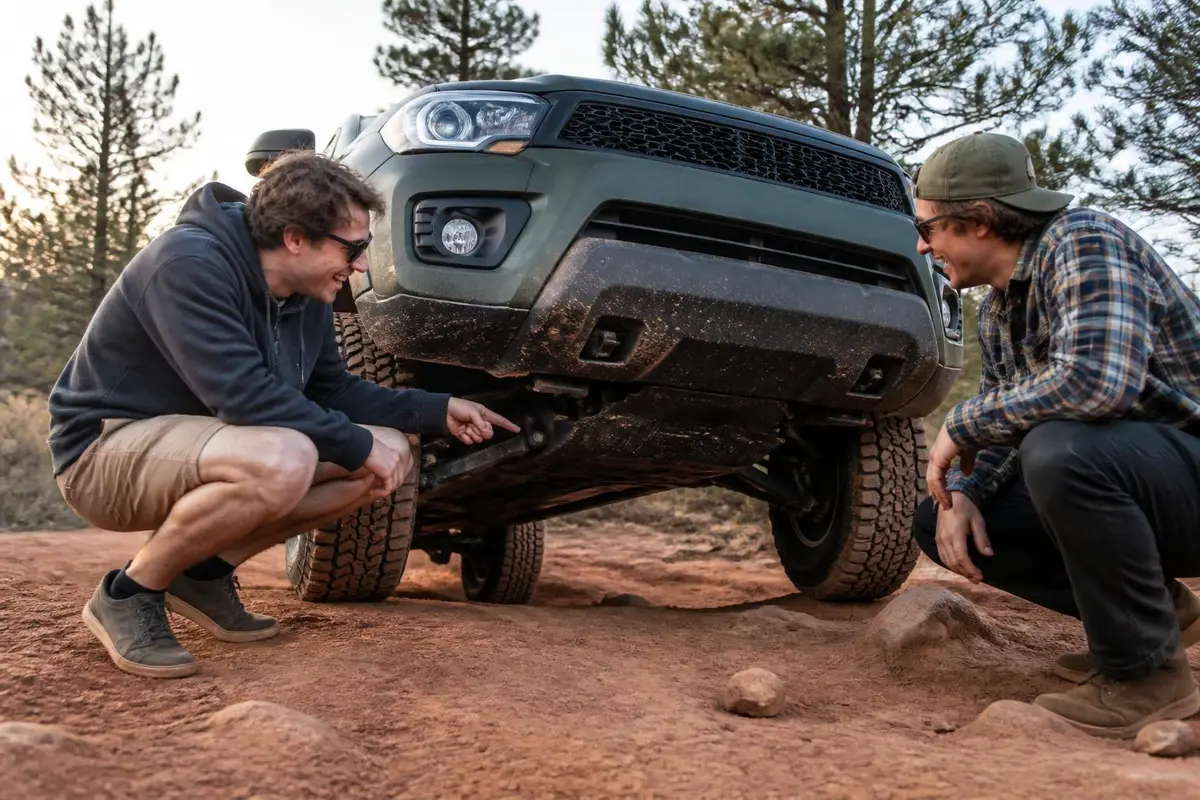
A suspension lift raises the vehicle by changing or repositioning suspension parts. Rough Country says smaller lifts may use springs, struts, spacers, shocks or control arms, while taller kits add crossmembers, knuckles, brackets, differential drops or blocks to keep suspension and steering geometry where it needs to be. Two of its independent-front-suspension kits show how the parts list grows:
| Kit | Lift | Key parts | Maker-listed tire fit | Install estimate |
|---|---|---|---|---|
| Rough Country 3.5" — Silverado 1500 (2019–2024) | 3.5 in. front, 2.5 in. rear | Lifted struts, forged aluminum upper control arms | Up to 295/55R20 | 5–6 hours; strut compressor needed |
| Rough Country 3.5" knuckle lift — Silverado/Sierra 2500HD/3500HD (2011–2019) | 3.5 in. | Steel knuckles, forged torsion-bar keys, forged upper control arms, differential drop spacers | 33-in. tires with proper backspacing | 4–6 hours |
There's no universal height-to-tire rule. Rough Country gives F-150 examples — about 2 inches of lift for some 33-inch combinations and about 6 inches for certain 35-inch combinations — and says fitment depends on drivetrain, trim, wheel width, offset, backspacing, tire width and trimming. Its advice is to pick the tire first and work back to the lift. Solid-axle and independent-front trucks lift differently; see solid axle vs IFS and aftermarket upper control arms.
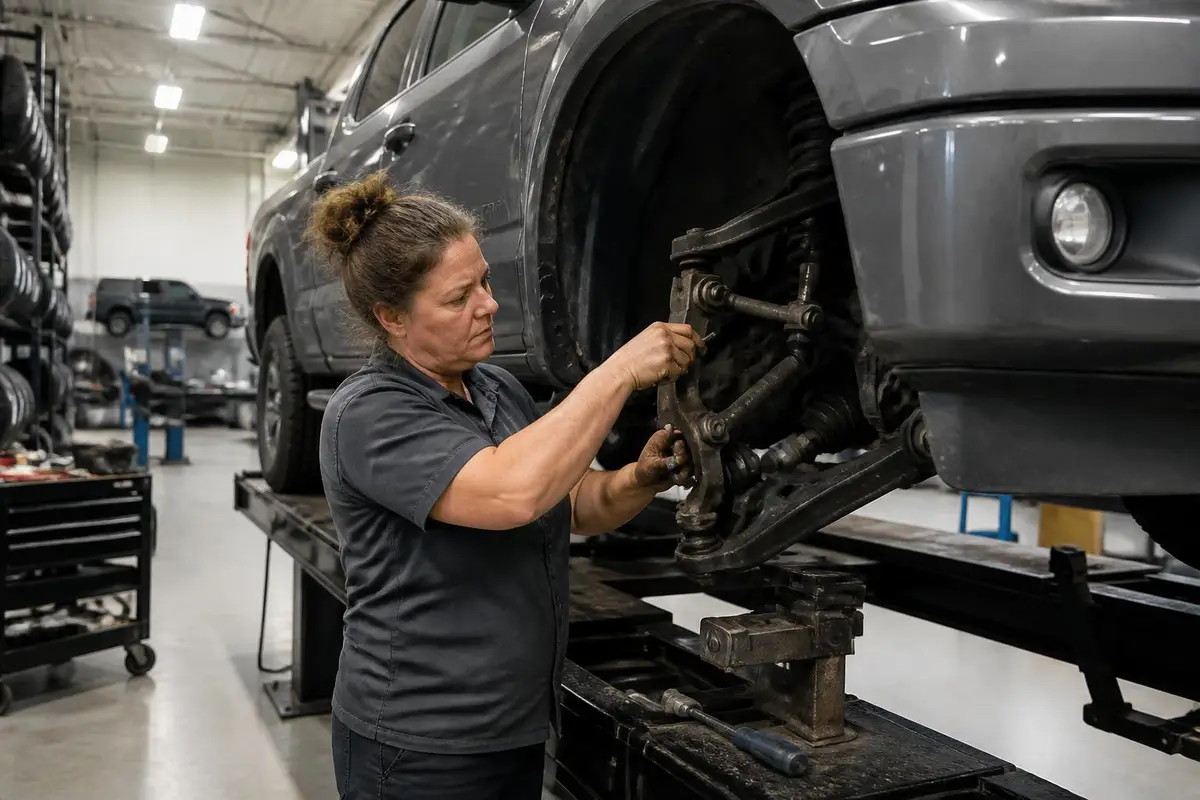
Torsion Bars vs Coil Springs Up Front
Some independent-front-suspension trucks use torsion bars instead of front coil springs. GM's 2011–2019 Silverado and Sierra 2500HD/3500HD are an example: Rough Country's kit for them uses forged torsion-bar keys and recommends a torsion-bar removal tool. On torsion-bar trucks, leveling is done by re-indexing the bar with new keys rather than adding a spacer on top of a strut. Coil-over-strut trucks such as the current Silverado 1500 use strut spacers, loaded struts or replacement struts instead.
Spring Rate and Ride Quality
Spring rate is the force needed to compress a spring by a set distance, usually quoted in pounds per inch. It sets how firm the truck rides, separately from how tall it sits. Lift springs are often stiffer than stock; RalliTEK, for example, lists its Crosstrek Wilderness lift springs at 190 lb/in front and 260 lb/in rear, 20% and 30% above factory. Rough Country says spacer-style leveling keeps more of the factory suspension in place, and that heavier wheels and more aggressive tires added at the same time can change road feel, steering weight and noise on their own. Match the spring rate to how the truck is loaded day to day.
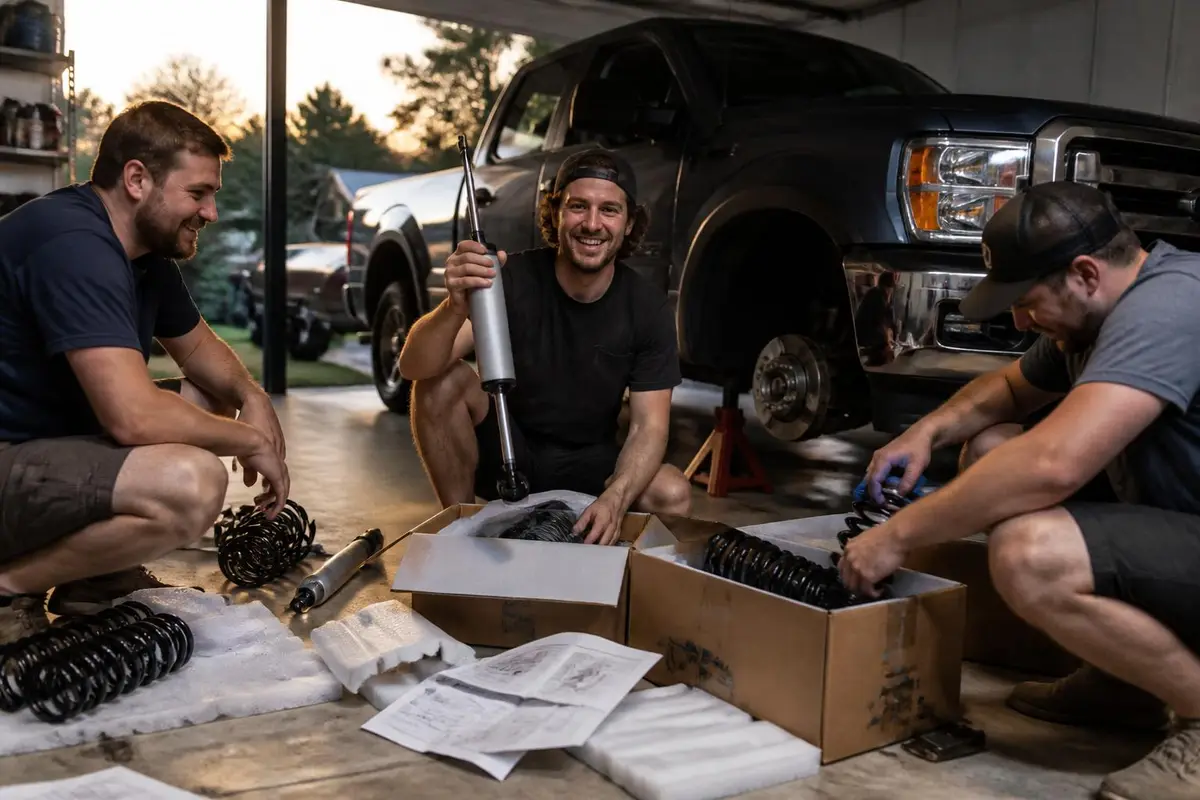
Shock Length and Travel After a Lift
A shock's extended and compressed lengths have to match the new ride height. Reusing a stock-length shock, or adding a spacer above it, moves the shock's working range: Bilstein's point is that the shock then bottoms before the bump stop and loses travel. Lift-specific or height-adjustable shocks restore the travel at the new height. See best off-road shocks for how the main brands compare.
Driveline and CV Angles
Raising ride height increases suspension travel and operating angles, Rough Country says, so before a lift check brake-line length and routing, ABS sensor wire slack, driveshaft angle and CV axle angle. Spicer gives the targets for U-joints: operating angles of 3 degrees or less for vibration-free performance, and the angles at each end of a driveshaft equal within 1 degree, or within half a degree for shafts in front of a transfer case. Above 3 degrees, Spicer says, U-joint life drops and vibration may start. On independent-front trucks, taller kits use knuckles and differential drops — Rough Country says its HD kit's knuckles and diff drops reduce CV bind.
Installation, Alignment and Re-Torque
Rough Country's install-prep guidance lists the steps: review both the factory and the kit torque specs, verify every part against the instructions before teardown, schedule an alignment immediately after installation — at a shop experienced with lifted vehicles for lifts of 4 inches or more — and re-torque after break-in. It warns that improper torque is a leading cause of suspension noise and hardware failure, and that skipping the alignment leads to uneven tire wear, steering pull and reduced stability.
Death Wobble on Solid-Axle Trucks
Death wobble is a violent, uncontrolled oscillation of the front wheels on a solid front axle, usually at speed. Thuren Fabrication, which builds Ram suspension parts, describes the trigger as one tire hitting a bump before the other — an angled bridge, railroad tracks or a pothole — which loads the track bar in tension and compression and lets the axle shift side to side. It names soft or poorly designed track-bar bushings as the main culprit on 1994–2013 Rams and says worn ball joints and tie rods should be fixed first. A properly positioned steering damper can counter the caster forces but does not replace the worn parts. More in what is death wobble.
Ratings, Warranty and Height Laws
A lift changes nothing on the door label. Rough Country notes that suspension height does not raise the manufacturer's tow or payload rating, and federal standards define GVWR as the manufacturer's value for the loaded weight of the vehicle. On warranty, the FTC says a warranty stays in effect when aftermarket parts are used, and the manufacturer must show the aftermarket part caused a failure before denying coverage; the Magnuson-Moss Warranty Act, 15 U.S.C. § 2302(c), bars conditioning a warranty on brand-name parts.
Some states limit how tall a vehicle can sit. California Vehicle Code § 24008.5, for example, caps frame height, measured midway between the axles with the vehicle unladen, at 27 inches for vehicles up to 4,500 lb GVWR, 30 inches for 4,501–7,500 lb and 31 inches for 7,501–10,000 lb, and it limits the body floor to 5 inches above the top of the frame. Rough Country also lists center of gravity, braking feel and steering feel among the things that change as a truck gets taller. Check your own state's code before choosing a height.
How to Choose a Leveling or Lift Kit
Pick the tire size first, then find the lowest lift that fits it on your exact truck. Decide whether you need to keep rake for towing. Prefer kits that correct geometry — control arms, knuckles or drops — over spacers alone as height goes up, and budget for the alignment. Every kit on this hub is compared on its maker's stated lift height, included geometry parts and fitment notes, alongside owner-reported ride quality; we don't buy, install or test suspension kits ourselves — see how we rank.
Sources
- MaxTrac Suspension — Understanding Factory Rake — Most trucks have 2–3 in. of rake and SUVs 1–2 in.; some single cabs up to 4 in.; 2003–2008 Ram 2500/3500 4–6 in.; rake lets the truck settle level under payload and towing.
- Rough Country — Lift Kit vs. Leveling Kit — Leveling kits about 1–2.5 in., lift kits about 2–6 in. or more; leveling designs (strut spacers, loaded struts, coil spacers, torsion-bar parts); taller kits add knuckles, crossmembers, differential drops; F-150 tire examples; pick the tire first; lifts don't raise tow or payload ratings; leveling can leave the rear low when loaded; what changes as trucks get taller.
- Rough Country — How to Prep for a Lift Kit Install — Lifts change geometry, steering angles and alignment; improper torque causes noise and failures; schedule alignment immediately, experienced shop for 4 in. or more; check brake lines, ABS wire slack, driveshaft and CV angles; re-torque after break-in.
- Rough Country — 2" Leveling Kit, Silverado/Sierra 1500 (2019–2026) — Upper-strut spacer design; not for AT4, AT4X, Trail Boss or ZR2, which have a 2-in. factory lift.
- Rough Country — 3.5" Lift Kit, Silverado 1500 (2019–2024) — 3.5 in. front, 2.5 in. rear; forged aluminum upper control arms for correct geometry; up to 295/55R20; 5–6 hours with a strut compressor.
- Rough Country — 3.5" Knuckle Lift, Silverado/Sierra 2500HD/3500HD (2011–2019) — Steel knuckles, forged torsion-bar keys, forged upper control arms, differential drops to reduce CV bind; 33-in. tires; 4–6 hour install; torsion-bar removal tool recommended.
- Bilstein Academy — Spacer Kits vs Ride Height Adjustable Shocks — Spacers reduce travel and change where the shock bottoms (before the bump stop), can hurt geometry; adjustable shocks such as the B8 5100, 6112 and 8112 are the recommended leveling solution.
- RalliTEK — 2" Suspension Lift Kit, 2024–2026 Crosstrek Wilderness — Example lift spring rates of 190 and 260 in-lb, 20% and 30% over OEM.
- Spicer (Dana) — Driveline Operating Angle Calculator — U-joint operating angles of 3° or less; equal within 1° at each end (½° in front of transfer cases); above 3° lowers U-joint life and may cause vibration.
- Thuren Fabrication — Death Wobble Explained — Death wobble definition and triggers; track bar bushings as the main cause on 1994–2013 Rams; fix worn ball joints and tie rods first; steering damper counters caster forces.
- FTC Consumer Advice — Auto Warranties and Auto Service Contracts — Warranty stays in effect with aftermarket parts; maker must prove the part caused the damage before denying coverage.
- Cornell LII — 15 U.S.C. § 2302 (Magnuson-Moss) — Subsection (c) bars conditioning a warranty on using a brand-name article or service.
- eCFR — 49 CFR § 571.3 (FMVSS definitions) — GVWR is the manufacturer's value for the vehicle's loaded weight.
- California Legislative Information — Vehicle Code § 24008.5 — Maximum frame heights of 27, 30 and 31 in. by GVWR band; body floor no more than 5 in. above the frame; how frame height is measured.
- Rancho — Solid Axle vs Independent Front Suspension — Background on solid-axle and independent front suspension layouts.