
Vehicle Emergency Kit Checklist

TL;DR
- NHTSA's vehicle kit: jumper cables, a flashlight, flares or emergency markers, a first-aid kit with a tourniquet, a phone and charger, water, food and medicine.
- Carry three reflective triangles; the federal rule for trucks places them about 10 feet, 100 feet behind and 100 feet ahead within 10 minutes of stopping.
- A B:C fire extinguisher covers fuel and electrical fires (5 B:C is the minimum for commercial trucks); an ABC unit adds ordinary combustibles. Mount it securely.
- Inflate to the door-jamb pressure, not the sidewall maximum, and check all tires, including the spare, at least monthly.
- Replace expired items and review the kit once a year, as Ready.gov advises.
This is the kit that stays in the vehicle all year, for a breakdown, a flat, a minor collision or a long wait for help. It is built from NHTSA and Ready.gov kit lists, with the federal truck rules for warning triangles and fire extinguishers as a benchmark. Our Winter Car Emergency Kit adds the cold-weather items on top of it.
What NHTSA and Ready.gov Say to Carry
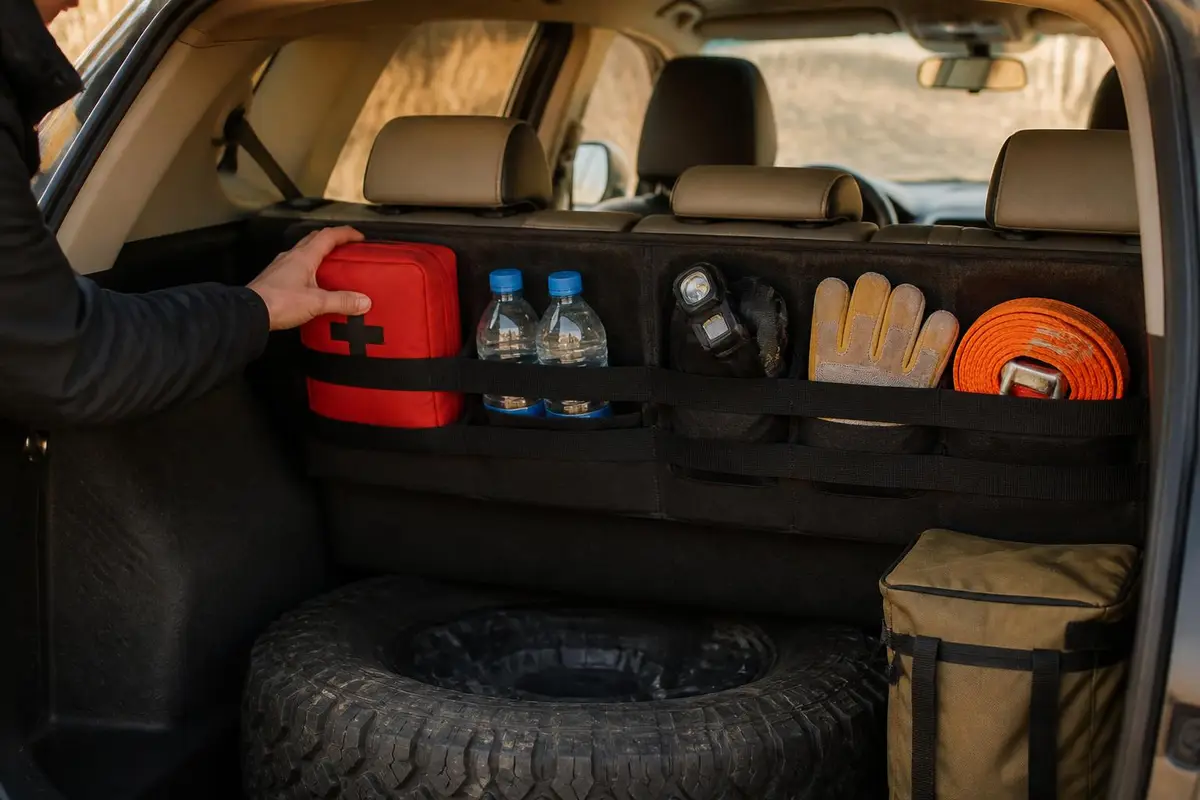
NHTSA's vehicle list covers jumper cables, a flashlight, warning devices such as flares and emergency markers, a first-aid kit that includes a tourniquet, a cell phone and charger, water, food and any necessary medicine. Ready.gov's car kit adds reflective triangles, a car phone charger, a blanket, a map and cat litter or sand for traction. Most of these items matter all year: a dead battery, a flat or a crash doesn't wait for winter. This checklist keeps those year-round items and moves the snow-specific ones to the winter kit.
Warning Triangles: How Many and Where
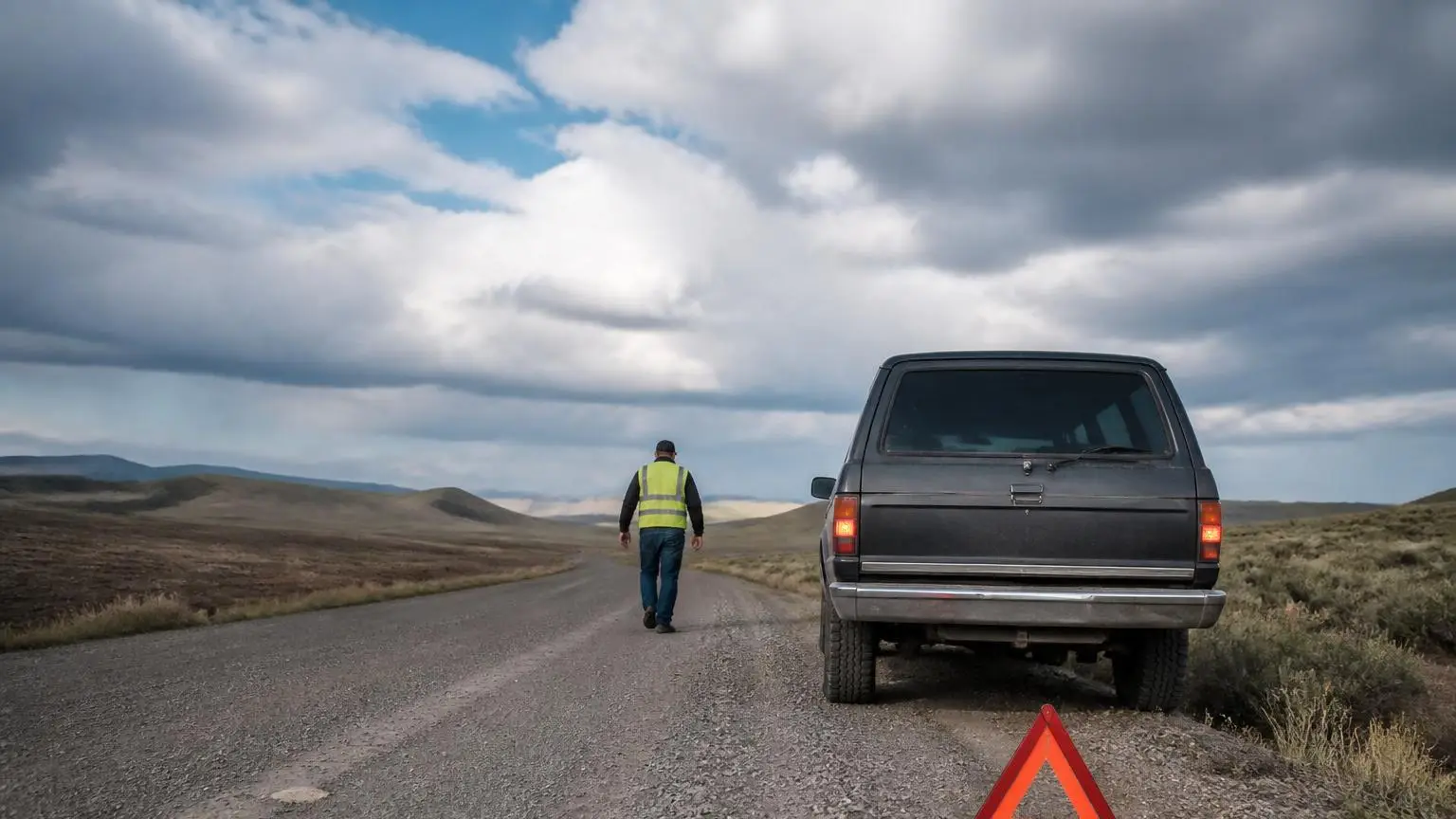
No federal rule sets triangle placement for private cars, but the rule for commercial trucks is a useful guide. Under 49 CFR 392.22, a truck driver who stops on a highway or shoulder must turn on the hazard flashers at once and set out warning devices within 10 minutes. On a two-lane road, one goes about 10 feet (4 paces) from the vehicle on the traffic side, one about 100 feet (40 paces) behind, and one about 100 feet ahead. Near a hill, curve or other obstruction within 500 feet, a triangle goes 100 to 500 feet back so approaching drivers see it in time. Trucks must carry three triangles that meet Federal Motor Vehicle Safety Standard 125, which is why three is the number to pack.
Fire Extinguisher Ratings Explained
The label on an extinguisher tells you what it can put out and how much. OSHA explains the numbers: each unit before the "A" equals 1.25 gallons of water on ordinary combustibles, and the number before the "B" is the square footage of flammable-liquid fire a non-expert should be able to extinguish. "C" has no number and means the agent is safe on energized electrical equipment. A 5 B:C unit, the FMCSA minimum for commercial trucks, is rated for about 5 square feet of fuel or oil fire. The U.S. Fire Administration's PASS method applies in a vehicle too: pull the pin, aim low at the base of the fire, squeeze slowly and sweep side to side. Use it only on a small fire with a clear escape route; otherwise get everyone away and call 911.
Tires and the Spare
NHTSA's tire guidance explains why the gauge and spare are on this list. The correct pressure is on the Tire and Loading Information label on the driver's door edge or post, not the maximum molded on the sidewall, and it should be checked cold, after the vehicle has sat for at least three hours. NHTSA recommends inspecting tires, including the spare, at least once a month and before long trips, and says tread should be at least 2/32 inch deep. A jack and lug wrench only help if they fit the wheels on the vehicle now, so check them after any wheel or tire change.
How to Use This Checklist
Work through roadside basics first, then communication and documents, then first aid and supplies. Ticks save in your browser, and Reset checklist clears them when you re-check the kit. Ready.gov advises replacing expired items and reviewing a kit once a year.
If You Break Down
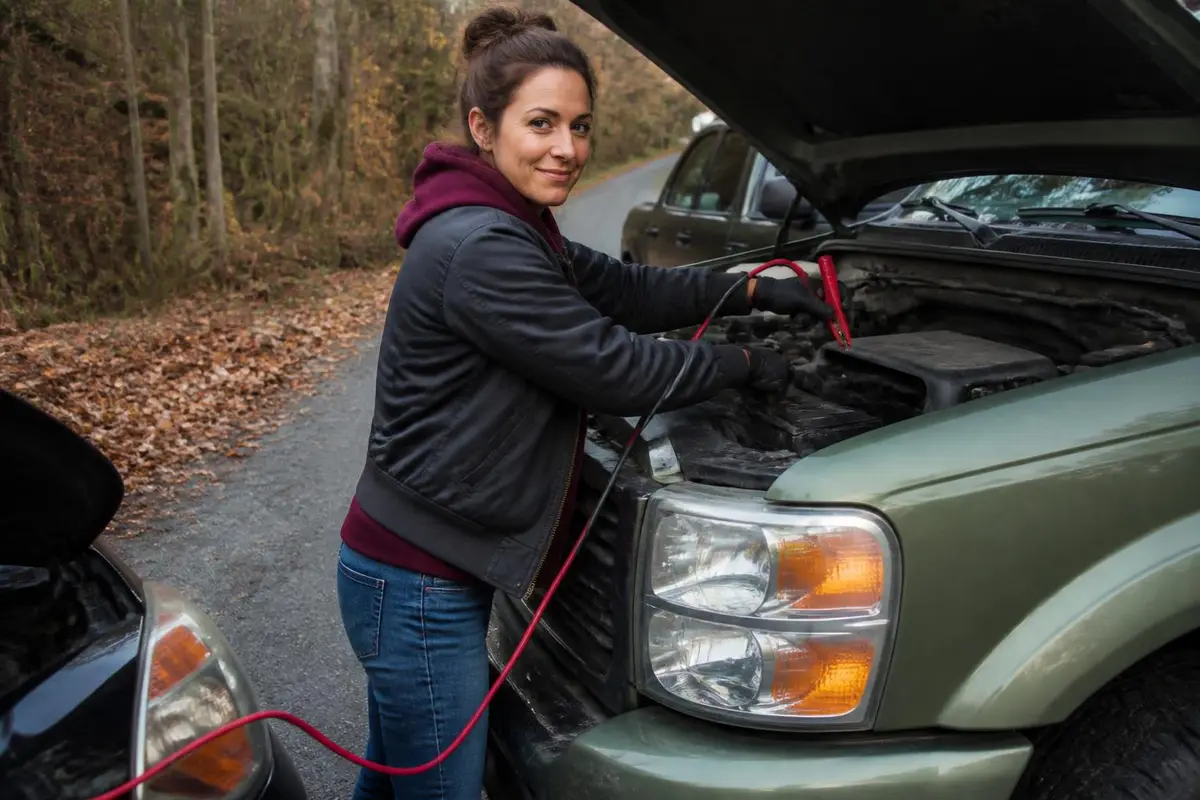
Get as far off the traffic lane as you safely can, turn on the hazard flashers and set out the triangles. Stay out of the live lane while you wait or work. If you're sitting with the engine running, make sure the exhaust isn't blocked; the CDC lists headache, dizziness, weakness, nausea and confusion as the common symptoms of carbon monoxide poisoning. Our pre-trip checklist covers the inspections that catch many of these problems before a trip.
Roadside basics
Communication & documents
First aid & supplies
Seasonal add-ons
Ticks are saved only in your browser on this device; never sent to us.
Get the Printable Checklist Pack
Leave your email and we'll add you to the list for the full printable checklist pack when it's ready. No spam, unsubscribe any time.
Recommended gear
A first recovery kit for any 4WD
Affiliate disclosure: As an Amazon Associate, we earn from qualifying purchases, at no extra cost to you. We research rather than test, and commissions never change our rankings. This site is reader-supported: those commissions pay for hosting, research and keeping every guide up to date, so if a guide helped you, buying through our links is an easy way to support it. How we rank · Full disclosure

Best for a complete strap, shackle and glove kit in one bag.
- Straps, shackles, gloves, damper and a recovery bag in one kit.
- Covers most vehicle-to-vehicle recoveries without buying parts separately.

Best for getting unstuck from sand, mud or snow without another vehicle.
- Nylon recovery boards that give spinning tires grip in sand, mud or snow.
- Double as a shovel to clear sand from in front of the tires.

Best for airing all four tires down to a set pressure at once.
- Automatic deflators preset between 6 and 30 PSI.
- Air all four tires down at once, then stop at the set pressure.

Best for airing back up before you hit pavement.
- Portable 12V compressor rated to 150 PSI.
- Sized for truck and SUV tires.
We research products from manufacturer specs and owner feedback; we don't test them ourselves. How we choose.
FAQ
Is this different from the Winter Car Emergency Kit?
Yes. This is the year-round base kit for a breakdown or roadside incident. The Winter Car Emergency Kit adds what NHTSA and the National Weather Service list for cold weather: a shovel, an ice scraper and brush, sand or cat litter for traction, and extra blankets and warm clothing.
What fire extinguisher rating should a car carry?
There is no federal rule for private cars. For commercial trucks, the FMCSA requires an extinguisher rated at least 5 B:C (10 B:C when hauling hazardous materials), securely mounted and readily accessible, and that is a sensible benchmark. B covers flammable liquids such as fuel and oil and C covers energized electrical equipment. An ABC multipurpose unit, which the U.S. Fire Administration recommends for homes, adds ordinary combustibles like upholstery.
Where should I store the kit?
Somewhere you can reach without unloading the cargo area, and tied down so it can’t slide or become a projectile in a crash or on rough ground. Mount the extinguisher; the federal truck rule requires it to be secured against sliding, rolling or vertical movement.
How often should I check the kit?
Ready.gov advises replacing expired items and rethinking your kit every year. Check the extinguisher’s pressure gauge, recharge a jump pack, and check the spare’s pressure when you check the other four tires, which NHTSA recommends doing at least once a month.
Sources
- NHTSA — Winter Weather Driving Tips — NHTSA's vehicle kit list: jumper cables, flashlight, flares and emergency markers, first-aid kit including a tourniquet, blankets, phone and charger, water, food and medicine; inspect tires monthly; tread at least 2/32 inch.
- Ready.gov — Car Safety — Ready.gov's car kit: jumper cables, flares or reflective triangle, ice scraper, car phone charger, blanket, map, cat litter or sand.
- Ready.gov — Build a Kit — Replace expired items and re-think the kit every year.
- NHTSA — Tires (TireWise) — Recommended pressure is on the Tire and Loading Information label on the driver's door, not the sidewall maximum; check tires cold (parked at least three hours), including the spare.
- 49 CFR § 392.22 — Emergency signals; stopped commercial motor vehicles (via Cornell LII) — Hazard flashers immediately; warning devices within 10 minutes at about 10 ft, 100 ft behind and 100 ft ahead; 100–500 ft back near hills, curves or obstructions within 500 ft.
- 49 CFR § 393.95 — Emergency equipment on all power units (via Cornell LII) — Commercial trucks: fire extinguisher rated at least 5 B:C (10 B:C for hazardous materials), securely mounted and readily accessible; three reflective triangles meeting FMVSS 125.
- OSHA — Portable Fire Extinguishers: Extinguisher Basics — The number before A equals 1.25 gallons of water per unit; the number before B is the square footage of flammable-liquid fire a non-expert should be able to put out; C is for energized electrical equipment.
- U.S. Fire Administration — Choosing and Using Fire Extinguishers — PASS technique; fight only a small, contained fire with a clear escape route; multipurpose A-B-C units for home use; check the pressure gauge.
- CDC — Carbon Monoxide Poisoning Basics — Common CO poisoning symptoms: headache, dizziness, weakness, upset stomach, vomiting, chest pain and confusion.