Recovery Kit Checklist

Affiliate disclosure: As an Amazon Associate, we earn from qualifying purchases, at no extra cost to you. We research rather than test, and commissions never change our rankings. This site is reader-supported: those commissions pay for hosting, research and keeping every guide up to date, so if a guide helped you, buying through our links is an easy way to support it. How we rank · Full disclosure
Quick answer: A recovery kit is only as good as its weakest-rated component — a $200 kinetic rope clipped to an unrated bumper mount is still an unrated recovery. This list is built around Working Load Limit (WLL) matching every piece to your vehicle’s weight, not just "buying the popular stuff." Run your GVWR through the WLL calculator below before buying anything rated.
Build Around Working Load Limit, Not Brand Names
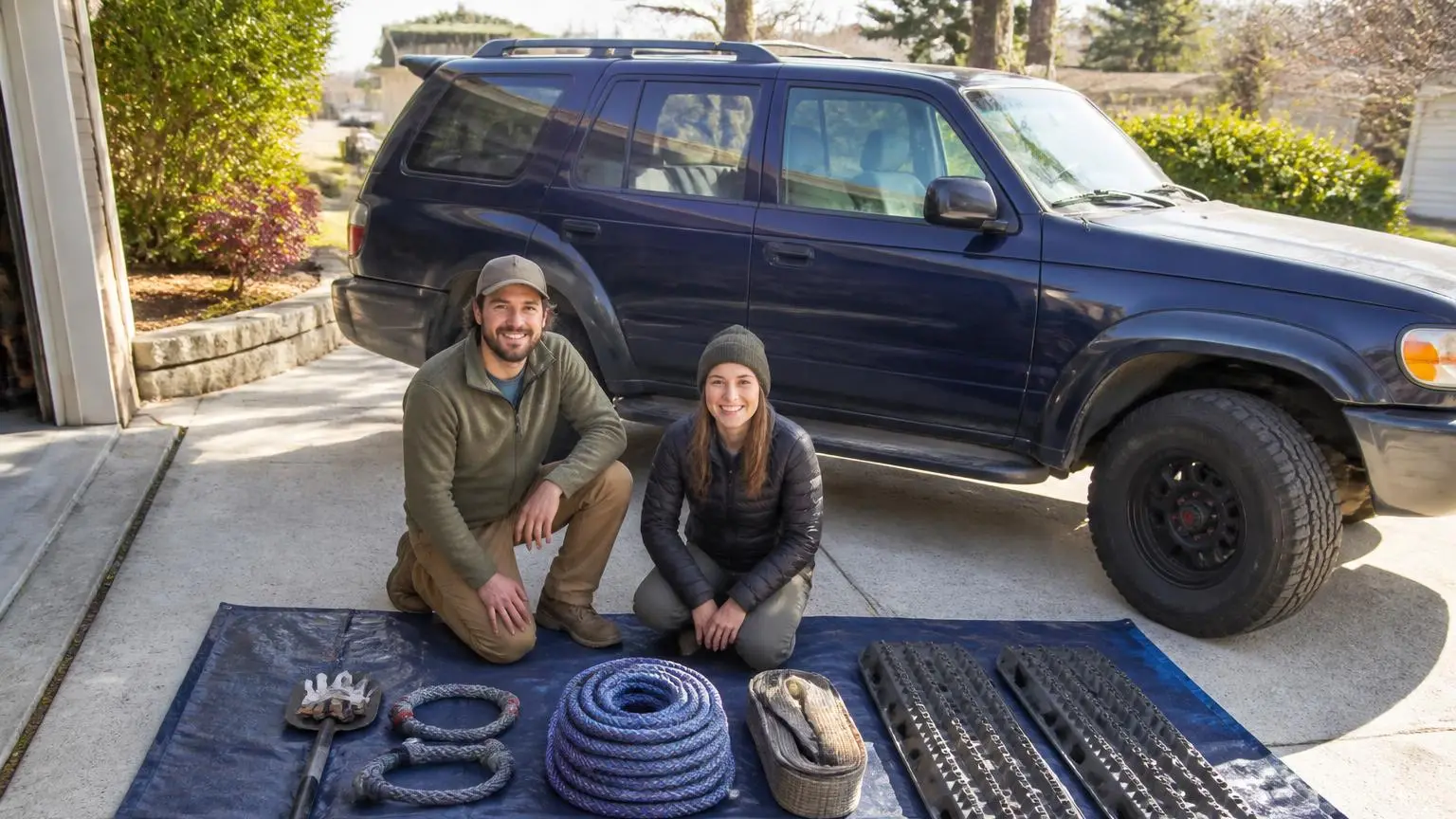
The single biggest mistake in a homemade recovery kit is buying rated gear piece by piece without ever checking that every piece is rated for the same load. A rope, a shackle and a recovery point each have their own WLL — the kit's real, usable capacity is whichever component is rated lowest, not the average or the strongest piece. Before adding anything to your kit, run your vehicle's GVWR through the recovery-gear rating calculator linked in this checklist to see the WLL range you actually need.
Rope vs. Strap vs. Winch: Know Which Tool Is Which
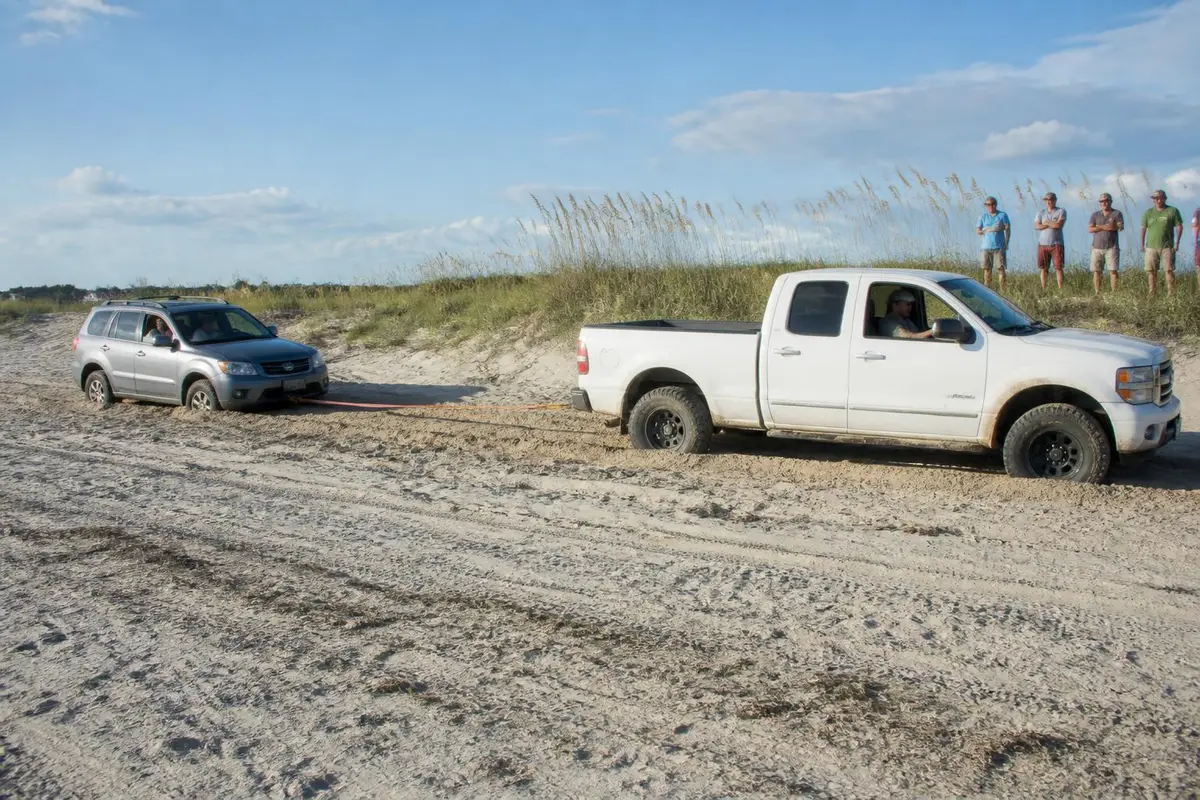
A kinetic recovery rope stretches under load and releases that stored energy to "jerk" a stuck vehicle free — it is not a towing device. A static tow strap has almost no stretch and is meant for controlled, low-speed towing, not a dynamic recovery. A winch lets a single vehicle recover itself using a fixed anchor, which matters most for solo travel or genuinely remote routes where a second vehicle may not be available. Carrying the wrong one of these for the situation you actually face is a common and avoidable gap.
Protecting the Anchor and Yourself
A tree-saver strap protects whatever you're anchoring to — required at many public-land sites specifically to prevent bark damage — and a rope damper thrown over a loaded line reduces the risk if a component fails under tension. Both are inexpensive, low-weight additions that matter far more than their price suggests the one time a line actually lets go.
Working Load Limit, Worked
ASME B30.9, the rigging standard the WLL concept comes from, defines Working Load Limit as the maximum load a piece of rigging is designed to handle under normal use — already a fraction of what it would take to actually break the component, not the breaking point itself. Recovery-gear makers commonly recommend sizing a kinetic rope or strap's minimum breaking strength to roughly two to three times the vehicle's actual weight, since the point of a rated rope is to stretch and absorb energy, not to be loaded anywhere near its limit on a routine pull. A worked example: a 6,000 lb loaded truck calls for connection points, shackles and a rope each rated at or above that 6,000 lb figure at minimum, with the rope's breaking strength ideally in the 12,000–18,000 lb range — and the kit's real capacity is whatever single component in that chain is rated lowest, not the average of the pieces.
Rated connection points
Rope, straps & winch

Traction & digging
Safety & protection
Ticks are saved only in your browser on this device; never sent to us.
Get the Printable Checklist Pack
Leave your email and we'll add you to the list for the full printable checklist pack when it's ready. No spam, unsubscribe any time.
Recommended gear
Core recovery gear
Affiliate disclosure: As an Amazon Associate, we earn from qualifying purchases, at no extra cost to you. We research rather than test, and commissions never change our rankings. This site is reader-supported: those commissions pay for hosting, research and keeping every guide up to date, so if a guide helped you, buying through our links is an easy way to support it. How we rank · Full disclosure

Best for a complete strap, shackle and glove kit in one bag.
- Straps, shackles, gloves, damper and a recovery bag in one kit.
- Covers most vehicle-to-vehicle recoveries without buying parts separately.

Best for getting unstuck from sand, mud or snow without another vehicle.
- Nylon recovery boards that give spinning tires grip in sand, mud or snow.
- Double as a shovel to clear sand from in front of the tires.

Best for vehicle-to-vehicle snatch recoveries.
- 1 in x 30 ft kinetic rope that stretches to ease a stuck vehicle out.
- Gentler on recovery points than a static tow strap.
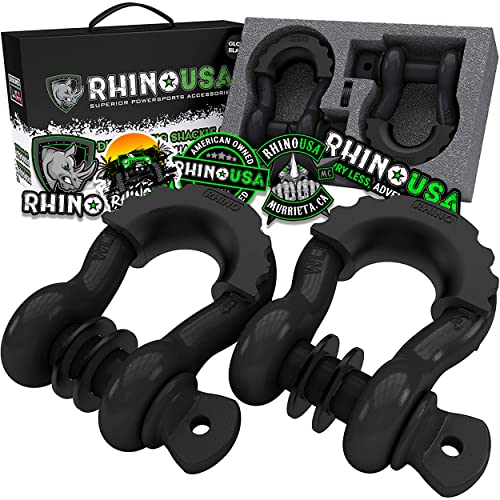
Best for rated connection points for straps and ropes.
- 3/4 in D-ring shackles, 41,850 lb listed break strength (2-pack).
- Connect straps to rated recovery points.
We research products from manufacturer specs and owner feedback; we don't test them ourselves. How we choose.
FAQ
What is Working Load Limit (WLL) and why does it matter for a recovery kit?
WLL is the maximum load a piece of rated recovery gear is designed to handle safely, including a margin below its actual breaking strength. A recovery kit is only as strong as its weakest rated link — a strong kinetic rope clipped to an unrated shackle or a bumper’s shipping tie-down point is still an unrated, unsafe recovery. Use the recovery-gear rating calculator to match every piece to your vehicle’s actual weight.
Is a kinetic rope the same as a tow strap?
No. A kinetic rope is designed to stretch and store energy for a "jerk" recovery of a stuck vehicle; a tow strap is a static, low-stretch strap meant for controlled towing at low speed. Using one in place of the other is a common and preventable mistake.
Do I need a winch if I already carry a kinetic rope?
Not always — it depends on where and how you drive. A kinetic rope needs another vehicle to perform the recovery; a winch lets a single vehicle self-recover, which matters if you frequently travel alone or in genuinely remote areas with no other vehicles nearby.
Sources
- ASME B30.9 — Slings (rigging/WLL standard reference) — Working Load Limit concept underlying the recovery-gear rating calculator and the worked WLL example on this page.
- U.S. Forest Service — Motorized Recreation Safety — General recovery and trail-safety guidance for motorized off-highway travel on federal land.
- ARB — Getting Started: Recovery Techniques and Equipment — Recommendation that a kinetic strap's minimum breaking strength be roughly two to three times the vehicle's gross weight, used in the worked WLL example.
- WARN Industries — Determine the Right Winch Capacity for Your Truck or SUV — GVWR-based sizing approach referenced alongside the WLL worked example.
- 49 CFR § 567.4 — Requirements for manufacturers of motor vehicles (via Cornell LII) — The GVWR certification label used to size recovery gear against the vehicle's actual rated weight.