

Affiliate disclosure: As an Amazon Associate, we earn from qualifying purchases, at no extra cost to you. We research rather than test, and commissions never change our rankings. This site is reader-supported: those commissions pay for hosting, research and keeping every guide up to date, so if a guide helped you, buying through our links is an easy way to support it. How we rank · Full disclosure
TL;DR
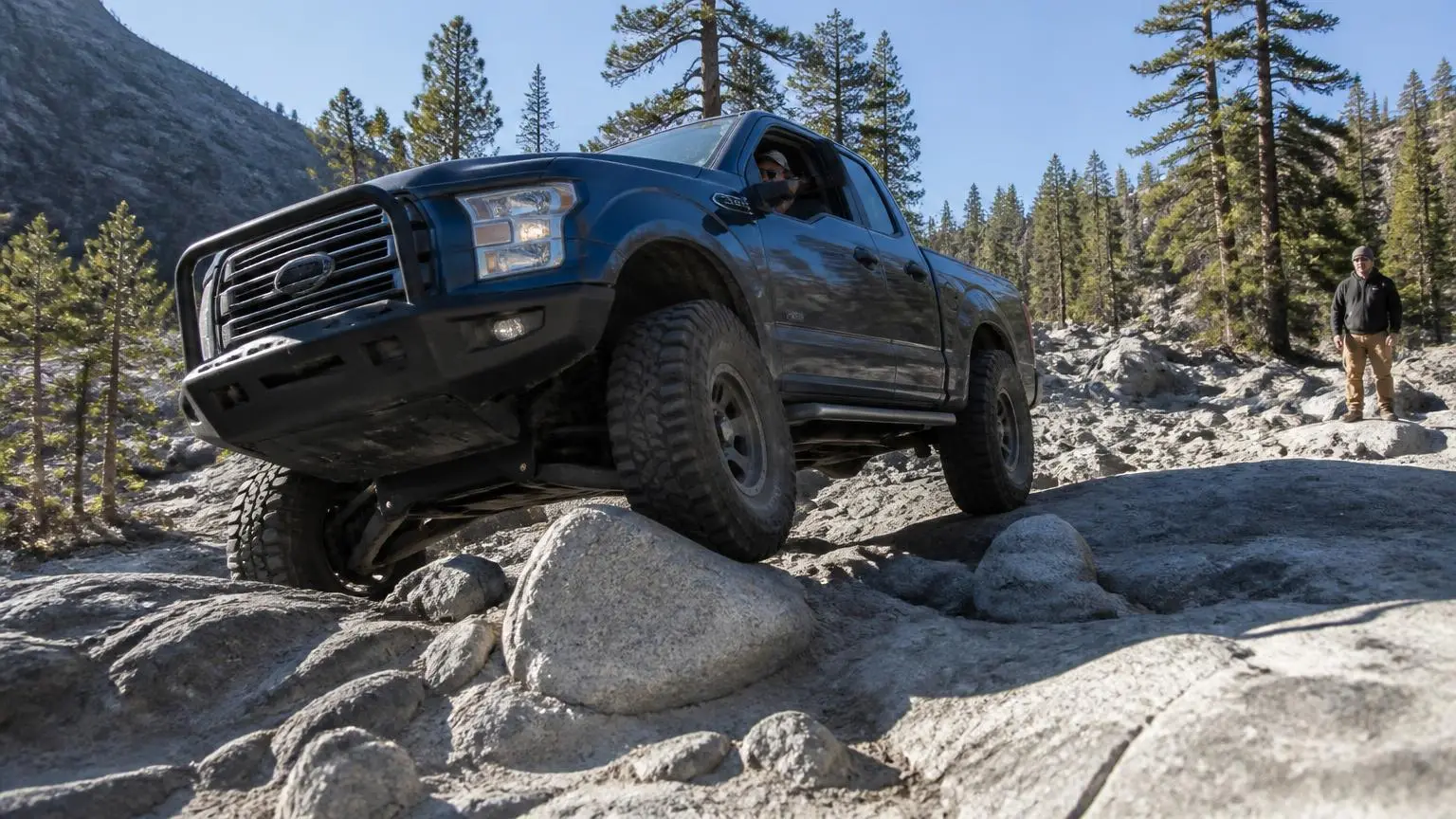
- A bumper's off-road value is clearance at the front corners, rated recovery points and a winch mount. Tire size moves approach angle too (Bronco: 35.5° base, 43.2° on 35-inch tires).
- Steel front bumpers are heavy. ARB lists about 110 lb for its Bondi Stubby (Jeep JL) and 176 lb for its Summit MKII (Tacoma).
- Steel skid plates are commonly 3/16 inch. A square foot of that weighs about 7.7 lb; 1/4-inch aluminum weighs about 3.5 lb.
- Rock sliders are built to carry the vehicle's weight on an obstacle. Steps are built for stepping.
- Check fitment by year and trim, and against cameras, parking sensors and adaptive cruise. Some bumpers don't support them.
At a Glance
| Part | What it protects or adds | What to check |
|---|---|---|
| Front bumper | Front corners, winch mount, recovery points | Weight, rated recovery points, winch size, sensor and camera compatibility |
| Rear bumper | Rear corners, spare carrier, hitch | Departure clearance with the spare fitted, recovery points |
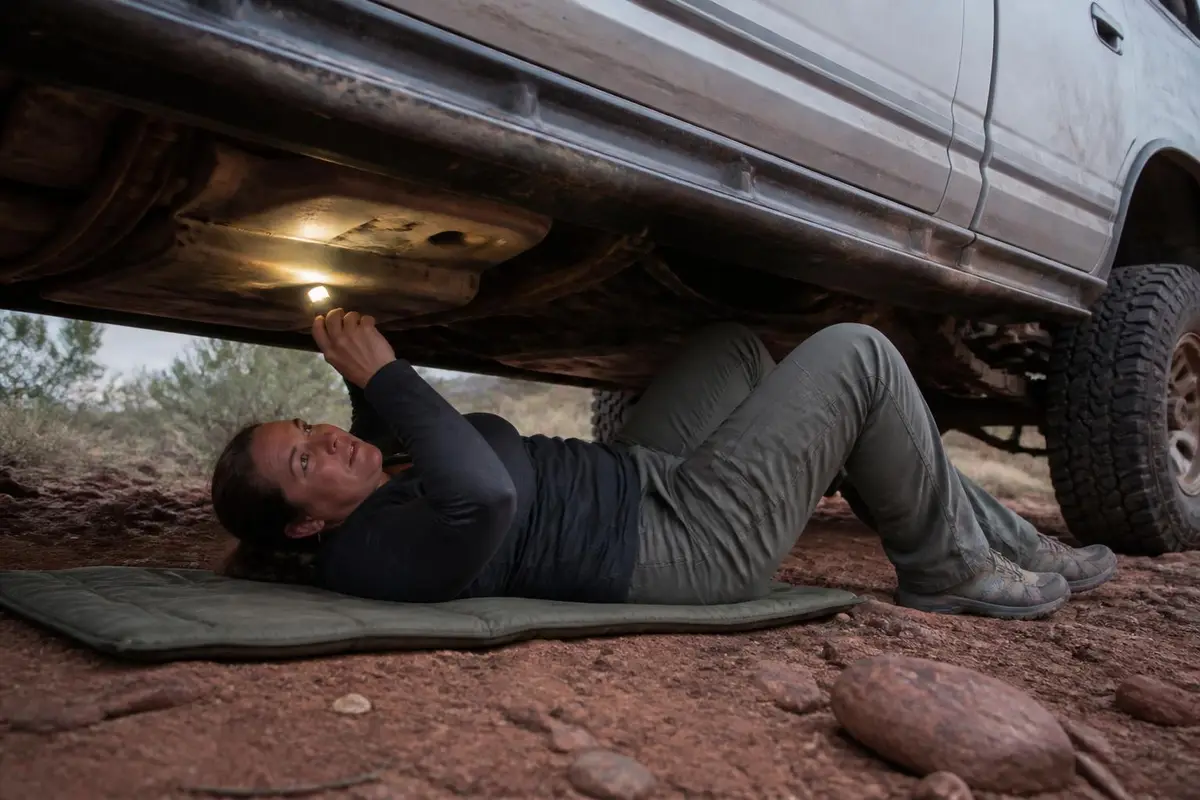
| Skid plates | Oil pan, transmission, transfer case, fuel tank | Material and thickness, which parts are covered, drain access |
| Rock sliders | Rocker panels and pinch welds | Rated to carry vehicle weight; frame or body-mount design |
Front Bumpers: Clearance, Recovery Points and Winch Mounts
Approach angle is the steepest slope the vehicle can drive onto before the front end hits. It's set by the lowest point of the front overhang: how far ahead of the tires it sits and how high it is. An off-road bumper that tucks the corners up and back raises it; bigger tires raise it too. Ford's 2025 Bronco specifications show the size of the tire effect: 35.5° for the base model and 43.2° for any Bronco on 35-inch tires. Trucks and SUVs aren't bound by the federal bumper standard, 49 CFR Part 581. It applies to passenger motor vehicles other than multipurpose passenger vehicles and low-speed vehicles, and tests at 1.5 mph (corner pendulum) and 2.5 mph (pendulum and barrier).
The second job is recovery. Look for rated recovery points mounted to the chassis. ARB's Bondi bumper for the JL Wrangler has two chassis-mounted rated recovery points and twin jacking points. A winch bumper adds a mount sized for a specific winch class: ARB's Summit MKII for the 2016–2023 Tacoma takes low-mount electric winches up to 10,000 lb.
Weight: What a Steel Bumper Adds
Steel front bumpers put their weight at the very front of the vehicle, ahead of the front axle. ARB lists its Bondi Stubby bumper for the JL at about 110 lb with chassis mounts and fitting kit, with about 42 lb of factory material removed during installation. It lists its Summit MKII winch bumper for the Tacoma at 176.4 lb. A winch adds more on top. That weight counts against payload and sits on the front springs, so check whether your springs are rated for it; see suspension and lift kits.
Airbags, Sensors and Cameras
A bumper replaces structure that the factory crash sensing and driver-assist systems were calibrated around. ARB describes the Summit MKII's mounting system as airbag compatible, and says the bumper doesn't suit Tacomas with forward-facing cameras. Ford Performance says its heavy-duty modular front bumper for the 2021–2026 Bronco was validated to Ford's crash standards. It isn't compatible with front parking sensors or adaptive cruise control, doesn't fit the Bronco Raptor, and comes in a separate version for trucks with parking sensors. Read the compatibility list for your exact year, trim and option set before buying.
Skid Plates: Material, Thickness and Coverage
A skid plate is a steel or aluminum panel bolted under the vehicle to protect the oil pan, transmission, transfer case or fuel tank from rock strikes. Aftermarket steel plates are commonly 3/16 inch (4.76 mm). Aluminum is softer and less stiff, so an aluminum plate needs more thickness to resist the same strike, but it still weighs far less. Using NIST's densities (2.699 g/cm³ for aluminum, 7.874 g/cm³ for iron), a square foot of plate weighs:
| Plate | Weight per square foot |
|---|---|
| 3/16 in steel | ≈ 7.7 lb |
| 1/4 in steel | ≈ 10.2 lb |
| 1/4 in aluminum | ≈ 3.5 lb |
| 3/8 in aluminum | ≈ 5.3 lb |
Coverage matters as much as material. A plate under the oil pan does nothing for an exposed transfer case, so check which components each plate covers and whether it has access holes for drain plugs and filters.
Rock Sliders vs Steps
Rock sliders run along the rocker panels, below the doors. ARB describes them as designed to bear the weight of the entire vehicle while spreading the load when the vehicle rests on an obstacle. ARB offers them in frame-mounted and body-mounted forms; its Jeep sliders mount to both the body and the body mounts. Steps and nerf bars are built as steps. ARB's own side steps are steel and bolt to the frame, with a non-slip plate, and give some rocker protection. What makes something a slider is a maker's statement that it's built to carry the vehicle's weight, and a mount that can take it. See running boards vs rock sliders and are rock sliders worth it.

Rear Bumpers and Spare Carriers
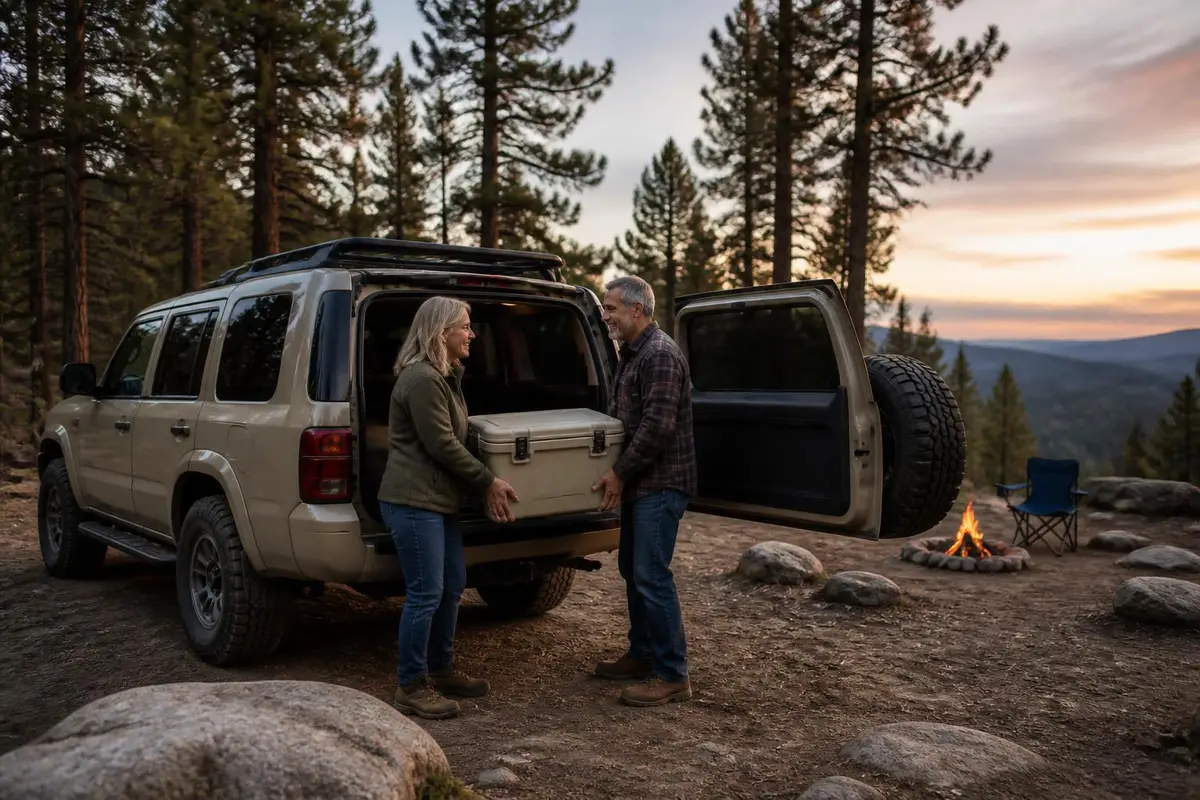
A rear bumper does for departure angle what a front bumper does for approach angle: it raises or tucks in the lowest point of the rear overhang. Many add recovery points, a hitch receiver and a spare-tire carrier. A swing-out carrier holds a larger spare on a hinged arm that moves clear of the tailgate or rear door. The spare's own size then sets part of the departure clearance, so check the carrier's rated tire size. The spare tire carriers guide compares the types.
Fitment: Year, Trim and Options
Fitment is listed by model year, trim and equipment, and those limits are specific. ARB lists the Summit MKII for the 2016–2023 Tacoma in SR, SR5, Limited, TRD Sport, TRD Off-Road and Trail trims, but not models with forward-facing cameras. Ford Performance's Bronco bumper excludes the Raptor because of its unique end caps and restraint-module calibration. Check your exact year, trim and factory options against the maker's fitment list.
How to Choose
Start with what you need to protect and why: recovery and a winch mount (front bumper), the drivetrain underneath (skid plates), or the rockers on rocky trails (sliders). Then check weight against payload and front springs, fitment against your year, trim and driver-assist equipment, and whether recovery points are rated. Products on this hub are weighed on manufacturer specifications and owner-reported fitment; we don’t buy, install or test this gear ourselves (how we rank).
Sources
- Ford — 2025 Bronco Technical Specifications — Approach angle 35.5° (base) versus 43.2° with 35-inch tires.
- 49 CFR 581.3 — Bumper Standard, Application (Cornell LII) — Applies to passenger motor vehicles other than multipurpose passenger vehicles and low-speed vehicles.
- 49 CFR 581.5 — Bumper Standard, Requirements (Cornell LII) — 1.5 mph pendulum and 2.5 mph pendulum and barrier impact tests with damage criteria.
- ARB USA — Bondi Stubby Bumper (3450470), Jeep Wrangler JL — About 110 lb with chassis mounts and fitting kit; about 42 lb of factory material removed; two chassis-mounted rated recovery points; twin jack points; detachable winch cradle for low-mount winches.
- ARB USA — Summit MKII Winch Bumper Kit (3423200KB), Toyota Tacoma — 176.4 lb; 2016–2023 Tacoma fitment by trim; low-mount electric winches up to 10,000 lb; airbag-compatible mounting; not for models with forward-facing cameras.
- Ford Performance — Bronco Heavy Duty Modular Front Bumper Kit (M-17757-BM) — 2021–2026 Bronco fitment, not Raptor (end caps and RCM calibration); validated to OEM crash standards; not compatible with front parking sensors or adaptive cruise; separate version for parking sensors.
- ARB USA — Side Steps vs Rock Sliders — Rock sliders are designed to bear the weight of the entire vehicle while spreading the load; frame- or body-mounted options; ARB's side steps are frame-bolted steel with a non-slip plate.
- NIST — X-Ray Mass Attenuation Coefficients, Table 1 (element densities) — Densities of aluminum (2.699 g/cm³) and iron (7.874 g/cm³) used for the plate-weight table.