

Affiliate disclosure: As an Amazon Associate, we earn from qualifying purchases, at no extra cost to you. We research rather than test, and commissions never change our rankings. This site is reader-supported: those commissions pay for hosting, research and keeping every guide up to date, so if a guide helped you, buying through our links is an easy way to support it. How we rank · Full disclosure
TL;DR
- A diff breather is the vent that lets an axle housing exhale as it heats and inhale as it cools; ARB says factory vents usually sit low and close to the ground.
- Air cooling from about 180°F to 50°F shrinks by roughly a fifth, so a hot axle dropped into a creek draws that much in through its vent.
- A breather kit runs the axle, transfer case and transmission vents up to one high manifold, under the hood or in the cab.
- Ford says axle and transfer case oil only needs checking after the unit has been submerged or shows a leak; milky oil means water got in.
- A snorkel protects only the engine intake, not the axles.
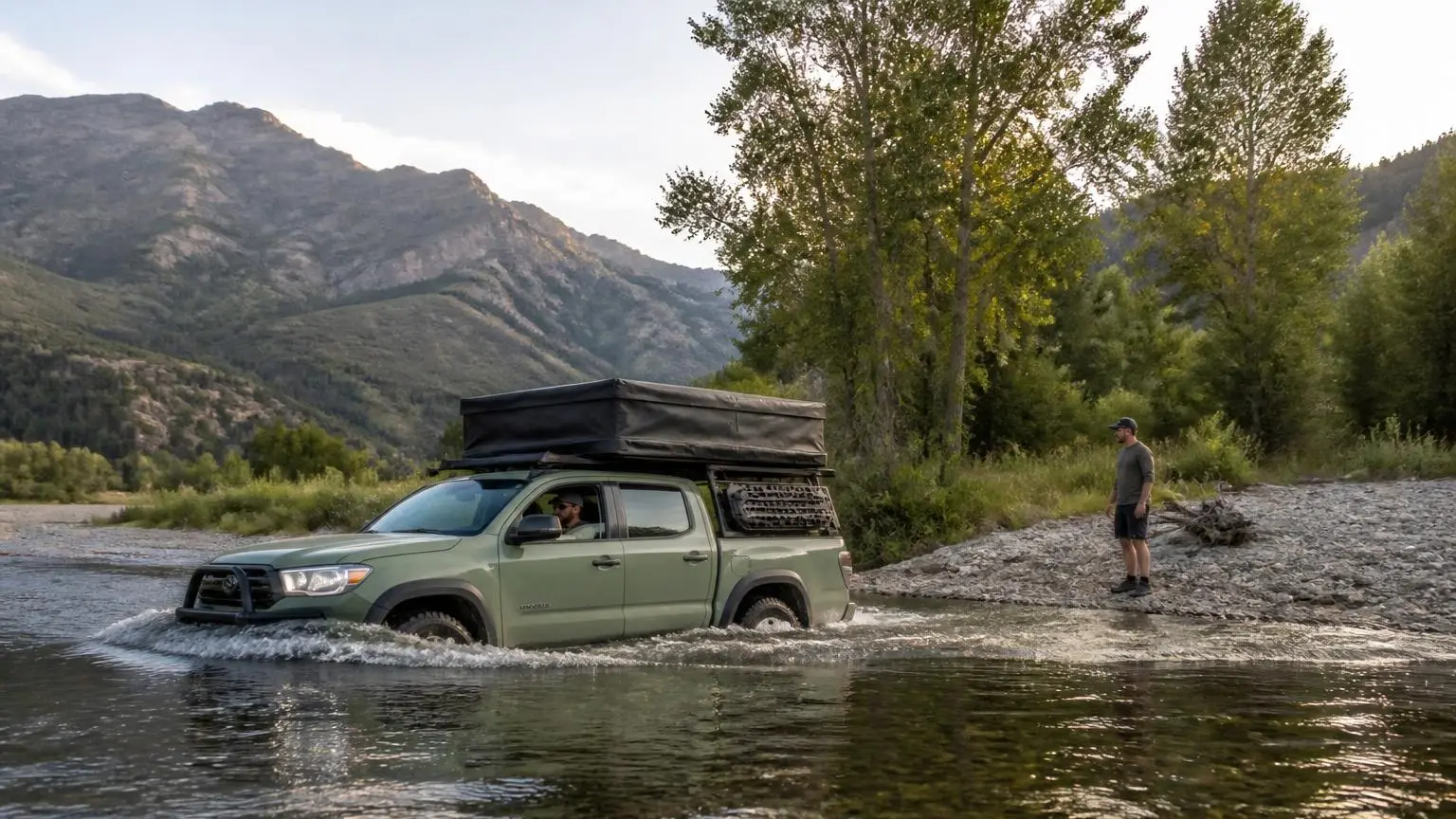
Why an Axle Needs to Breathe
A differential is a closed housing of gears in oil, with a pocket of air above the oil. ARB describes the cause simply: driving, especially off-road, generates heat throughout the drivetrain, and that hot air expands and creates pressure inside the housing. Without a vent, the pressure would push oil past the axle and pinion seals. The breather lets the air out as the axle warms and back in as it cools.
The size of that inhale follows the gas laws. At constant pressure, the volume of a gas is directly proportional to its absolute temperature, per NASA Glenn Research Center's equation-of-state reference. A worked example with illustrative temperatures:
| Step | Temperature | Absolute (kelvin) | Air volume |
|---|---|---|---|
| Axle air after a long highway run | 180°F (82°C) | 355 K | 100% |
| Same air, cooled by a 50°F creek | 50°F (10°C) | 283 K | 283 ÷ 355 ≈ 80% |
About a fifth of the air space has to be refilled from whatever sits at the vent. If the vent is above the water, that is air. If it's submerged, it is water.
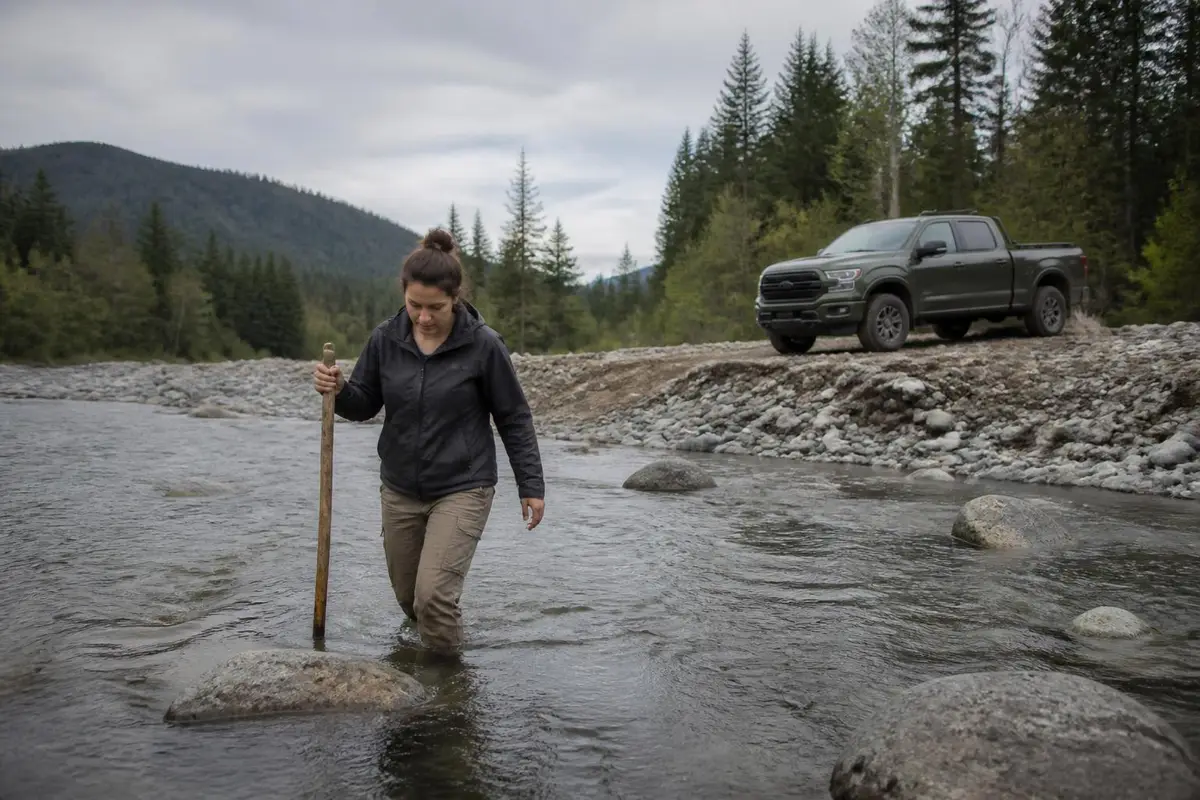
What Happens in a Water Crossing
ARB points out that factory breathers are typically mounted low and close to the ground, which makes them an easy entry point for water off-road. They also clog with dirt or mud, and ARB says that leads to damaged axle seals, because the housing can no longer vent. Water mixed into gear oil turns it milky and cuts its ability to lubricate. ARB warns that it can end in failure of the parts inside the housing.
Ford's guidance for the Bronco puts the check in proportion. The owner's manual says the transfer case and front and rear axles don't need scheduled maintenance. Checking or changing their lubricant isn't necessary unless the unit has been submerged in water or shows signs of leakage. It also says vehicles that cross water regularly should be inspected periodically for water in all their fluids, and serviced if any is found.
Factory Wading Depths and Where the Vents Should End
An extended breather line only helps if its open end sits above the deepest water you plan to cross. For scale, Ford publishes these maximum wading depths for the Bronco, with a speed limit of 4 mph (7 km/h) in water:
| 2025 Bronco version | Maximum wading depth |
|---|---|
| Without the Sasquatch Package | 31.5 in (800 mm) |
| With the Sasquatch Package | 33.5 in (850 mm) |
| Everglades | 36.4 in (925 mm) |
| Raptor | 37.0 in (940 mm) |
At any of those depths the axles are fully under water, and Ford still advises checking for water in the fluids after a submersion. A manifold mounted under the hood or inside the cab, where ARB recommends it, sits above the water line of any crossing the truck is rated for.
Checking and Refilling Gear Oil After a Crossing
The usual check is at the fill plug, with the truck level. Healthy gear oil looks like clean oil. A milky, cloudy or foamy look means water has mixed in, and that oil should be drained and replaced. If you change it, use the grade and quantity the manual lists. For the 2025 Bronco (non-Raptor), Ford specifies Motorcraft SAE 75W-85 Premium Synthetic Hypoid Gear Lubricant meeting WSS-M2C942-A, in these quantities:
| Axle (2025 Bronco, excluding Raptor) | Capacity |
|---|---|
| Front, with electronic locking differential | 775 ± 25 ml (26.2 fl oz) |
| Front, no locker, no front axle disconnect | 865 ± 25 ml (29.2 fl oz) |
| Front, no locker, with front axle disconnect | 900 ± 25 ml (30.4 fl oz) |
| Rear, with electronic locking differential | 1.88 L (63.6 fl oz) |
| Rear, without electronic locking differential | 1.93 L (65.3 fl oz) |
Other vehicles use different grades and quantities, so check your own owner's manual before buying oil.
How a Diff Breather Kit Works
A kit replaces the factory vents with longer lines that run up to one high, protected manifold. ARB says its kit swaps the usual one-way valve breathers for a high-flow, zero-back-pressure, zero-vacuum system. According to ARB, kit 170112:
- has four ports, so one manifold can serve the front diff, rear diff, transfer case and transmission;
- uses an anodized billet aluminum manifold with a splash-resistant filter holding a sintered, multi-layer metal element;
- ships with tubing and push-in fittings for at least two drivetrain assemblies, usually both differentials; more tubing and fittings are sold separately to connect all four;
- should be mounted at a high point protected from dust and water, under the hood or in the cab.
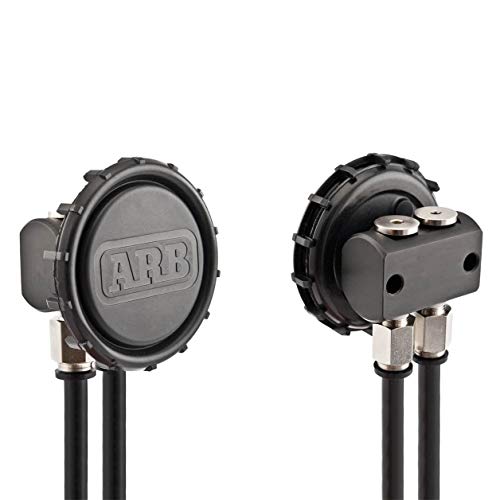
Best for Owners who want to raise the front diff, rear diff, transfer case and transmission breathers to one protected point; confirm with the seller for your vehicle.
- 4-port anodized billet aluminum manifold, per ARB.
- Includes fittings and tubing for at least two drivetrain assemblies.
- Splash-resistant air filter.
Front vs Rear Diff Breathers
Every component with its own vent needs its own line: the front differential, the rear differential, the transfer case and, on many trucks, the transmission. Owners often start with the axles, because their vents sit lowest and go under first in a crossing, and ARB's kit ships set up for two assemblies for the same reason. If you wade deep water regularly, extend every vent. One low vent is enough to let water into that unit.

Breather vs Snorkel: Two Different Jobs
A snorkel raises the engine's air intake so the engine doesn't ingest water. It does nothing for the axles, transfer case or transmission, which vent separately, so a snorkeled truck still needs extended breathers for deep water. For the intake side, see is a snorkel worth it, snorkel vs raised air intake and how much a snorkel costs. Our Safari snorkel review covers ARB's snorkel line.
Routing the Lines
Each line needs enough slack for full suspension travel, because the axle moves and the manifold doesn't. Keep lines clear of the exhaust and of moving steering and driveline parts, and end them above the deepest water you expect to cross. Our DIY diff breathers guide covers the steps, and the water crossing guide covers technique.
How We Research This Guide
This guide is built from ARB's product documentation, Ford's Bronco owner's manual and NASA's gas-law reference. We don't buy, install or test parts ourselves. See how we rank and our affiliate disclosure.
Sources
- ARB USA — A Breath of Fresh Air — Drivetrain heat expands the air in the housing and builds pressure; factory breathers sit low and close to the ground, clog with dirt or mud and lead to damaged axle seals; water contaminates gear oil and can end in failure; the kit's sintered filter, tubing for two drivetrain systems, and mounting under the hood or in the cab.
- ARB USA — Differential Breather Kit 170112 — Four-port anodized billet aluminum manifold with splash-resistant filter; tubing and fittings for at least two drivetrain assemblies, more sold separately for up to four; replaces factory one-way valve breathers with a high-flow, zero-back-pressure, zero-vacuum system.
- NASA Glenn Research Center — Equation of State — At constant pressure a gas's volume is directly proportional to its absolute temperature, the basis of the worked cooling example.
- Ford — 2025 Bronco Owner's Manual (PDF) — Maximum wading depths by version and the 4 mph water speed limit; vehicles used in water regularly should be inspected for water in all fluids; axle and transfer case lubricant checks not needed unless submerged or leaking; front and rear axle fluid capacities and the SAE 75W-85 WSS-M2C942-A specification.