

Affiliate disclosure: As an Amazon Associate, we earn from qualifying purchases, at no extra cost to you. We research rather than test, and commissions never change our rankings. This site is reader-supported: those commissions pay for hosting, research and keeping every guide up to date, so if a guide helped you, buying through our links is an easy way to support it. How we rank · Full disclosure
A hot differential or transfer case, cooled suddenly by cold water during a crossing, creates a vacuum inside the housing. Here's ARB's explanation of what happens next: outside air gets drawn in through the oil seals instead of the breather. If those seals are also underwater at that moment, they draw in water, dirt and oil along with the air. That contaminates the fluid, and over time, corrodes the housing. An extended breather kit moves the vent point to a high, filtered spot, so the vacuum pulls in clean air instead of drawing through a submerged seal.
| Tools needed | Push-lock hose or manufacturer kit tubing, Hose clamps, Drill (for mounting the central vent/filter housing), Zip ties for routing |
|---|---|
| Time estimate | 1–2 hours for a full kit covering multiple assemblies |
| Difficulty | Moderate |

The Failure Mode, Precisely
Every differential, transfer case and gearbox vents through a one-way breather, so internal pressure from normal operating heat can escape. ARB's own kit documentation walks through what goes wrong on a water crossing. As the hot housing cools rapidly in cold water, the air inside contracts, and pressure inside the housing drops below the pressure outside it.
That pressure difference pulls air back in. If the breather is clear of the water, air comes back through it, no problem. If the breather itself is submerged, air takes whichever path offers the least resistance — on a stock vehicle, that's often a shaft seal. Once the path is a seal instead of the breather, what gets drawn in isn't clean air.
Dana's own Spicer axle vent components are built around the same principle: a vent set at the highest practical point on the axle, protected from dust and moisture, keeps that path from being a seal in the first place.

What a Standard Kit Covers — and What It Doesn't
ARB's Differential Breather Kit (part 170112) is a 4-port design. It can serve up to four assemblies — front differential, rear differential, transfer case, gearbox — through one central, high-flow filtered manifold. You mount that manifold somewhere protected from water and dust, typically under the hood.
The kit as sold includes enough tubing to route two differentials. Connecting a transfer case or gearbox as a third or fourth port needs extra tubing and fittings, sold separately. Check exactly which assemblies you're routing on your specific vehicle — don't assume one box covers all of them.
Step Overview
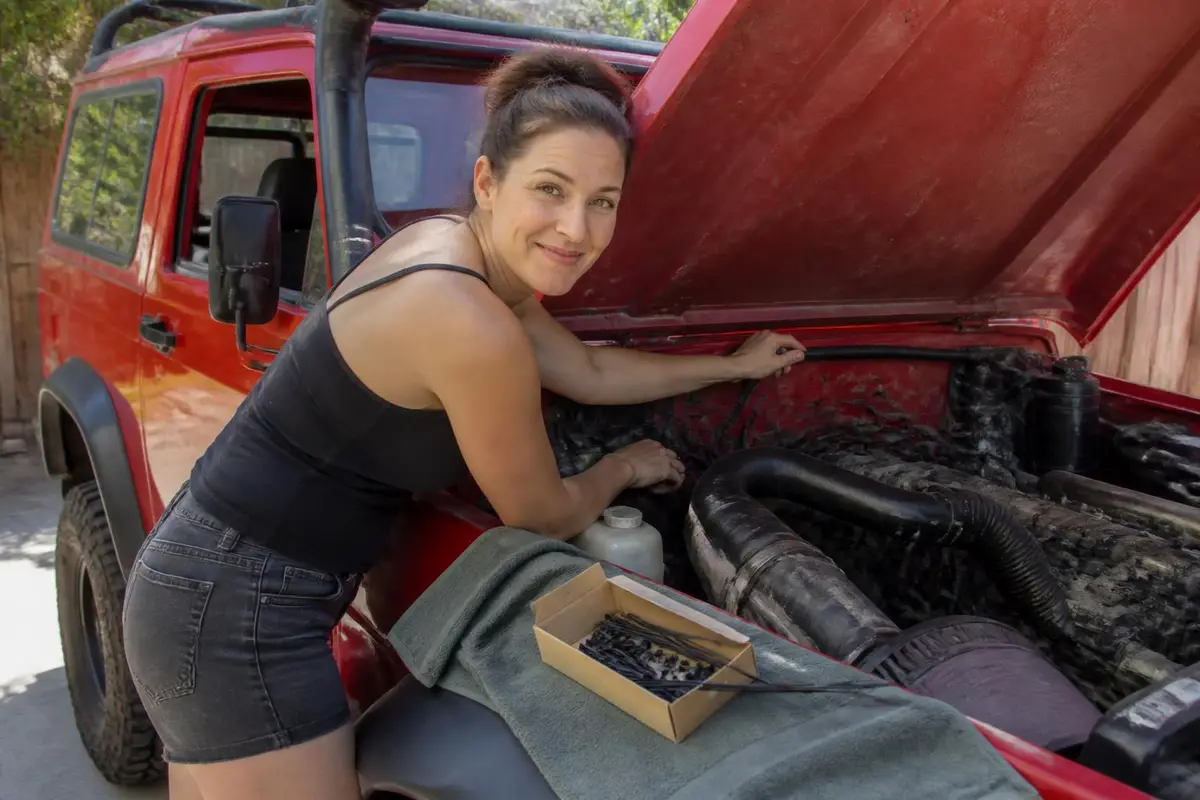
Follow the kit's own routing diagram for hose length and the central manifold's mounting height — it's sized around how many ports you're using. Route hose away from hot exhaust components and moving parts, and secure it at intervals with clamps or zip ties. Mount the filtered manifold well above your vehicle's rated wading depth, not just above the height of the stock breathers it replaces.
That margin matters. Land Rover's own published wading depths for the current Defender run to 850mm (coil suspension) or 900mm (air suspension) — real numbers that show how deep a genuinely capable 4WD can be expected to cross, and why "a few inches above stock" isn't enough margin on a vehicle built for that kind of water.
Common Mistakes
Mounting the filtered manifold somewhere it can still go underwater on a genuinely deep crossing defeats the kit's purpose. The mounting point needs real margin above your vehicle's rated wading depth, not just a few inches above the old breather height. Routing hose against a hot exhaust component, where heat can degrade it, is the other common installation error.
Parts and Recommended Gear
When to Use a Pro
Following a manufacturer kit's routing diagram is a reasonable DIY task for an owner comfortable with basic hose and clamp work. A custom routing on a vehicle with limited underbody clearance, or uncertainty about where hot components are located, is worth having a 4WD shop review before drilling or routing anything.
Sources
- ARB — Diff Breathers explanation — The vacuum/water-intrusion failure mode during a water crossing and how a central filtered vent above the water line prevents it.
- ARB — Differential Breather Kit 170112 (official product page) — Confirms the 170112 kit is a 4-port design (front diff, rear diff, transfer case, transmission) with standard tubing/fittings covering two assemblies; more tubing and push-in fittings sold separately to connect the other two.
- ARB — Differential Breather Kit 170112 fitting instructions (FI_170112) — ARB's own fitting/routing document for the 170112 kit, referenced for mounting-height and routing guidance.
- Dana Aftermarket — Spicer Axle Vent Breather and Tube Kit (507162) — Manufacturer's own axle vent/breather component, confirming the same design principle — a protected, high-mounted vent — independent of ARB's kit.
- Land Rover — Driving Through Water: Wading Depths — Published wading-depth figures for the current Defender (850mm coil / 900mm air) as a real-world example of how deep a genuinely capable 4WD is rated to cross, underscoring why the breather mounting point needs real margin above stock height.