
Affiliate disclosure: As an Amazon Associate, we earn from qualifying purchases, at no extra cost to you. We research rather than test, and commissions never change our rankings. This site is reader-supported: those commissions pay for hosting, research and keeping every guide up to date, so if a guide helped you, buying through our links is an easy way to support it. How we rank · Full disclosure
TL;DR
- Pick the construction before the tread: some all-terrains come only in passenger (SL/XL) sizes, some only in light-truck (LT) sizes, and many in both.
- Each axle's tires must be rated, together, for at least that axle's GAWR (FMVSS 110). Never swap original LT tires for P-metric ones (BFGoodrich).
- LT all-terrains start with more tread: 15/32" to 18.5/32" on the LT-only lines here, against 10/32" to 14/32" on the passenger-only lines.
- 30 of the 38 carry the 3PMSF symbol, which requires a packed-snow traction test; M+S only describes tread geometry.
- Many lines carry a shorter mileage warranty on LT sizes than on passenger sizes (Maxxis Razr AT: 60,000 vs 50,000 miles; Nitto Recon Grappler A/T: 65,000 vs 55,000).
At a Glance
| Your vehicle and use | All-terrain construction to look at | What to check |
|---|---|---|
| Crossover or light SUV that came on passenger tires | Passenger (SL or XL) all-terrain | Load index and speed rating at or above the door placard |
| Half-ton pickup or SUV, daily driving plus trails | Either type, matched to what the truck came with | Combined load rating per axle at least equal to the axle rating (GAWR) |
| Towing, heavy payload or a loaded overland build | LT all-terrain, Load Range E or higher | Maximum load and pressure on the sidewall; new pressure advice if you switched from passenger tires |
| Snowy winters without a separate winter set | Any all-terrain with the 3PMSF symbol | The mountain-snowflake symbol on the sidewall, not just M+S |

What Defines an All-Terrain Tire
BFGoodrich's off-road tire guide draws the line by tread. All-terrains have a less aggressive tread design that, it says, gives better highway comfort, a quieter ride and better on-road handling than mud-terrains while still coping with moderate trails. It lists them as best for long-distance overlanding, mixed trail and highway commuting, trucks used for towing or daily work, and winter driving. Mud-terrains use large tread blocks and wide voids to eject mud, sand and soft soil, and BFGoodrich says they aren't quiet or fuel-efficient.
Makers position their all-terrains differently within the category. Michelin describes its LTX A/T2 as offering "a quiet, comfortable ride in all seasons," and marks it Mud & Snow rather than 3PMSF. BFGoodrich positions the KO3 on gravel-road durability and sidewall toughness, and sells it only in LT and flotation sizes.
Passenger or LT: The First Choice
An all-terrain comes in passenger construction (Standard Load or Extra Load, often P-metric), light-truck construction (LT-metric or flotation, Load Range C through F), or both. BFGoodrich describes LT-metric tires as stronger and more durable than passenger tires, built for towing, hauling and off-road use, and says many new SUVs and light trucks leave the factory on P-metric tires chosen to meet fuel-economy goals. Here is how the current all-terrains in this library split:
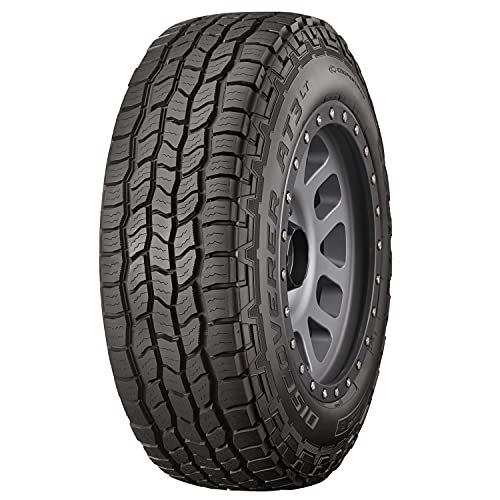
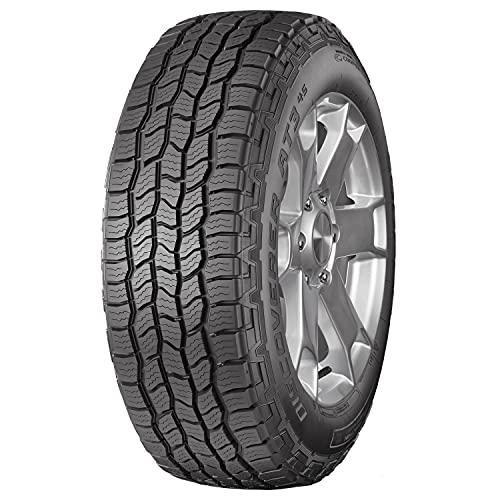
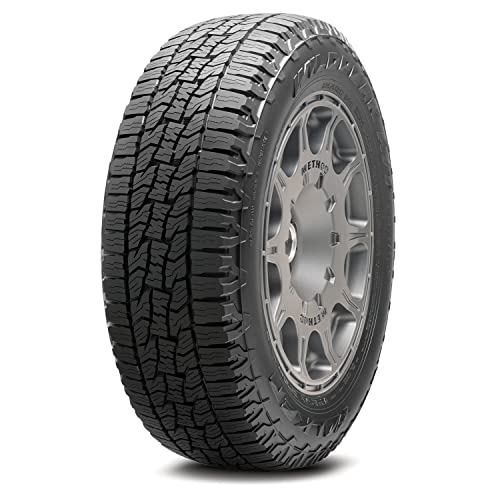
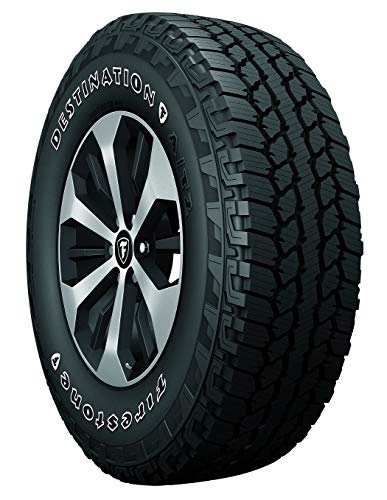
- Passenger sizes only (SL/XL): BFGoodrich Trail-Terrain T/A, Cooper Discoverer AT3 4S, Cooper Discoverer Road+Trail AT, Falken Wildpeak A/T Trail, Firestone Destination A/T2, Hankook Dynapro AT2, Nitto Nomad Grappler and the two Pirelli Scorpion all-terrains. Where the makers publish tread depth, it runs 10/32" to 14/32".
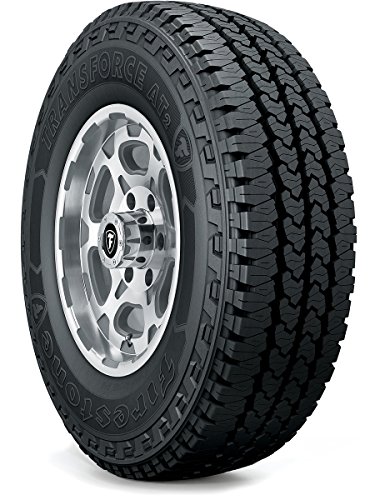
- LT sizes only: BFGoodrich All-Terrain T/A KO2 and KO3, BFGoodrich HD-Terrain T/A KT, Cooper Discoverer AT3 XLT and Stronghold AT, Firestone Transforce AT2 and Mickey Thompson Baja Legend EXP. Their published tread depths run 15/32" to 18.5/32".
- Both: the rest, including the Falken Wildpeak A/T4W, General Grabber A/TX, Toyo Open Country A/T III, Nitto Recon Grappler A/T and Goodyear Wrangler Workhorse AT 2. In these lines the LT sizes usually carry deeper tread than the passenger sizes.

Load: What the Rules Require
For trucks, SUVs and other multipurpose vehicles, FMVSS 110 (49 CFR 571.110, S4.2.2.1) requires the maximum load ratings of the tires on an axle to add up to at least that axle's gross axle weight rating (GAWR), as printed on the vehicle's certification label. The tire placard on the driver's-side B-pillar gives the original tire size and cold inflation pressures. Worked example: a rear axle rated at 4,000 lb needs two tires rated at 2,000 lb or more each. On Goodyear's load index chart that means a load index of at least 104 (1,984 lb is index 104; 2,039 lb is index 105).
A tire's maximum load is only reached at its maximum pressure, and LT tires need more pressure than passenger tires to carry a given load. BFGoodrich warns that after switching from P-metric to LT or flotation tires, the door placard pressures no longer apply and you should get the tire maker's pressure recommendation for your size.
Tread Depth and Warranty
Tread depth is measured in 32nds of an inch from new. Federal tire standard FMVSS 139 requires at least six treadwear indicators around the tire that show when the tread has worn to 1/16" (2/32"). Transport Canada advises against running tires worn close to 4 mm (5/32") on snow-covered roads, so a tire that starts at 11/32" has less usable winter tread than one that starts at 16/32".
Mileage warranties vary by line and often by size within a line. Maxxis gives the Razr AT 60,000 miles on P-metric sizes and 50,000 on LT sizes. Nitto gives the Recon Grappler A/T 65,000 miles on hard-metric sizes and 55,000 on LT-metric and flotation sizes. Some heavy-duty lines, such as the BFGoodrich HD-Terrain T/A KT and Firestone Transforce AT2, list no mileage warranty at all. Federal UTQG treadwear grades apply only to passenger car tires, so LT sizes have no treadwear grade to compare.

Winter Capability: 3PMSF vs M+S
The two snow markings mean different things. Under the U.S. Tire Manufacturers Association's definitions, the M+S marking (TISB 10) is based on tread geometry: slots or pockets at the tread edge that reach at least 1/2" toward the center and a contact-surface void area of at least 25%. No traction test is required. The three-peak mountain snowflake (TISB 37) requires a snow grip index of at least 1.10 against a standard reference tire in the ASTM F1805 test on medium-packed snow. 30 of the 38 current all-terrain tires here carry the 3PMSF symbol. Filter to them in the tire library, and see winter and snow 4WD for how a dedicated winter tire compares.
Every All-Terrain Tire in This Library
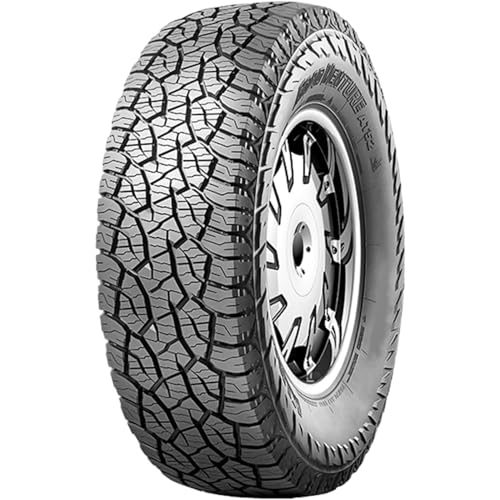
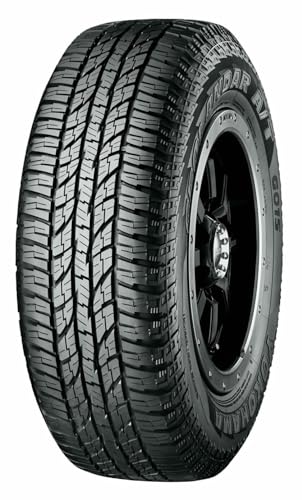
The 38-tire list below is sorted alphabetically by brand. Use the main tire library filter to narrow by size or winter rating across the whole catalog.
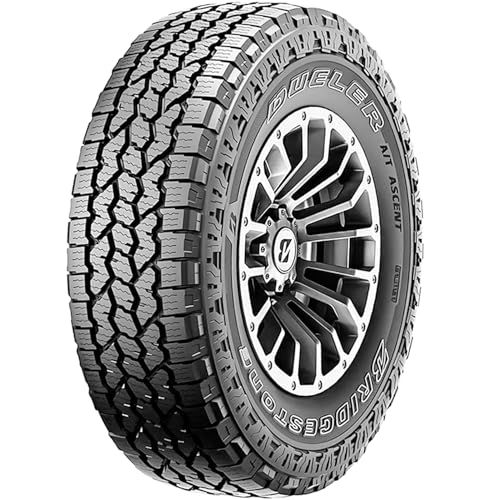
Not listed below because they're no longer current buys: the Falken Wildpeak A/T3W (discontinued; Falken's successor is the Wildpeak A/T4W), the Nitto Terra Grappler G2 (replaced by the Terra Grappler G3), the Nokian Rotiiva AT Plus (discontinued; Nokian's North American all-terrains are now the Outpost APT and Outpost nAT) and the Bridgestone Dueler A/T002 (a European-market tire; Bridgestone's US Dueler all-terrain is the Dueler A/T Ascent).











Related Pages
Every spec above comes from the tire maker's own spec page, linked on each tire's write-up; see how we rank for the full method. For the more aggressive alternative, see mud-terrain tires; for something between the two, see rugged-terrain/hybrid tires; or read the all-terrain vs mud-terrain comparison. For picks, see the best all-terrain tires roundup, best all-terrain tires for snow and best all-terrain tires for highway driving.
Sources
- BFGoodrich — Off-road tire selection guide — All-terrain vs mud-terrain tread descriptions and best uses; LT-metric vs passenger construction; P-metric factory tires; never replace original LT tires with P-metric; new pressure recommendation after switching to LT or flotation tires.
- 49 CFR 571.110 (FMVSS 110) — Tire selection and rims (Cornell LII) — S4.2.2.1: tires on an axle must have combined maximum load ratings at least equal to the axle's GAWR; S4.3: tire placard location.
- Goodyear — Load Index and Speed Rating — Load index chart used in the worked example (104 = 1,984 lb; 105 = 2,039 lb).
- USTMA — TISB 37: severe snow (3PMSF) definition (PDF) — 3PMSF criteria: snow grip index of at least 1.10 in the ASTM F1805 packed-snow test.
- USTMA — TISB 10: M+S snow tire definition (PDF) — M+S criteria are tread geometry only (slots of at least 1/2 inch, at least 25% void area).
- 49 CFR 571.139 (FMVSS 139) — Light vehicle tires (Cornell LII) — At least six treadwear indicators showing wear to 1/16 inch.
- Transport Canada — Using winter tires — Advice not to use tires worn close to 4 mm (5/32") on snow-covered roads.
- 49 CFR 575.104 — Uniform Tire Quality Grading Standards (Cornell LII) — UTQG treadwear grades apply to passenger car tires only.
- Maxxis — Razr AT product page — Limited treadwear warranty: 60,000 miles on P-metric sizes, 50,000 on LT sizes.
- Nitto — Recon Grappler A/T product page — Limited treadwear warranty: 65,000 miles on hard-metric sizes, 55,000 on LT-metric and flotation sizes.
- Michelin — LTX A/T2 product page — Michelin's description of a quiet, comfortable ride in all seasons; Mud & Snow marking.
- BFGoodrich — All-Terrain T/A KO3 product page — KO3 offered only in LT-metric and flotation sizes.
- Falken — Wildpeak A/T4W product page — The A/T4W as Falken's current Wildpeak all-terrain; LT and non-LT sizes.
- NHTSA — Tires (TireWise) — General background on tire types, load-rated tires and cold inflation pressure.