
Affiliate disclosure: As an Amazon Associate, we earn from qualifying purchases, at no extra cost to you. We research rather than test, and commissions never change our rankings. This site is reader-supported: those commissions pay for hosting, research and keeping every guide up to date, so if a guide helped you, buying through our links is an easy way to support it. How we rank · Full disclosure
Off-roading for beginners starts with three things: knowing what your vehicle's 4WD controls do, learning a handful of driving techniques on easy trails, and knowing where you are legally allowed to drive. None of it requires a modified vehicle.
Know Your Vehicle's Controls First
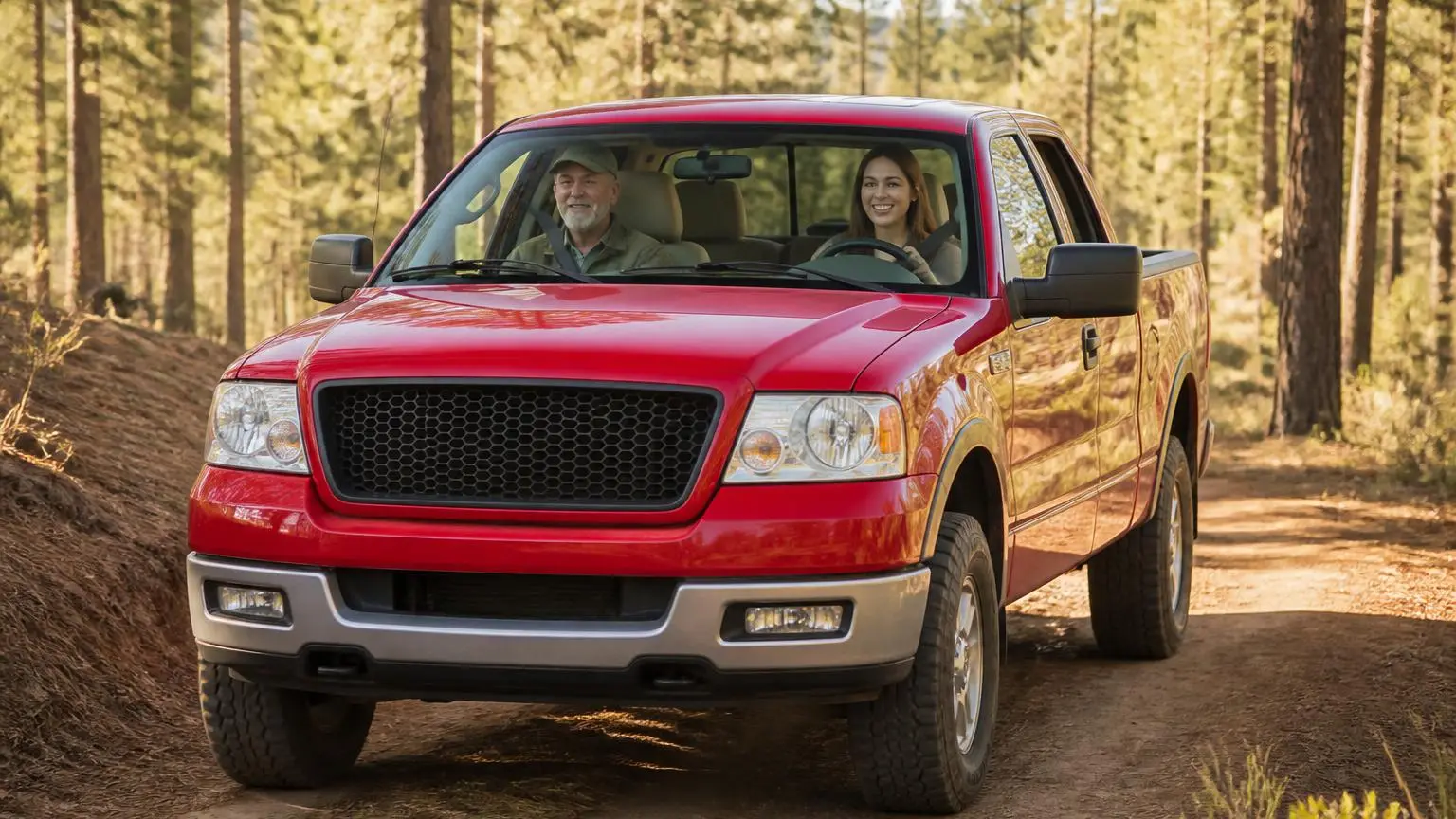
Read the 4WD section of your owner's manual before a first trail day. The rules differ by system, and the numbers matter:
| Control | What it does | Typical rule |
|---|---|---|
| 4H | Drives both axles at normal gearing | Jeep allows the shift while moving up to 55 mph; part-time systems stay off dry pavement |
| 4L | Adds a low-range reduction (2.72:1 to 4.0:1 on a Wrangler) | Shift at 2–3 mph in neutral (Jeep) or 3 mph or less (Ford); Jeep says stay under 25 mph |
| Locking differential | Locks both wheels on an axle together | Jeep says not to use it on dry, paved roads |
| Hill descent control | Uses the antilock brakes to hold a slow descent speed | See your manual for the speed range and how to switch it on |
| Manual locking hubs | Connect the front wheels to the axle | Turn both to LOCK before using 4WD |
Our guides cover each one: 4-high vs 4-low, 4WD Auto, hill descent control, engine braking and 4WD vs AWD.
Core Driving Skills
Jeep's own off-road guidance for new owners boils down to a few habits:
- Engage 4WD before you need it, not after a wheel is already spinning.
- Go slow on rocks. Jeep puts the ideal rock-crawling speed at 1 to 3 mph, in low range and a low gear, letting the vehicle idle over obstacles. It notes the Rubicon Trail averages 1 to 5 mph.
- Keep momentum in mud and snow. Don't shift lower than you need; over-revving spins the wheels. If traction is lost, stop, because spinning only digs deeper.
- Climb and descend straight, never at an angle, and know what is over the crest before you climb.
- Put a tire on a rock rather than straddling it if the rock is taller than your ground clearance.
Start on trails rated for a stock vehicle (see how trail ratings work) and read off-road driving tips for the full list. An off-road driving school gives supervised practice on real obstacles.
Terrain-Specific Technique and Tire Pressure
Lower tire pressure lengthens the tire's footprint. Jeep's figures for conventional tires: drop 10 to 12 psi below normal for sand, and 3 to 5 psi for rocks, then return to normal pressure before driving on pavement. Sand also rewards wide turns, because tight turns slow the vehicle abruptly. See airing down, how to drive on sand, how to not get stuck in mud, rock crawling and water crossings.
Where You Can Legally Drive, and Trail Etiquette
On national forests, motor vehicles may use only the roads, trails and areas designated for them. Driving off designated routes is prohibited under 36 CFR 261.13. Each forest publishes a free Motor Vehicle Use Map (MVUM) showing which routes are open, to which vehicle classes and in which seasons. Check it before you go. Some trail systems also have vehicle-class rules, so know whether yours counts as an OHV there.
On the trail, Jeep's etiquette basics are that uphill traffic has the right of way, you pull off the trail if you stop, you stay on routes approved for off-roading and you pack out trash. See trail etiquette for more.
Before You Go: Preparation
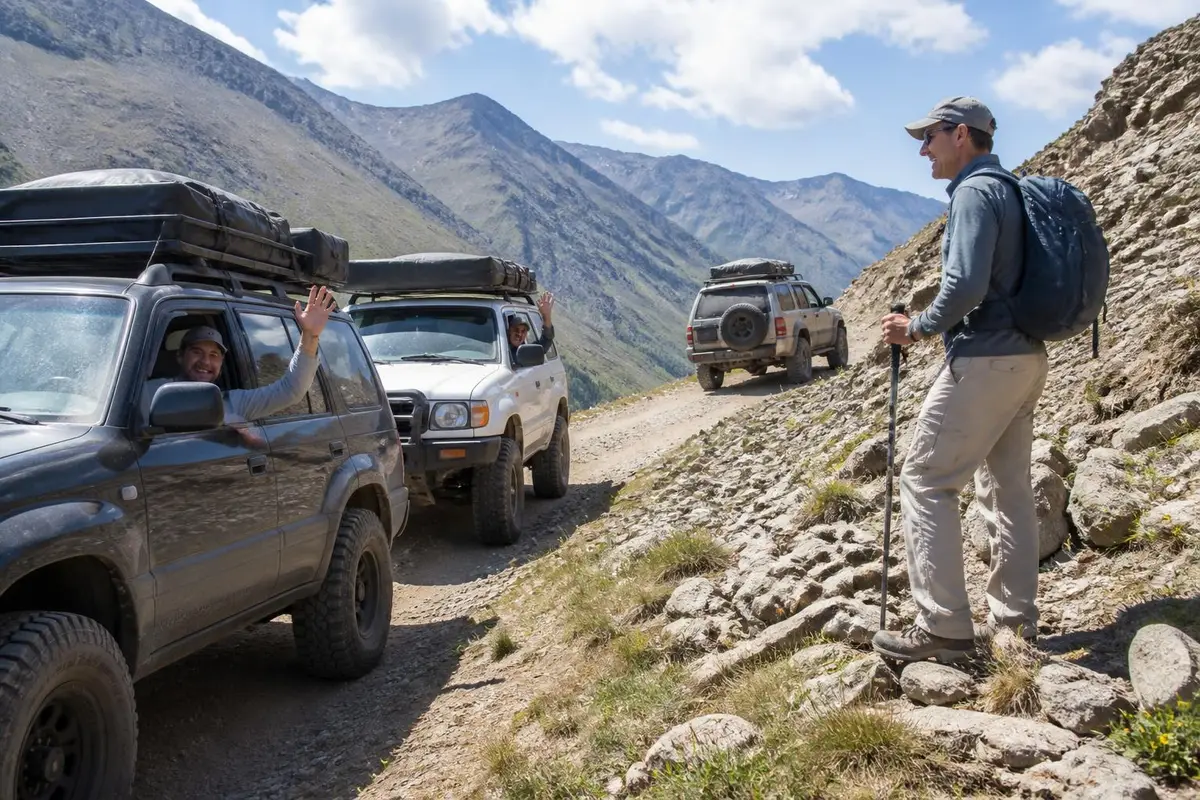
Jeep's pre-trip checklist: inspect hoses, top off oil, fluids and fuel, check all four tires and their pressures, avoid traveling alone, and carry recovery equipment, extra water and a first aid kit. On a longer trip, file a trip plan with someone at home. Multi-day travel adds route research, fuel and water range, permits and communications; see overland trip planning.
Sources
- Jeep — 4x4 FAQ & Glossary — 4H shift up to 55 mph; 4L shift at 2–3 mph in neutral and 25 mph limit; lockers not for dry pavement; hill descent control uses ABS; rock-crawling speed 1–3 mph and Rubicon Trail 1–5 mph average; engage 4WD before you need it; momentum in mud and snow; climb and descend straight; 10-inch clearance vs 12-inch rock; air down 10–12 psi for sand and 3–5 psi for rocks; uphill right of way; pre-trip checklist.
- Stellantis Media — 2026 Jeep Wrangler Specifications — Wrangler low-range ratios of 2.72:1 and 4.0:1.
- Ford Owner's Manual — Using Four-Wheel Drive (2017 Expedition) — Ford's 4L shift at 3 mph or less in neutral.
- Ford Owner's Manual — Using Four-Wheel Drive (2017 Super Duty) — Manual/auto hub locks must be set to LOCK and both hubs set the same.
- USDA Forest Service — Motor Vehicle Use Maps (Sawtooth National Forest) — An MVUM is a free legal document showing which National Forest roads and trails are open to motor vehicles; driving off designated routes is prohibited.
- eCFR — 36 CFR Part 212 Subpart B, Designation of Roads, Trails, and Areas for Motor Vehicle Use — Forest Service designation of roads, trails and areas for motor vehicle use and the MVUM that enforces 36 CFR 261.13.