
Affiliate disclosure: As an Amazon Associate, we earn from qualifying purchases, at no extra cost to you. We research rather than test, and commissions never change our rankings. This site is reader-supported: those commissions pay for hosting, research and keeping every guide up to date, so if a guide helped you, buying through our links is an easy way to support it. How we rank · Full disclosure
Trail etiquette is the set of right-of-way conventions and land-access rules that keep a shared off-road trail usable and open — yielding correctly, staying within the established route rather than driving around an obstacle, and packing out everything brought in — and land managers consistently cite violations of these basics as the leading cause of trail closures, which makes etiquette a genuine access issue rather than a matter of politeness alone.
Right-of-Way: Uphill vs Downhill
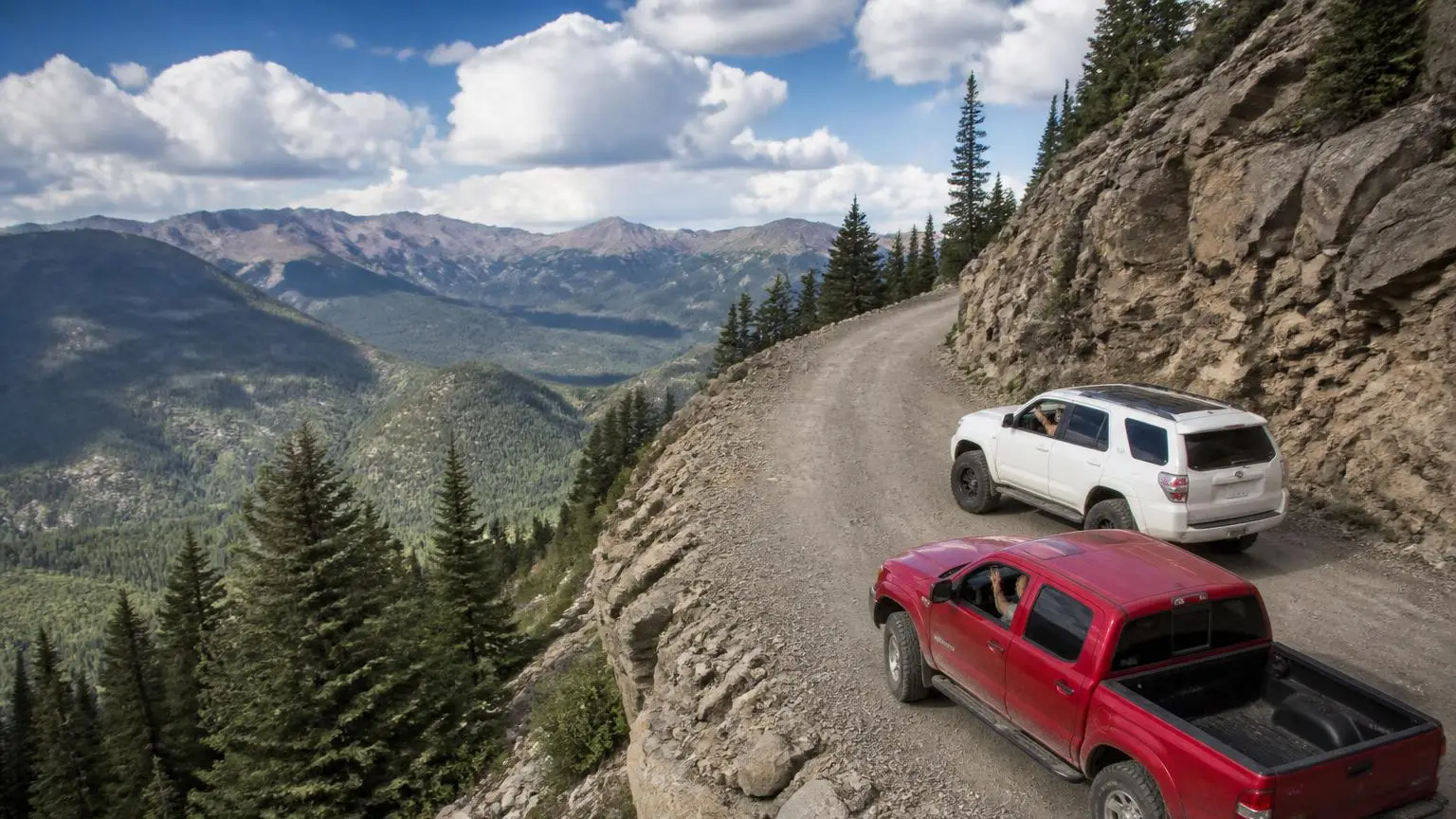
The uphill-yields-to-downhill convention on many paved roads is reversed on most off-road trails, where a vehicle already climbing generally has less room to safely stop and reverse than one heading downhill (see FAQ). This isn't universal across every trail system, so checking the specific posted convention for a given trail — rather than assuming the general off-road rule applies everywhere — is the safer default when signage exists.
Staying on the Established Route
Driving around an obstacle rather than through it, to avoid a rut or a technical section, is one of the most common and most damaging etiquette violations, both because it's frequently illegal on federal land managed under a Motor Vehicle Use Map (see FAQ, and how to not get stuck in mud for the specific mud-rut version of this rule) and because it's how trails widen and braid over repeated use, damaging a larger footprint than the original obstacle ever covered. The correct response to a difficult section within the existing track is generally to drive through it carefully, scouting first if needed, not around it.
Blocking a Trail and Passing Etiquette
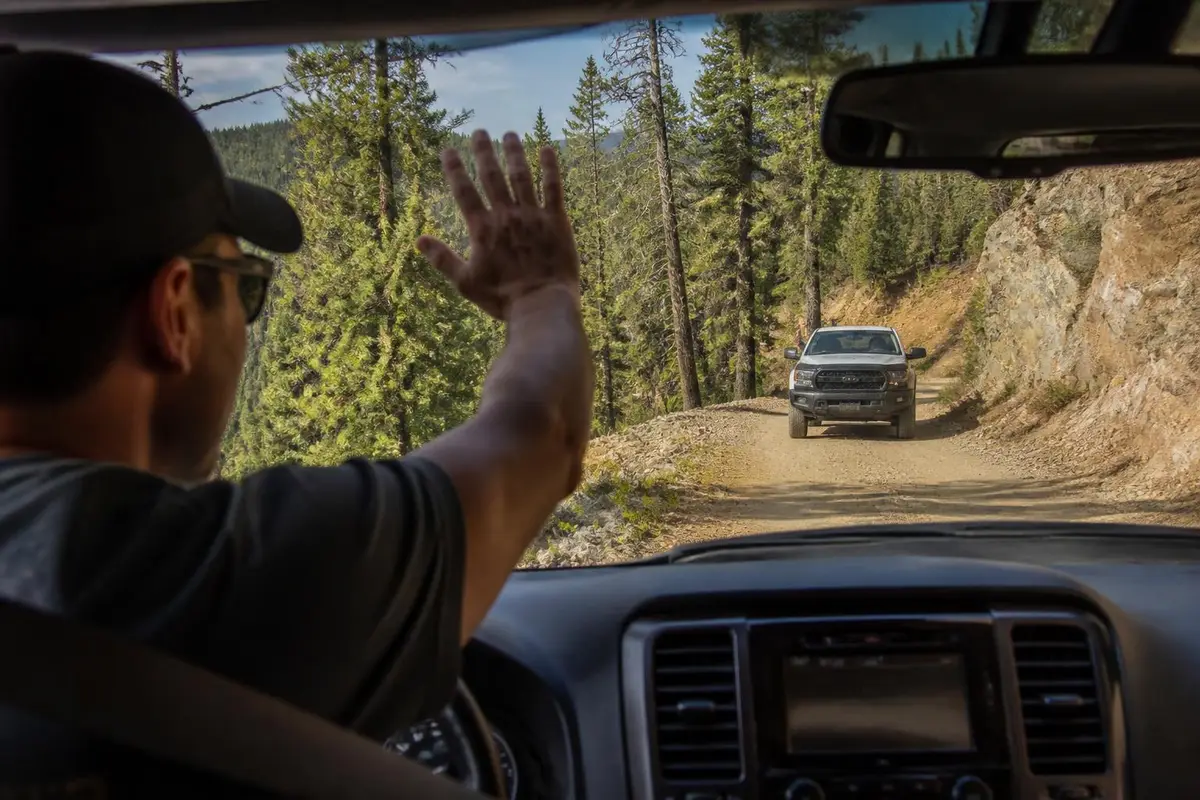
Stopping mid-trail for photos, a break, or to wait on a group member without pulling to a wide spot or established pullout blocks other trail users and is a frequently cited frustration among experienced drivers. On a narrow trail where passing isn't possible, communicating with oncoming traffic (a wave, a radio call on a known trail-group channel, or simply backing to the nearest safe pullout) keeps traffic moving without a standoff.
Pack It Out, Including What Isn't Yours
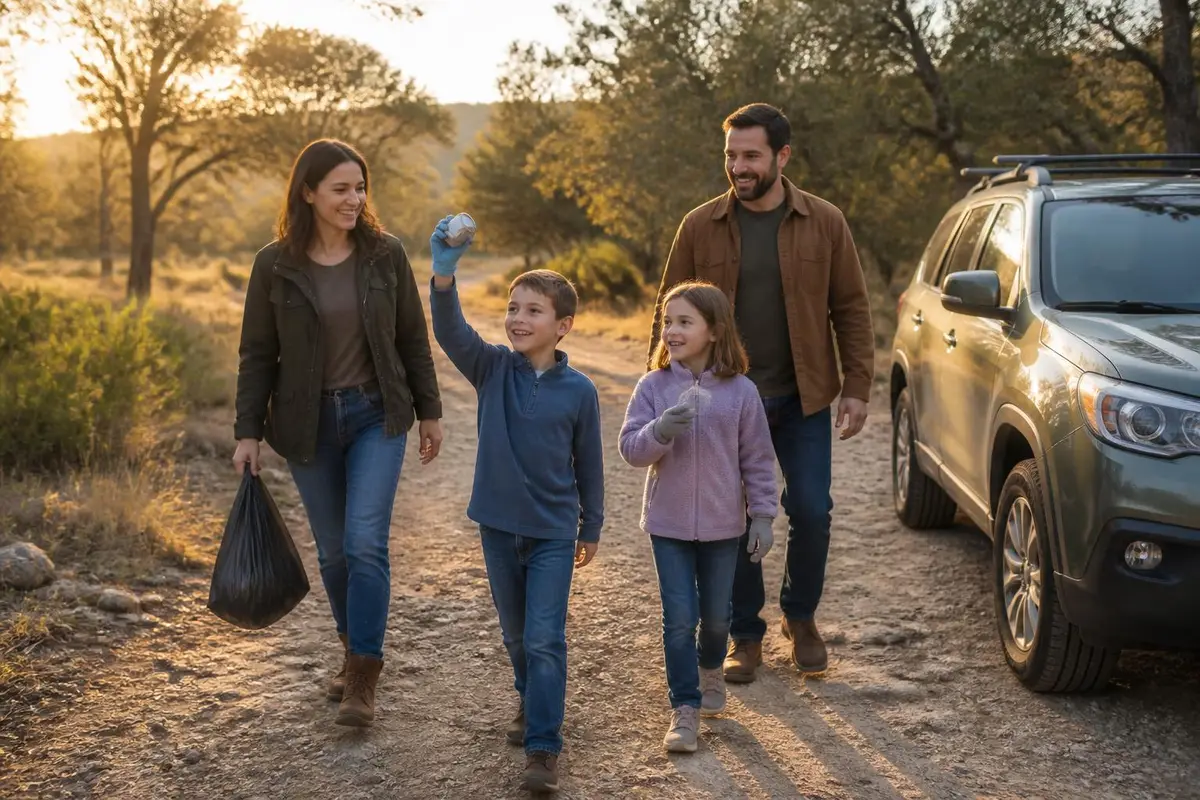
Tread Lightly!'s own five-point framework — Travel responsibly, Respect the rights of others, Educate yourself, Avoid sensitive areas, Do your part — spells out T.R.E.A.D., and its "do your part" point states the pack-out rule directly: leave the area better than you found it, and pack out your garbage regardless of who left it (see FAQ). This extends to human waste management on multi-day trips in areas without facilities, and to avoiding disturbing wildlife or vegetation beyond the established trail corridor.
Group Runs and Convoy Etiquette
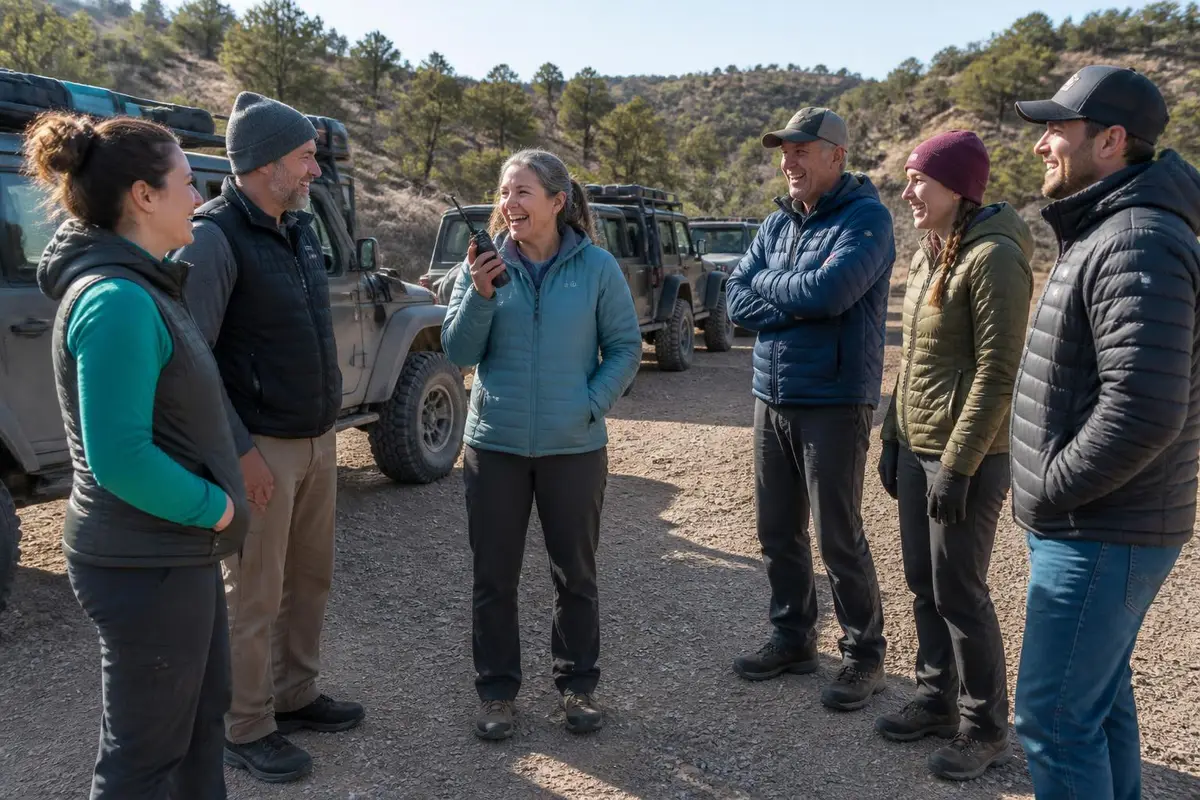
On a group trail run, maintaining reasonable spacing rather than tailgating through dust or over an obstacle before the vehicle ahead has fully cleared it, and having a designated tail vehicle to confirm nobody's left behind, are conventions experienced trail-run organizers report as standard for any group larger than two or three vehicles. A consistent radio channel or hand-signal system for the group avoids confusion at a technical obstacle where verbal communication is difficult.
Why Etiquette Is an Access Issue, Not Just Courtesy
Land-management agencies repeatedly cite trail widening, off-route travel and litter as leading, documented reasons for closing a popular off-road area to public access — meaning poor etiquette doesn't just annoy other drivers, it genuinely risks the trail's continued availability for everyone. See off-road trail ratings for how a trail's posted difficulty interacts with the access rules covered here, and off-road driving tips for the driving-skill side of a safe, responsible trail run.
Recommended gear
A first recovery kit for any 4WD
Affiliate disclosure: As an Amazon Associate, we earn from qualifying purchases, at no extra cost to you. Purchases through these links help keep this site running and up to date. Learn more

Best for a complete strap, shackle and glove kit in one bag.
- Straps, shackles, gloves, damper and a recovery bag in one kit.
- Covers most vehicle-to-vehicle recoveries without buying parts separately.

Best for getting unstuck from sand, mud or snow without another vehicle.
- Nylon recovery boards that give spinning tires grip in sand, mud or snow.
- Double as a shovel to clear sand from in front of the tires.

Best for airing all four tires down to a set pressure at once.
- Automatic deflators preset between 6 and 30 PSI.
- Air all four tires down at once, then stop at the set pressure.

Best for airing back up before you hit pavement.
- Portable 12V compressor rated to 150 PSI.
- Sized for truck and SUV tires.
We research products from manufacturer specs and owner feedback; we don't test them ourselves. How we choose.
Sources
- Tread Lightly! — T.R.E.A.D. Principles — The full five-point T.R.E.A.D. framework (Travel responsibly, Respect the rights of others, Educate yourself, Avoid sensitive areas, Do your part) and its explicit pack-out and stay-on-route language.
- eCFR — 36 CFR §261.13, Motor vehicle use — Off-route travel prohibition on federal land under a Motor Vehicle Use Map, regardless of signage.
- Federal Register / govinfo — 36 CFR Part 261 penalty provisions — Fine of up to $5,000 and/or up to six months imprisonment for violating the designated-route rule.
- U.S. Forest Service — Sierra National Forest OHV Trail Difficulty Symbols — Cross-referenced trail-rating symbol system that interacts with the access rules covered on this page.