
Affiliate disclosure: As an Amazon Associate, we earn from qualifying purchases, at no extra cost to you. We research rather than test, and commissions never change our rankings. This site is reader-supported: those commissions pay for hosting, research and keeping every guide up to date, so if a guide helped you, buying through our links is an easy way to support it. How we rank · Full disclosure
TL;DR
- Most mud stucks are prevented, not recovered from — scout depth and consistency, air down, and hold steady momentum rather than flooring it.
- Drive through a rut within the existing track, don't route around it — off-route travel is prohibited outright on federal land under a Motor Vehicle Use Map (36 CFR §261.13), with fines up to $5,000 or six months imprisonment.
- Tread Lightly!'s own T.R.E.A.D. principles state it directly: travel responsibly, cross obstacles rather than skirting them.
- A mud-terrain tire's wider, self-cleaning lug pattern gives technique more to work with than an all-terrain tire in genuinely deep, sustained mud.
- 4-low provides the fine throttle control mud driving needs; a slightly taller gear within that range often beats the lowest gear's more aggressive torque.
Scout Before Committing
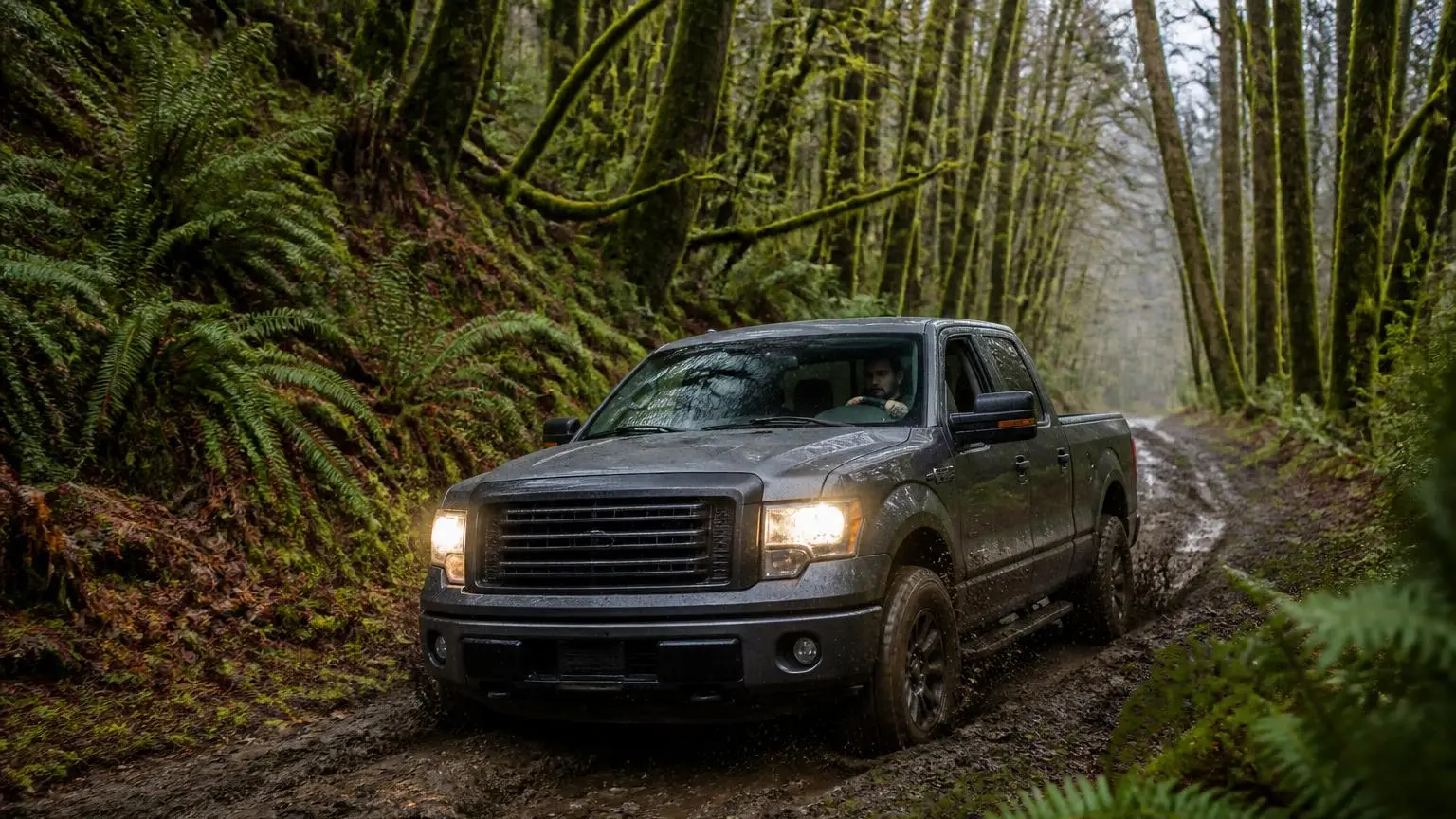
Walking an unfamiliar mud section on foot, or at minimum studying it closely from the vehicle, reveals depth and consistency a windshield view alone hides. A puddle that looks shallow can conceal a deep, soft rut underneath, and a section that looks uniformly muddy sometimes has a firmer line along one edge. Owners with extensive mud experience consistently report this single habit as the biggest predictor of avoiding a stuck in the first place.
Air Down for a Bigger Footprint
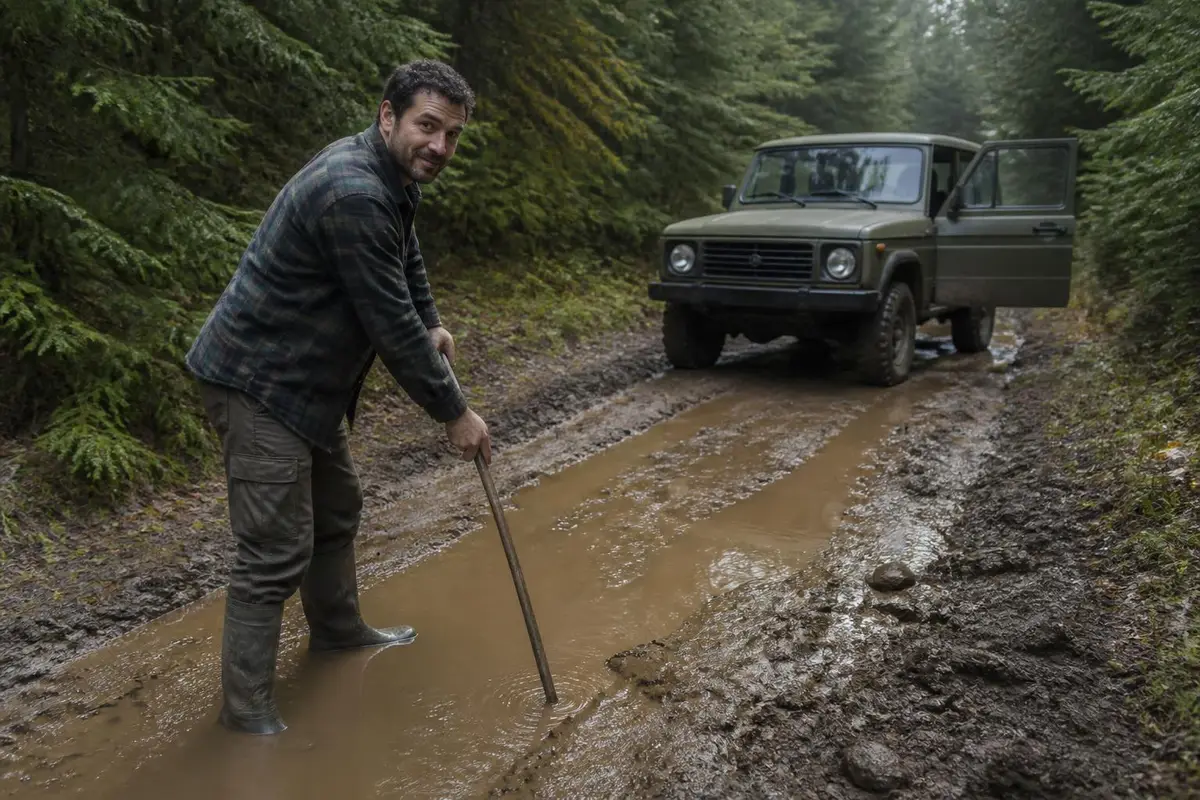
Lower tire pressure increases the tire's contact patch, helping it float across soft mud or dig down to firmer ground beneath the surface rather than sinking straight in (see FAQ). This is the same flotation principle that applies in sand, and it's one of the cheapest, most effective preventive steps available before ever entering a muddy section. See the airing-down guide for terrain-specific pressure ranges.
Maintain Steady Momentum, Not Maximum Speed
Losing forward momentum is what actually causes a mud stuck — once the tires stop making progress, they dig rather than roll. Steady, controlled speed through a mud section, adjusted to what can actually be seen ahead, keeps that momentum without overdriving into an obstacle hidden beneath the surface (see FAQ). A vehicle that's already bogging down needs a measured throttle response, not a full-throttle reaction that more often digs deeper.
Staying on the Route: Drive Through Ruts, Don't Go Around Them
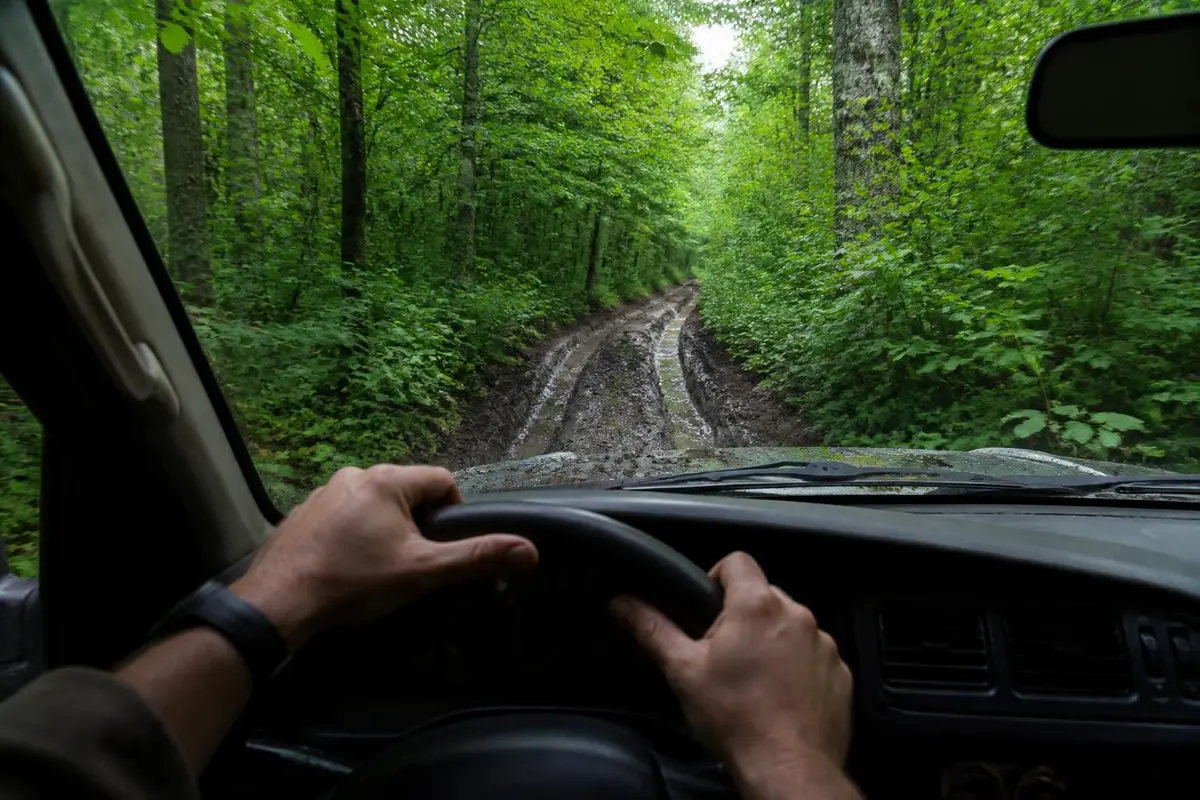
Existing ruts from prior vehicles concentrate water, stay softer longer, and tend to pull a vehicle's tires into them by default (see FAQ). Even so, the responsible and, on most public land, the legally required response is to drive through the rut within the existing track rather than skirting off the established route to avoid it. Tread Lightly! guidance is explicit: travel only on designated routes, and drive over obstacles rather than around them. On federal land managed under a Motor Vehicle Use Map, leaving the designated route is prohibited outright under 36 CFR §261.13 — a violation carries a fine of up to $5,000, up to six months imprisonment, or both, regardless of whether the area is signed — and cutting new ground beside a rut is also how trails widen and braid over time, damaging a larger area than the original rut ever covered. See off-road trail etiquette for the broader access picture beyond mud specifically.

Gear Selection: Low Range and a Taller Gear
4-low provides the fine throttle control mud driving benefits from — see 4 high vs 4 low for the full range comparison. Within that range, a slightly taller gear than the lowest available often produces smoother, more consistent wheel speed than the lowest gear's more aggressive torque delivery, which can spin tires rather than translating power into forward motion. Matching gear selection to maintaining smooth momentum, rather than maximum torque at every moment, is a technique experienced mud drivers report refining over time.
Tire Choice Still Matters More Than Technique Alone
Even perfect technique has limits on a tire that simply can't clear mud from its tread fast enough to keep biting. A mud-terrain tire's wider, self-cleaning lug pattern gives technique more to work with than an all-terrain tire's tighter tread in genuinely deep, sustained mud. See all-terrain vs mud-terrain tires for when that tread difference actually justifies the tradeoff for a specific build's typical terrain. Airing down, covered above, helps either tire type — but it can't fully substitute for a tread pattern that simply isn't designed to self-clean in deep, sticky mud, which is the specific job a mud-terrain tire's wider lug spacing exists to do on the toughest sections.
When Prevention Doesn't Work
Even good technique doesn't prevent every stuck — a hidden obstacle, a misjudged depth, or ground that's simply softer than it looked can still catch an experienced driver. See how to get unstuck from mud for the recovery steps once it happens, recovery gear for the traction boards, kinetic rope and winch that handle the situations technique alone can't prevent, and off-road driving tips for the broader technique picture beyond mud specifically.
Recommended gear
Gear for mud and wet trails
Affiliate disclosure: As an Amazon Associate, we earn from qualifying purchases, at no extra cost to you. Purchases through these links help keep this site running and up to date. Learn more

Best for a lower-cost set of traction boards for sand and mud.
- Traction tracks for sand, mud and snow recoveries.
- Sold as a pair, the budget alternative to MAXTRAX.

Best for a kinetic rope with matching soft shackles.
- 7/8 in x 30 ft kinetic rope plus two 7/16 in soft shackles.
- Comes with a waterproof storage bag.
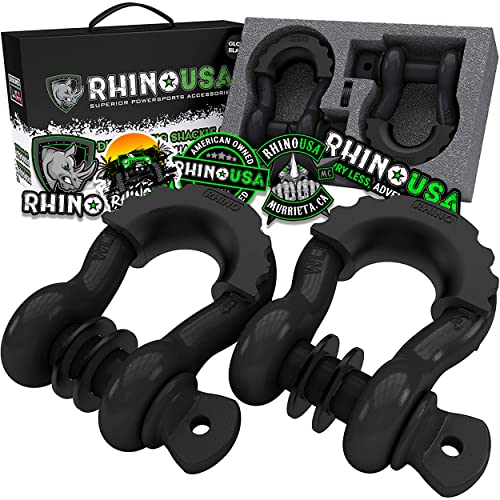
Best for rated connection points for straps and ropes.
- 3/4 in D-ring shackles, 41,850 lb listed break strength (2-pack).
- Connect straps to rated recovery points.

Best for solo self-recovery on steep or muddy trails.
- 12V winch with a 10,000 lb rated pull.
- Sized for full-size trucks and SUVs.
We research products from manufacturer specs and owner feedback; we don't test them ourselves. How we choose.
Sources
- Tread Lightly! — T.R.E.A.D. Principles — "Travel responsibly": stay on designated routes and go over, not around, obstacles — the specific rule behind driving through a rut rather than skirting it.
- eCFR — 36 CFR §261.13, Motor vehicle use — Off-route travel on federal land under a Motor Vehicle Use Map is prohibited outright, regardless of signage.
- Federal Register / govinfo — 36 CFR Part 261 penalty provisions — Violation of the designated-route prohibition carries a fine of up to $5,000, up to six months imprisonment, or both.
- BFGoodrich — Tire FAQ — 20 PSI floor / 15 mph guidance, applied to airing down for mud flotation.
- WARN Industries — Determine the Right Winch Capacity — Winch as the escalation point when technique alone doesn't prevent a stuck, and how a winch is sized relative to vehicle weight.