Recommended 4x4 Places: Ranked Lists
Ranked and recommended lists that link our own place guides first, and cite an official source for every other place named. Each kind of list turns on a different rule: a beach needs a driving permit, dispersed camping has a stay limit, and a beginner trail is defined by its difficulty rating.
Beaches You Can Drive On
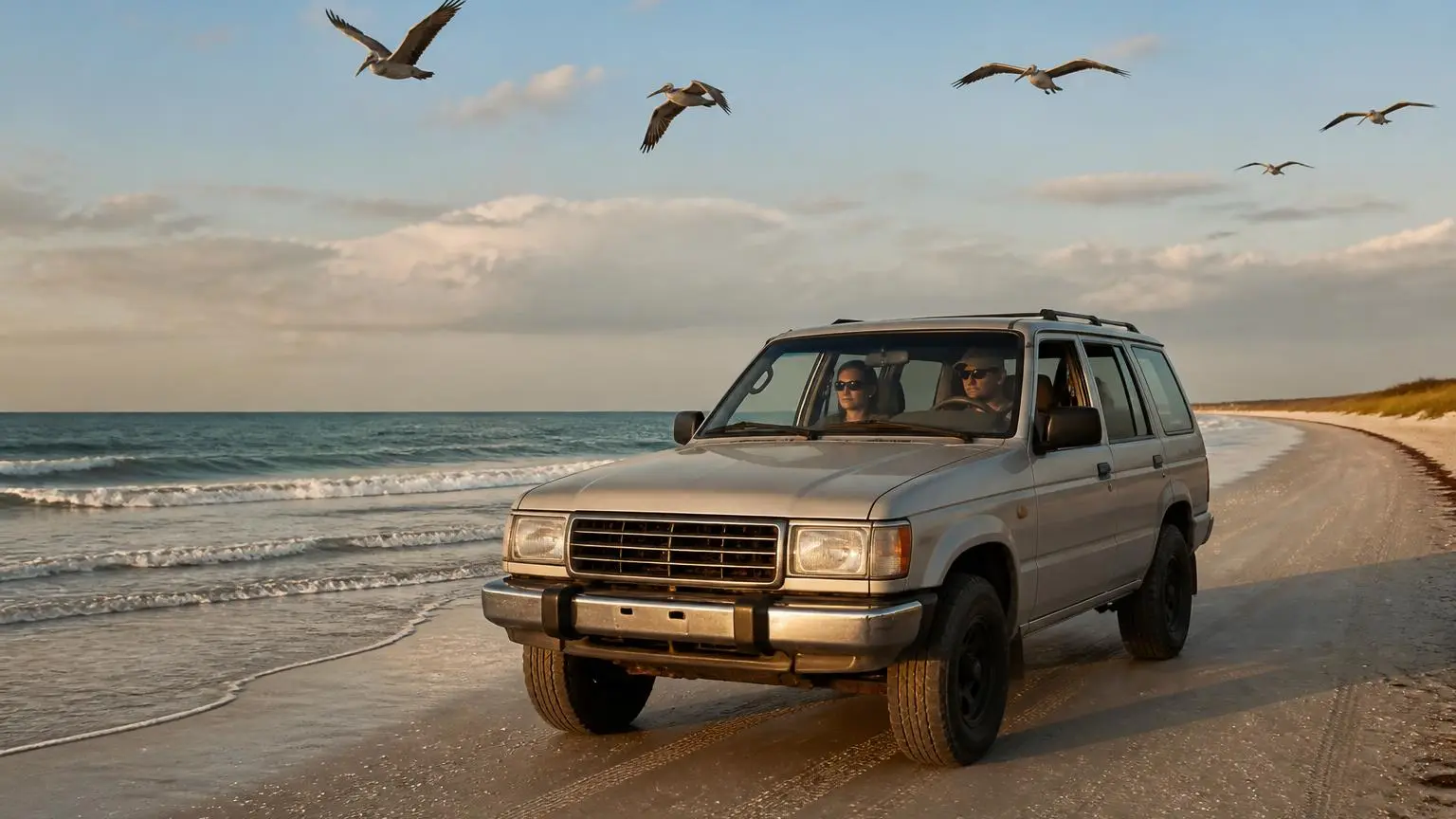
A handful of US beaches allow street-legal and 4WD vehicles on the sand under a county or National Park Service permit — Daytona Beach in Florida, three public beaches in Galveston, Texas, the Outer Banks' Carova and Cape Hatteras National Seashore in North Carolina among the best known.
Live Thu, Apr 1Beaches You Can Drive On in Florida
Daytona Beach, run by Volusia County's Park Volusia program, is Florida's best-known legal beach-driving destination — residents drive free, and non-residents buy a beach-driving permit and an off-beach parking permit or pay a daily visitor fee.
Live Thu, Apr 1North Carolina Beaches You Can Drive On
North Carolina's two legal beach-driving destinations are Carova, a county-regulated public vehicular area on the northern Outer Banks with no paved-road access at all, and Cape Hatteras National Seashore further south, which runs its own National Park Service ORV permit.
Live Thu, Apr 8Oregon Beaches You Can Drive On
Oregon's public-beach driving is far more restricted than its dune riding — the state's best-known legal off-road coastal destination is the Oregon Dunes National Recreation Area, a Siuslaw National Forest OHV area covering coastal dune terrain rather than the open beach itself.
Live Mon, Apr 12Beaches in Galveston You Can Drive On
Vehicles are banned from most Galveston beaches, but the Galveston Park Board allows driving with a parking pass at three specific public access points: Beach Access Point 36 at Salt Cedar Drive, Pocket Park 1 on the West End, and Sunny Beach off San Luis Pass Road.
Live Wed, Apr 7South Carolina Beaches You Can Drive On
The honest answer is that South Carolina currently has no beach open to unrestricted vehicle driving: Hunting Island State Park and Edisto Beach State Park both prohibit motorized vehicles on the sand by ordinance, and Port Royal's Sands Beach — once the state's best-known exception — restricted vehicle access to pedestrians, golf carts and bicycles only under an updated town policy.
Live Mon, Apr 12Best Beginner Off-Road Trails
The friendliest legal trails for a first-time 4WD driver are ones our trail-ratings rubric scores Green (1–3) or a low Blue (4): graded dirt or basic 4WD terrain that doesn't demand lockers, 33-inch tires or a winch.
Live Sat, Apr 24Jeep Badge of Honor Trails
Jeep Badge of Honor is a free app-based rewards program, launched by Jeep in 2013, that lets any driver check in at partner trails and lets registered Jeep owners earn a mailed "Hard Badge"; the app's trail map has grown to over 100 trails nationwide, with 85 of them designated permanent Core Trails, several of which — including Rubicon, Johnson Valley and Black Bear Pass — have their own dedicated guide on this site.
Live Thu, Jan 14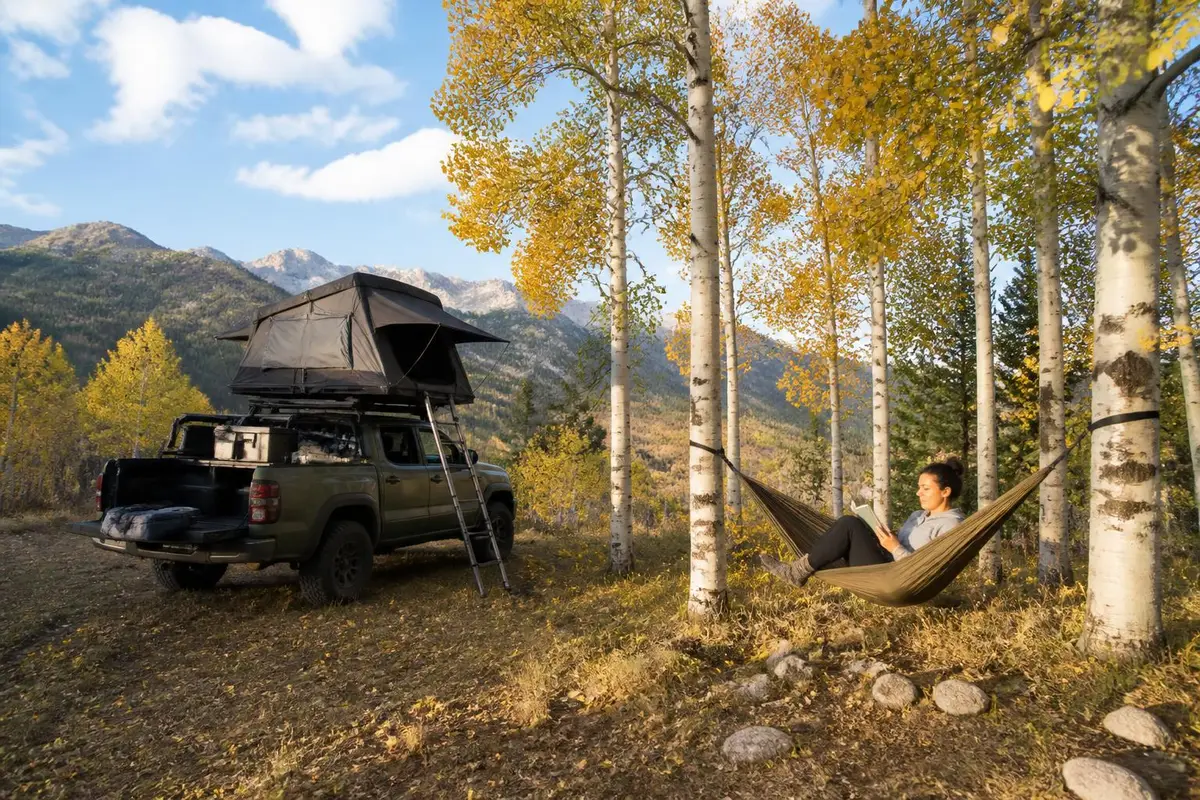
Dispersed Camping in Colorado
Dispersed camping on Colorado BLM and national forest land is free, unreserved and capped at 14 days in any 30-day period at one location, after which you must move at least 30 air miles away before camping in that area again.
Live Sat, May 1Dispersed Camping in Washington State
Washington and Oregon national forest land caps dispersed camping at 14 days within any 28-day period, after which you must move your campsite outside a 25-mile radius, with some forests like Gifford Pinchot and Colville also capping total camping at 28 days per year.
Live Mon, Apr 26Dispersed Camping in Michigan
Michigan allows free dispersed camping on state forest land as long as the site sits more than one mile from a state forest campground, isn't posted "No Camping," and carries a posted DNR backpacking registration card, with a 15-day maximum stay at one location.
Live Sat, Apr 24The Rule to Check for Each Kind of List
| List | Who sets the rules | What to check before you go |
|---|---|---|
| Beaches you can drive on | The county, city or National Park Service unit that owns the beach | The driving permit, seasonal closures and required gear |
| Dispersed camping | The BLM field office, national forest or state forest agency | The stay limit and how far you must move afterward |
| Beginner trails | The land manager, plus our 1–10 difficulty scale | The trail's rating and whether it's open to your vehicle class |
| Jeep Badge of Honor trails | Jeep runs the program; the land manager runs each trail | The trail's own access rules and rating |
Beach Driving Permits: Cape Hatteras as a Worked Example
National Park Service units may allow off-road driving only on routes designated by special regulation, and only in national recreation areas, seashores, lakeshores and preserves (36 CFR 4.10). Cape Hatteras National Seashore in North Carolina is one of them, and its permit shows what beach driving usually involves:
- Cost: a 10-day permit is $50, valid for 10 consecutive days; an annual permit is $120, valid for one year from purchase.
- How to get one: watch the park's ORV safety video, apply on Recreation.gov, then print the permit and display proof of it on the windshield.
- Required gear: a low-pressure tire gauge, a shovel, a jack and a jack support board.
- Recommended gear: a tow strap, first aid kit, full-size spare tire, trash bags, fire extinguisher and, for night driving, a flashlight.
For a family that visits for a week each summer, two 10-day permits ($100) cost less than an annual permit ($120); a third trip in the same year makes the annual permit cheaper.
Dispersed Camping Stay Limits Compared
| Land | Stay limit | After the limit |
|---|---|---|
| BLM land, general rule | 14 days within any 28-day period | Move, often at least 25–30 miles; varies by field office |
| BLM land in Colorado | 14 days in any 30-day period at one location | Move at least 30 air miles |
| Gifford Pinchot National Forest, Washington | 14 consecutive days in one spot | No more than 28 total days per calendar year across the forest (Forest Order 06-03-00-24-03) |
The BLM also asks campers to stay at least 200 feet from water sources. Limits are set locally, so the state camping lists cite each area's own rule.
What Makes a Trail Beginner-Friendly
Our beginner list favors trails in the Green band (1–4) of our trail difficulty scale. On national forests, the Forest Service's own road maintenance levels are a useful cross-check: a level 2 road is maintained for high-clearance vehicles, while level 3 to 5 roads are maintained for a standard passenger car in the normal season of use.
Recommended gear
A first recovery kit for any 4WD
Affiliate disclosure: As an Amazon Associate, we earn from qualifying purchases, at no extra cost to you. We research rather than test, and commissions never change our rankings. This site is reader-supported: those commissions pay for hosting, research and keeping every guide up to date, so if a guide helped you, buying through our links is an easy way to support it. How we rank · Full disclosure

Best for a complete strap, shackle and glove kit in one bag.
- Straps, shackles, gloves, damper and a recovery bag in one kit.
- Covers most vehicle-to-vehicle recoveries without buying parts separately.

Best for getting unstuck from sand, mud or snow without another vehicle.
- Nylon recovery boards that give spinning tires grip in sand, mud or snow.
- Double as a shovel to clear sand from in front of the tires.

Best for airing all four tires down to a set pressure at once.
- Automatic deflators preset between 6 and 30 PSI.
- Air all four tires down at once, then stop at the set pressure.

Best for airing back up before you hit pavement.
- Portable 12V compressor rated to 150 PSI.
- Sized for truck and SUV tires.
We research products from manufacturer specs and owner feedback; we don't test them ourselves. How we choose.
Sources
- eCFR — 36 CFR 4.10 (NPS travel on park roads and designated routes) — NPS off-road routes only by special regulation, in recreation areas, seashores, lakeshores and preserves
- Cape Hatteras National Seashore — Off-Road Vehicle Permits — $50 10-day and $120 annual permits; safety video, Recreation.gov and windshield display
- Cape Hatteras National Seashore — Off-Road Vehicle Use — Required and recommended ORV equipment
- Bureau of Land Management — Camping on Public Lands — 14-days-in-28 limit, 25–30-mile move, 200 feet from water
- BLM Colorado — Camping and Occupancy fact sheet — Colorado BLM 14-days-in-30 limit and 30-air-mile move
- Gifford Pinchot National Forest — Camping Restrictions alert — 14 consecutive days and 28 days per calendar year; Forest Order 06-03-00-24-03
- US Forest Service — Guidelines for Road Maintenance Levels (2012) — Level 2 roads for high-clearance vehicles; levels 3–5 for passenger cars