

Affiliate disclosure: As an Amazon Associate, we earn from qualifying purchases, at no extra cost to you. We research rather than test, and commissions never change our rankings. This site is reader-supported: those commissions pay for hosting, research and keeping every guide up to date, so if a guide helped you, buying through our links is an easy way to support it. How we rank · Full disclosure
Mounting a winch means bolting it to a bumper or plate built for the job. Use the winch's specific bolt pattern, and the hardware grade its instructions call for. Warn's own mounting-kit documentation lists 10 x 4.5 inch (254 x 114.3mm) four-bolt spacing as the common pattern for most mid-size and full-size truck winches. That's why most aftermarket bumpers and universal plates are built to it. But the exact spec, bolt grade and torque value always come from that winch model's own manual — never assume a generic number.
| Tools needed | Socket set / impact wrench, Torque wrench, Winch mounting plate or winch-rated bumper, A second set of hands (winches are heavy) |
|---|---|
| Time estimate | 1–2 hours for mounting alone |
| Difficulty | Easy to Moderate |
Mounting Is Its Own Job
Installing a winch is really two separate tasks: mounting it to the truck, and wiring it to the battery and a control switch. This page covers mounting only. See how to wire a winch for the electrical half — most owners treat that as a separate follow-on step.
Confirm the Winch Is Sized to the Truck Before Bolting Anything Down
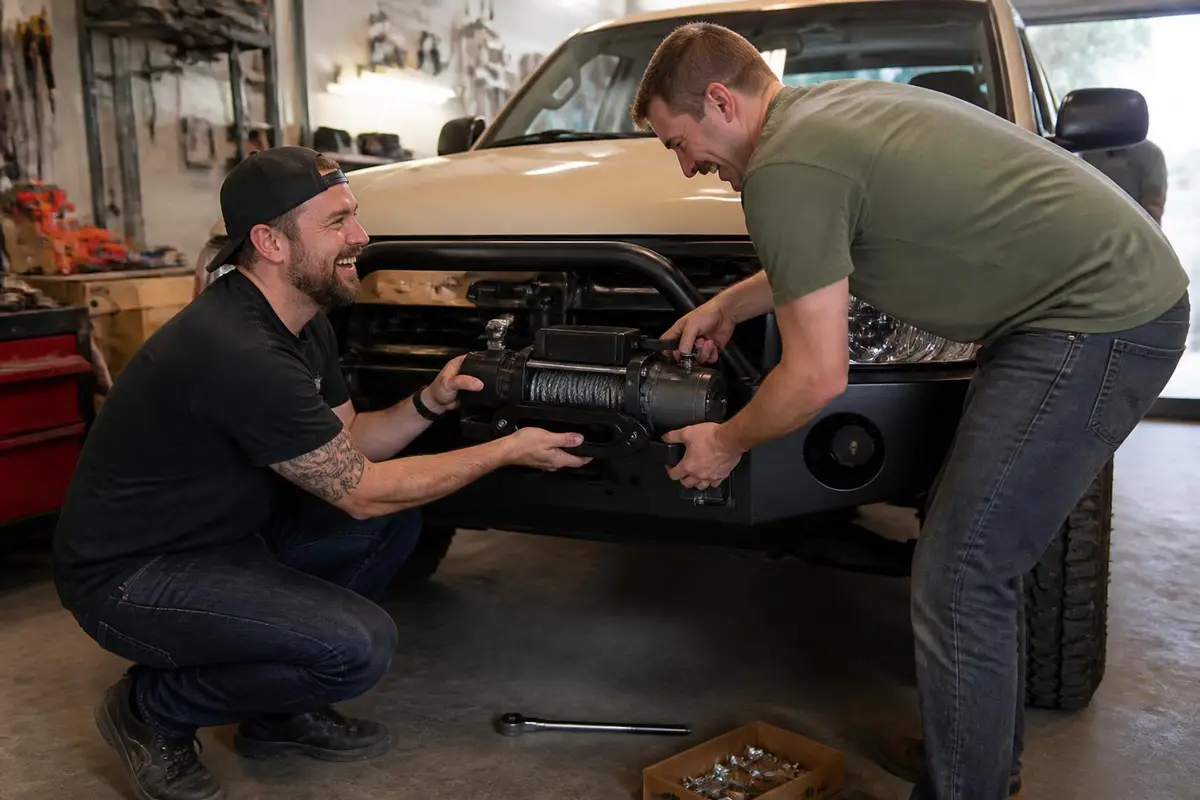
Before you mount anything, check that the winch is actually rated for the job. Warn's own guidance: size a winch's rated line pull to at least 1.5 times the vehicle's GVWR (gross vehicle weight rating — found on the driver's-door-jamb sticker). That accounts for the extra load of mud, water and an uphill recovery angle, which a bare curb-weight number doesn't cover. A winch mounted correctly but undersized for the truck still leaves you short on pulling capacity exactly when it matters.
The Mounting Surface and Hardware, Specifically
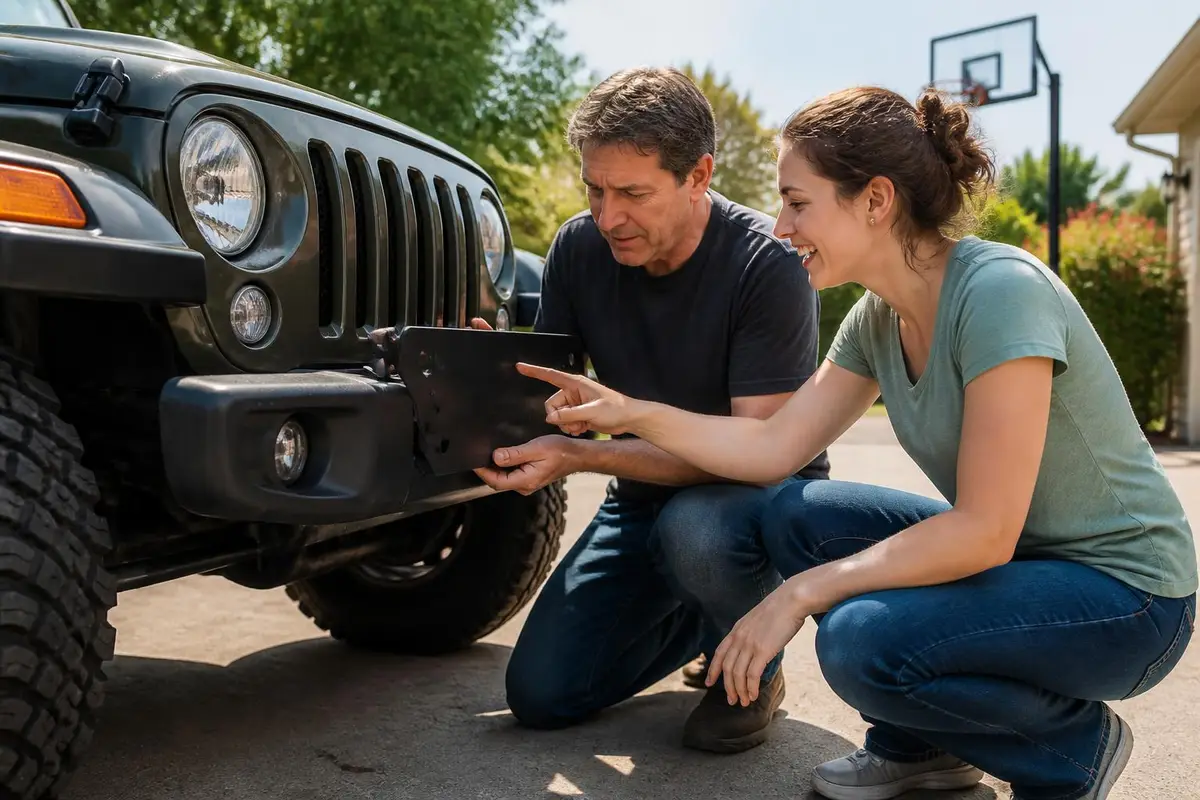
Warn's mounting-kit instructions call for a flat surface at least 1/4 inch (6.4mm) thick, bolted with class 8.8 metric (roughly SAE grade 5) hardware or better. Feet-forward and feet-down mounting orientations use different bolt sets, per Warn's own kit documentation — match the orientation to the parts list, rather than assuming any M10 bolt works. Two rules apply no matter the orientation: never weld a mounting bolt, and never use a longer bolt than specified. A bolt that bottoms out in a blind hole before it clamps the winch down doesn't do its job.
Attaching the Winch Line Safely
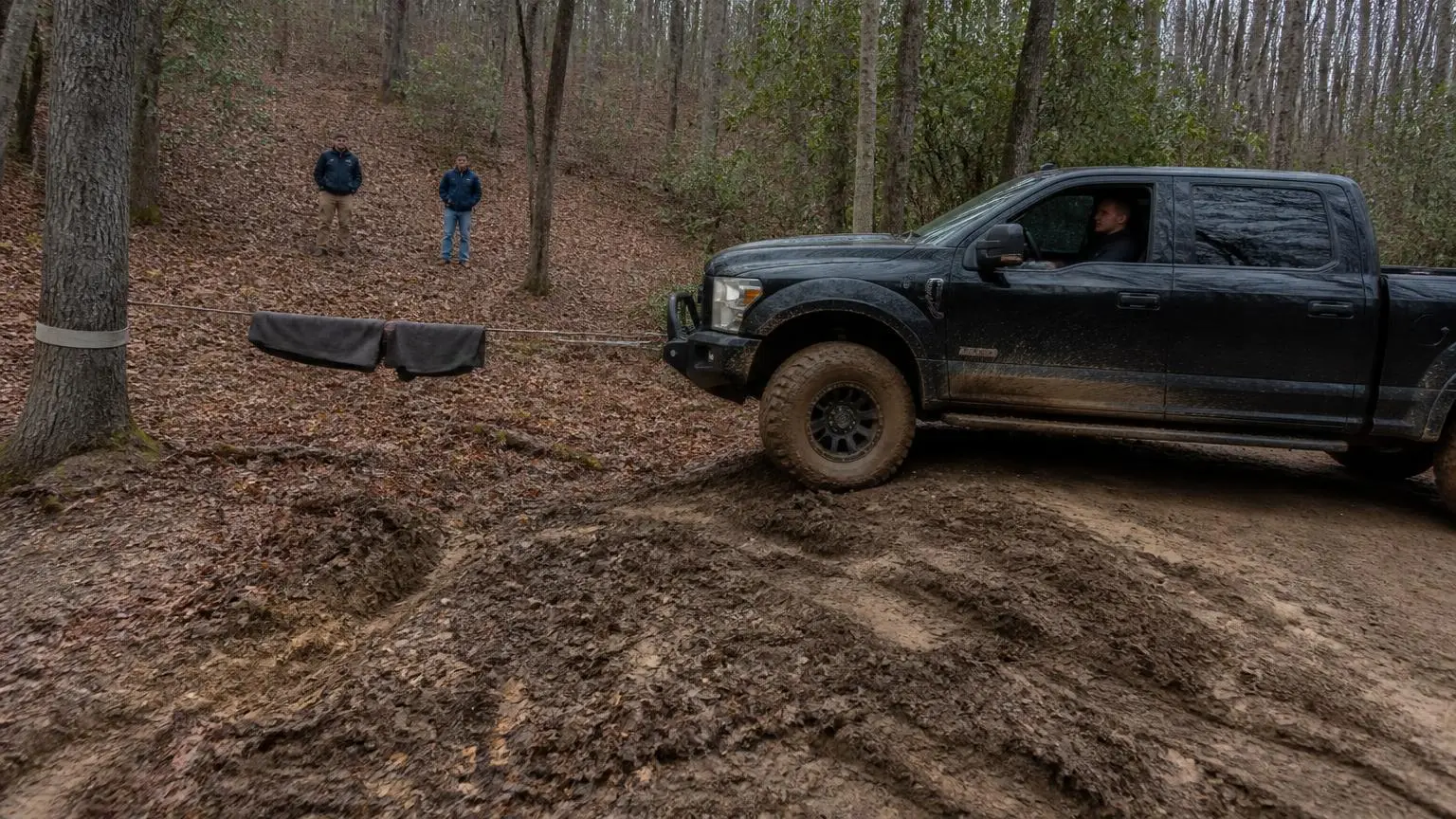
Once the winch is mounted, attaching it to a recovery is where most mistakes happen. Warn's winching guide gives several firm rules.
- Always use the supplied hook, and apply load only to the center of the hook, never to the tip or latch.
- Never wrap the rope back onto itself. Use a tree trunk protector or choker chain on the anchor instead. Warn notes chains will damage or kill trees, so a trunk protector is the kinder choice.
- Pick an anchor that will withstand the load, and double the line or choose a distant anchor if the pull is heavy.
- Never winch with fewer than 5 wraps of rope on the drum.
Finish the physical install and hook attachment before you wire the winch, as the guide advises. See our wiring guide for the electrical side.
Step Overview
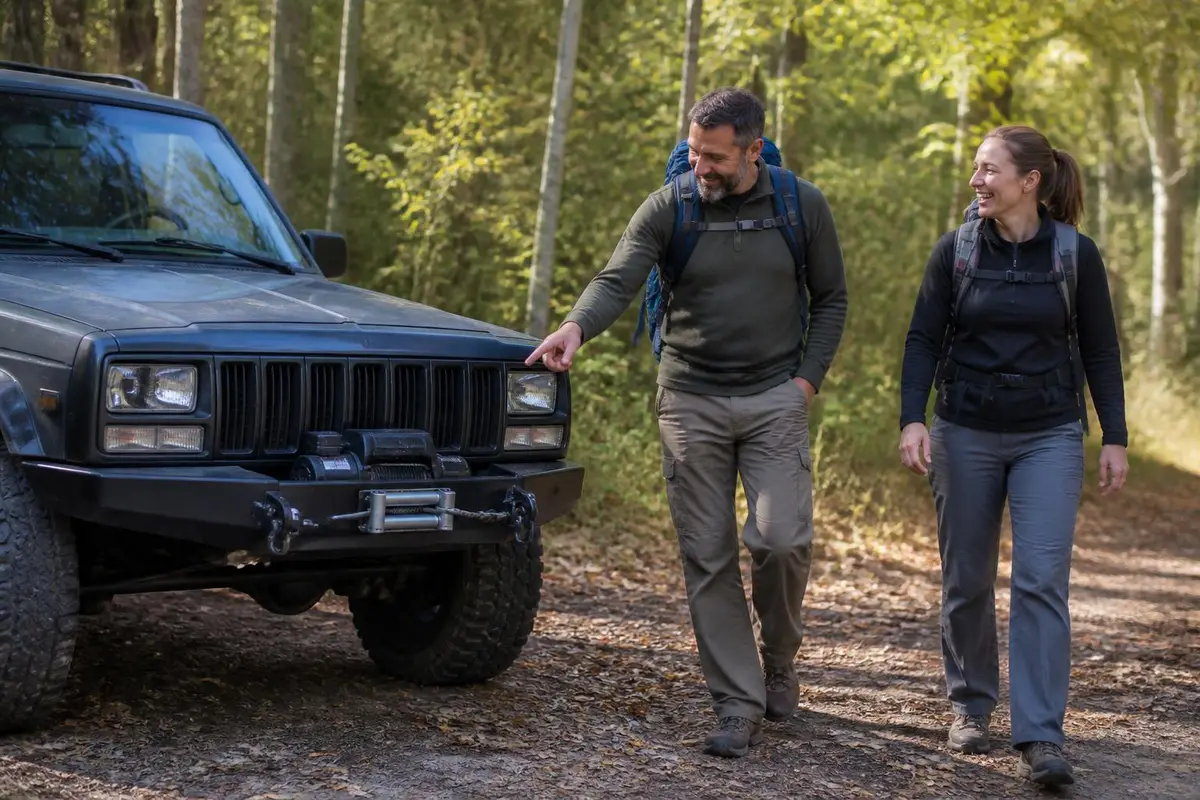
Confirm the mounting plate or bumper is rated for the winch's weight and pulling capacity. Position the winch so the cable feeds correctly through the fairlead. Torque the mounting bolts to the value in the winch or plate's own instructions — use the printed torque spec, never a guessed one. That number varies by model: Warn's Zeon Platinum manual specifies 41-47 Nm (30-35 ft-lbs) for its mounting bolts. "Snug it down" isn't the same as torqued to spec. Route the winch far enough forward that the cable spools evenly on the drum, without rubbing the fairlead at an angle.
Fleet Angle: Why Centering the Fairlead Matters
Winch makers publish a real tolerance for this, not just a "keep it centered" suggestion. ComeUp's own manual says the pull should stay within about 15° of horizontal, and within about 5° of perpendicular to the drum's centerline, for the rope to wind on evenly.
Mount the winch off-center from the fairlead — or too close for the fairlead to correct the angle — and the rope climbs one side of the drum instead of wrapping evenly. That's the actual mechanism behind uneven spooling and early rope wear. It's not just a cosmetic issue.
Common Mistakes
The most safety-relevant mistake: swapping in hardware-store bolts instead of the grade Warn specifies, or welding a mounting bolt in place. A winch mount takes real shock loading during a recovery pull, and welding changes a bolt's temper in ways you can't see afterward. The other common mistake: mounting the winch off-center from the fairlead opening, outside the maker's fleet-angle tolerance. That makes the cable spool unevenly and rub, which shortens its life.
Parts and Recommended Gear
- Winches — ranked and compared
- Verified winch listings Check Price (paid link)
When to Use a Pro
Bolting a winch to a pre-drilled, rated mounting plate is a reasonable DIY task for anyone comfortable with basic hand tools. A bumper that requires cutting, welding, or fabricating a custom mount is a job for a shop with fabrication experience — a mount that isn't structurally sound is a genuine safety hazard under winching load.
Sources
- Warn — Winch mounting kit installation instructions — 10 x 4.5 inch (254 x 114.3mm) four-bolt mounting pattern; flat mounting surface at least 1/4 inch thick; class 8.8 metric (grade 5) or better hardware; never weld or over-length a mounting bolt.
- Warn — Zeon Platinum Operators & Install Manual — Minimum 650 cold-cranking-amp battery requirement for running a winch, and the model's own specified mounting-bolt torque of 41-47 Nm (30-35 ft-lbs).
- ComeUp — Instruction Manual for Automotive Winch — Published fleet-angle tolerance for even rope spooling: pull within about 15° of horizontal and 5° perpendicular to the drum centerline.
- Warn — Basic Guide to Winching — General mounting/electrical safety guidance and the 650 CCA battery recommendation, corroborating the winch's own manual.
- Warn — "Tech Tip Tuesday: Determine the Right Winch Capacity For Your Truck or SUV" — Warn's own sizing rule: choose a winch with a rated line pull of at least 1.5 times the vehicle's GVWR (found on the door-jamb sticker), to account for recovery angle, mud and water beyond bare curb weight.