
Affiliate disclosure: As an Amazon Associate, we earn from qualifying purchases, at no extra cost to you. We research rather than test, and commissions never change our rankings. This site is reader-supported: those commissions pay for hosting, research and keeping every guide up to date, so if a guide helped you, buying through our links is an easy way to support it. How we rank · Full disclosure
TL;DR
- 4H drives both axles at normal gearing (1:1); 4L adds a reduction, 2.72:1 or 4.0:1 on a current Wrangler, that multiplies torque and slows the wheels.
- Use 4H for snow, ice, gravel and wet dirt at road speed; use 4L for rocks, steep climbs and descents, and pulling a trailer up a ramp.
- Jeep allows 2H to 4H on the move up to 55 mph; shift into 4L at 2 to 3 mph (Jeep) or 3 mph or less (Ford), in neutral.
- Jeep's ceiling in 4L is 25 mph.
- Part-time 4H and 4L stay off dry pavement: Ford warns of noise, tire wear and damage to drive components.
At a Glance
| Situation | Range | Why |
|---|---|---|
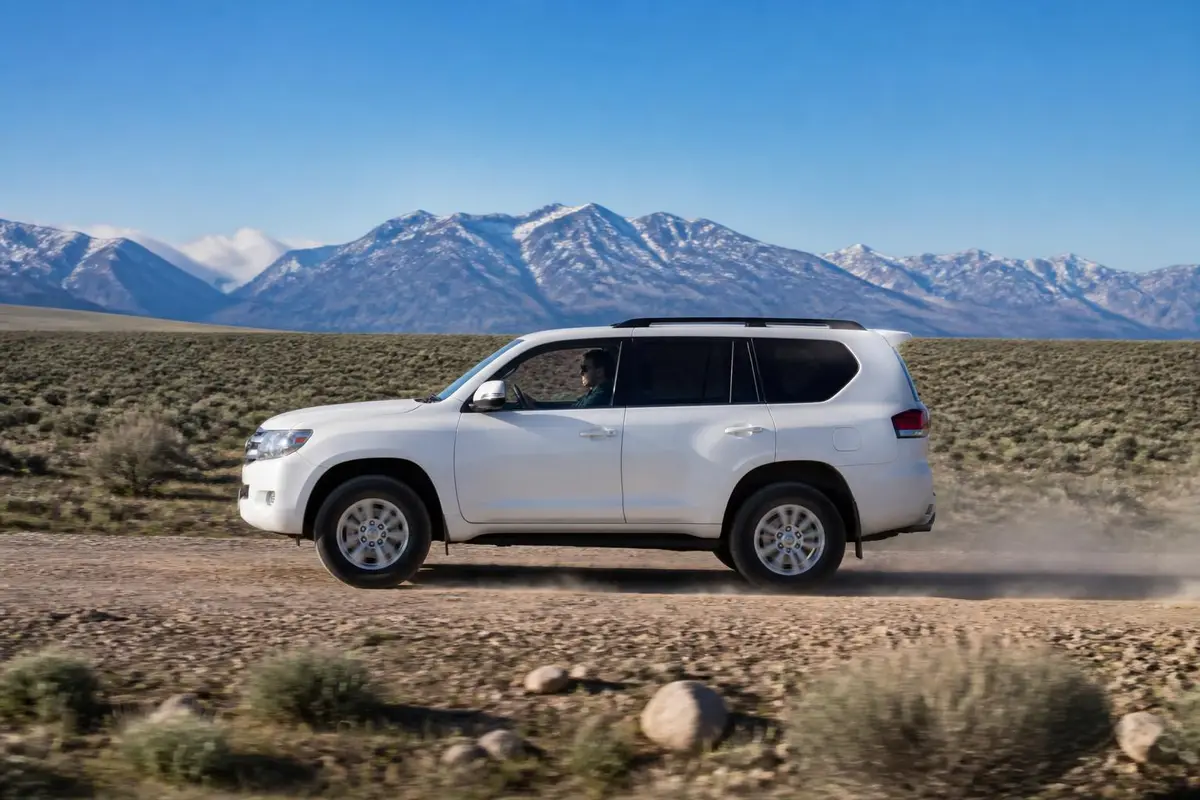
| Snow, ice, gravel or wet dirt road at normal speed | 4H | Full road speed with power at both axles |
| Soft sand where you need momentum | 4H first, 4L if needed | Jeep suggests trying 4H to keep moving, then 4L |
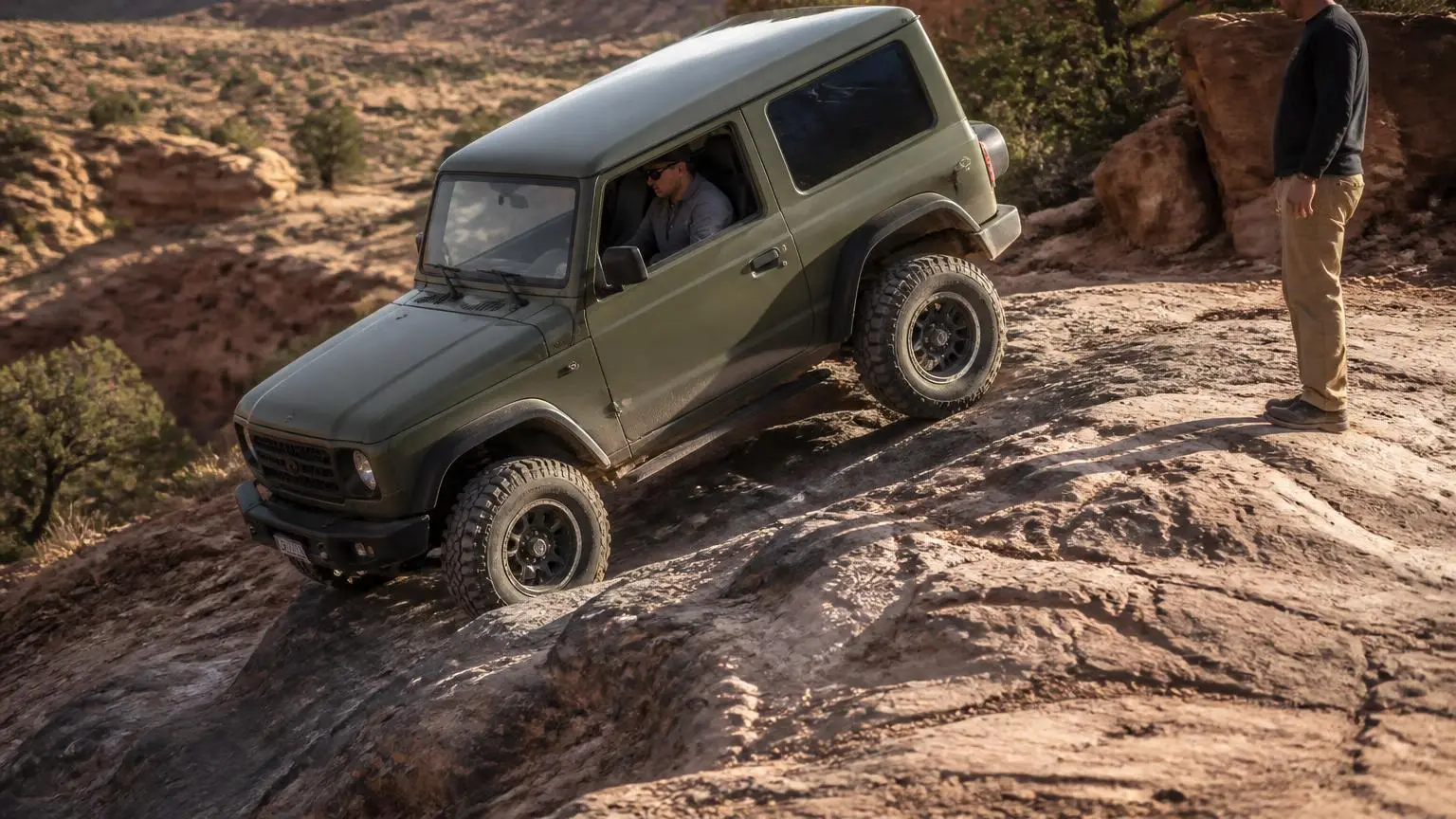
| Rock crawling, ledges, logs | 4L, lowest gear | Idle-speed crawling with maximum torque |
| Steep climb or steep descent | 4L | Torque going up, engine braking coming down |
| Pulling a boat or trailer up a wet ramp | 4L | Jeep lists this as a low-range job |
| Dry pavement | 2H (part-time) or 4WD Auto | Part-time 4H or 4L binds the driveline on grippy surfaces |
4-High: Loose Surfaces at Normal Speed
In 4H the transfer case runs at 1:1, so gearing is the same as in 2WD. On a part-time case the front and rear driveshafts are locked together, so both axles are driven. Jeep says the shift into 4H can be made stopped or moving, at up to 55 mph. Jeep recommends extended driving in 4H on a part-time system only on wet, loose or slippery surfaces. A full-time system can stay in high range in normal conditions because a center differential or clutch lets the front and rear turn at different speeds.
4-Low: Torque Multiplication for Technical Terrain
4L engages a reduction gear set in the transfer case, on top of whatever gear the transmission is in. Jeep's current Wrangler specifications list two low-range ratios:
| Transfer case | Type | Low range | Fitted to |
|---|---|---|---|
| NV241 Command-Trac | Part-time | 2.72:1 | Sport, Sahara |
| MP3022 Selec-Trac | Full-time | 2.72:1 | Moab 392 |
| NV241OR Rock-Trac | Part-time | 4.0:1 | Rubicon (standard) |
| MP3022OR Rock-Trac | Full-time | 4.0:1 | Rubicon (optional) |
A 4.0:1 low range makes the wheels turn a quarter as fast as in 4H for the same engine speed and transmission gear, and multiplies torque at the wheels four times, before friction losses. Jeep's guidance is not to exceed 25 mph in low range and to avoid it for normal driving on hard surfaces.
Worked Example: What 4L Does on a Wrangler Rubicon
Using Stellantis's figures for a Rubicon with the 3.6-liter V6 (260 lb-ft), the 8-speed automatic (first gear 4.71:1) and 4.10 axles on nominal LT285/70R17 tires (about 32.7 inches tall, roughly 617 revolutions per mile):
| 4H (1:1) | 4L (4.0:1) | |
|---|---|---|
| Overall ratio (1st × transfer case × axle) | 19.3:1 | 77.2:1 |
| Road speed at 2,000 rpm | about 10 mph | about 2.5 mph |
| Peak engine torque multiplied at the axles | about 5,000 lb-ft | about 20,100 lb-ft |
That 77.2:1 figure is the Rubicon's crawl ratio with the automatic. The overall ratio in first gear and low range is what sets how slowly the vehicle can creep at idle. Jeep puts the ideal rock-crawling speed at 1 to 3 mph and says low gearing at idle will generally pull the vehicle over obstacles. With the 6-speed manual (first gear 5.13:1) and optional 4.88 axles, the same arithmetic gives about 100:1, the maximum crawl ratio Jeep advertises for the Wrangler. A Sport with the 2.72:1 case, 3.45 axles and the automatic works out to about 44:1.
Shifting Between Ranges Correctly
- 2H to 4H: Jeep allows it stopped or moving up to 55 mph. Ford's 2017 Super Duty manual allows it at a stop or while driving.
- Into or out of 4L: Jeep says to roll at 2 to 3 mph with an automatic in neutral (or the clutch pressed on a manual), shift, then select a gear. Ford says 3 mph or less with the transmission in neutral, and if you try above 3 mph the system will not shift.
- Shifting into 4L at a dead stop: Jeep says this works but isn't recommended, because the gear teeth may not line up.
- Manual hubs: on trucks with manual locking hubs, turn both hubs to LOCK before relying on 4H or 4L. See what locking hubs do.
Choosing the Right Range for the Terrain
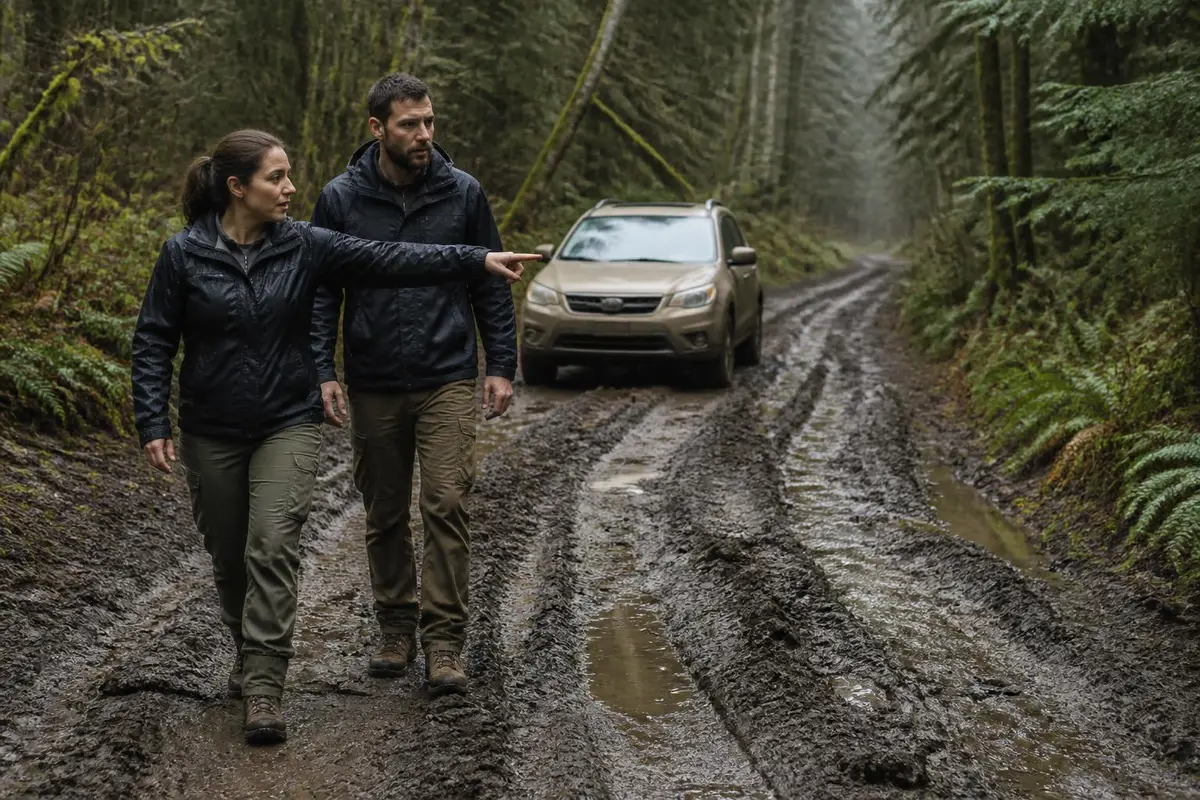
Jeep's rule of thumb: use high range for all road surfaces, including wet or snow-covered pavement, sand and gravel (on a part-time system, only where the surface is slippery). Use low range where you need added low-speed power or technical control, such as rocks, steep grades, deep mud or pulling a trailer out of the water. On soft sand Jeep suggests starting in 4H to keep momentum and dropping to 4L only if the sand demands it. For descents, Jeep says to use low range and the lowest gear so the engine controls speed; see engine braking for why that works, and when to use 4WD for the surface-by-surface decision.
Common Mistakes
- Leaving a part-time system in 4H or 4L on dry pavement. Jeep describes the result as crow hop (a bang, shudder and tire scuffing in turns). Ford warns of noise, tire wear and possible damage to drive components.
- Driving too fast in 4L. Jeep's ceiling is 25 mph. More torque does not mean more traction, and wheelspin on snow, ice or mud comes quicker in low range.
- Waiting until you're stuck. Jeep's advice is to engage 4WD before you need it.
Recommended gear
A first recovery kit for any 4WD
Affiliate disclosure: As an Amazon Associate, we earn from qualifying purchases, at no extra cost to you. Purchases through these links help keep this site running and up to date. Learn more

Best for a complete strap, shackle and glove kit in one bag.
- Straps, shackles, gloves, damper and a recovery bag in one kit.
- Covers most vehicle-to-vehicle recoveries without buying parts separately.

Best for getting unstuck from sand, mud or snow without another vehicle.
- Nylon recovery boards that give spinning tires grip in sand, mud or snow.
- Double as a shovel to clear sand from in front of the tires.

Best for airing all four tires down to a set pressure at once.
- Automatic deflators preset between 6 and 30 PSI.
- Air all four tires down at once, then stop at the set pressure.

Best for airing back up before you hit pavement.
- Portable 12V compressor rated to 150 PSI.
- Sized for truck and SUV tires.
We research products from manufacturer specs and owner feedback; we don't test them ourselves. How we choose.
Sources
- Jeep — 4x4 FAQ & Glossary — 4L definition, 25 mph limit, 2–3 mph neutral shift, why a dead-stop shift isn't recommended, 4H shift up to 55 mph, part-time 4H only on slippery surfaces, crow hop on dry pavement, sand and descent technique, 1–3 mph rock-crawling speed.
- Jeep — 4x4 Systems — When to use high range and low range, including pulling a boat trailer out of water.
- Stellantis Media — 2026 Jeep Wrangler Specifications — Transfer cases and low-range ratios (Command-Trac and Selec-Trac 2.72:1, Rock-Trac 4.0:1), 8-speed first gear 4.71, 6-speed first gear 5.13, axle ratios 3.45/4.10/4.88, 3.6L torque 260 lb-ft, LT285/70R17 Rubicon tire — the inputs to this page's worked example.
- Stellantis Media — Press Kit: What's New for 2026: Jeep Wrangler — Jeep's claim of maximum crawl ratios up to 100:1 for the Wrangler.
- Ford Owner's Manual — Using Four-Wheel Drive (2017 Expedition) — Ford: 4L shift at 3 mph or less in neutral; the system won't shift above 3 mph; no 4H or 4L on dry, hard-surfaced roads.
- Ford Owner's Manual — Using Four-Wheel Drive (2017 Super Duty) — Ford: 2H to 4H at a stop or while driving; dry-pavement warning.