Free 4x4 & Overlanding Checklists
Free, interactive checklists for each stage of a 4x4 or overland trip: what to check before you leave, what to carry for a recovery, what to pack for several days off-grid, and what belongs in the vehicle all year for a roadside emergency. Tick items off as you go. Your progress is saved in your browser on this device and never sent to us; print a clean copy any time, and reset when you're ready for the next trip.
Which Checklist Do You Need?
| When | Checklist | What it covers |
|---|---|---|
| In the driveway before any trip off pavement | Pre-Trip | Fluids, tires, drivetrain, lighting and trip plan |
| Packing recovery gear | Recovery Kit, Recovery Gear | The full kit with load-rating math, and a printable quick list |
| Planning several days off-grid | Overland Packing, Overland Trip | Gear (sleep, kitchen, power, water, navigation) and logistics (route, permits, communication, fuel) |
| Driving to one campsite and staying put | Car Camping | Camp setup, food storage and firewood rules |
| Any drive, all year | Vehicle Emergency Kit | Warning triangles, jump start, tire tools, first aid, fire extinguisher |
| From the first freeze | Winter Car Emergency Kit | Warmth, traction, signaling and what to do if stranded |
| Trips where help is hours away | Off-Road First Aid Kit | Bleeding control and trauma supplies beyond a glovebox kit |
They overlap in places on purpose, because each is built for one moment. Pre-Trip is the driveway check. Recovery Kit explains working load limits in full, and Recovery Gear is its printable short form. Overland Packing and Overland Trip split a multi-day trip into gear and logistics. Car Camping is for a site you drive to and stay at. Winter Car Emergency Kit adds cold-weather items to the year-round Vehicle Emergency Kit, and Off-Road First Aid Kit covers trauma supplies for remote trips.
Numbers These Checklists Use
- Water: Ready.gov plans on one gallon per person per day, for drinking and sanitation, for several days.
- Winch size: WARN sizes a winch at a minimum of 1.5 × the vehicle's GVWR, the rating on the driver's door label. A 6,000 lb GVWR truck needs at least 9,000 lb of line pull.
- Kinetic strap strength: ARB recommends a minimum breaking strength of 2 to 3 times the vehicle's gross mass, so 12,000 to 18,000 lb for that same 6,000 lb truck.
- Tires: NHTSA recommends checking tires, including the spare, at least once a month and before long trips, at the pressure on the door-jamb label.
- Stranded in cold: the National Weather Service advises running the engine about 10 minutes each hour, with the exhaust pipe cleared of snow.
How These Are Built
Each checklist follows published guidance where it exists: NHTSA, the National Weather Service, the CDC and Ready.gov for roadside and winter kits; the Stop the Bleed program for bleeding control; manufacturer load ratings for recovery gear; and land-agency rules for permits, fire restrictions and food storage. Each is cross-checked against what 4x4 and overland owners report using on trips. See how we rank for the full method.
Pre-Trip Checklist
A pre-trip inspection checklist for 4x4 and overland trips: fluids, tires, drivetrain, electrical and trip-planning items to run through before you leave pavement.
Live Wed, Nov 4Recovery Kit Checklist
A recovery-gear checklist for 4x4 trips: rated recovery points, kinetic rope or strap, shackles, a traction board and the extras that make a stuck-vehicle recovery routine instead of a crisis.
Live Tue, Oct 20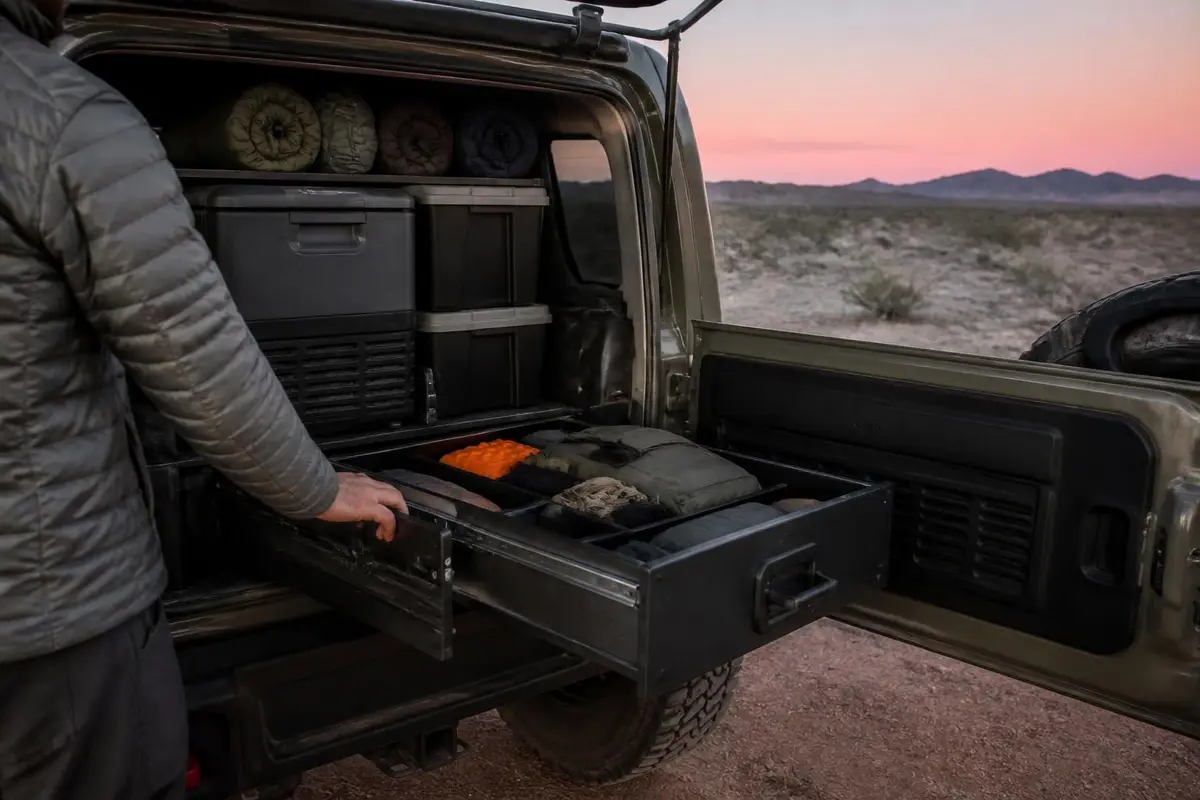
Overland Packing Checklist
An overland trip packing checklist covering sleep, kitchen, power, water and navigation gear for a multi-day off-grid trip.
Live Sat, Mar 13Winter Emergency Kit Checklist
A winter car emergency kit checklist covering warmth, visibility, traction and communication items for being stranded in cold or snowy conditions.
Open checklistCar Camping Checklist
A car camping checklist covering shelter, sleep, cooking, water and comfort items for a trip where the vehicle itself is your gear hauler, not just transport.
Live Sat, Mar 13Off-Road First Aid Kit
A first aid kit checklist built for off-road trips where help is farther away than a paved-road breakdown — trauma supplies alongside the basics.
Live Wed, Nov 11Recovery Gear Checklist
A short, printable list of what to carry for a self-recovery on the trail — the companion quick-reference to our full recovery kit checklist and WLL-rating guide.
Live Thu, Oct 29Overland Trip Checklist
A departure-day overlanding checklist — the trip-planning and logistics steps that come before packing gear, complementary to our overland packing checklist.
Live Sat, Mar 6Vehicle Emergency Kit
A year-round vehicle emergency kit checklist for any breakdown or roadside incident, on-road or off — the broader companion to our winter-specific kit.
Open checklistSources
- Ready.gov — Build a Kit — One gallon of water per person per day for several days; replace expired items and review the kit every year.
- WARN Industries — Determine the Right Winch Capacity for Your Truck or SUV — Minimum winch pulling capacity = GVWR × 1.5, with GVWR from the driver's door sticker.
- ARB — Getting Started: Recovery Techniques and Equipment — Snatch (kinetic) strap minimum breaking strength of two to three times the vehicle's gross vehicle mass.
- NHTSA — Tires (TireWise) — Recommended tire pressure is on the driver's door label, not the tire sidewall; check all tires including the spare.
- NHTSA — Winter Weather Driving Tips — Winter vehicle kit contents; inspect tires at least once a month and before long road trips.
- National Weather Service — Winter Safety: During a Storm — If stranded, stay in the vehicle and run the motor about 10 minutes each hour with the exhaust pipe cleared of snow.
- American College of Surgeons — Stop the Bleed — Bleeding-control priorities behind the Off-Road First Aid Kit checklist.
- National Park Service — Food Storage — Food-storage rules referenced by the camping and overland checklists.
- USDA Forest Service — Firewood: Don't Move It — Buy firewood near where you burn it to avoid spreading pests, as the Car Camping checklist advises.