Recovery Gear Checklist

Quick answer: This is the quick, printable version: what to actually have in the truck before you leave pavement. For the full explanation of Working Load Limit (WLL) matching and why an unrated recovery point is a real hazard, see our <a href="/checklists/recovery-kit">Recovery Kit Checklist</a>, which this page complements rather than repeats.
What "Recovery Gear" Actually Covers
Recovery gear is anything that gets a stuck vehicle moving again without a tow truck: connection points, a line to pull with, and traction aids for sand, mud or snow. This checklist keeps the list short and printable on purpose — the reasoning behind each item, including why an unrated shackle or recovery point is a genuine hazard, is covered in full on our Recovery Kit Checklist.
How to Use This Checklist
Tick items off as you confirm you have them, print a copy for the glovebox, and re-check it each season since rope and strap materials degrade with UV exposure over time. Ticks are saved in your browser device-side, and Reset checklist clears it if you want to re-verify everything from scratch.
What "Rated" Actually Means on This List
Every rated item on this list — recovery points, shackles, the rope or strap itself — carries a Working Load Limit (WLL), a maximum figure set well below the point where the component would actually fail, per the ASME B30.9 rigging standard the term comes from. Recovery-gear makers such as ARB recommend sizing a kinetic strap's minimum breaking strength to roughly two to three times the vehicle's own gross weight, precisely because the strap's job is to stretch and absorb energy, not sit near its limit on an ordinary pull. A kit is only as strong as its lowest-rated piece, which is why the full reasoning — including how to run your own vehicle's weight through the calculator — lives on the Recovery Kit Checklist.
Before you need it
The rest of the bag
Ticks are saved only in your browser on this device; never sent to us.
Get the Printable Checklist Pack
Leave your email and we'll add you to the list for the full printable checklist pack when it's ready. No spam, unsubscribe any time.
Recommended gear
Core recovery gear
Affiliate disclosure: As an Amazon Associate, we earn from qualifying purchases, at no extra cost to you. We research rather than test, and commissions never change our rankings. This site is reader-supported: those commissions pay for hosting, research and keeping every guide up to date, so if a guide helped you, buying through our links is an easy way to support it. How we rank · Full disclosure

Best for a complete strap, shackle and glove kit in one bag.
- Straps, shackles, gloves, damper and a recovery bag in one kit.
- Covers most vehicle-to-vehicle recoveries without buying parts separately.

Best for getting unstuck from sand, mud or snow without another vehicle.
- Nylon recovery boards that give spinning tires grip in sand, mud or snow.
- Double as a shovel to clear sand from in front of the tires.

Best for vehicle-to-vehicle snatch recoveries.
- 1 in x 30 ft kinetic rope that stretches to ease a stuck vehicle out.
- Gentler on recovery points than a static tow strap.
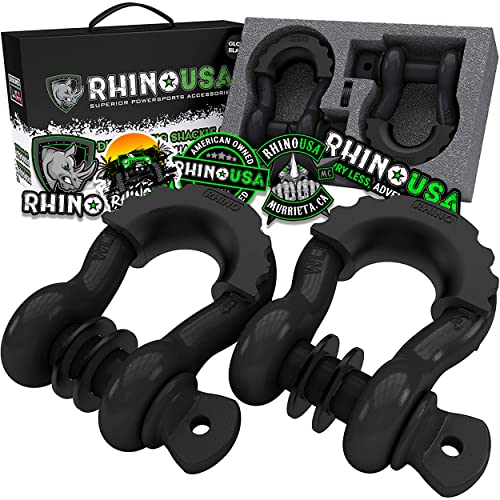
Best for rated connection points for straps and ropes.
- 3/4 in D-ring shackles, 41,850 lb listed break strength (2-pack).
- Connect straps to rated recovery points.
We research products from manufacturer specs and owner feedback; we don't test them ourselves. How we choose.
FAQ
Is this the same as the Recovery Kit Checklist?
No — this is the short, printable version of what to carry. Our Recovery Kit Checklist covers the same gear in depth, including how to match Working Load Limit (WLL) ratings between your vehicle, rope, shackles and recovery points, which matters before you buy anything rated.
Do I need a winch if I already have traction boards and a rope?
Not always. Traction boards and a kinetic rope cover a large share of everyday stuck situations. A winch adds capability for situations with no anchor point nearby, or a stuck vehicle a kinetic pull can’t move, and is a common second purchase rather than a first one.
What is the single most-skipped item on this list?
Rated recovery points. Many owners have straps and a rope but are still pulling from the factory shipping tie-down hook, which is not rated for a dynamic recovery load.
Sources
- WARN Industries — Determine the Right Winch Capacity for Your Truck or SUV — Rated recovery point and shackle practice referenced in the short-form recovery gear checklist.
- ASME B30.9 — Slings (rigging/WLL standard reference) — Working Load Limit concept explained in the "What 'Rated' Actually Means" section.
- ARB — Getting Started: Recovery Techniques and Equipment — Recommendation that a kinetic strap's minimum breaking strength be roughly two to three times the vehicle's gross weight.
- U.S. Forest Service — Motorized Recreation Safety — General recovery and trail-safety guidance for motorized off-highway travel on federal land.
- 49 CFR § 567.4 — Requirements for manufacturers of motor vehicles (via Cornell LII) — The GVWR certification label a vehicle's own gross weight is read from.