

Affiliate disclosure: As an Amazon Associate, we earn from qualifying purchases, at no extra cost to you. We research rather than test, and commissions never change our rankings. This site is reader-supported: those commissions pay for hosting, research and keeping every guide up to date, so if a guide helped you, buying through our links is an easy way to support it. How we rank · Full disclosure
4WD engagement failures fall into two categories. Either the system rejected your shift because you weren't moving at the right speed, or there's an actual fault in the mechanism or its electronics. A scan tool that reads the stored code separates the two far faster than guessing from symptoms. The same "won't engage" complaint can trace to a weak battery, a blown fuse, a corroded connector, low transfer case fluid, a worn shift fork, seized linkage, or a control module that never sent the command at all.
| Tools needed | OBD-II scan tool (to read the specific fault code) |
|---|---|
| Time estimate | Diagnosis: 15–30 minutes with a scan tool |
| Difficulty | Easy (diagnosis); varies (repair) |
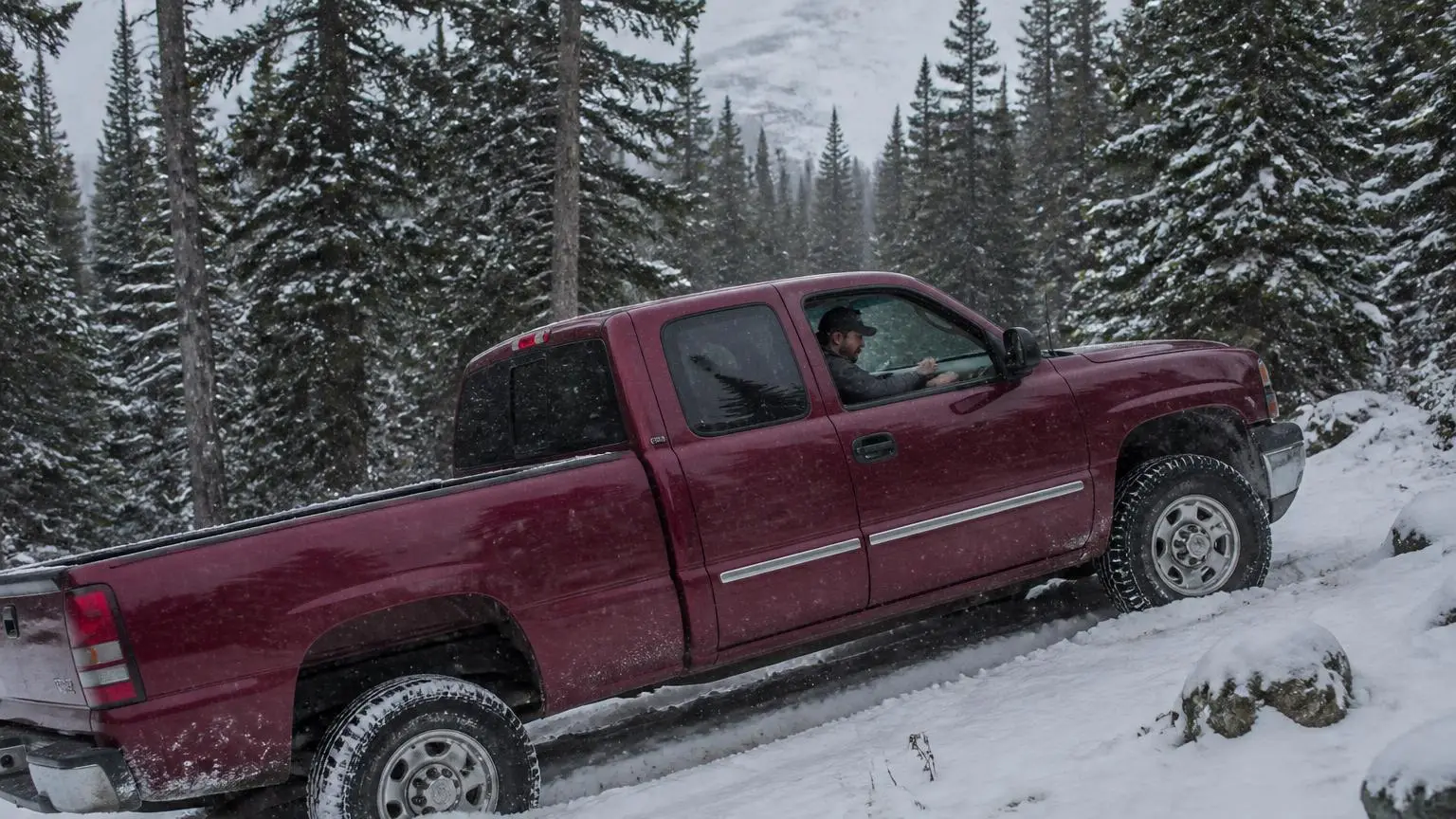
Check the Shift Procedure First
Part-time transfer cases enforce shift conditions mechanically, not just as advice. Ford's own F-150 owner's manual gives the exact numbers: to shift into 4L (4x4 low), bring the vehicle to 3 mph (5 km/h) or less and put the transmission in Neutral. That's because the range fork has to slide dog clutches into mesh at near-zero relative speed.
Shifting between 2H and 4H is usually allowed on the move, but it still fails if there's wheel slip at the exact moment you request it. A shift attempted outside those conditions typically just doesn't complete — it's not a fault. Roll the vehicle a short distance to let the internal clutches line up, then re-select the mode. That resolves most of these cases with no repair needed.

Electric Shift Motors and Actuator Faults
On an electronically shifted transfer case, a motor-driven encoder moves the shift fork on command from a transfer case control module (TCCM). The TCCM then checks the shift shaft's position to confirm the move finished.
GM's technical service bulletin PIP5003C documents exactly this failure, for 2010-2013 full-size trucks and SUVs with RPO NQH or NP0 transfer cases. It sets a "Service 4WD" message and code C0387, when the shift shaft doesn't start moving within 50 milliseconds of a request. GM's diagnostic path: first rule out an intermittent code — try every range, then test-drive in auto 4WD to trigger an encoder actuation — before concluding the encoder motor needs replacing.
Software can cause the same symptom on a different make. A 2022 Stellantis bulletin (08-103-22) covers 2021 Jeep Grand Cherokee models with Quadra-Trac 4WD. It documents a "Service 4WD" message, codes like C1472-92, and the front axle not engaging when selected — caused by outdated Drivetrain Control Module software. The fix there is a reflash, not a parts swap. That's a useful reminder: not every "Service 4WD" fault is mechanical.
Vehicles with vacuum-actuated locking front hubs have a separate common failure point. Ford ran three such systems: pulse vacuum hublocks (PVH), constant vacuum hublocks (CVH), and integrated wheel ends (IWE). Trade documentation on the PVH system gives real numbers. Once the module confirms the transfer case shifted to 4WD, it applies at least 11 in-Hg of vacuum to lock the hubs, for up to 60 seconds. It applies 6-7 in-Hg to unlock them when you shift back to 2WD, for up to 30 seconds. A leaking vacuum line or a failed actuator can leave a hub unlocked even after the transfer case itself shifted correctly. A hand vacuum pump test on the hub-side plumbing is worth doing before you blame the transfer case internals.
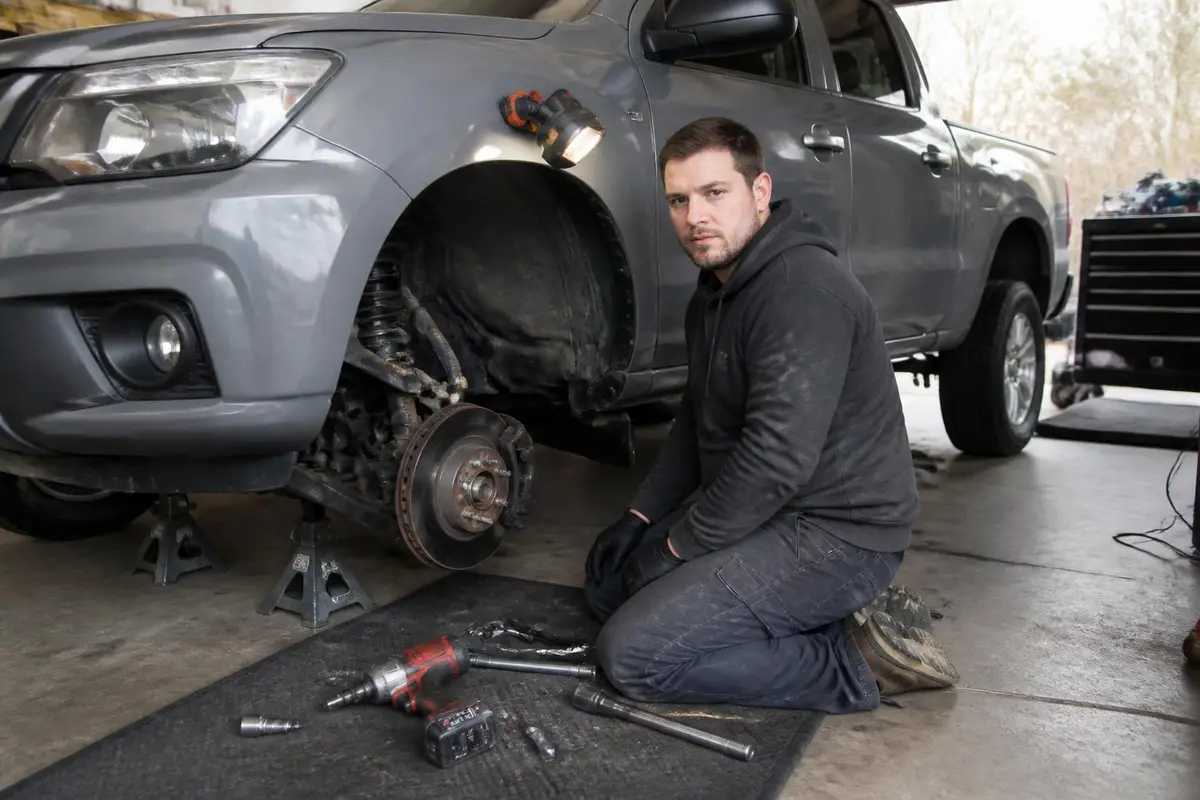
Read the Code Before Replacing Anything
A basic OBD-II scan tool reads manufacturer-specific network codes stored by the transfer case or 4WD control module, not just generic powertrain codes. That narrows the diagnosis to a specific system — encoder motor, wiring, TCCM, selector switch — instead of a guess from symptoms. Several unrelated faults can produce the exact same dash message: a weak battery, a blown fuse, low transfer case fluid, a worn shift fork. Read the actual stored code before you order a part. That's how you avoid a repair that doesn't fix anything.

When to Use a Pro
Reading a code and confirming the shift procedure is straightforward for any owner with a scan tool. Replacing a transfer case encoder motor or control module — or any transfer case disassembly — needs a confirmed diagnosis first. GM's own bulletin explicitly warns against replacing the control module or encoder motor on an intermittent, non-reproducible code. A shop that can duplicate the fault before ordering the part is worth the cost, for anything beyond a confirmed hard code.
Sources
- GM Technical Service Bulletin PIP5003C (filed with NHTSA) — Documented example of a transfer case control module setting code C0387 when the encoder motor doesn't move the shift shaft within 50ms of a request; GM's own diagnostic path and warning against replacing the module on an unconfirmed intermittent code.
- SAE J1979 / J2012 OBD-II diagnostic standards (Softing technical summary) — OBD-II scan tools read standardized and manufacturer-specific diagnostic trouble codes, the basis for reading a 4WD system's stored fault code rather than guessing from symptoms.
- Gears Magazine — "Engaging Moments! Ford's Vacuum-Actuated Locking Hub System, Diagnosis and Issues" — Ford's PVH/CVH/IWE vacuum hub-lock systems; PVH applies at least 11 in-Hg vacuum for up to 60 seconds to lock and 6-7 in-Hg for up to 30 seconds to unlock, the basis for a hand-vacuum-pump test on the hub side of the system.
- Stellantis/Jeep Technical Service Bulletin 08-103-22 (filed with NHTSA) — A 2021 Jeep Grand Cherokee (Quadra-Trac) bulletin documenting a Service-4WD message and front-axle-won't-engage complaint caused by outdated Drivetrain Control Module software, fixed by reprogramming rather than a parts replacement — a software-cause example on a non-GM system.
- Ford — 2020 F-150 Owner's Manual (Four-Wheel Drive) — The exact shift-into-4L requirement: vehicle at 3 mph (5 km/h) or less with the transmission in Neutral.