
Affiliate disclosure: As an Amazon Associate, we earn from qualifying purchases, at no extra cost to you. We research rather than test, and commissions never change our rankings. This site is reader-supported: those commissions pay for hosting, research and keeping every guide up to date, so if a guide helped you, buying through our links is an easy way to support it. How we rank · Full disclosure
TL;DR
- A replacement tire must carry at least the original tire's load at the pressure you run. Check the load-and-inflation tables, not just the load index.
- For LT-metric sizes, load ranges C, D and E max out at 50, 65 and 80 PSI in the TRA table. Flotation sizes differ: a 35x12.50R17 Load Range E tops out at 65 PSI. An LT tire at P-metric pressure carries less than the P-metric tire it replaced.
- The 3-peak mountain snowflake means a passed snow-traction test (index ≥ 110 against a reference tire). M+S means no test.
- LT tires aren't required to carry a UTQG treadwear grade. BFGoodrich backs its KO2 all-terrain with a 50,000-mile warranty and its KM3 mud-terrain with none.
- Bigger tires lower effective gearing by the diameter ratio: 31.6 to 35 inches turns a 3.73 into about a 3.37.
At a Glance
| If you mostly… | Tire type | What to check |
|---|---|---|
| Drive on pavement, with gravel roads and some trails | All-terrain | Load range for your weight, the 3-peak snowflake if you see snow, and a mileage warranty |
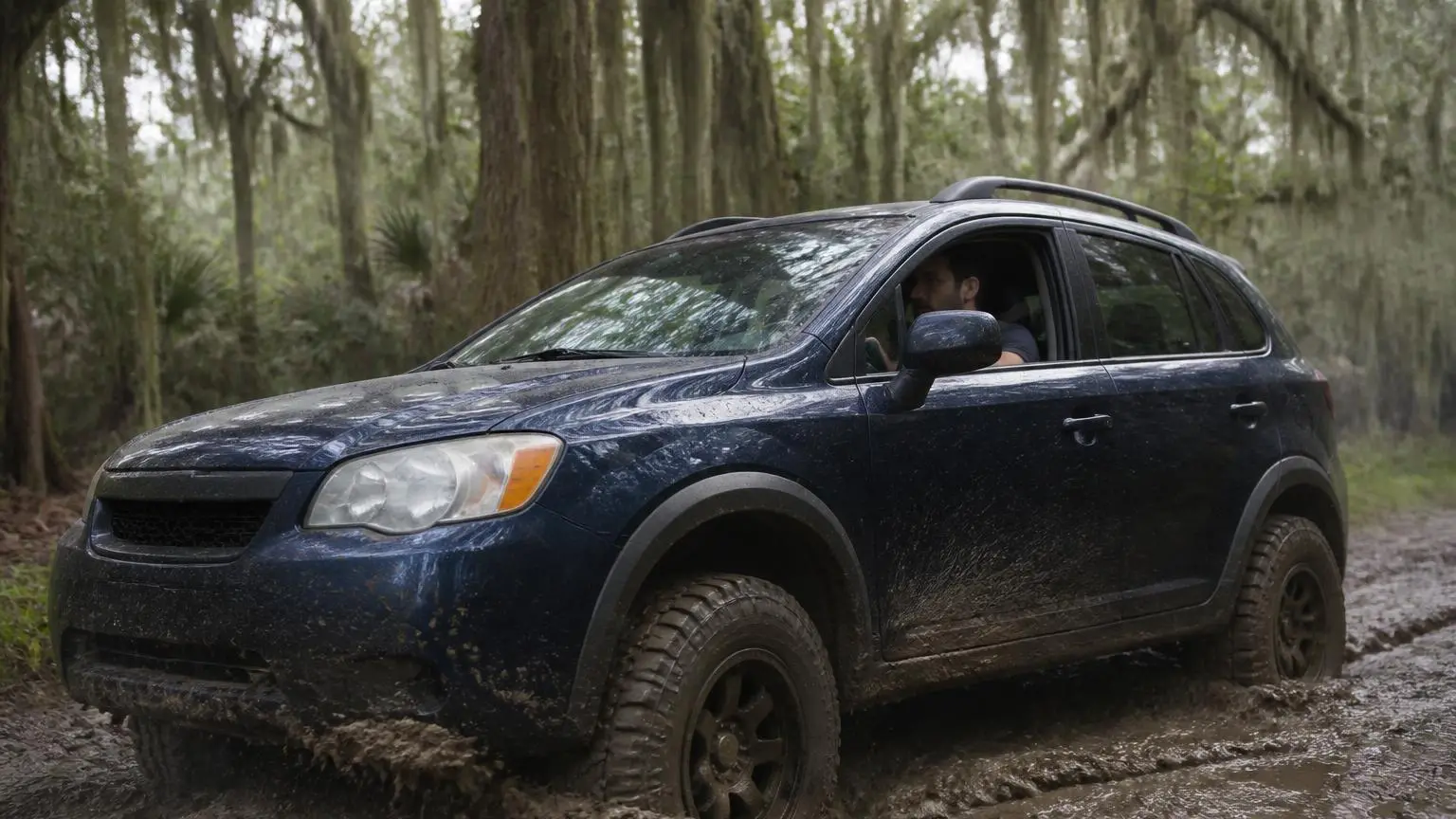
| Drive deep mud or soft clay | Mud-terrain | Open tread with mud-release features. Expect no mileage warranty. |
| Carry heavy loads or tow | LT-metric, Load Range E | Load at the pressure you'll run, from the load-and-inflation table |
| Want a bigger size | Whichever type fits your use | Clearance, speedometer error and effective gearing (see the tire size calculator) |
Reading the Size: P-Metric, LT-Metric and Flotation
Toyo's guide to the Tire and Rim Association (TRA) standards breaks down the three size formats found on off-road tires:
- P-metric (P265/70R17 115T): the tire is for passenger vehicles. 265 is the section width in millimeters, 70 the aspect ratio (sidewall height as a percentage of width), R means radial, and 17 is the rim diameter in inches. It ends with the load index and speed rating.
- LT-metric (LT265/70R17 E): the same measurements with a light-truck designation, and usually a load range letter.
- Flotation (35x12.50R17LT): overall diameter and section width in inches, then the rim diameter, LT, and the load range.
Some LT tires show two load indexes, such as 121/118. The first is for single rear wheels and the second for duals; Toyo notes the dual rating is lower to allow for road crown.
Load Index, Load Range and Why Pressure Decides Capacity
The load index is a code for the most weight a tire can carry at the speed its speed symbol allows, under specified conditions. A tire's real capacity depends on inflation pressure, though. Toyo's bulletin on replacing light-truck tires states that a tire's ability to carry a load comes from the air pressure inside it. Its example: a P245/75R16 109 carries 2,271 lb at 35 PSI. The LT245/75R16 Load Range C in the same size needs 50 PSI to carry that load, and even a Load Range D or E version must run 50 PSI to match it. Run LT tires at the old P-metric placard pressure and they're underinflated for the load. Toyo's thermal images show the sidewall running much hotter at 30 PSI than at 50 PSI under the same load.
Load range sets how high the pressure, and so the load, can go. In the TRA light-truck table Toyo reproduces for LT265/70R17:
| Pressure | Load (single) | Load range that tops out here |
|---|---|---|
| 35 PSI | 1,890 lb | — |
| 45 PSI | 2,255 lb | — |
| 50 PSI | 2,470 lb | C |
| 65 PSI | 2,910 lb | D |
| 80 PSI | 3,195 lb | E |
Going the other way, a P-metric tire fitted to a light truck loses capacity. Toyo cites the federal motor vehicle safety standards for dividing a P-metric or hard-metric tire's load by 1.10 on an SUV, pickup or van: a tire rated 3,086 lb carries 2,805 lb. Toyo's F-150 example uses that rule. A P255/70R17 110S rated 2,337 lb at 35 PSI is really good for 2,125 lb, and the LT265/70R17 121S replacing it needs 45 PSI to match. If the new tires need a different pressure, Toyo says the installer should put a new placard over the old one showing the new size and pressure.
Tread Pattern: All-Terrain vs Mud-Terrain
All-terrain tread uses smaller, closer-spaced blocks and siping (thin slits cut into the blocks) for grip on pavement, gravel and snow. Mud-terrain tread uses large blocks with wide gaps between them so mud clears out as the tire turns. BFGoodrich describes its KM3 as having massive tread blocks and "Mud-Phobic" bars that release packed mud. It also says the KM3's sidewall is built to flex and wrap around objects when aired down. The wide gaps that clear mud also leave less rubber on the road. The all-terrain vs mud-terrain comparison goes through the tradeoffs.

Snow: The 3-Peak Mountain Snowflake vs M+S
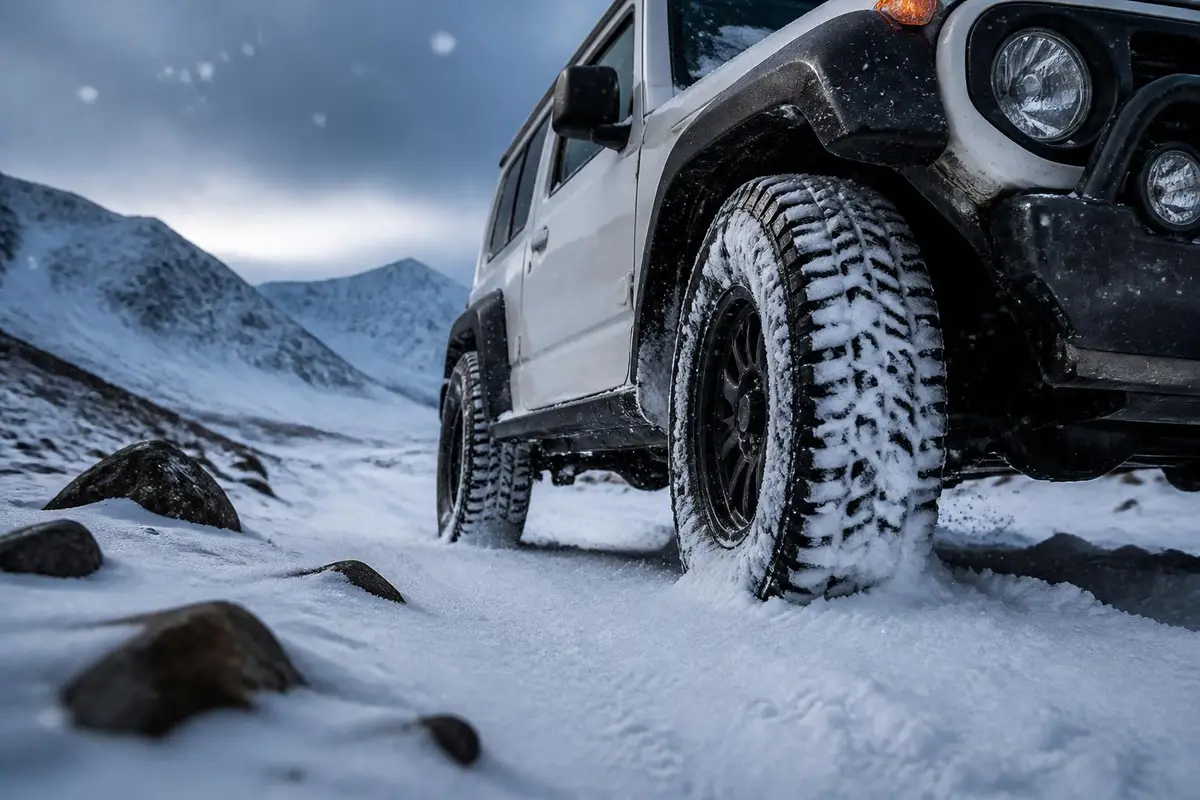
The 3-peak mountain snowflake (3PMSF) is a performance mark. Canada's Motor Vehicle Tire Safety Regulations, section 5(4), define it: in the ASTM F1805 single-wheel driving-traction test on medium-packed snow, at 74% of the test load, the tire must reach a traction index of at least 110 against a standard reference test tire. Transport Canada says tires with the symbol meet specific snow traction requirements for severe snow. The test measures straight-line acceleration on snow only, not braking, cornering, ice or wet roads. Some all-terrains carry the mark; BFGoodrich lists its KO2 as rated for severe snow. The M+S (mud and snow) marking has no such test behind it.
Speed Rating
The speed rating is the letter after the load index. It gives the top speed at which the tire can carry its rated load under specified conditions. General Tire lists Q at 99 mph and R at 106 mph, the ratings often found on mud-terrain and heavy-duty LT tires. BFGoodrich lists S at 112, T at 118 and H at 130 mph. Toyo recommends replacement tires match or exceed the original speed rating. If they don't, the vehicle's speed should be limited to the new tires' rating and the owner told.
Tread Life, Wear Bars and Tire Age
The federal Uniform Tire Quality Grading rule (49 CFR 575.104) covers new tires for passenger cars; its treadwear number compares wear on a government test course near San Angelo, Texas. LT tires fall outside it, so there's often no treadwear grade to compare. Mileage warranties fill the gap: BFGoodrich's KO2 carries 50,000 miles, and its KM3 carries only the standard warranty against defects, for the life of the original tread or six years from purchase, whichever comes first.
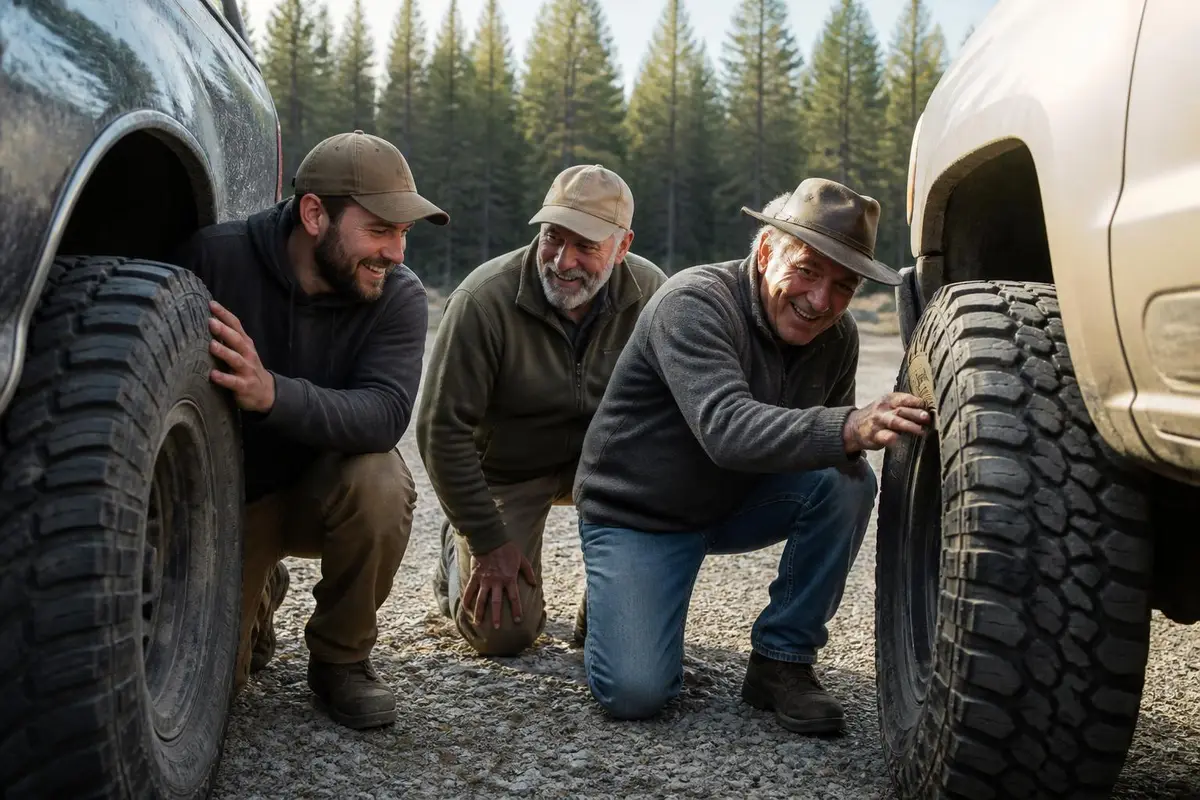
Replace at 2/32 inch. Michelin says a tire has reached minimum tread depth when the tread wears level with the wear bars molded in its grooves. Age matters separately from tread. Federal rule 49 CFR 574.5 makes the last four digits of the DOT tire identification number the week and year of manufacture (2324 means week 23 of 2024). Michelin recommends a yearly professional inspection after five years in service and replacement ten years after manufacture, spare included, whatever the tread depth. That matters most for trucks that sit between trips.
Going Bigger: Clearance, Speedometer and Gearing
Diameter comes from the size code: rim diameter + 2 × (width in mm × aspect ratio ÷ 100 ÷ 25.4). A P265/70R17 works out to 31.6 inches. A larger tire covers more ground per turn, so the speedometer reads low by the same percentage the diameter grew, and effective gearing drops by the diameter ratio. Fitting a bigger tire usually also means checking fender and suspension clearance at full steering lock and full compression. See suspension and lift kits for clearance and the tire size calculator for the math. Wheel spacers are sometimes used to clear a larger tire; see are wheel spacers safe.
How to Choose
Start from the door placard. Find the original size and pressure, look up the load it carries, and choose a replacement size and load range that carries at least that at a pressure you'll run. Then choose the tread for how you really drive, check for the 3-peak snowflake if you see snow, confirm the speed rating, and check the DOT date on delivery. For model-by-model load range, tread depth, 3PMSF and warranty data, see the 4WD tire library. Tires on this hub are weighed on manufacturer specifications and owner-reported reliability; we don't buy, mount or test tires ourselves (how we rank).
Sources
- Toyo Tires — Guidelines for the Application of Load and Inflation Tables (Version 2020-7) — P-metric, LT-metric and flotation size formats (TRA); load index definition; single/dual load indexes; 1.10 load derating for P-metric tires on light trucks per FMVSS; TRA LT265/70R17 loads at 35–80 PSI with C/D/E maximums; F-150 P255/70R17 to LT265/70R17 example; speed-rating replacement rule; placard update.
- Toyo Tires — Technical Bulletin TSD-12-011, Replacing Tires on Light Trucks — Load capacity depends on inflation pressure; P245/75R16 109 carries 2,271 lb at 35 PSI and an LT245/75R16 needs 50 PSI to match; underinflated LT tires run hotter.
- Motor Vehicle Tire Safety Regulations (SOR/2013-198), section 5(4) — Justice Laws Website (Canada) — Three-peak mountain snowflake requires a traction index of at least 110 in the ASTM F1805 medium-pack snow test at 74% of test load.
- Transport Canada — Using Winter Tires — Tires with the peaked-mountain snowflake symbol meet specific snow traction performance requirements for severe snow.
- 49 CFR 575.104 — Uniform Tire Quality Grading Standards (Cornell LII) — UTQG applies to new passenger-car tires; treadwear grades come from a government test course near San Angelo, Texas.
- 49 CFR 574.5 — Tire Identification Requirements (Cornell LII) — The four-digit date code gives the week and the last two digits of the year of manufacture.
- Michelin — When Do I Need New Tires? — Wear bars mark the 2/32-inch minimum tread depth; annual professional inspection after five years; replacement ten years after manufacture regardless of tread.
- General Tire — What Do the Numbers on My Tire Mean? — Speed ratings Q = 99 mph and R = 106 mph; single and dual load indexes on LT tires.
- BFGoodrich — Tire Speed Rating Chart and Tread Life — Speed ratings S = 112, T = 118 and H = 130 mph; load range E carries a higher maximum inflation pressure than C or D.
- BFGoodrich — All-Terrain T/A KO2 — 50,000-mile warranty; rated for severe snow (3PMSF).
- BFGoodrich — Mud-Terrain T/A KM3 — Mud-Phobic bars and large tread blocks; Linear Flex Zone sidewall; standard limited warranty only (life of original tread or six years), no mileage warranty.