
Affiliate disclosure: As an Amazon Associate, we earn from qualifying purchases, at no extra cost to you. We research rather than test, and commissions never change our rankings. This site is reader-supported: those commissions pay for hosting, research and keeping every guide up to date, so if a guide helped you, buying through our links is an easy way to support it. How we rank · Full disclosure
Once a vehicle has actually stopped moving in mud, stop and assess before doing anything else — check depth, whether the vehicle is high-centered, and what firm ground is reachable — then work through traction boards and digging before escalating to a winch, and avoid continued wheel spin at every stage, since it's the single habit most likely to turn a recoverable stuck into a much deeper one.
Assess Before You Act
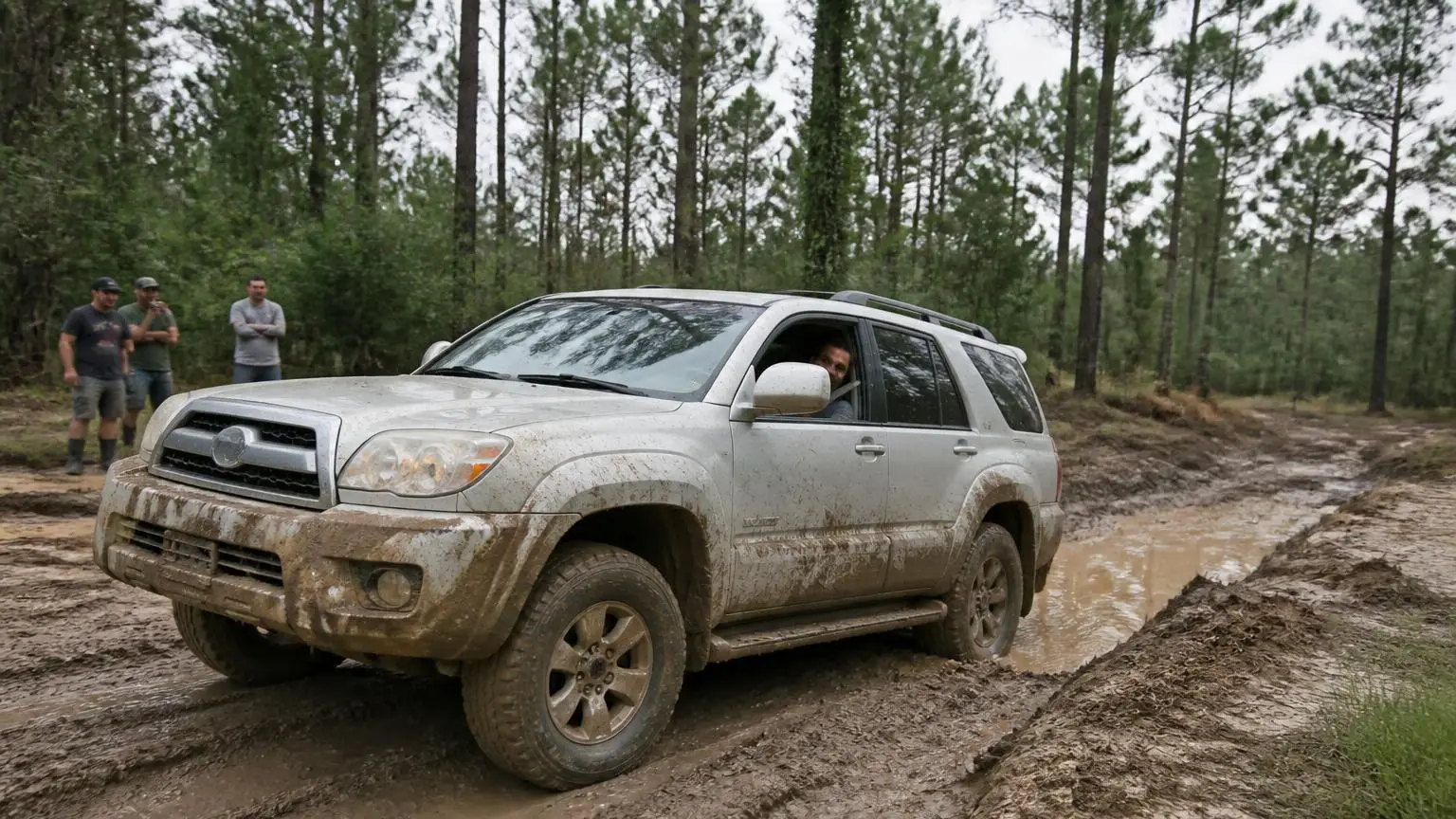
Get out and physically look at the situation rather than guessing from the driver's seat: how deep is each stuck tire, is the vehicle resting on its frame or undercarriage (high-centered), and what's the nearest realistically reachable firm ground. This single step, skipped by drivers eager to just try something, is what experienced recovery drivers report most consistently determines whether the next attempt actually works or makes things worse.
Stop Spinning the Wheels
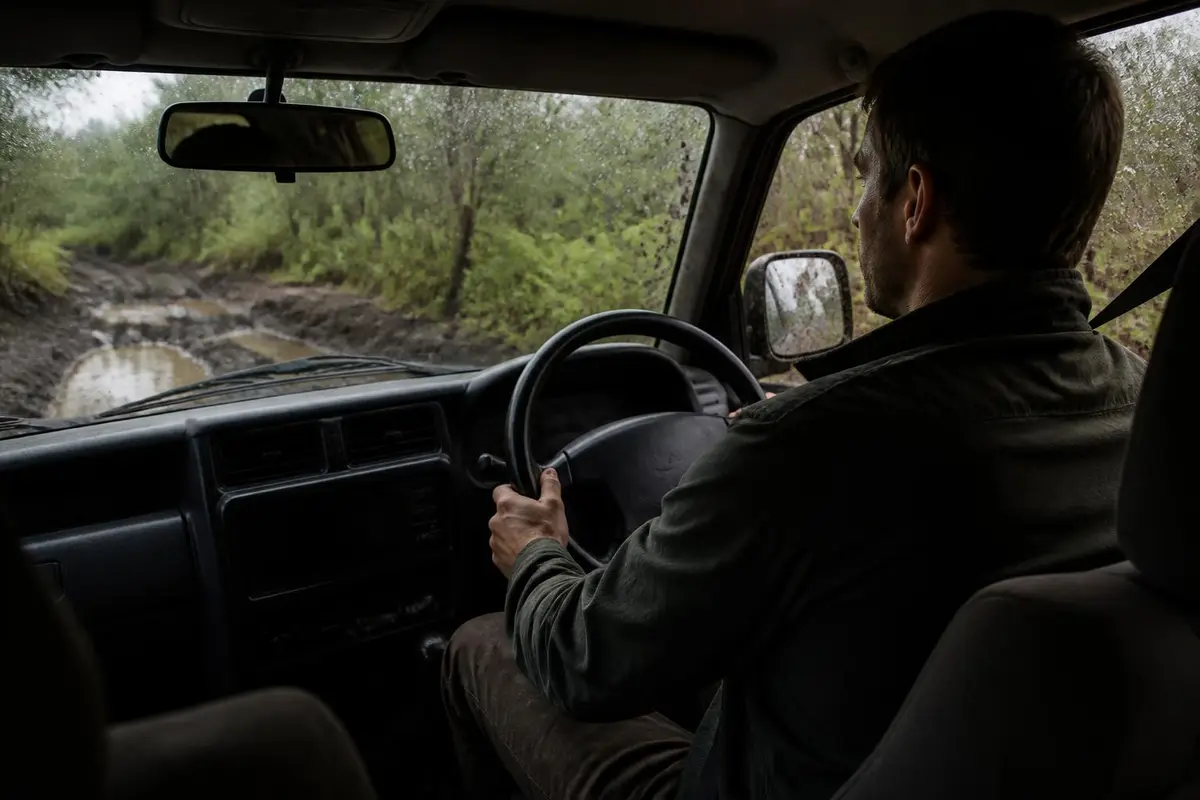
Continued wheel spin digs a stuck tire deeper into soft mud rather than restoring traction, and it's also what damages a traction board — melting or wearing the cleats and firing the board out from under the tire (see FAQ). A brief, gentle rock — forward, reverse, forward — can sometimes free a vehicle on the edge of being stuck, but sustained throttle input rarely helps and often actively worsens the situation.
Digging and Traction Boards
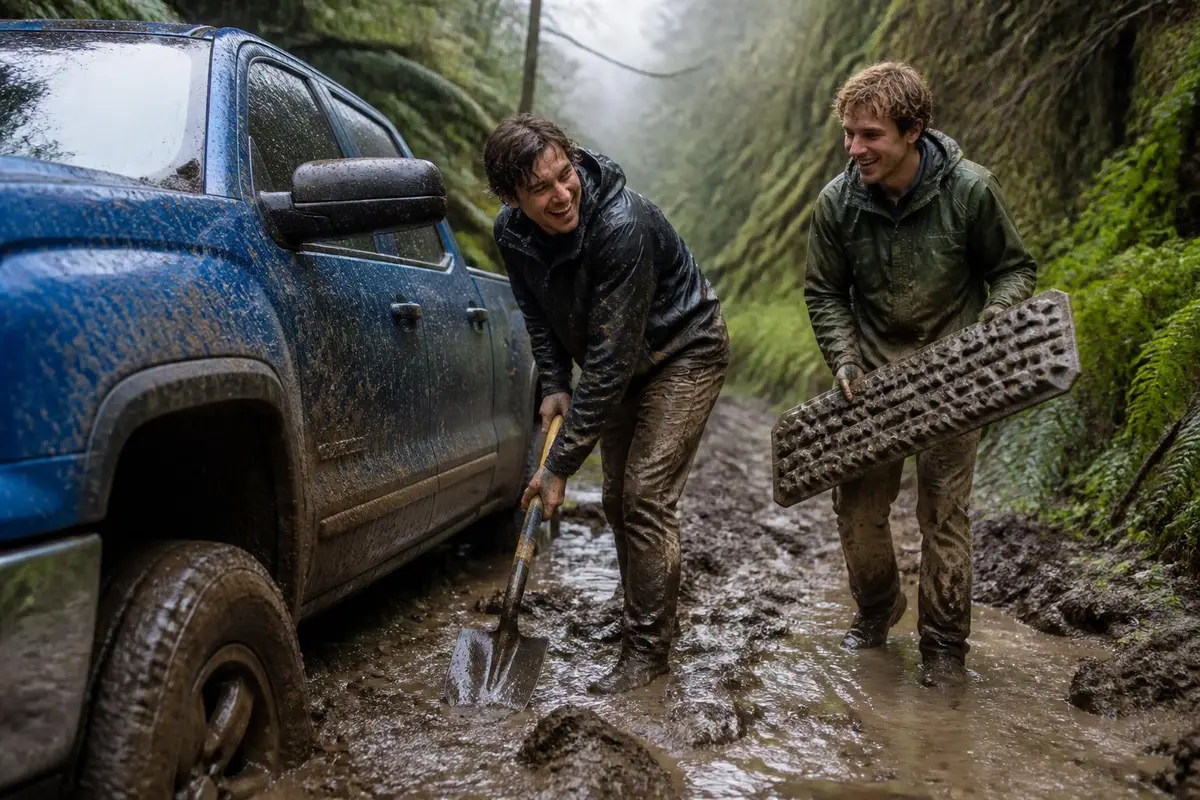
Digging away the built-up mud in front of and around each stuck tire, creating a clear path to firmer ground or the boards, is the unglamorous first physical step before placing traction boards. Push each board's leading edge firmly into the tread rather than laying it flat on the surface, then drive out gently and steadily rather than flooring the throttle the instant the boards are in place. Board capacity varies by model — MAXTRAX's own spec for its MKII board lists a 4,500 kg (roughly 9,900 lb) rating per board — so a board rated for one vehicle class isn't automatically rated for a heavier one. See recovery gear for how traction boards compare on load rating and cleat design.
Airing Down for the Recovery Attempt
Lowering tire pressure, even mid-recovery if not already done beforehand, increases the tire's contact patch and helps it find grip on firmer ground beneath the mud surface — see the airing-down guide for terrain-specific pressure ranges. This is worth doing before a second attempt if the first attempt at street pressure didn't work.
When Boards Aren't Enough: Winching Out
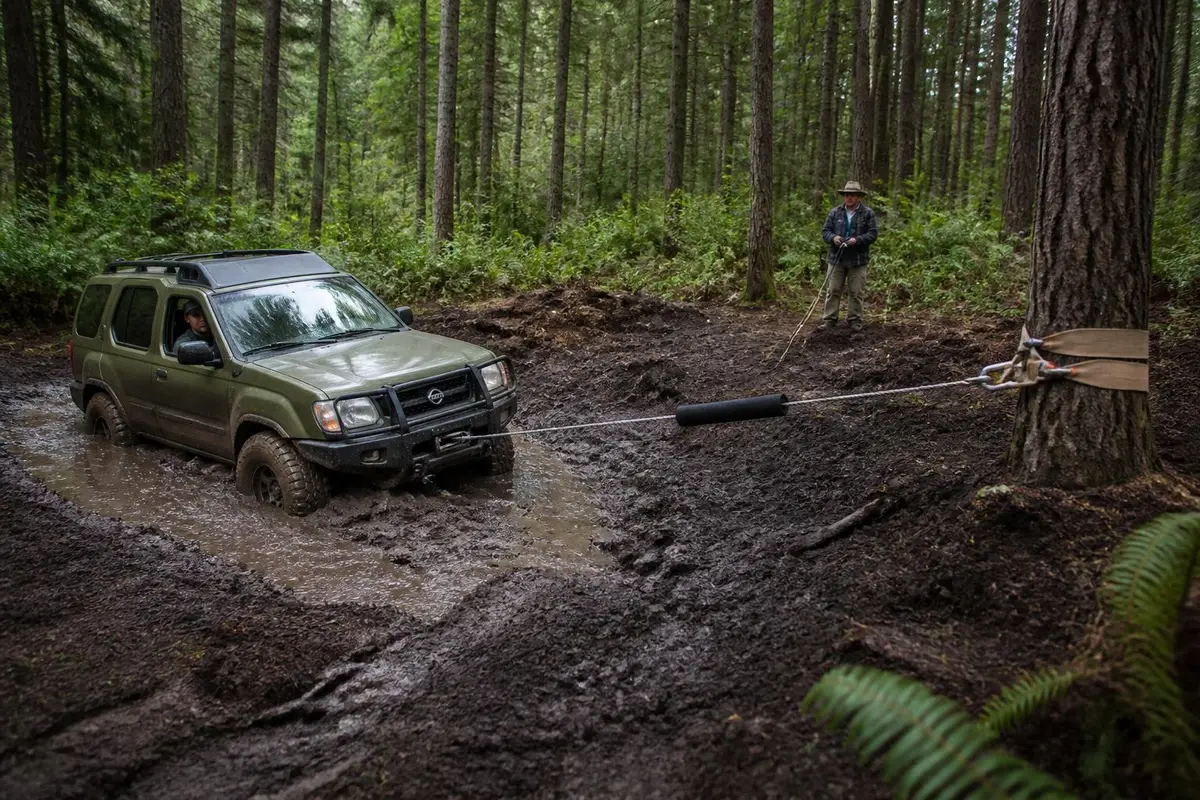
A vehicle that's deeply mired, high-centered, or hasn't responded to a genuine traction-board attempt generally needs a winch, anchored to a solid tree, another vehicle, or a ground anchor rated for the load. A winch sized to WARN's 1.5×-GVWR rule (see FAQ) has margin for exactly this situation — a mud-mired vehicle resists more than its parked weight alone would suggest. Confirming the anchor point's own strength before committing to a pull, and staying clear of a loaded cable's path, are the safety basics that matter as much as the winching technique itself.
Preventing the Next Stuck
See how to not get stuck in mud for the prevention side of this same topic — scouting, airing down before entering a section, and staying on the established route are what avoid needing this recovery guide in the first place on the next trip.
Recommended gear
Gear for mud and wet trails
Affiliate disclosure: As an Amazon Associate, we earn from qualifying purchases, at no extra cost to you. Purchases through these links help keep this site running and up to date. Learn more

Best for a lower-cost set of traction boards for sand and mud.
- Traction tracks for sand, mud and snow recoveries.
- Sold as a pair, the budget alternative to MAXTRAX.

Best for a kinetic rope with matching soft shackles.
- 7/8 in x 30 ft kinetic rope plus two 7/16 in soft shackles.
- Comes with a waterproof storage bag.
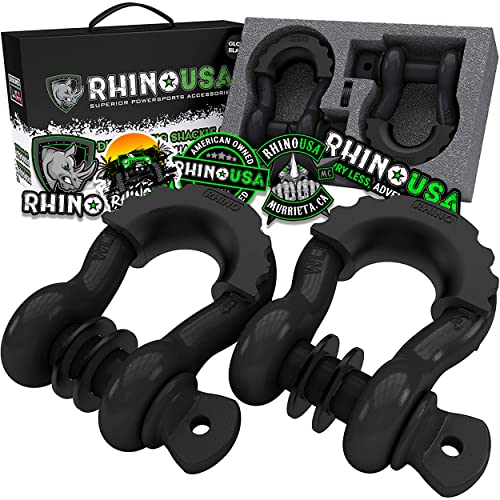
Best for rated connection points for straps and ropes.
- 3/4 in D-ring shackles, 41,850 lb listed break strength (2-pack).
- Connect straps to rated recovery points.

Best for solo self-recovery on steep or muddy trails.
- 12V winch with a 10,000 lb rated pull.
- Sized for full-size trucks and SUVs.
We research products from manufacturer specs and owner feedback; we don't test them ourselves. How we choose.
Sources
- WARN Industries — Determine the Right Winch Capacity — 1.5×-GVWR rule of thumb for minimum winch line-pull capacity.
- MAXTRAX USA — MKII Recovery Boards — 4,500 kg (~9,900 lb) rated static load per board, illustrating that board capacity varies by model.
- Tread Lightly! — T.R.E.A.D. Principles — Cross-referenced land-ethic basis for preferring prevention (staying on route) over recovery.