
Affiliate disclosure: As an Amazon Associate, we earn from qualifying purchases, at no extra cost to you. We research rather than test, and commissions never change our rankings. This site is reader-supported: those commissions pay for hosting, research and keeping every guide up to date, so if a guide helped you, buying through our links is an easy way to support it. How we rank · Full disclosure
TL;DR
- Scout an unfamiliar obstacle on foot before driving it — most avoidable trail damage traces back to skipping this step.
- 4-low and a locker are for control at low speed, not raw power; the goal is the slowest speed that still holds momentum.
- Approach, departure and breakover angle are trim-specific — a tow hook or step bar can cut into the number the spec sheet promises.
- Rated wading depth varies by vehicle: 31.5–37 in. across Ford Bronco trims, 34.5 in. on the Jeep Wrangler Rubicon 392, up to 35.4 in. on a Land Rover Defender in Wade Mode.
- Build skill gradually on graded, well-traveled trails before attempting anything with a real difficulty rating.
Reading Terrain Before Committing
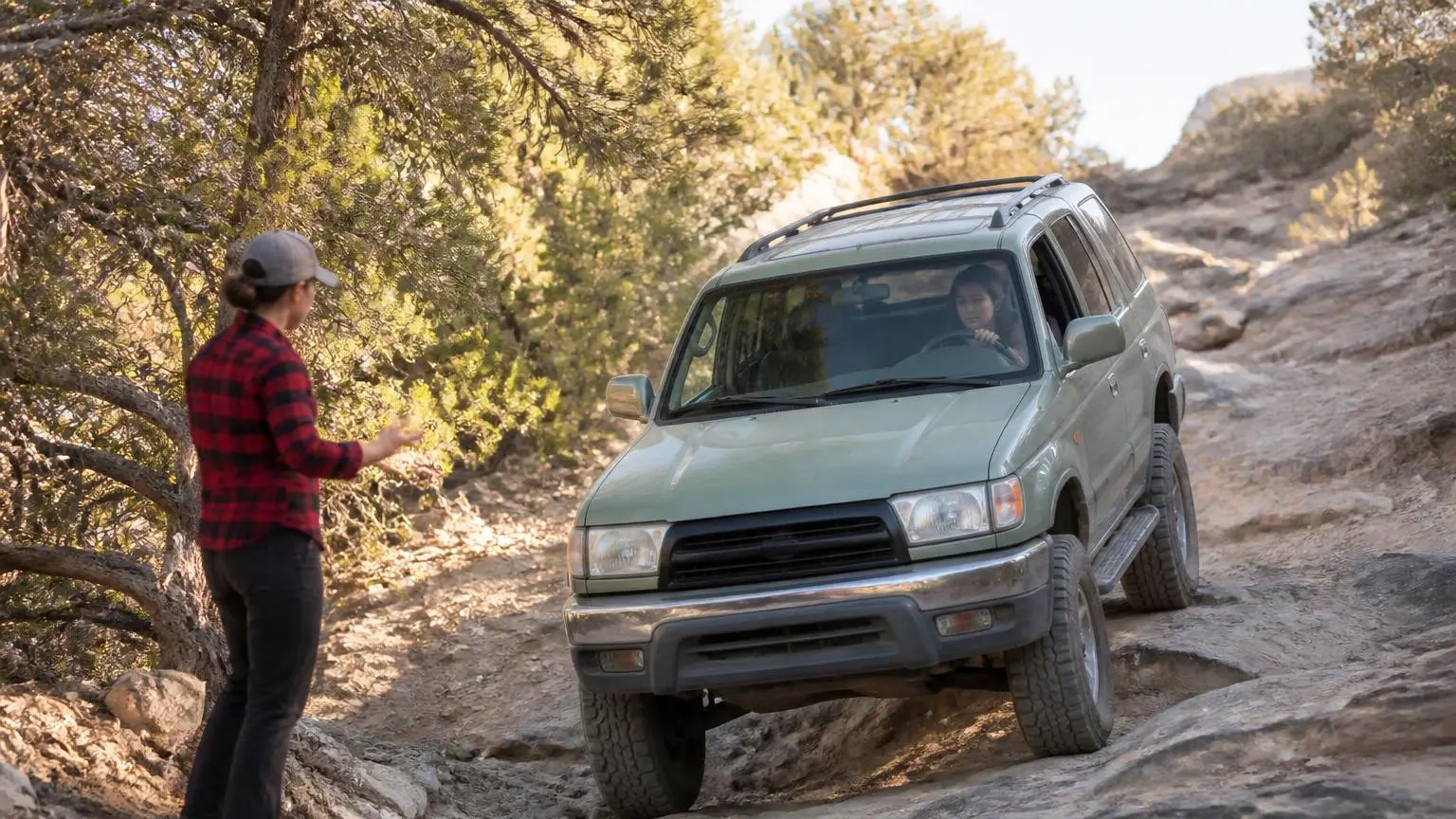
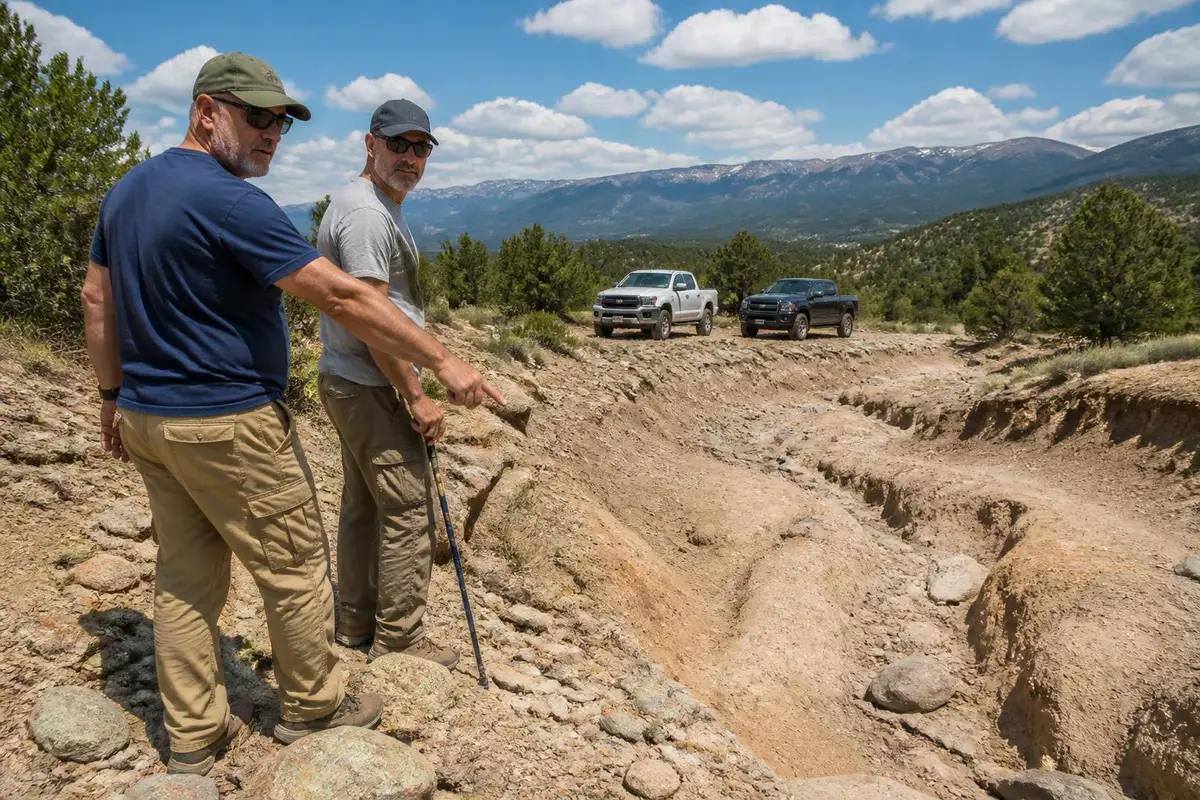
Scouting an unfamiliar obstacle on foot before driving it reveals the details a windshield view hides — a hidden rut, a sharp rock edge in the tire’s line, or a soft patch that looks solid from the driver’s seat. Owners with extensive trail experience consistently report that most avoidable trail damage, to both vehicle and terrain, traces back to skipping this step on an obstacle that looked straightforward from inside the cab.
4-Low, Lockers and Low-Speed Control
4-low (see FAQ) and a locking differential (see FAQ) both exist to maximize control at low speed rather than to add power for its own sake. The goal on technical terrain is the slowest speed that maintains steady momentum, not the fastest line through an obstacle. Momentum matters more in mud and sand, where maintaining speed prevents bogging down — see how to not get stuck in mud and how to drive on sand — while precision matters more on rock, where picking a deliberate wheel placement line prevents undercarriage contact (see what is rock crawling). See 4 high vs 4 low for when to use which range.
Wheel Placement on Technical Terrain
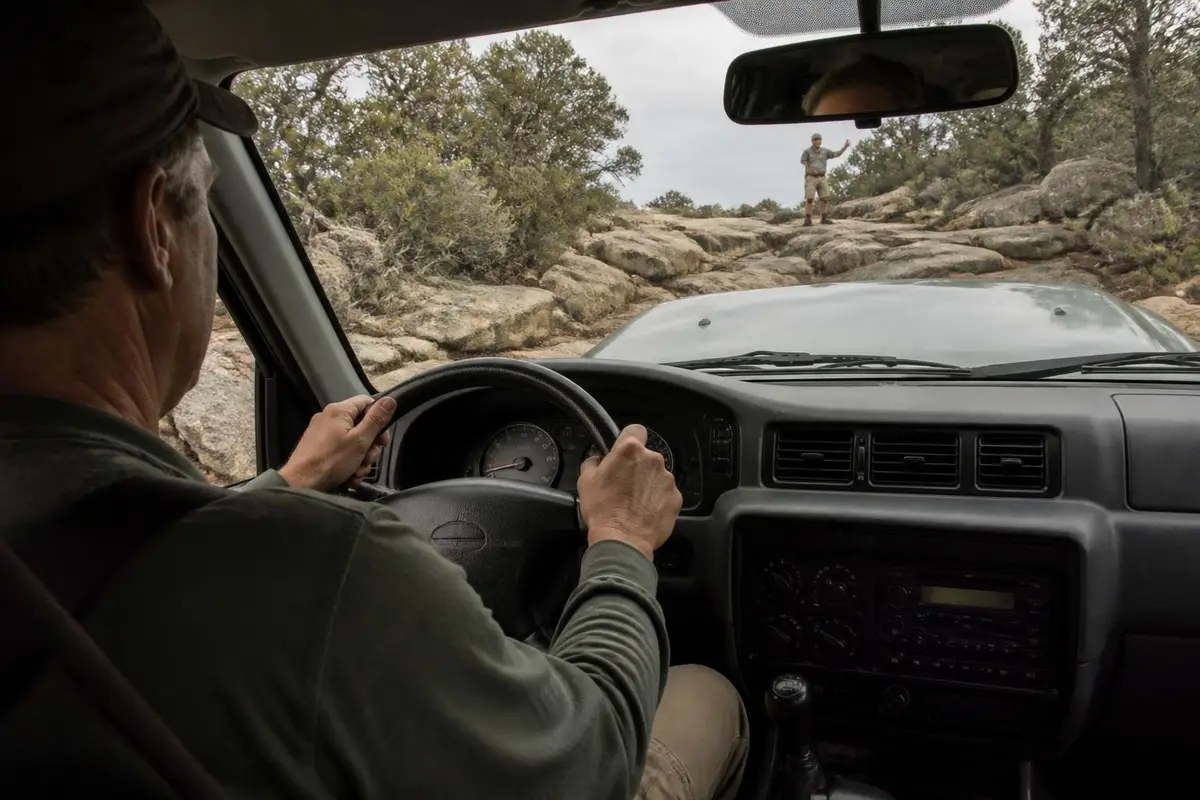
Placing tires on the highest points of a rocky obstacle — rather than driving through the low center — keeps the undercarriage clear of contact and uses the suspension’s full articulation to keep tires planted on uneven rock. A spotter outside the vehicle, directing wheel placement the driver cannot see from inside, is standard practice among experienced trail groups for any obstacle where undercarriage clearance is genuinely tight.
Approach, Departure and Breakover Angles
Approach and departure angle (see FAQ) set the steepest grade a vehicle can enter or exit without contacting the ground. Breakover angle, a related third figure, sets the steepest peaked obstacle a vehicle can cross without the undercarriage contacting the ground at the obstacle’s crest. All three numbers are trim-specific, since a factory tow hook, step bar or low-hanging exhaust changes the usable angle independent of the vehicle’s rated ground clearance elsewhere — see bumpers, skid plates and rock sliders for how aftermarket protection changes these numbers, generally for the better on approach angle and mixed on departure depending on design. See the 4x4 glossary for the full definitions.
Water Crossings: When To Turn Back
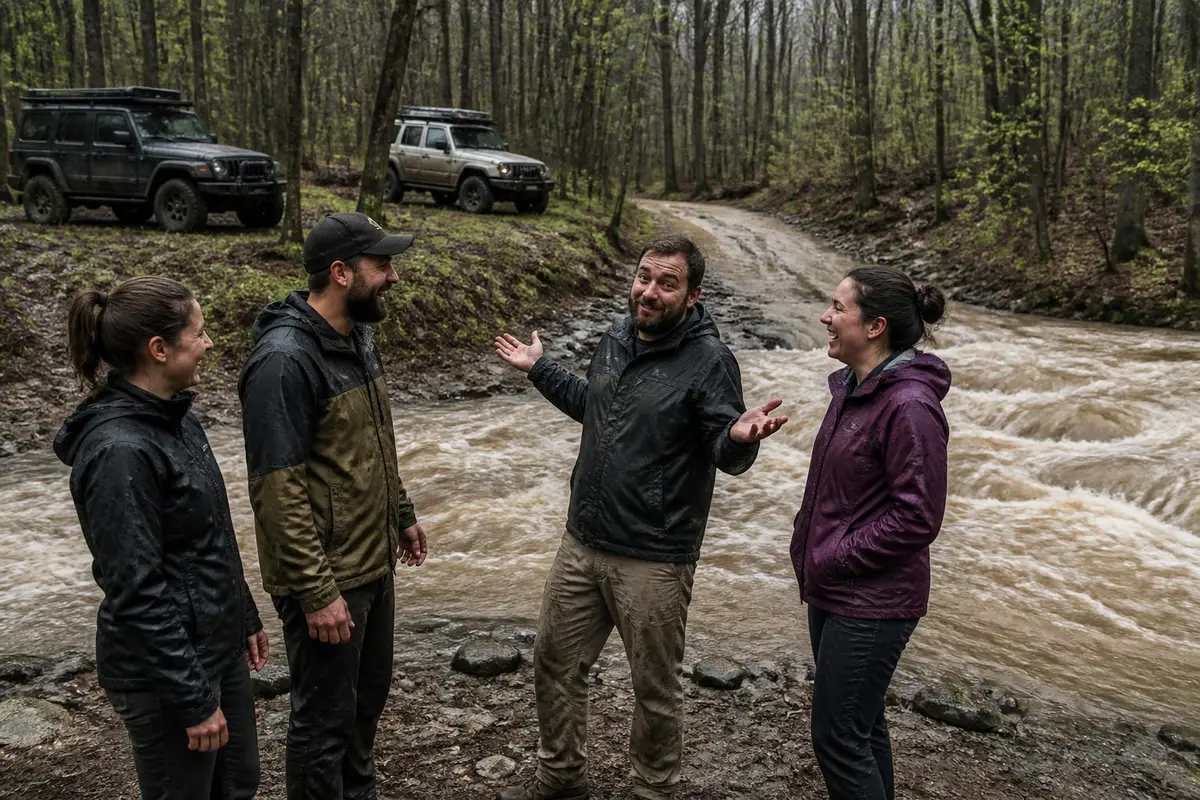
A vehicle's rated wading depth, published per trim by the manufacturer, is the hard ceiling for a stock air intake and electrical components — and it varies far more between vehicles than most new drivers expect. Stellantis rates the 2025 Jeep Wrangler Rubicon 392 at 34.5 inches; Ford rates a standard Bronco at 31.5 inches (33.5 inches with the Sasquatch package, 37 inches on the Bronco Raptor); Land Rover rates the Defender at up to 900 mm (about 35.4 inches) with air suspension raised for wading. Crossing water deeper than that figure risks hydrolock or a stalled engine mid-crossing, which is a far worse position than turning back. Experienced trail leaders consistently recommend walking an unfamiliar crossing on foot first to check for a soft bottom, a sudden drop-off or a current stronger than it looks from the bank, since none of those are reliably visible from the driver’s seat. Enter at a slow, steady pace rather than plowing through, which keeps a bow wave from pushing water up over the bumper and into the engine bay. See 4x4 water crossing for the full technique and how a snorkel changes (and doesn't change) the numbers. When current, depth or bottom conditions are uncertain, the safest call is the same: turn back and find another route.
Common Beginner Mistakes
Overconfidence in a vehicle's ground clearance without checking the specific trim's approach and departure angles is a frequently reported first-trip mistake, discovered only after undercarriage contact on an obstacle that looked manageable. Driving too fast through mud rather than maintaining steady momentum is a close second, often turning a passable section into a stuck vehicle. Skipping a spotter on a tight approach-angle obstacle, and treating trail right-of-way as optional rather than a real access convention — see off-road trail etiquette — round out the mistakes that show up most on a first real trail run.
Building Skill Gradually
Starting on graded, well-traveled trails before attempting a rated technical trail (see off-road trail ratings) lets a new driver build wheel-placement and low-range judgment without the consequences of a genuinely difficult obstacle. Joining an established local off-road club or group run is a commonly recommended path for beginners specifically because it pairs a new driver with owners who can spot for tricky sections and demonstrate correct line choice in real time — see off-road driving schools for a more structured, instructor-led alternative, and recovery gear for the equipment a first serious trail run carries regardless of skill level.
Recommended gear
A first recovery kit for any 4WD
Affiliate disclosure: As an Amazon Associate, we earn from qualifying purchases, at no extra cost to you. Purchases through these links help keep this site running and up to date. Learn more

Best for a complete strap, shackle and glove kit in one bag.
- Straps, shackles, gloves, damper and a recovery bag in one kit.
- Covers most vehicle-to-vehicle recoveries without buying parts separately.

Best for getting unstuck from sand, mud or snow without another vehicle.
- Nylon recovery boards that give spinning tires grip in sand, mud or snow.
- Double as a shovel to clear sand from in front of the tires.

Best for airing all four tires down to a set pressure at once.
- Automatic deflators preset between 6 and 30 PSI.
- Air all four tires down at once, then stop at the set pressure.

Best for airing back up before you hit pavement.
- Portable 12V compressor rated to 150 PSI.
- Sized for truck and SUV tires.
We research products from manufacturer specs and owner feedback; we don't test them ourselves. How we choose.
Sources
- Stellantis / Jeep — 2026 Wrangler Rubicon 392 Specifications — 34.5 in. rated fording depth on the 2025/2026 Wrangler Rubicon 392.
- Ford — 2026 Bronco Technical Specifications — 31.5 in. standard / 33.5 in. Sasquatch-package Bronco wading depth.
- Land Rover — Driving Through Water: Wading Depths — Defender wading depth up to 900 mm (about 35.4 in.) with air suspension raised in Wade Mode.
- eCFR — 36 CFR §261.13, Motor vehicle use — Off-route travel prohibition relevant to trail etiquette and staying on the designated line.
- U.S. Forest Service — Sierra National Forest OHV Trail Difficulty Symbols — Green circle / blue square / black diamond trail-difficulty symbol system referenced for matching skill to trail rating.