
Affiliate disclosure: As an Amazon Associate, we earn from qualifying purchases, at no extra cost to you. We research rather than test, and commissions never change our rankings. This site is reader-supported: those commissions pay for hosting, research and keeping every guide up to date, so if a guide helped you, buying through our links is an easy way to support it. How we rank · Full disclosure
TL;DR
- Rock crawling is slow, deliberate driving over rocks and broken terrain — often under 5 mph — where wheel placement matters more than power.
- 4-low, a locking differential and suspension articulation matter more than horsepower; an open differential sends power to the wheel with the least traction, the opposite of what's needed.
- The U.S. Forest Service's own trail symbols — green circle, blue square, black diamond — rate a route's hardest single obstacle, not the average difficulty.
- A spotter outside the vehicle closes the gap between what a driver can see from the cab and what a tight obstacle actually requires.
- Easier, stock-graded rock-crawling trails exist; harder trails generally require a locker, a lift, larger tires and underbody protection.
Rock Crawling, Defined
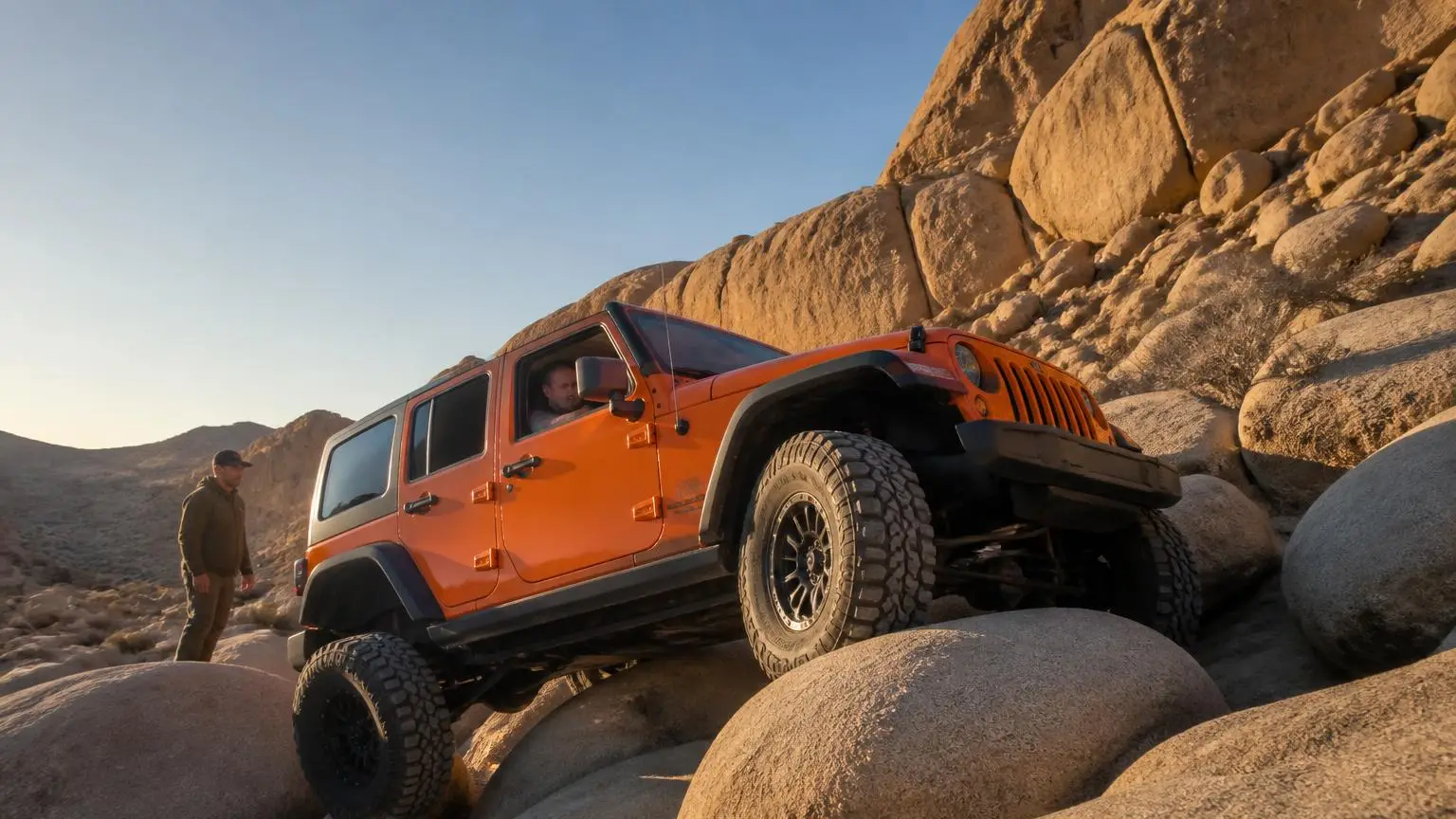
Rock crawling is a form of off-roading where the vehicle moves over large rocks, ledges and broken, uneven terrain at very low speed — often walking pace or slower. Unlike graded trail driving or higher-speed desert running, the goal isn't covering distance; it's placing tires precisely enough to clear an obstacle without the undercarriage contacting rock or a tire losing traction entirely. Owners who wheel both styles consistently describe rock crawling as closer to a puzzle solved one wheel at a time than to driving in the conventional sense.
Low Range: The Foundation of Control
4-low, engaged through the transfer case, multiplies torque and slows the vehicle's top speed at any given throttle input, which is what makes fine, creeping speed control possible on a technical obstacle. Attempting a rock-crawling obstacle in 4-high is a commonly reported beginner mistake, since the gearing simply doesn't allow the slow, deliberate speed the terrain calls for. See 4 high vs 4 low for the full mechanical explanation of what low range actually changes.
Lockers, Articulation and Tire Placement
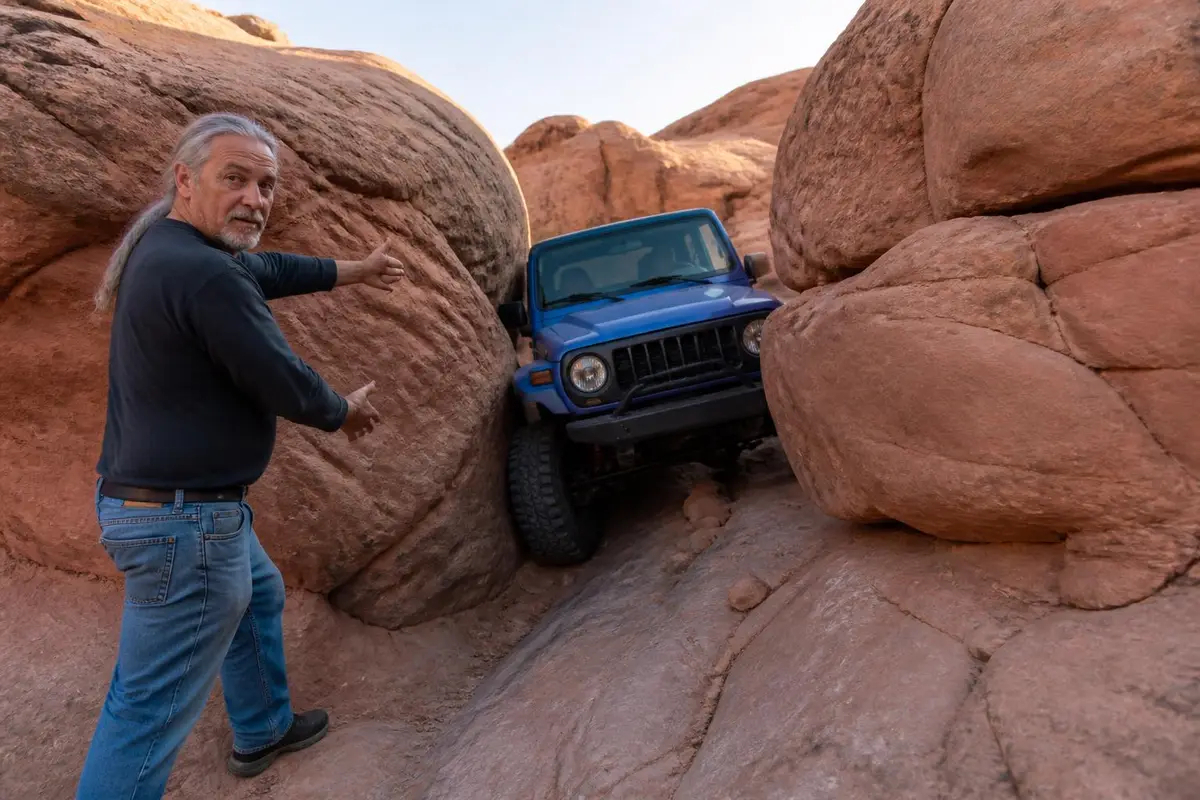
An open differential sends power to whichever wheel spins easiest — exactly the wrong behavior the moment one tire lifts off a rock. A locking differential forces both wheels on that axle to spin together, which owner reports consistently rank as the single upgrade that most directly improves rock-crawling capability. Suspension articulation, how far the suspension can flex to keep all four tires in contact with uneven ground, matters almost as much: a vehicle with more wheel travel keeps traction on obstacles that would lift a tire clean off a stiffer, less articulated setup. See what is a locking differential for the full mechanical breakdown.
Approach, Departure and Breakover Angle
Approach angle sets the steepest incline a vehicle can climb onto without the front bumper hitting first; departure angle is the same measurement for exiting a decline. Breakover angle, a third figure, sets the steepest peaked obstacle the undercarriage can cross without the frame contacting the crest. All three are trim-specific — a low-hanging tow hook or aftermarket step can reduce a vehicle's effective angle independent of its rated ground clearance. See the 4x4 glossary for the full definitions and typical ranges, and bumpers, skid plates and rock sliders for how aftermarket protection changes these numbers.
Line Choice: Reading the Obstacle Before Committing
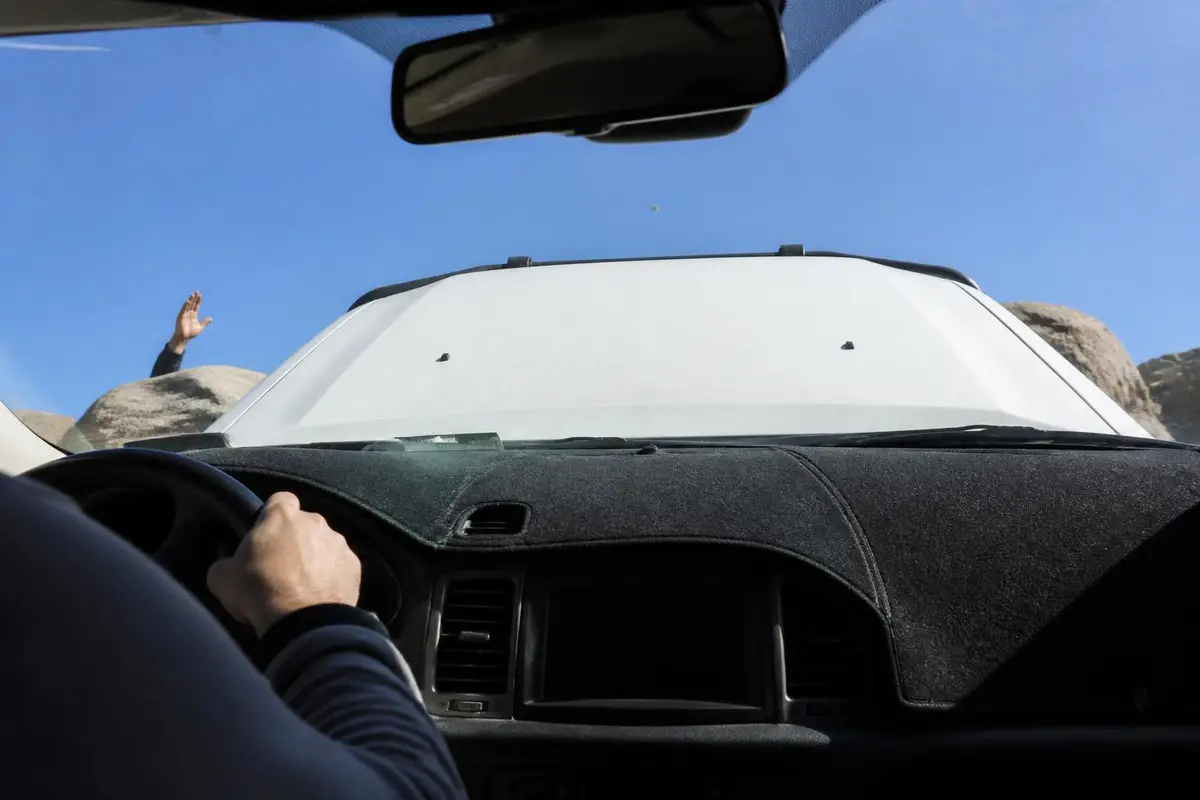
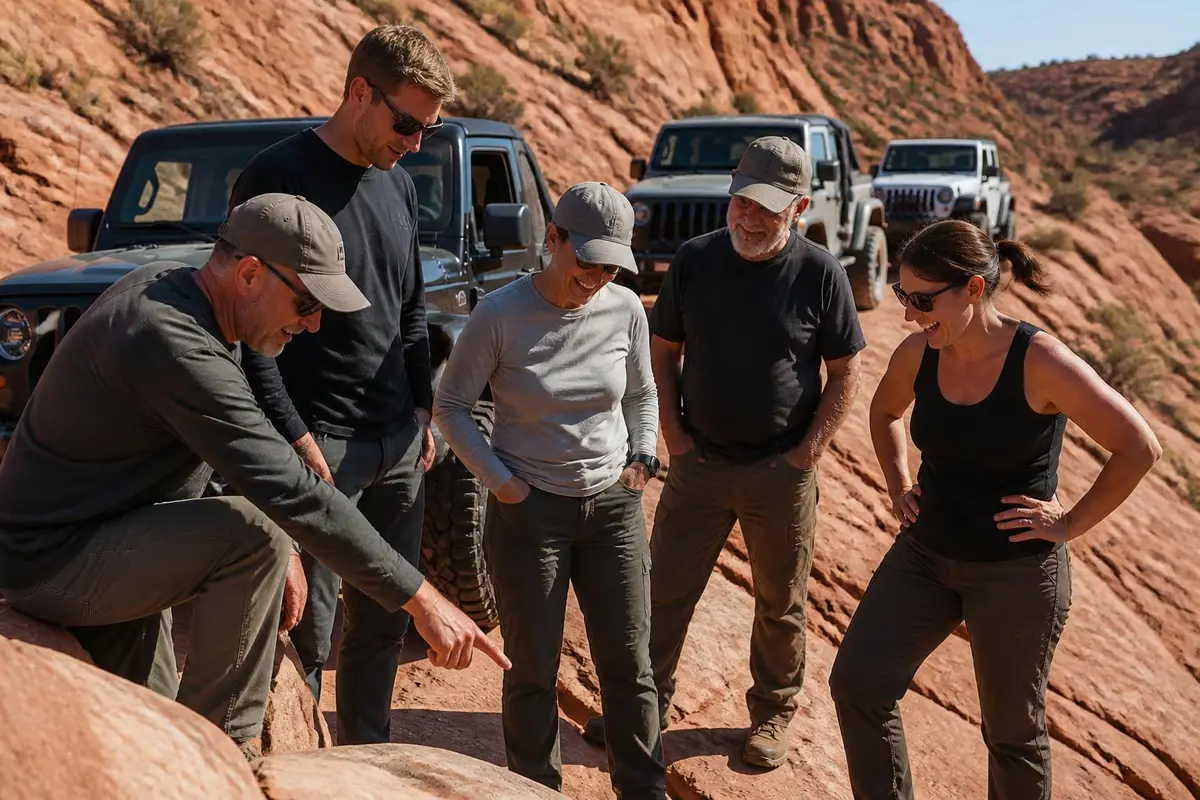
Walking an unfamiliar rock obstacle on foot before driving it, then picking a line that places tires on the highest, most stable points rather than the low center, is the habit experienced rock crawlers report most consistently. A spotter standing outside the vehicle in the driver's clear view, directing exact wheel placement, closes the gap between what a driver can actually see from inside the cab and what the obstacle actually requires. Owners who skip scouting and spotting on a genuinely tight obstacle report undercarriage contact and stuck situations far more often than owners who take the extra few minutes.
Trail Difficulty Ratings: Matching Vehicle to Route
The U.S. Forest Service's own OHV trail-difficulty symbols — a green circle (easiest), blue square (more difficult) and black diamond (most difficult) — describe a route's hardest single obstacle, not the average driving throughout, so a trail carrying a black-diamond symbol because of one technical climb can otherwise consist of easy, graded terrain. Ratings generally account for required ground clearance, whether low-range 4WD and a locker are genuinely necessary, and how much articulation the hardest obstacle demands. See how off-road trail ratings work for the full breakdown of what a posted rating actually means.
Common Beginner Mistakes
Flooring the throttle when a tire starts spinning is a frequently reported beginner reaction that usually digs the tire in deeper rather than restoring traction — a measured, steady throttle input more often recovers grip. Skipping a walk-around scout on an obstacle that looks manageable from the driver's seat is a close second, discovered only after undercarriage contact that a five-minute look would have caught. Attempting a trail rated well above the vehicle's actual build — rather than confirming low range and any locker are engaged before, not during, a technical climb, and working up through easier-rated routes first — is the mistake most likely to end a first rock-crawling trip early.
Gear a Rock-Crawling Trip Typically Carries
See recovery gear for the traction boards, kinetic rope and winch that a rock-crawling trip typically carries regardless of skill level — an obstacle that's fine ninety-nine times can still catch a tire on the hundredth.
Recommended gear
Gear for rocky, technical trails
Affiliate disclosure: As an Amazon Associate, we earn from qualifying purchases, at no extra cost to you. Purchases through these links help keep this site running and up to date. Learn more

Best for a complete strap, shackle and glove kit in one bag.
- Straps, shackles, gloves, damper and a recovery bag in one kit.
- Covers most vehicle-to-vehicle recoveries without buying parts separately.

Best for vehicle-to-vehicle snatch recoveries.
- 1 in x 30 ft kinetic rope that stretches to ease a stuck vehicle out.
- Gentler on recovery points than a static tow strap.
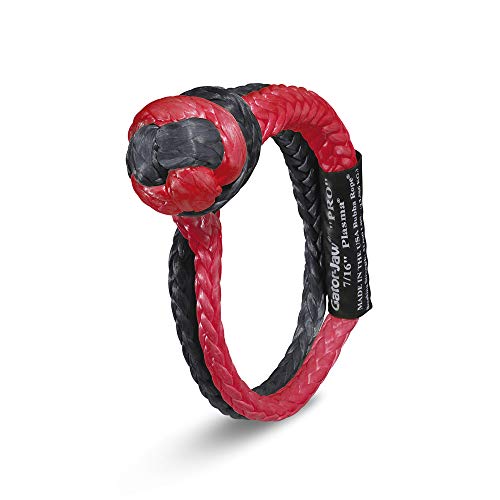
Best for a lighter alternative to steel shackles.
- 7/16 in synthetic soft shackle, 52,300 lb listed breaking strength.
- Lighter than a steel shackle and won't become a projectile.

Best for solo self-recovery on steep or muddy trails.
- 12V winch with a 10,000 lb rated pull.
- Sized for full-size trucks and SUVs.
We research products from manufacturer specs and owner feedback; we don't test them ourselves. How we choose.
Sources
- U.S. Forest Service — Sierra National Forest OHV Trail Difficulty Symbols — Green circle (easiest), blue square (more difficult), black diamond (most difficult) trail-symbol system and what each tier generally requires.
- Jeep — Trail Rated Badge: Off-Road Vehicle Certification — Jeep's own Trail Rated certification program, referenced as one brand-specific trail-recognition system alongside land-manager ratings.
- eCFR — 36 CFR §261.13, Motor vehicle use — Designated-route requirement relevant to why line choice happens within, not around, an obstacle.
- WARN Industries — Determine the Right Winch Capacity — Recovery-gear sizing referenced for the equipment a rock-crawling trip typically carries.
- MAXTRAX USA — MKII Recovery Boards — Traction-board static load rating (4,500 kg per board) referenced for recovery-gear equipment carried on a rock-crawling trip.