

Affiliate disclosure: As an Amazon Associate, we earn from qualifying purchases, at no extra cost to you. We research rather than test, and commissions never change our rankings. This site is reader-supported: those commissions pay for hosting, research and keeping every guide up to date, so if a guide helped you, buying through our links is an easy way to support it. How we rank · Full disclosure
On an independent front suspension (IFS) truck, lifting the front changes the angles of the control arms, ball joints, CV axles and alignment. An aftermarket upper control arm is one of the parts lift makers use to bring those angles back into range: it is built for the new ride height, often clears a larger tire, and usually adds caster and camber adjustment. Whether you need one depends on how far you lift and what your kit already includes.
What a Lift Does to IFS Geometry
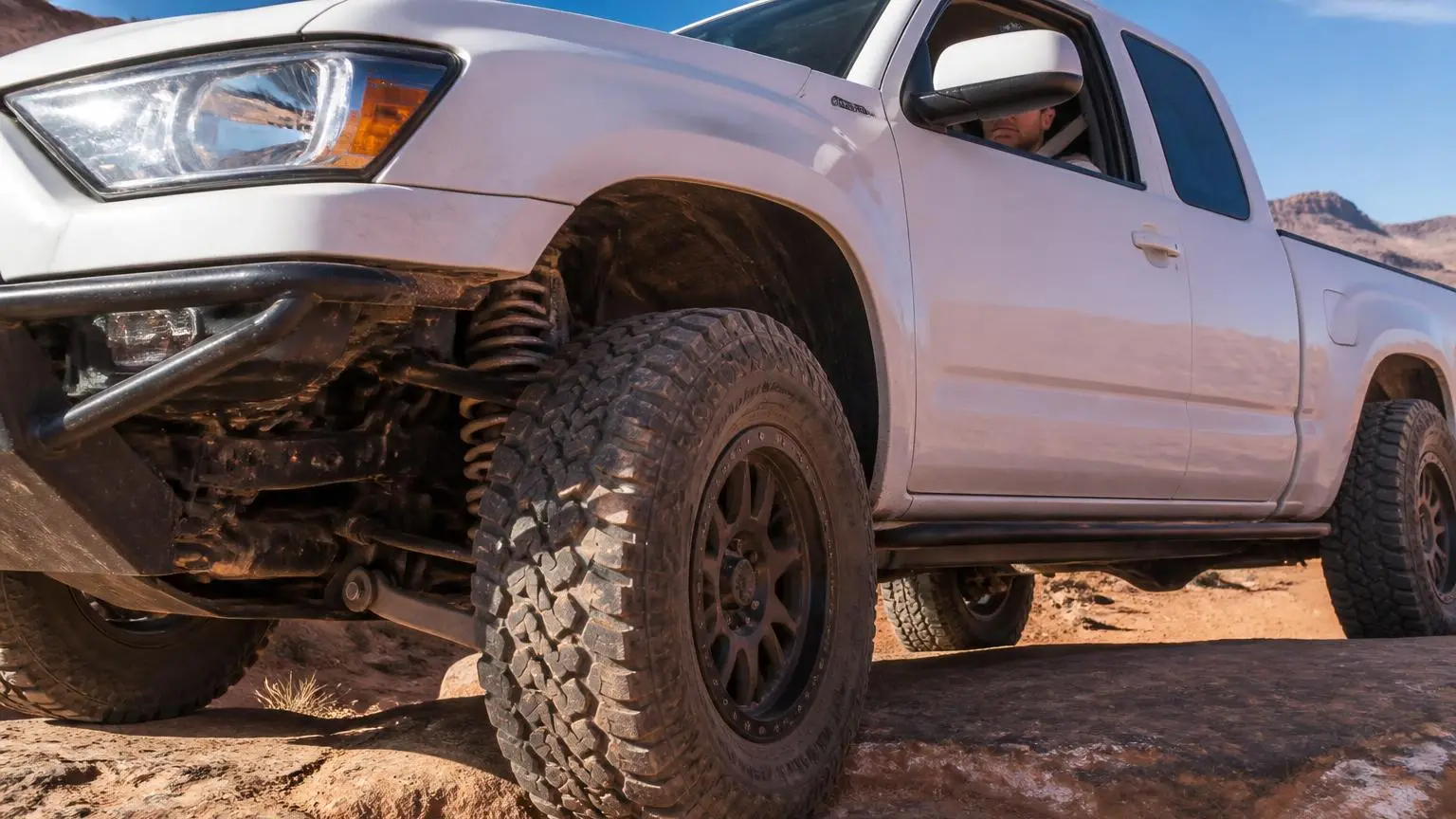
On an IFS truck each front wheel moves independently, as Rancho puts it, located by an upper and a lower control arm that meet the steering knuckle at ball joints. Spacer and lifted-strut kits raise the truck by pushing the knuckle down relative to the frame, so both arms hang at steeper angles than the factory designed around. Rough Country says the key to preserving ride quality when changing a suspension is keeping the geometry of every component as close to its factory angle as possible, and that increasing ride height increases operating angles — including CV axle angles on 4WD trucks. The upper ball joint and the alignment are usually the first places that run out of range.
What an Aftermarket Upper Arm Changes
A lift-specific arm doesn't make the lift; the struts, spacers, springs or knuckles do that. What it changes is how the knuckle is held at the new height:
| Feature | What it does | Example from maker specs |
|---|---|---|
| Geometry for the lifted height | Keeps the upper ball joint and arm angles in their working range | Rough Country's 3.5" Silverado 1500 kit uses forged aluminum upper arms "to provide the correct suspension geometry" |
| Caster and camber adjustment | Lets an alignment shop set the front end back to spec | ICON Tacoma billet arms: adjuster sleeves for on-vehicle caster and camber tuning |
| Higher-angle joint | Lets the arm move farther without binding | ICON Delta Joint: more angularity than a typical ball joint |
| More droop travel | Lets the wheel drop farther when paired with longer shocks | ICON: added droop when paired with its extended-travel coilovers |
Every arm has a working range of its own. ICON lists its Tacoma Delta Joint arms as compatible with 0 to 3.5 inches of front lift on 2005–2015 trucks and 0 to 2.75 inches on 2016–2023 trucks, and only with factory steering knuckles.
When a Lift Needs New Upper Arms
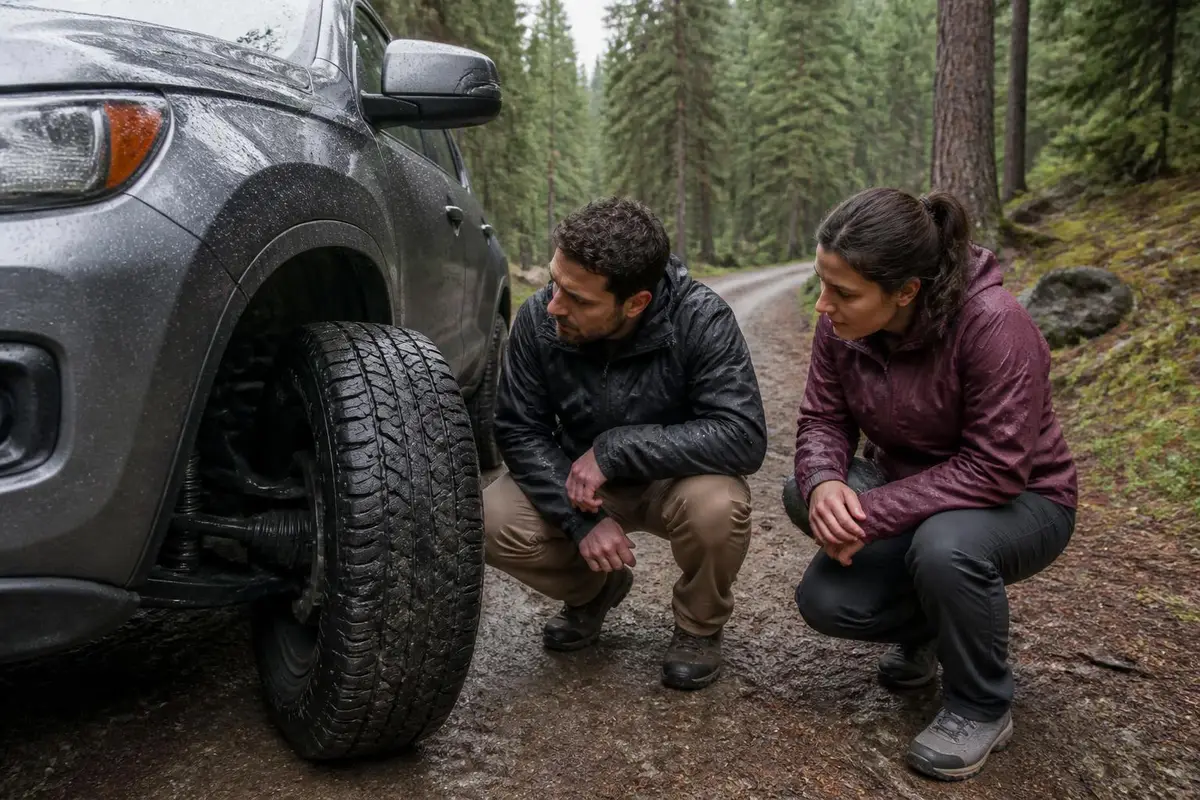
The parts list for your exact truck and lift height is the most reliable guide, and Rough Country's GM kits show how it changes with height:
| Rough Country kit | How it lifts | Upper arms included? |
|---|---|---|
| 2" leveling kit, Silverado/Sierra 1500 (2019–2026) | Upper-strut spacer | No |
| 3.5" lift, Silverado 1500 (2019–2024) | Lifted struts; 3.5 in. front, 2.5 in. rear | Yes, forged aluminum |
| 3.5" knuckle lift, Silverado/Sierra 2500HD/3500HD (2011–2019) | Steel knuckles, torsion-bar keys, differential drops | Yes, forged, with OEM-style bushings |
After any ride-height change, Rough Country says to schedule an alignment immediately, because lift kits change suspension geometry, steering angles and alignment settings. Adjustable upper arms matter most at this step, since they give the shop the caster and camber range the factory arm may no longer reach at the new height.
Arm and Joint Designs
Aftermarket arms come in tubular steel, forged and billet aluminum designs. ICON's billet arms are CNC-machined 6061 aluminum with an anodized finish; Rough Country's GM arms are forged. The bigger choice is the joint at the knuckle. A uniball — a spherical bearing — lets the arm articulate with little bind, but ICON notes its weakness in daily driving is exposure to the elements. A sealed ball joint keeps grit out but allows less angle. ICON's Delta Joint is its attempt at both: a zinc-plated housing, a grease seal and a greaseable, metal-on-metal design meant to run quietly while allowing more angle than a typical ball joint. At the frame end, Rough Country fits OEM-style Clevite rubber bushings to its HD arms.
How We Research This
This explainer draws on how lift-kit and control-arm makers describe the geometry problem and their parts. See solid axle vs IFS for the suspension layouts this applies to, and how we rank for the site’s full research method.
Sources
- ICON Vehicle Dynamics — 2005–2023 Tacoma Billet Upper Control Arm, Delta Joint (58550DJ) — CNC 6061 aluminum; PTFE-lined rod ends and adjuster sleeves for caster and camber; added droop with extended-travel coilovers; uniball vs Delta Joint trade-offs; compatible with 0–3.5 in. (2005–2015) and 0–2.75 in. (2016–2023) of front lift, OE knuckles only.
- Rough Country — 3.5" Lift Kit, Silverado 1500 (2019–2024) — Keeping suspension geometry close to factory angles preserves ride quality; kit includes forged aluminum upper control arms for correct geometry; 3.5 in. front, 2.5 in. rear.
- Rough Country — 3.5" Knuckle Lift, Silverado/Sierra 2500HD/3500HD (2011–2019) — Forged upper control arms with OEM-style Clevite bushings; knuckles, torsion-bar keys and differential drops.
- Rough Country — 2" Leveling Kit, Silverado/Sierra 1500 (2019–2026) — Upper-strut spacer leveling kit without new control arms.
- Rough Country — How to Prep for a Lift Kit Install — Ride height increases operating angles including CV axle angle; lifts change geometry, steering angles and alignment; schedule alignment immediately.
- Rancho — Solid Axle vs Independent Front Suspension — On independent front suspension each wheel moves independently.