
Affiliate disclosure: As an Amazon Associate, we earn from qualifying purchases, at no extra cost to you. We research rather than test, and commissions never change our rankings. This site is reader-supported: those commissions pay for hosting, research and keeping every guide up to date, so if a guide helped you, buying through our links is an easy way to support it. How we rank · Full disclosure
TL;DR
- A trailer-mounted rooftop tent lets camp stay pitched while the tow vehicle leaves, and takes the vehicle's roof rating out of the equation.
- The trailer rack must meet the tent's crossbar rules — for Thule tents, at least 28 inches front to back.
- The trailer, rack, tent and cargo all count against the trailer's GVWR, printed on the label on the front half of its left side.
- Aim for tongue weight at 10–15% of loaded trailer weight; a 165-lb tent 3 ft ahead of the axle adds about 50 lb to the tongue on a trailer with a 10-ft axle-to-coupler distance.
- Level and chock the trailer before anyone climbs the ladder.
Why Put a Rooftop Tent on a Trailer
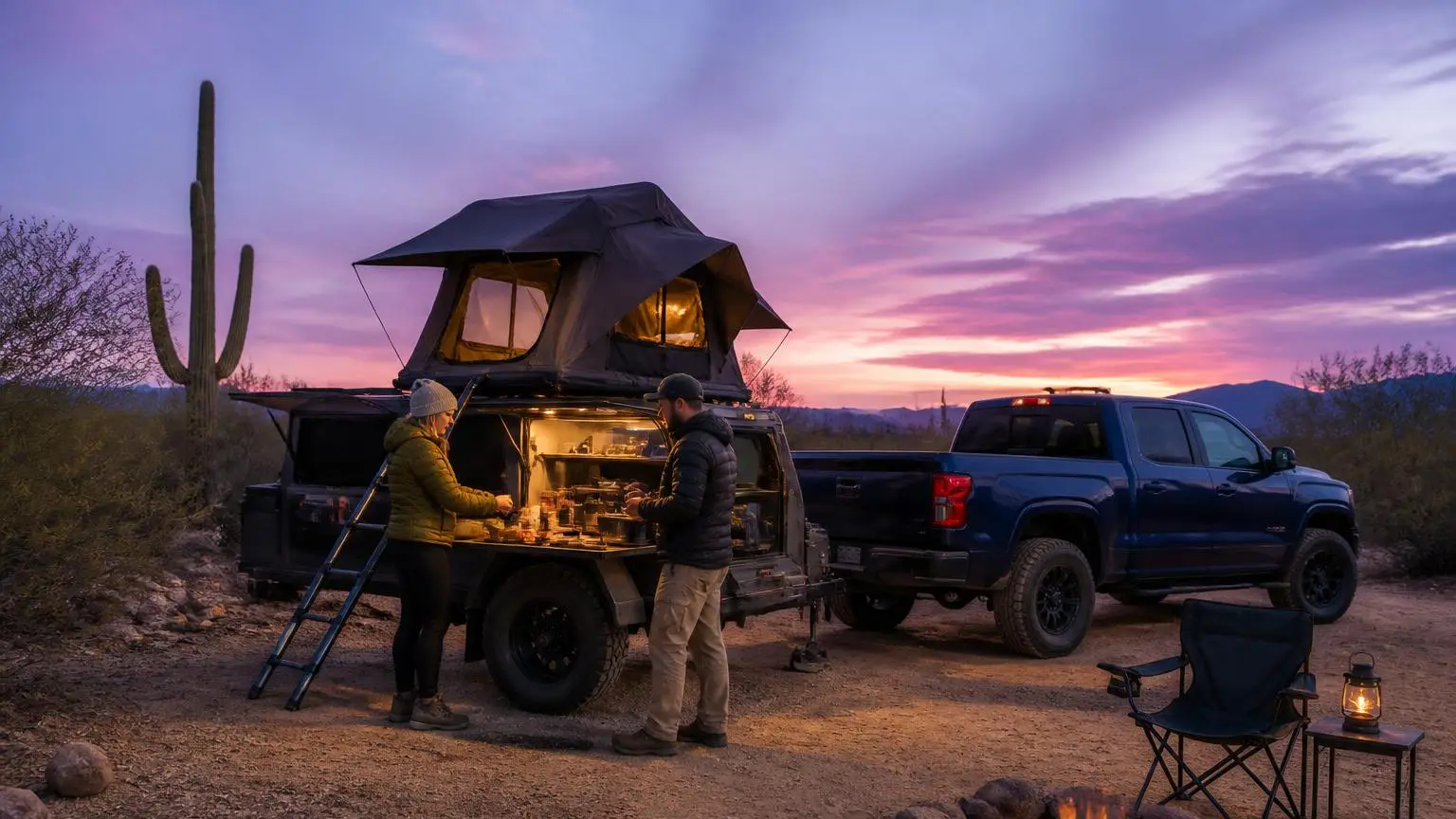
With the tent on a trailer, camp stays set up at the site while the tow vehicle goes to the trailhead, the store or the next viewpoint. The tow vehicle’s roof stays free for bikes, boats or a roof basket, and its own roof load rating stops being the limit on which tent you can buy. The tent can also move between vehicles with the trailer rather than being bolted to one roof. The trade-off is everything that comes with towing: a weight budget for the trailer, tongue weight to manage, and a longer rig on tight trails.
Trailer Options: Utility, Overland and Purpose-Built
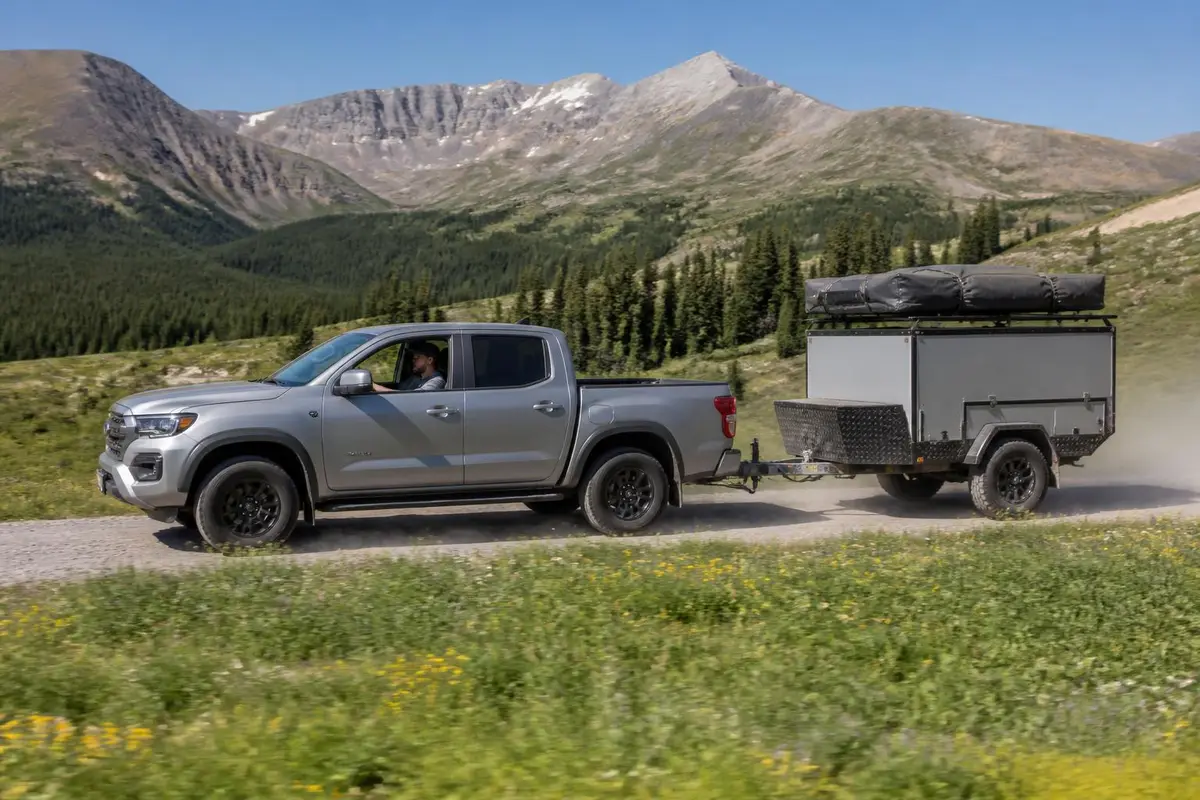
There are three common routes. A standard utility trailer with an added rack is the budget option; check its suspension, tires and clearance against where you plan to tow. An off-road or overland trailer is built for trail use, usually with more clearance, stronger suspension and a factory rack or rack mounting points. A purpose-built tent trailer ships with a tent already mounted. Whichever you choose, the trailer’s own ratings, not its appearance, decide what it may carry.
Rack Height, Crossbar Spread and Tent Fit
A trailer rack has to meet the same requirements a roof rack does. Thule’s rooftop tent guidelines call for a front-to-back bar spread of at least 28 inches and list minimum side-to-side spreads by tent, from 24 inches for the Foothill to 34 inches for the Kukenam; they also cap the bar cross-section the tent brackets accept. iKamper lists 30 to 60 inches front to back for the Skycamp 3.0. Rack height matters too. It has to clear whatever rides in the trailer tub below, and it sets how high the tent floor sits, which decides whether the tent’s ladder reaches the ground; iKamper’s Skycamp 3.0 ladder, for example, extends to 88.5 inches.
Trailer Weight Ratings
Federal motor vehicle standards define gross vehicle weight rating (GVWR) as the manufacturer’s value for the loaded weight of a single vehicle, and gross axle weight rating (GAWR) as the load-carrying capacity of a single axle system, measured at the tires. For trailers, 49 CFR 567.4 requires the certification label carrying those ratings on the forward half of the left side, readable from outside. The trailer’s own empty weight, the rack, the tent, any cargo and water all count against its GVWR. Use a scale for the loaded number rather than adding up catalog weights.
Tongue Weight: Where the Tent Sits Matters
Equal-i-zer’s guidance is to calculate tongue weight at 10 to 15 percent of the trailer’s loaded weight. Oregon DOT’s towing guide explains why the range matters: too little tongue weight can cause the trailer to sway, and too much takes weight off the tow vehicle’s front wheels, making steering less responsive. A tent changes tongue weight by where it sits relative to the axle. The share it adds to the tongue is its weight times its distance ahead of the axle, divided by the distance from the axle to the coupler.
| Example (loaded trailer 1,500 lb) | Result |
|---|---|
| Target tongue weight at 10–15% | 150–225 lb |
| 165-lb tent centered 3 ft ahead of the axle, coupler 10 ft ahead of the axle | Adds about 50 lb to the tongue (165 × 3 ÷ 10) |
| Same tent centered directly over the axle | Adds about 0 lb to the tongue |
| Same tent centered 2 ft behind the axle | Removes about 33 lb from the tongue (165 × 2 ÷ 10) |
Recheck the number on a scale once the trailer is loaded, and keep it inside your hitch’s and tow vehicle’s tongue-weight limits. Our towing and payload hub covers weighing and hitch setup.
Static Load: Sleepers on a Trailer
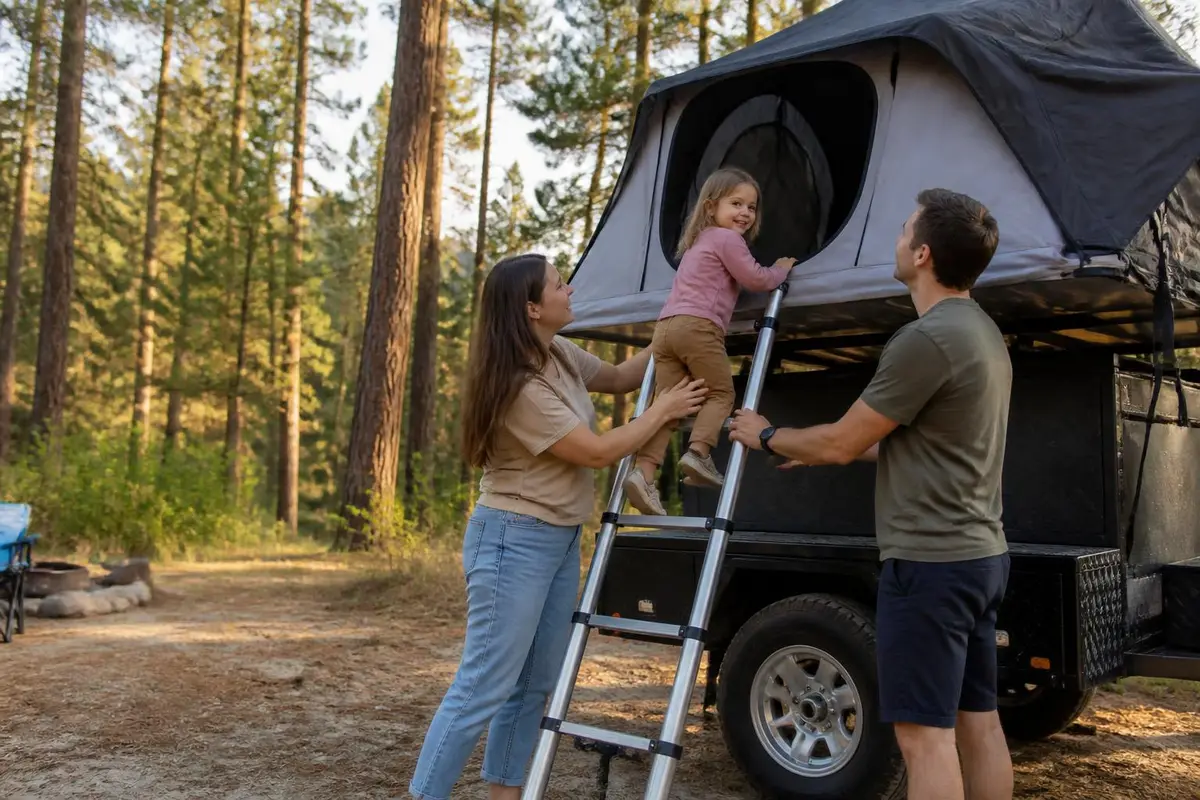
When you sleep in the tent, the load is static. Thule defines static weight capacity as what a tent carries with people inside while the vehicle is parked, and notes it can exceed the dynamic figure used while driving. On a trailer the rack, the trailer frame and the tongue jack all carry that load, so level the trailer on its tongue jack and use the trailer's stabilizer jacks or wheel chocks so it cannot rock or roll when someone climbs the ladder.
Choosing a Tent for a Trailer
A trailer rated for the load removes the tow vehicle’s roof rating from the equation, which opens up heavier fold-out hard shells like those in our best rooftop tents for trucks. Fold-out tents need clear ground on the open side, so plan which side of the trailer the tent opens toward. An annex below the tent can turn the trailer into a covered camp room. If you are still deciding between shell types, our hard-shell vs soft-shell comparison covers the trade-offs.
We do not build, tow or camp on these setups ourselves — see how we rank for the full method and affiliate disclosure for how the site is funded.
Recommended gear
Tents and shelter for vehicle camping
Affiliate disclosure: As an Amazon Associate, we earn from qualifying purchases, at no extra cost to you. Purchases through these links help keep this site running and up to date. Learn more

Best for a low-profile rooftop tent that sets up in minutes.
- 2-person rooftop tent with a mattress included.
- Low-profile design that sits close to the roof.

Best for sleeping off the ground in a pickup bed.
- 2-person tent that sets up in a pickup bed in about 10 minutes.
- Rainfly included for wet nights.

Best for shade and rain cover off a roof rack at camp.
- 8.2 x 10 ft pull-out awning with UV50+ fabric.
- Mounts to a roof rack; hardware included.

Best for keeping a camp kitchen organized.
- Hanging organizer with pockets for camp-kitchen gear.
- Keeps utensils and spices off the table and out of the dirt.
We research products from manufacturer specs and owner feedback; we don't test them ourselves. How we choose.
Sources
- Thule — Rooftop Tent Guidelines (PDF) — 28-in. minimum front-to-back bar spread; minimum side-to-side spread by tent (Foothill 24 in. to Kukenam 34 in.); crossbar size limits; static capacity defined as tent with people inside while parked, and can exceed dynamic.
- iKamper — Skycamp 3.0 Specifications — 30–60 in. crossbar range, 165-lb weight and 88.5-in. ladder for the Skycamp 3.0.
- Equal-i-zer — What Weight Distribution Hitch Size Do I Actually Need? — Calculate tongue weight at 10–15% of the trailer's loaded gross weight.
- Oregon DOT — Towing a Trailer: Being Equipped for Safety (PDF) — Too little tongue weight can cause sway; too much takes weight off the tow vehicle's front wheels and makes steering less responsive; tow ratings are in the owner's manual.
- eCFR — 49 CFR § 571.3 (FMVSS definitions) — GVWR is the manufacturer's value for the loaded weight of a single vehicle; GAWR is the load-carrying capacity of a single axle system.
- eCFR — 49 CFR § 567.4 (Certification labels) — A trailer's certification label must be on the forward half of the left side, readable from outside.