

Affiliate disclosure: As an Amazon Associate, we earn from qualifying purchases, at no extra cost to you. We research rather than test, and commissions never change our rankings. This site is reader-supported: those commissions pay for hosting, research and keeping every guide up to date, so if a guide helped you, buying through our links is an easy way to support it. How we rank · Full disclosure
TL;DR
- The 130 is 211 inches long with its spare wheel, about 13.4 inches longer than a 110, and all of the extra length sits behind the rear axle.
- It shares the 110's 119-inch wheelbase and 42.1-foot turning circle.
- Up to eight seats in a 2+3+3 layout, with 804 mm (31.7 in) of third-row legroom; a five-seat Outbound version is also sold.
- The long rear costs departure angle: 28.8° at off-road height against 41.9° for an air-sprung 90 or 110.
- Electronic Air Suspension is standard; wading depth is 35.4 inches and US towing is up to 8,200 lbs.

Defender 130 Dimensions: The Official Numbers
Land Rover’s US launch release gives the core measurements in inches, and its 2025 technical specification adds metric detail, including how much of the length comes from the tailgate-mounted spare wheel. Where we give inches from a metric figure, they are straight conversions from Land Rover’s own millimeter values.
| Measurement | Defender 130 (Land Rover figure) |
|---|---|
| Overall length | 211 in (US release); 5,358 mm with spare wheel |
| Length without spare wheel | 5,099 mm (about 200.7 in) |
| Wheelbase | 119 in |
| Width (mirrors folded) | 79 in (US release); 2,008 mm |
| Height | 77.6 in (US release); 1,970 mm with roof antenna |
| Ground clearance | 11.4 in (US release); 293 mm at off-road height |
| Turning circle, curb to curb | 12.84 m (about 42.1 ft) |
| Maximum wading depth | 35.4 in (900 mm) |
For a garage or parking space, the spare wheel is the detail to watch. Land Rover's figures put 259 mm (about 10.2 inches) between the with-spare and without-spare lengths, so measure against the full with-spare number unless the spare is relocated. For comparison, the same specification lists 5,018 mm (197.6 in) for a 110 and 4,583 mm (180.4 in) for a 90, both with the spare.
Where the Extra Length Goes
Land Rover’s launch release says the Defender silhouette was “extended by 13.38 inches” for the 130, and the 130 keeps the 119-inch wheelbase of the 110. Every added inch is therefore rear overhang. That one design choice explains almost everything else about the 130.
- Cabin: The added overhang is where the third row fits. Land Rover built the 130 around a full three-row, 2+3+3 layout, not the smaller two-seat third row that is optional in the 110.
- Ride and maneuverability: The wheelbase is unchanged, so the turning circle is the same as the 110’s. Land Rover’s technical specification lists 12.84 m curb to curb for both.
- Trail geometry: Long overhangs reduce departure clearance. That cost is covered in the capability section below.

Seating: Up to Eight in Three Rows
Land Rover’s US model page lists the 130 with “up to 8 seats,” and the launch release describes the arrangement as 2+3+3. The company’s technical specification also lists 5-, 7- and 8-seat versions, and the US page describes a five-seat version as part of the 130 Outbound story. In the eight-seat layout, the specification gives up to 804 mm (about 31.7 in) of third-row legroom and 990 mm (about 39 in) of third-row headroom. By comparison, the same document lists 517 mm of third-row legroom for the optional 5+2 layout in the 110.
Headroom in the other rows is close to the 110's: the specification lists 1,032 mm in the first row and 1,027 mm in the second for the 130. Second-row legroom is 975 mm (38.4 in).
Cargo Capacity
Land Rover’s current US page lists 15.3 cu ft of cargo space behind the third row. It says folding the third and second rows adds space in stages, up to a stated maximum of 89 cu ft. The original launch release quoted different figures for the first model year (13.7 cu ft with all rows in use and 80.9 cu ft with both rear rows folded), so cargo numbers have changed across model years. If a specific figure matters for your purchase, check the brochure for the exact year you are considering.
The roof is useful too. Land Rover’s US page gives the 130 a 260-lb dynamic roof load, meaning weight carried while driving, and a 661-lb static roof load, meaning weight such as occupants in a rooftop tent while parked. Those are the same figures published for the 110. Land Rover's international technical specification shows the dynamic rating includes the Expedition Roof Rack and rises from 100 kg to 168 kg (about 370 lbs) on a 130 fitted with off-road tires. For rack and tent choices, see our Defender roof rack guide.
Off-Road Capability: What the Overhang Costs
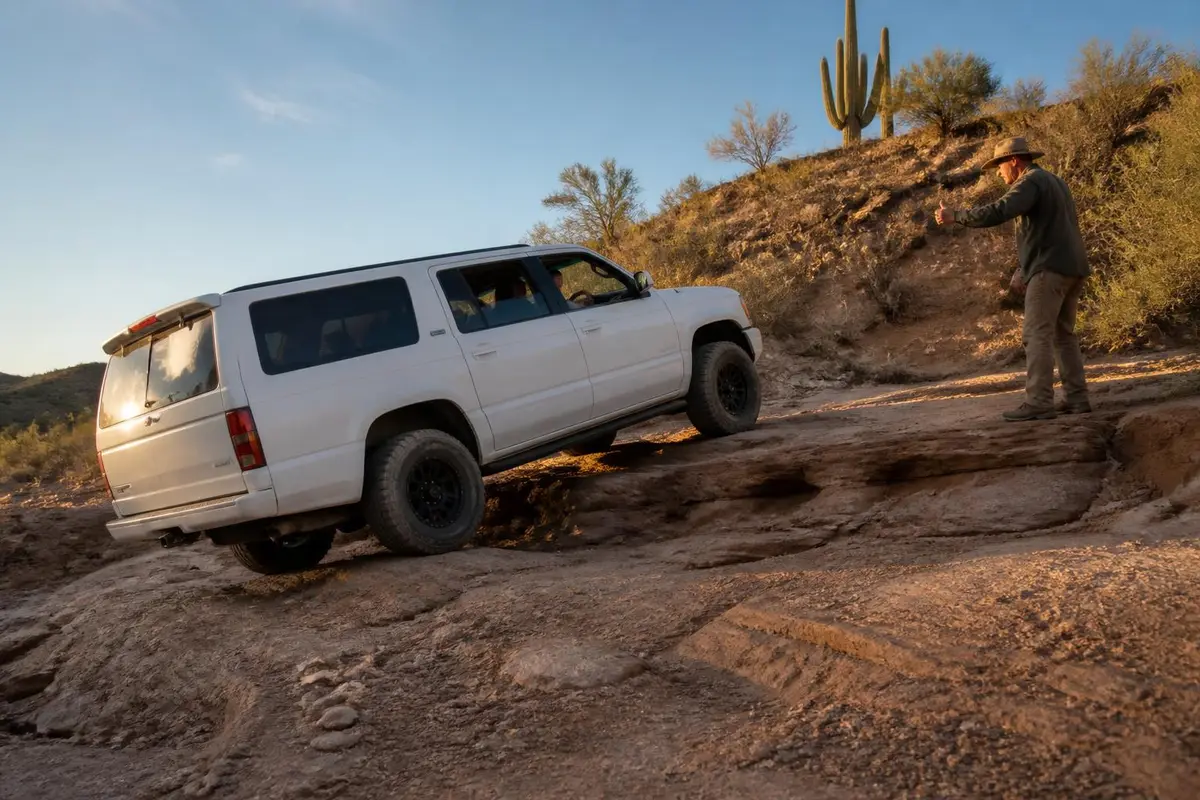
The 130 keeps the core Defender hardware. Land Rover’s launch release lists Electronic Air Suspension with Adaptive Dynamics as standard, and the current US models page lists all-wheel drive with a twin-speed transfer box and Terrain Response 2. Wading depth is 35.4 in, and the approach angle is close to the 110’s. Land Rover’s launch release quotes 37.5° approach, 27.8° breakover and 28.5° departure. The 2025 technical specification gives both ride heights:
| Measurement | Standard height | Off-road height |
|---|---|---|
| Ground clearance | 218.5 mm (8.6 in) | 293 mm (11.5 in) |
| Approach angle | 30.1° | 37.6° (37.5° petrol) |
| Ramp (breakover) angle | 22.0° | 27.9° |
| Departure angle | 24.5° | 28.8° |
The departure angle is the number to watch. The same technical specification lists 41.9° for the 90 and 110 on air suspension at off-road height, so the 130 gives up roughly 13° at the back, and the rear bumper touches down sooner when driving off a ledge or through a steep dip. Our Defender off-road capability explainer covers how Terrain Response and the air suspension’s off-road height work across the lineup.
Powertrains and Towing
At launch, Land Rover's US release listed two 3.0-liter Ingenium inline-six engines for the 130: the P300, rated at 296 hp and 347 lb-ft, and the mild-hybrid P400, rated at 395 hp and 406 lb-ft. The current US models page lists a 3.0-liter six with an 8-speed automatic on every 130 trim and quotes "up to 395 HP." Towing is up to 8,200 lbs with a braked trailer, and the launch release gave a maximum payload of up to 1,760 lbs. Payload has to cover up to eight occupants plus cargo, roof load and any trailer tongue weight, so a full 130 reaches its limit quickly; check the figure on your vehicle's door-jamb label.
Who the 130 Suits, and Who It Doesn’t
Choose the 130 if you regularly need seven or eight usable seats, or five seats with a very long cargo floor, and your trips are mostly graded roads, forest routes and moderate trails. It is harder to justify if tight technical trails, narrow city parking or a standard-length garage are daily concerns. Our Defender 130 vs 110 comparison covers that decision in detail, and Defender 90 vs 110 covers the shorter end of the range.
Figures on this page come from Land Rover's US pages, its 130 launch release and its 2025 technical specification, with inches converted from Land Rover's millimeter values; we haven't driven or measured a 130 ourselves (see how we rank). Fitment guides are on the Land Rover hub.
Land Rover and Defender are trademarks of their respective owners. 4x4 & Overlanding is an independent publication and is not affiliated with, sponsored or endorsed by any vehicle manufacturer.
Recommended gear
Core recovery gear
Affiliate disclosure: As an Amazon Associate, we earn from qualifying purchases, at no extra cost to you. Purchases through these links help keep this site running and up to date. Learn more

Best for a complete strap, shackle and glove kit in one bag.
- Straps, shackles, gloves, damper and a recovery bag in one kit.
- Covers most vehicle-to-vehicle recoveries without buying parts separately.

Best for getting unstuck from sand, mud or snow without another vehicle.
- Nylon recovery boards that give spinning tires grip in sand, mud or snow.
- Double as a shovel to clear sand from in front of the tires.

Best for vehicle-to-vehicle snatch recoveries.
- 1 in x 30 ft kinetic rope that stretches to ease a stuck vehicle out.
- Gentler on recovery points than a static tow strap.
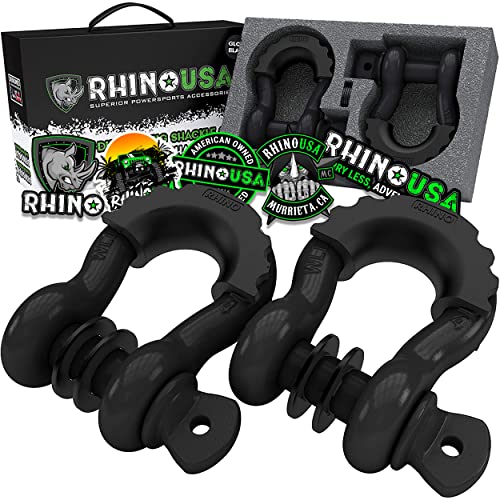
Best for rated connection points for straps and ropes.
- 3/4 in D-ring shackles, 41,850 lb listed break strength (2-pack).
- Connect straps to rated recovery points.
We research products from manufacturer specs and owner feedback; we don't test them ourselves. How we choose.
Sources
- Land Rover USA — Defender 130 — Up to 8 seats; 15.3 cu ft behind the third row and up to 89 cu ft maximum cargo; 35.4-in wading depth; 260-lb dynamic and 661-lb static roof loads; up to 395 hp; towing up to 8,200 lbs; Terrain Response 2; five-seat Outbound version.
- Land Rover USA — The New Land Rover Defender 130 (launch release) — 211-in length, 119-in wheelbase, 13.38-in silhouette extension, 79-in width, 77.6-in height, 11.4-in ground clearance, 2+3+3 seating, launch cargo figures, 37.5°/27.8°/28.5° angles, Electronic Air Suspension on every 130, P300 (3.0-liter six, 296 hp) and mild-hybrid P400 (395 hp) outputs, 1,760-lb payload.
- Land Rover USA — Defender 130 Models & Specifications — 3.0-liter six and 8-speed automatic on every 130 trim, Electronic Air Suspension on the 130 S, all-wheel drive with twin-speed transfer box.
- Land Rover — Defender Technical Specification 2025 (PDF) — Metric length with and without spare wheel for 90, 110 and 130; width, height, turning circle, 900 mm wading; standard and off-road clearance and angles; 5/7/8-seat configurations with headroom and legroom by row; dynamic roof load 100 kg rising to 168 kg with off-road tires; 110 figures for comparison.