
Affiliate disclosure: As an Amazon Associate, we earn from qualifying purchases, at no extra cost to you. We research rather than test, and commissions never change our rankings. This site is reader-supported: those commissions pay for hosting, research and keeping every guide up to date, so if a guide helped you, buying through our links is an easy way to support it. How we rank · Full disclosure
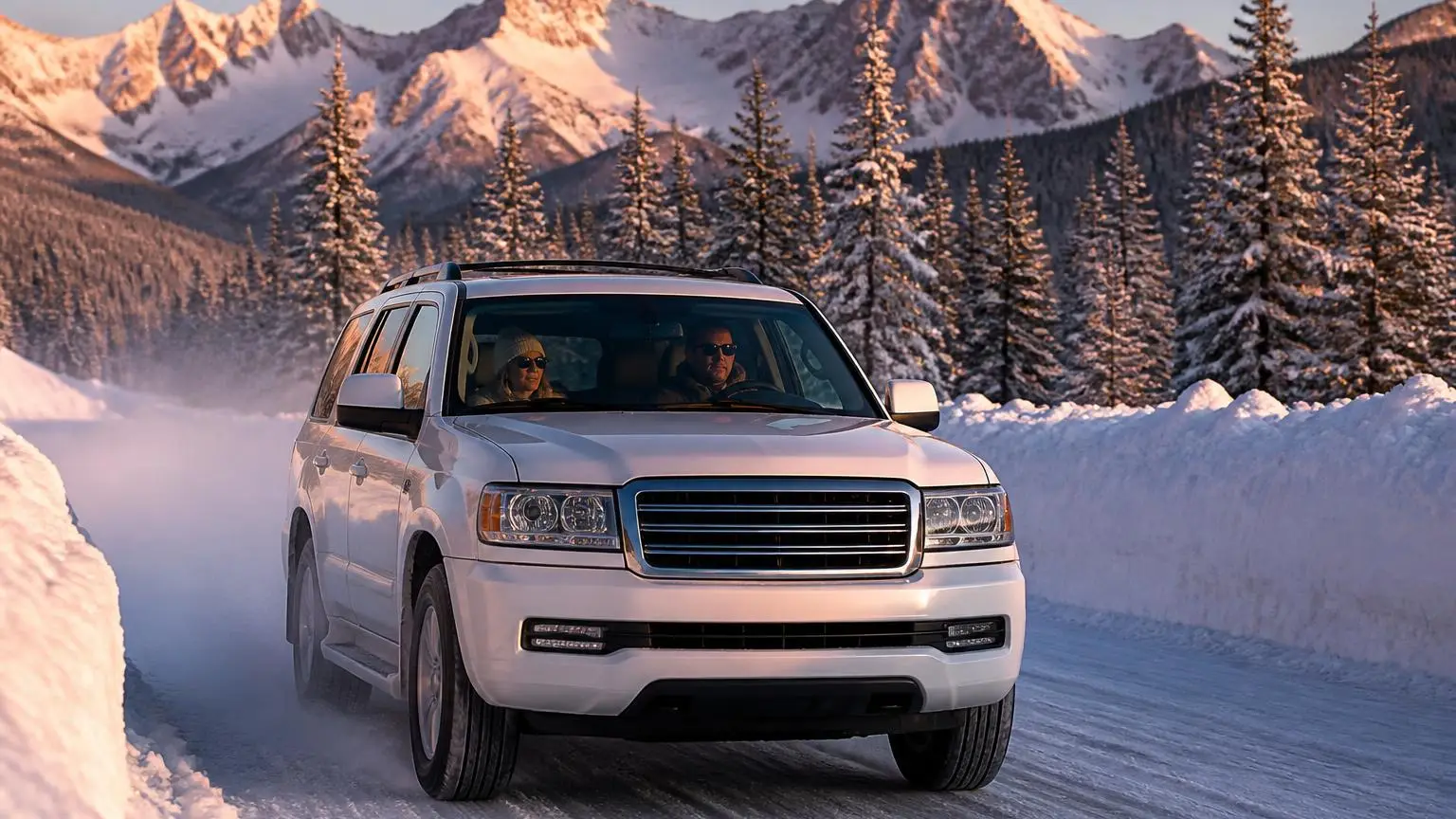
Every SUV below has a documented low-range transfer case in its manufacturer spec sheet, not just an "all-wheel drive" or "4x4"-badged marketing name. That low-range gearing is the part that actually matters for deep, unplowed snow — plenty of crossovers wear a 4x4-sounding trim name without it.
At a Glance
| SUV | 4WD system | Snow-relevant feature |
|---|---|---|
| Jeep Wrangler | Part-time, 2-speed case (Command-Trac/Rock-Trac) | Solid axles; Rubicon adds lockers |
| Ford Bronco | Selectable, 2-speed case | Standard across the lineup |
| Toyota 4Runner | Part-time, low range by trim | Body-on-frame TNGA-F platform |
| Toyota Land Cruiser | Full-/part-time, low range | Shares TNGA-F with 4Runner |
| Land Rover Defender | Full-time, 2-speed case | Locking center/rear diffs, 35.4-in wading depth |
Jeep Wrangler
Wrangler runs a part-time 4WD system (Command-Trac or the heavier-duty Rock-Trac on Rubicon trims) built around a genuine two-speed transfer case, which owners in snow-heavy climates consistently cite as giving real low-range control in deep or drifted snow that a typical crossover simply can't match. It remains a body-on-frame platform with solid axles on most trims, a further point of difference from a unibody AWD crossover.
Ford Bronco
Bronco offers a selectable 4WD system with a two-speed transfer case across its lineup, built on the same fundamental architecture logic as Wrangler — power to both axles plus low-range gearing for low-speed torque. Owners cite this as a genuine off-road and deep-snow capability difference from Ford's own AWD-based crossover SUVs.
Toyota 4Runner
4Runner is built on Toyota's body-on-frame TNGA-F platform (shared with Land Cruiser and Tacoma), and part-time 4WD with low-range is offered depending on trim. Owners running 4Runner through genuine winter seasons report the low-range gearing as a real asset for deep snow and steep, snow-covered grades that a typical crossover SUV in the same size class doesn't offer.
Toyota Land Cruiser
Land Cruiser shares its body-on-frame TNGA-F platform with 4Runner and is built around the same full-time or part-time 4WD-with-low-range architecture, historically positioned by Toyota as its most off-road-capable SUV globally. It carries the same low-range advantage over an AWD crossover that 4Runner does, in a larger body.
Land Rover Defender
Defender runs a full-time all-wheel-drive system paired with a two-speed transfer case and locking center and rear differentials — a genuine off-road 4WD architecture rather than a crossover AWD system, according to Land Rover's own published specifications. Owners cite the combination of low range and locking differentials as giving it real capability in deep snow beyond what its "all-wheel drive" label alone would suggest.
Solid Axles vs. Independent Front Suspension in Deep Snow
Wrangler's front and rear axles are Dana-designated units — the "44" in a Dana 44 refers to a specific ring-gear size and torque rating, per Dana/Spicer's own axle documentation — while 4Runner, Land Cruiser and Defender all run independent front suspension. A solid axle holds ground clearance under the differential regardless of suspension travel, which matters when plowing through consistent deep snow; independent suspension generally rides smoother on the plowed road in between.
A 4x4 System Doesn't Replace Winter Tires
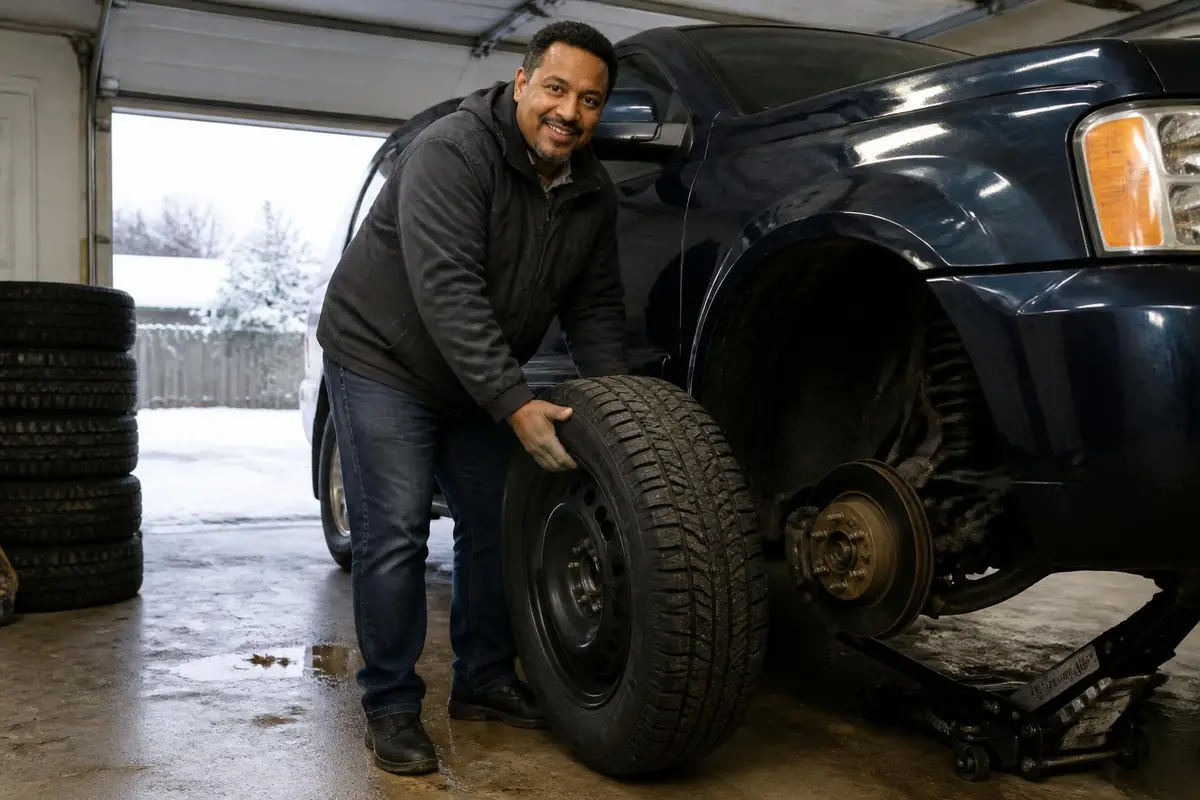
Every SUV above adds real low-speed torque and traction capability for deep or difficult snow, but none of it changes braking or cornering grip — that's a function of the tires. See winter and snow 4WD for how a dedicated winter tire compares with a chained all-terrain, and fit the right tire to whichever SUV you choose before assuming the drivetrain alone covers winter safety.
Towing Capacity Still Matters for a Winter Trailer or Sled Hauler
| SUV | Max towing |
|---|---|
| Jeep Wrangler Rubicon | 5,000 lb |
| Ford Bronco (Sasquatch, tow package) | 4,500 lb |
| Toyota 4Runner TRD Off-Road | 6,000 lb |
| Toyota Land Cruiser | 6,000 lb |
| Land Rover Defender 110 | up to 8,201 lb (P400/P500/V8) |
A snowmobile trailer or small camper pulled behind any of these adds real weight on top of winter's already-reduced traction, and the two Toyota body-on-frame SUVs tow a full 1,000–1,500 lb more than Wrangler or Bronco despite similar or lower approach angles — towing capacity and off-road geometry aren't determined by the same part of the vehicle, so don't assume the more capable-looking off-roader tows the most.
Cold-Weather Starting and Battery Health
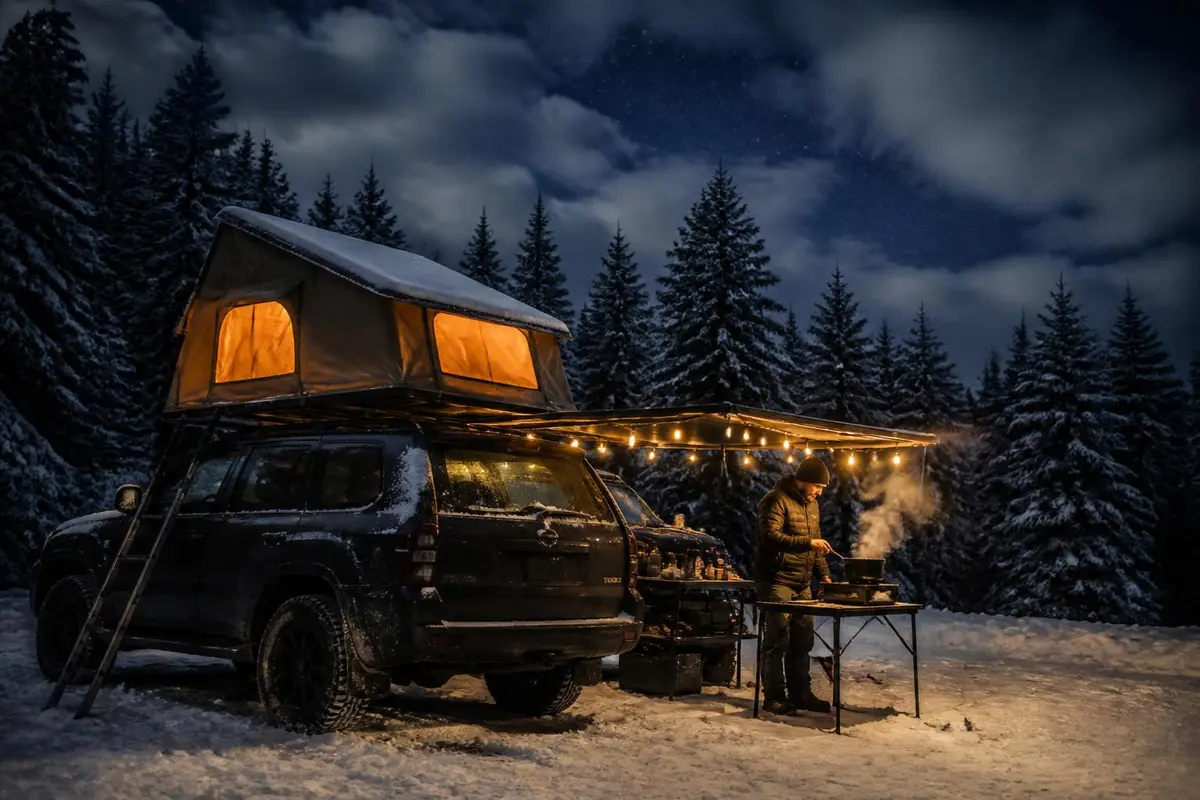
A weak battery is a far more common winter no-start cause than any drivetrain issue, and cold weather itself reduces a battery's effective cranking capacity — have the battery load-tested each fall regardless of which SUV on this list you own, since even a genuinely capable 4x4 won't start on a dead battery.
Where and How You Park Matters Too
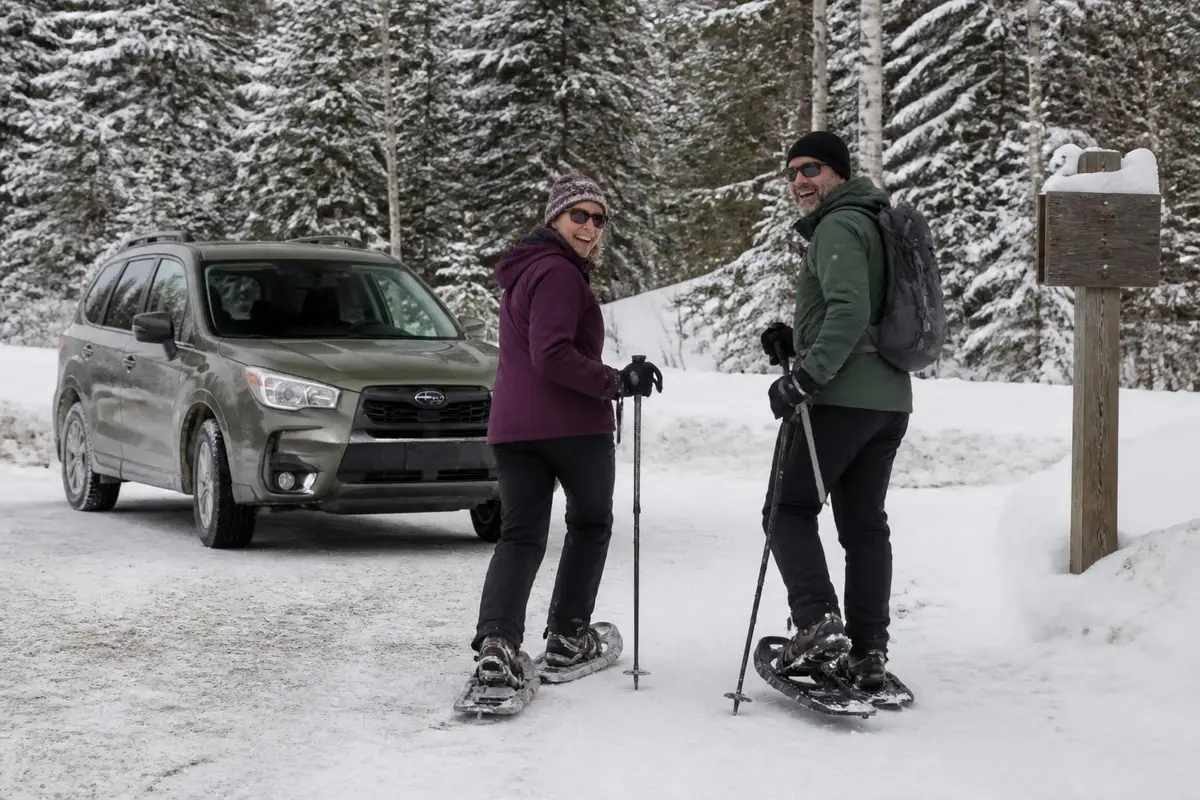
A garage or covered parking spot meaningfully reduces snow and ice buildup on door seals, wipers and the windshield compared with street parking, cutting down on morning prep time before a commute. For owners without covered parking, a simple windshield cover can prevent the most time-consuming part of winter morning prep — scraping a fully iced windshield.
Every drivetrain spec above comes from the automaker's own published documentation, cross-checked against aggregated owner reports on winter use; see how we rank.
Recommended gear
Gear for snow and winter trips
Affiliate disclosure: As an Amazon Associate, we earn from qualifying purchases, at no extra cost to you. Purchases through these links help keep this site running and up to date. Learn more

Best for getting unstuck from sand, mud or snow without another vehicle.
- Nylon recovery boards that give spinning tires grip in sand, mud or snow.
- Double as a shovel to clear sand from in front of the tires.

Best for a kinetic rope with matching soft shackles.
- 7/8 in x 30 ft kinetic rope plus two 7/16 in soft shackles.
- Comes with a waterproof storage bag.

Best for a compact compressor for tires up to 33".
- Compact 12V compressor, 120 PSI, for tires up to 33 in.
- Small enough to keep in the vehicle full-time.

Best for plugging a tread puncture on the trail.
- Reamer-and-plugger kit for tread punctures.
- Lets you plug a tire on the trail instead of changing it.
We research products from manufacturer specs and owner feedback; we don't test them ourselves. How we choose.
Sources
- Jeep — Wrangler 4xe Official Model Page — Wrangler's part-time 4WD system with a two-speed transfer case (Command-Trac/Rock-Trac), as distinct from an AWD crossover system.
- Ford Media — Bronco Official Product Page — Bronco's selectable 4WD system with a two-speed transfer case, offered across the lineup.
- Toyota Pressroom — The All-New 2025 Toyota 4Runner — 4Runner is built on Toyota's body-on-frame TNGA-F platform, shared with Land Cruiser and Tacoma, with part-time 4WD offered depending on trim.
- Land Rover USA — Defender 110 — Defender's full-time all-wheel-drive system paired with a two-speed transfer case and locking center/rear differentials, a genuine off-road 4WD architecture rather than a crossover AWD system.
- Spicer (Dana) — AdvanTEK Axle Technology — Dana axle designation tied to a specified ring-gear size and torque capacity, relevant to Wrangler's solid front and rear axles.
- Ford Media — 2025 Bronco Technical Specifications (PDF) — Bronco's towing capacity (4,500 lb max) and off-road geometry by trim.
- Stellantis Media — What's New for 2025: Jeep Wrangler / Wrangler 4xe — Wrangler Rubicon's towing capacity (5,000 lb max) and published off-road angle figures.