
Affiliate disclosure: As an Amazon Associate, we earn from qualifying purchases, at no extra cost to you. We research rather than test, and commissions never change our rankings. This site is reader-supported: those commissions pay for hosting, research and keeping every guide up to date, so if a guide helped you, buying through our links is an easy way to support it. How we rank · Full disclosure
A CV axle (also called a half-shaft or sideshaft) drives a wheel on a vehicle with independent suspension. On a 4WD truck with independent front suspension, like the 2026 Ram 1500, whose front end Stellantis lists as upper and lower A-arms, each front wheel is driven by one. What the job costs depends on the part you choose (new, remanufactured, or just a boot or joint), whether a core charge applies, and how cleanly the old axle comes out.
TL;DR
- Each CV axle has a fixed joint at the wheel and a plunging joint at the differential; the boot sealing each joint is what usually fails first (GKN).
- A torn boot caught before the joint is contaminated can be fixed with a boot and grease; a clicking or dry joint usually means a complete axle.
- Remanufactured axles cost less but can carry a much shorter warranty: Cardone lists 1 year/18,000 miles reman vs Limited Lifetime new.
- Remanufactured axles often carry a refundable core charge, so return the old axle.
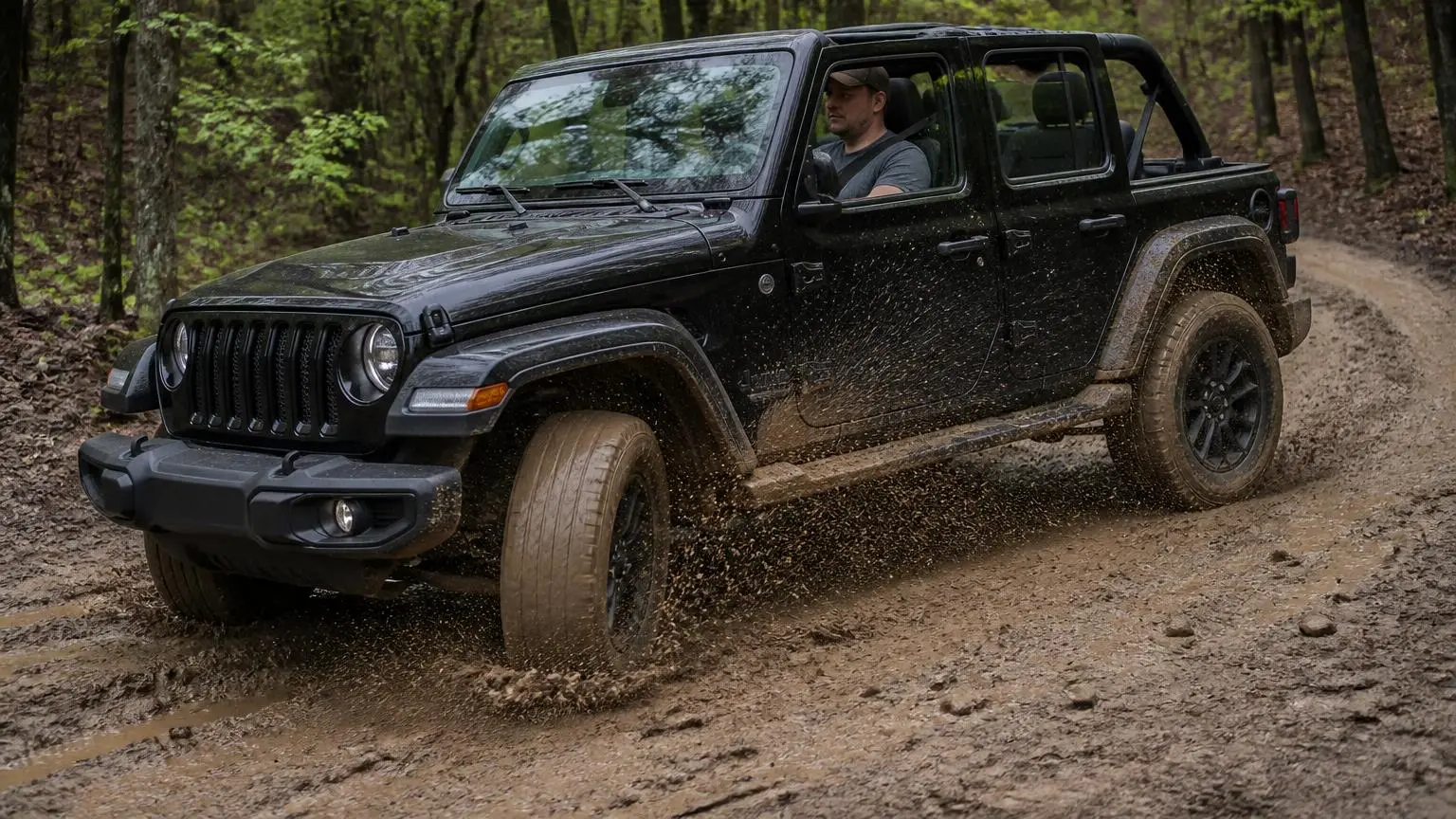
- Solid-front-axle trucks such as the Jeep Wrangler have no front CV sideshafts.
| Tools needed | Floor jack and rated jack stands, Axle-nut socket and torque wrench, Tie-rod or ball-joint separator, Pry bar or slide hammer for the inner joint on some designs |
|---|---|
| Difficulty | Moderate (DIY) |
At a Glance
| What you find | Usual repair | Cost driver |
|---|---|---|
| Torn boot, joint still quiet and smooth | New boot, clamps and grease | Mostly labor; the parts are small |
| Clicking in turns, or a boot that ran dry | Complete CV axle | New vs remanufactured, plus labor |
| Remanufactured axle | Swap it and return the old one | Core charge, refunded when the old axle goes back |
| Solid front axle (e.g. Jeep Wrangler) | No front CV sideshafts | See u-joint repair instead |
How a CV Axle Is Built
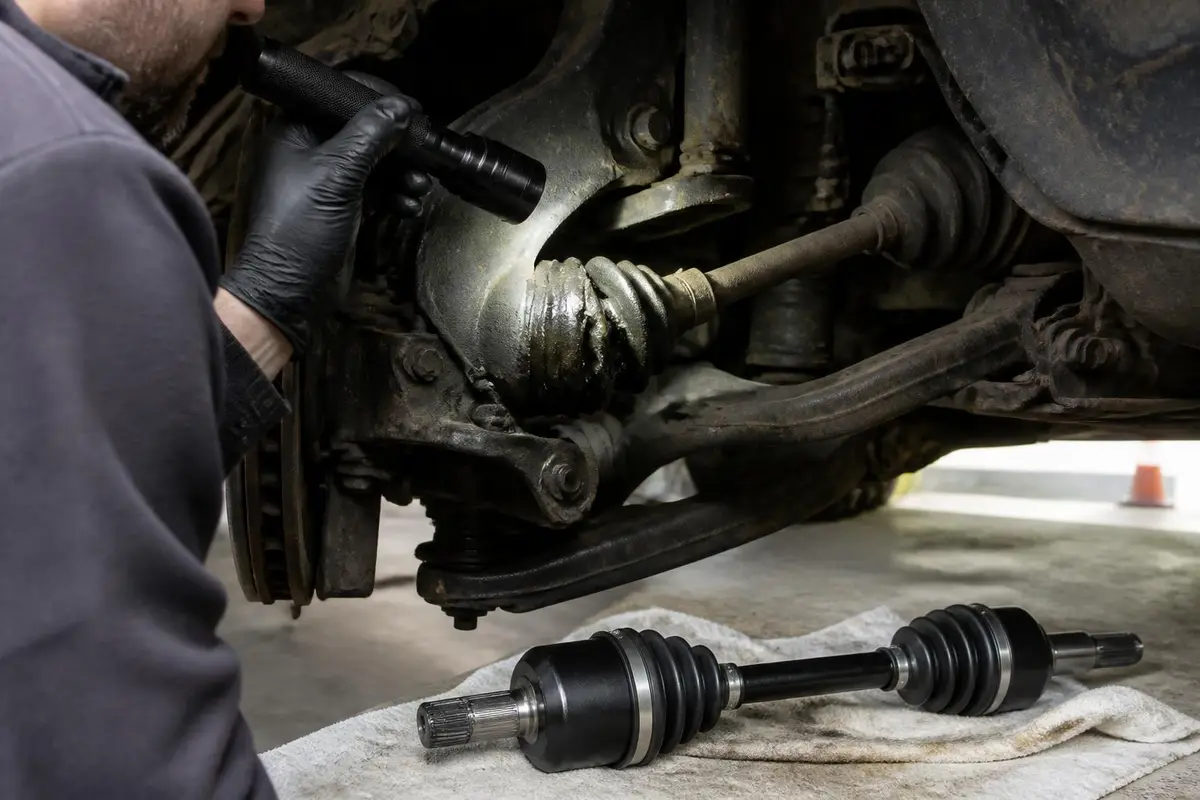
GKN, a major sideshaft manufacturer, describes every sideshaft as two constant-velocity joints joined by a shaft: a fixed joint at the wheel end and a plunging joint at the gearbox or differential end. The plunging joint lets the shaft's effective length change as the suspension moves. The fixed joint has to pass torque through the steering angle: GKN says a front, steered outboard joint must work at up to 52 degrees, and rates its common AC fixed-ball joint at a maximum of 47 degrees. Rear sideshafts run at much lower angles. Each joint is packed with grease and sealed by a boot, and the boot is the part that usually fails first.
Which 4WD Trucks Have Front CV Axles
Front CV sideshafts belong to independent front suspension. A solid front axle carries its axle shafts inside the housing instead. The 2026 Jeep Wrangler, for example, lists a solid front axle with link-coil suspension, so a front-axle joint problem on it is not a CV axle job; see the u-joint replacement cost guide for that kind of repair.
Boot Repair vs Complete Axle
A torn boot caught early is the cheapest outcome: the joint is cleaned, repacked and fitted with a new boot and clamps. GKN's joint kits contain the joint, boot, boot circlips, tightening straps, bolts, nuts and spacers needed for a professional repair, which shows the individual parts are serviceable. Once dirt or water has reached the joint, or it clicks under load, a complete axle is the more common fix. The labor is similar, and the result doesn't depend on how clean the old joint was.
What Drives the Price
- New vs remanufactured. Remanufactured axles usually cost less, but the warranty can be much shorter. Cardone lists 1 year/18,000 miles for its remanufactured CV drive axles and Limited Lifetime for its new ones.
- Core charge. A remanufactured axle is often sold with a refundable deposit for your old axle, called the core. Keep the old axle intact and return it by the seller's deadline, or the deposit becomes part of the cost.
- Front vs rear, and design. A front axle passes through the steering knuckle and hub. Some inner joints are held in the differential by a clip and pry out, while others bolt to a flange.
- Seized parts. A splined shaft rusted into its hub, or a stuck ball-joint or tie-rod taper, adds labor time.
- Alignment. Many front CV jobs separate a ball joint or tie-rod end to swing the knuckle clear. If a tie rod's adjustment is disturbed, an alignment check follows.
DIY vs. Shop
DIY cost is the axle plus any tools you don't already own. The job needs safe support on rated jack stands, the correct axle-nut socket, a torque wrench for the axle nut and suspension fasteners (use the values in your vehicle's service information), and a way to separate the knuckle. A shop makes more sense when the axle is seized in the hub, when your design needs a special puller, or when you'd rather not risk damaging the knuckle or the differential seal.
Is It Worth Replacing Both Sides at Once?
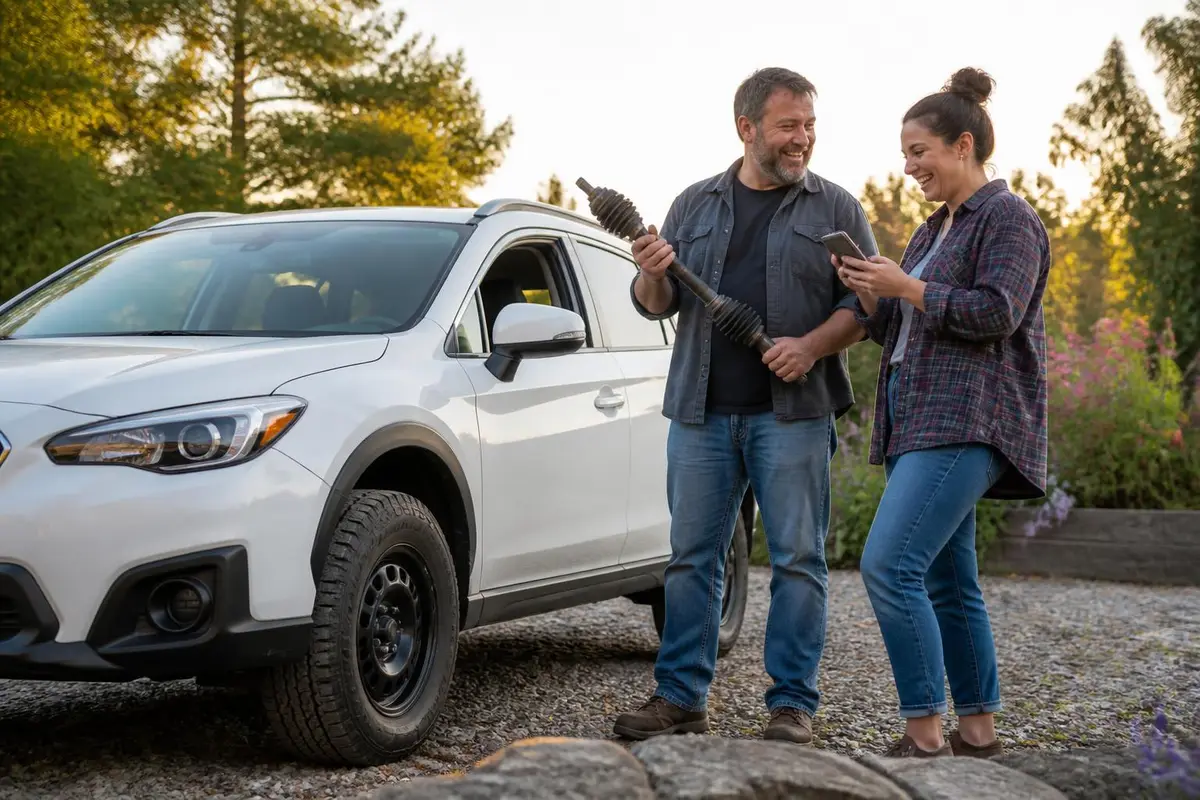
Both front axles have the same mileage and the same exposure, but one failing doesn't mean the other will. Inspect the second side's boots and check its joints for play and noise. Replace it if the boot is cracked or the joint is worn, and leave it if both are sound.
Lifted Trucks
A leveling or lift kit on an independent front suspension drops the knuckle relative to the frame-mounted differential, so the sideshaft sits at a steeper angle at ride height. That uses up part of the fixed joint's angle range before any steering or suspension travel is added, so inspect the boots more often on a lifted truck.
Sources
- GKN Automotive — Sideshafts — Every sideshaft has a fixed joint at the wheel end and a plunging joint at the gearbox end, joined by a shaft.
- GKN Automotive — Constant Velocity Joints — Plunging joint absorbs suspension travel; steered outboard joints work at up to 52 degrees; AC fixed-ball joint maximum 47 degrees; joint kits include boot, circlips, straps and hardware.
- Cardone — Product Warranty Policy (remanufactured and new, PDF) — Remanufactured CV drive axles at 1 year/18,000 miles vs new CV drive axles at Limited Lifetime.
- Stellantis Media — 2026 Ram 1500 Specifications — Upper and lower A-arm (independent) front suspension on the 2026 Ram 1500.
- Stellantis Media — 2026 Jeep Wrangler Specifications — Solid front axle with link-coil suspension on the 2026 Wrangler.