

Affiliate disclosure: As an Amazon Associate, we earn from qualifying purchases, at no extra cost to you. We research rather than test, and commissions never change our rankings. This site is reader-supported: those commissions pay for hosting, research and keeping every guide up to date, so if a guide helped you, buying through our links is an easy way to support it. How we rank · Full disclosure
A DC-DC charger sits between your starter battery and an auxiliary battery. It actively sets a target charge voltage for the auxiliary battery's specific chemistry — a basic isolator just connects the two batteries together and stops there.
REDARC's BCDC series manual spells this out. Its profiles set a max charge voltage of 14.6V, 15.0V or 15.3V, based on which lead-acid type you pick. It also has a separate lithium mode for LiFePO4 packs. The install itself is just mounting and wiring. Getting the charge profile right for your battery is what makes the charger actually do its job.
| Tools needed | Wire crimpers and lugs, Mounting hardware, Manufacturer’s wiring diagram for your specific charger, Fuse holder and fuse rated per the charger’s chart |
|---|---|
| Time estimate | 2–3 hours |
| Difficulty | Moderate |

Mounting Location and Heat
REDARC's own install guidance for its BCDC Core units says the heatsink can reach 60°C (140°F) under load. Keep the unit away from users and flammable material. It performs best at or below 55°C (130°F), with good airflow.
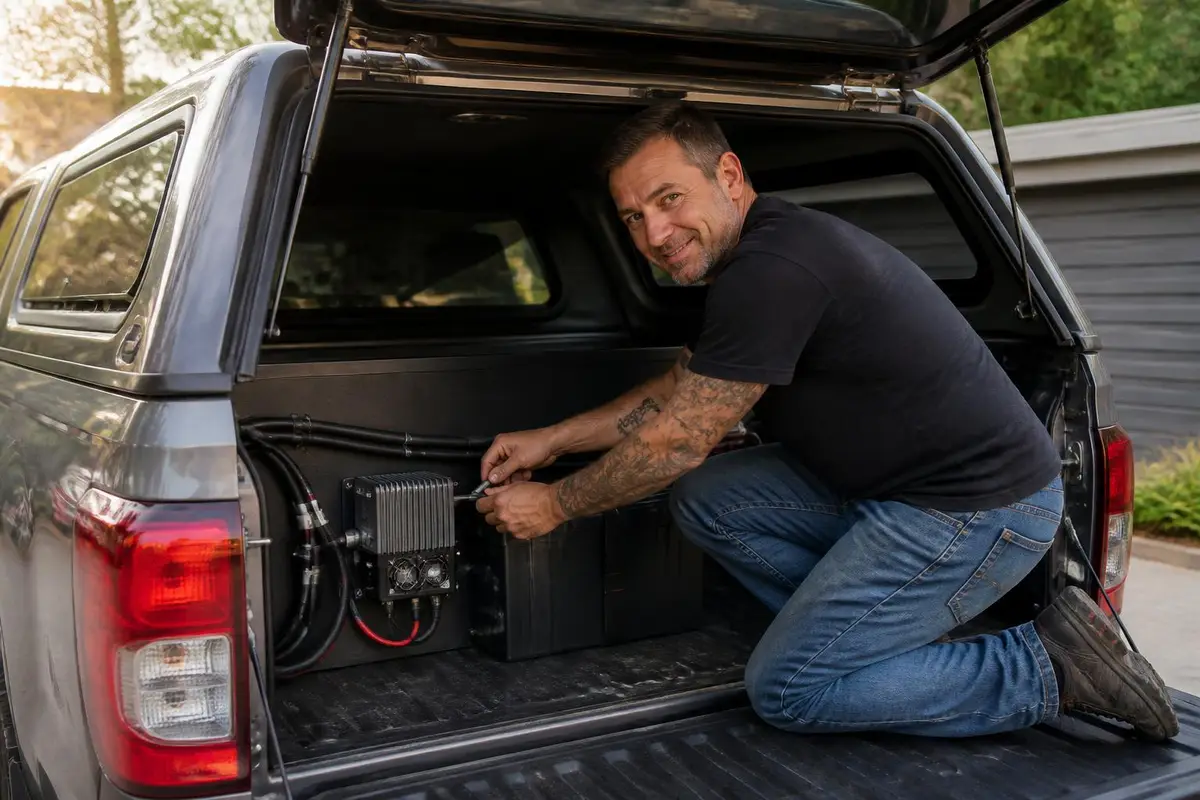
Pick a mounting spot with real airflow, away from direct engine heat, and within the cable-run distance the charger's sizing chart assumes. Confirm that before you run any cable — relocating the unit afterward means re-running the wiring.
Setting the Charge Profile
Charge profile selection isn't a minor setting. It's the entire reason to run a DC-DC charger instead of an isolator. On REDARC's BCDC units, one wire sets the profile. Leave it disconnected for Profile A (14.6V max). Tie it to common ground for Profile B (15.0V). Tie it to another lead for Profile C (15.3V). Tie it to a dedicated lead for lithium mode.
Victron's Orion-Tr Smart charger shows the same pattern on a different brand. Its LiFePO4 preset runs 14.20V absorption and 13.50V float — different from its lead-acid presets.
Run a lithium battery on a lead-acid profile, and it comes up short of what its own management system expects. REDARC's manual is clear on this: even on the Li profile, a LiFePO4 pack still needs its own built-in BMS (battery management system). That circuit guards against over- and under-voltage, and keeps the cells balanced. The charger's voltage setting alone doesn't do that job.
Step Overview
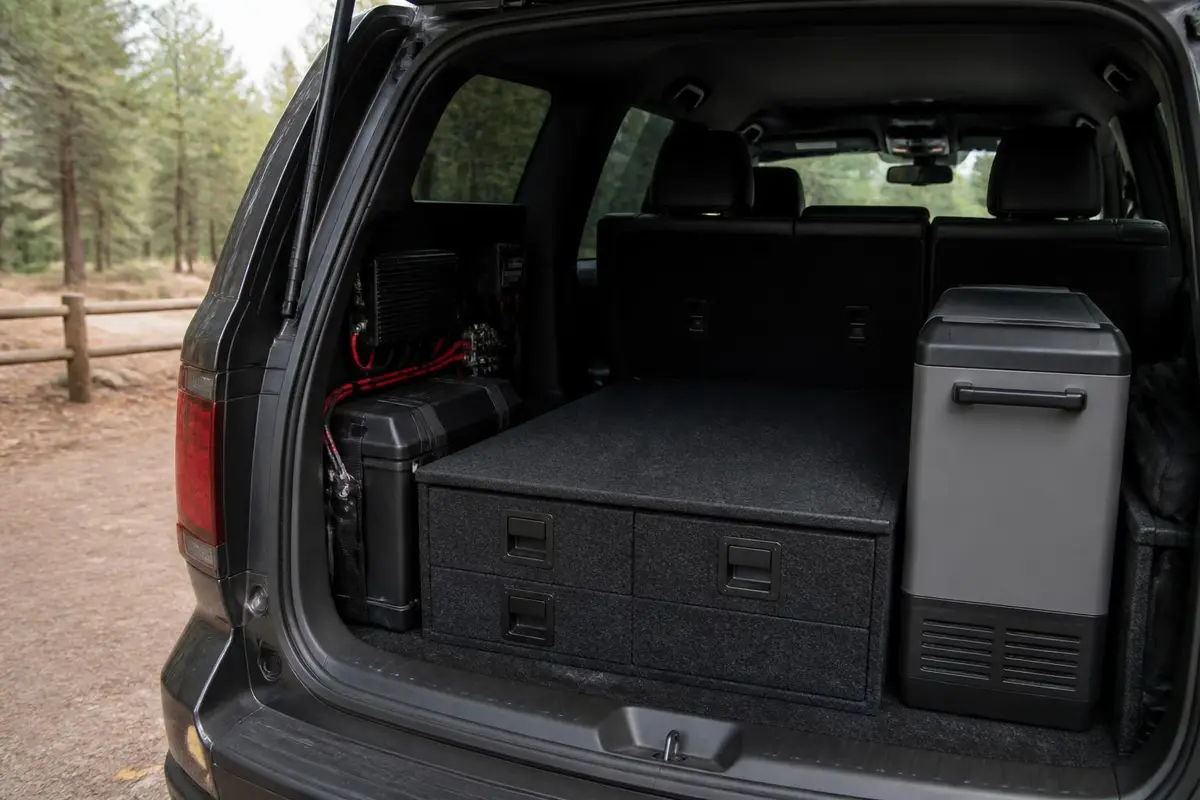
With both batteries disconnected, mount the charger per its maker's airflow and orientation guidance. Wire the input from the starter battery, and the output to the auxiliary battery, following that specific charger's diagram. Input and output wiring aren't interchangeable on most units. Fuse both legs per the maker's chart. Connect any solar input if it's a dual-input model. Set the charge profile to match your actual battery, then reconnect both batteries.
Common Mistakes
The most costly mistake: leaving the charge profile on its default setting, instead of checking it matches your battery. A lead-acid profile on a lithium battery undercharges it, short of what its BMS expects. The reverse can push a lead-acid battery too hard. Skip the airflow the maker specifies, and you risk the thermal shutdown REDARC's own heat warning describes.
Parts and Recommended Gear
- Dual battery wiring diagram (system overview)
- DC-DC chargers — verified listings Check Price (paid link)

When to Use a Pro
If you're comfortable with 12V wiring and can read a maker's diagram, you can generally install a DC-DC charger yourself. Get a 12V/overland electrical specialist to check your setup first if you're adding solar, or unsure which charge profile fits your battery.
Sources
- REDARC — BCDC1225D/BCDC1240D Dual Input Instruction Manual — Selectable charge profiles A/B/C (14.6V / 15.0V / 15.3V max) for lead-acid chemistries, set by the orange wire connection, plus the separate Li profile.
- REDARC — BCDC Core Dual Input Installation and Operation Guide — Heatsink temperature under load (up to 60°C/140°F) and mounting/ventilation guidance; lithium batteries need their own BMS providing over/under-voltage protection and cell balancing.
- Battle Born Batteries — The Basics of Charging LiFePO4 Batteries — Independent confirmation of a lithium charge voltage window (14.2-14.6V bulk/absorb, under 13.6V float) matching the kind of profile a DC-DC charger has to deliver.
- Victron Energy Community — Orion-Tr Smart lithium configuration (official archive) — A second brand's DC-DC charger LiFePO4 preset (14.20V absorption, 13.50V float), cross-confirming the charge-profile-by-chemistry pattern on non-REDARC hardware.