

Affiliate disclosure: As an Amazon Associate, we earn from qualifying purchases, at no extra cost to you. We research rather than test, and commissions never change our rankings. This site is reader-supported: those commissions pay for hosting, research and keeping every guide up to date, so if a guide helped you, buying through our links is an easy way to support it. How we rank · Full disclosure
Swapping to an aftermarket bumper means unbolting the factory bumper — disconnecting any integrated lights, sensors or camera first — bolting on the new one at the factory or bumper-specific mounting points, and reconnecting or leaving disconnected whatever electronics the new bumper does or doesn't support. Unlike a passenger car, there's no federal low-speed-impact standard the replacement has to meet: NHTSA's bumper standard, 49 CFR Part 581, applies only to passenger cars and specifically excludes multipurpose passenger vehicles — the category pickups and SUVs fall under — and low-speed vehicles, per 49 CFR 571.3(b). What does still apply is FMVSS 108 for any lighting on the bumper, and whatever ADAS sensor package the factory bumper carries.
| Tools needed | Socket set / impact wrench, Torque wrench, Wire disconnect tools (for integrated electronics), A helper or hoist to support the bumper’s weight |
|---|---|
| Time estimate | 2–4 hours |
| Difficulty | Moderate |
Check Fitment and ADAS Sensors Before Buying
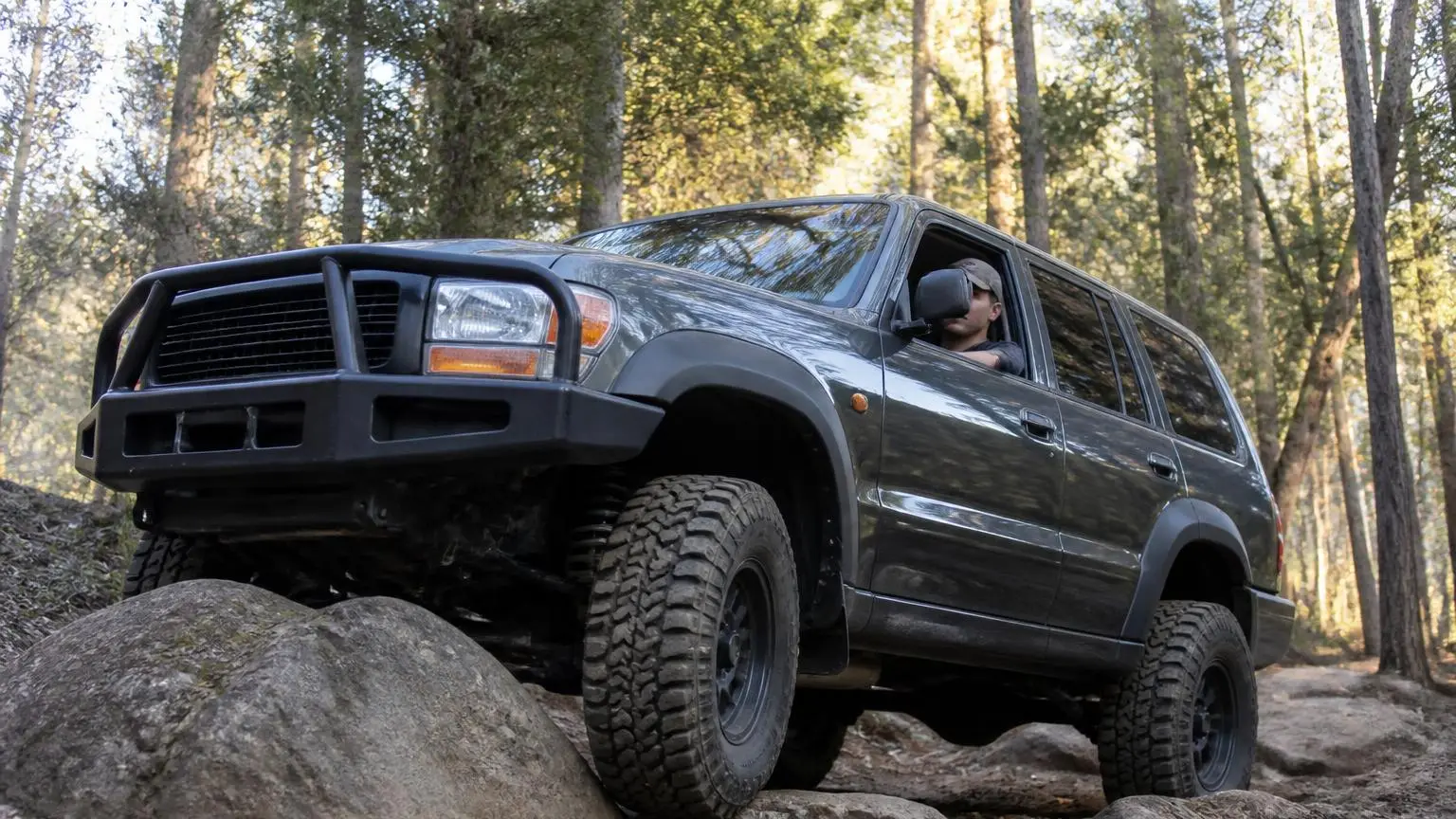
Confirm the bumper is specifically designed for your truck's model year and trim, since factory sensor packages (parking sensors, forward radar, tow hooks) vary by trim and year even on the same model. Collision-repair trade documentation on OEM calibration requirements is direct on this point: automaker technical bulletins list bumper cover replacement, and repair to the bumper's mounting structure, among the triggers for forward radar or camera recalibration — a bumper genuinely engineered for your specific configuration states how it relocates or reconnects those factory sensors; a generic or universal-fit bumper often doesn't support them at all, and removing a sensor-equipped factory bumper without a plan to recalibrate can leave forward collision warning or adaptive cruise reading incorrectly, not just disabled.
Step Overview
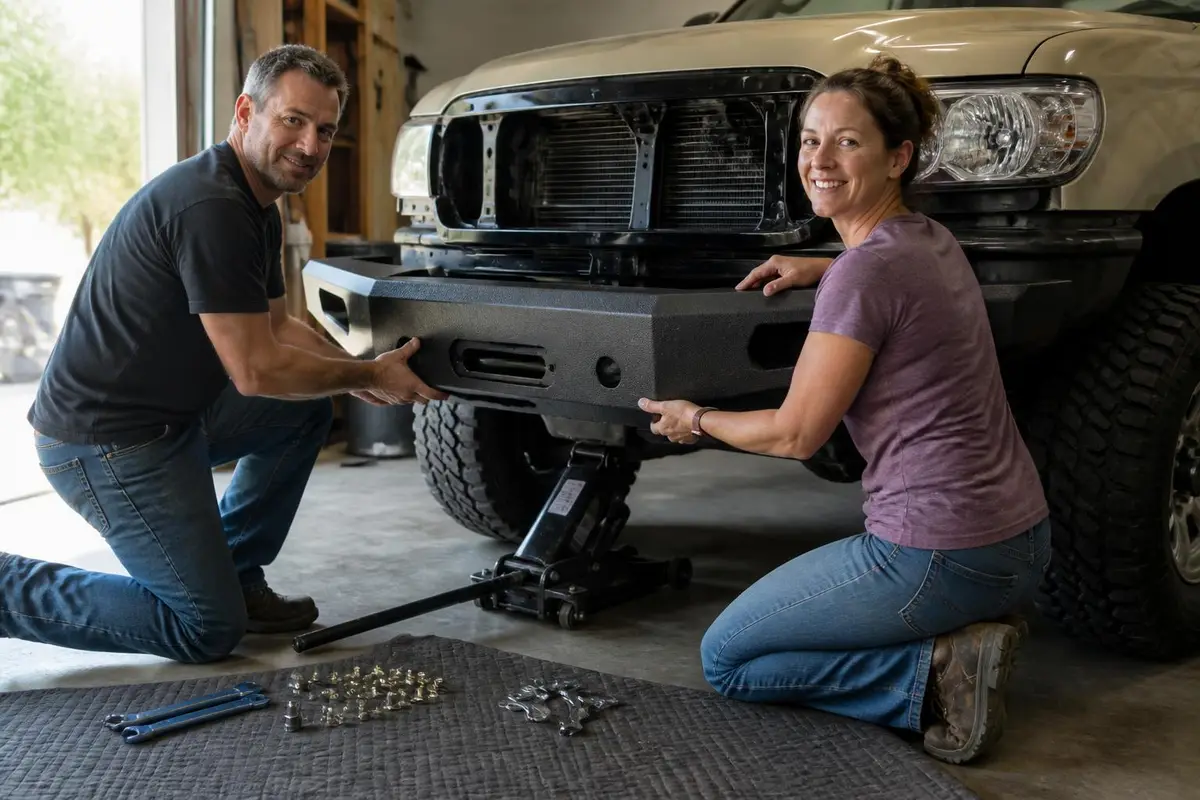
Disconnect the battery's negative terminal before disconnecting any bumper-integrated electronics. Remove the factory bumper's mounting bolts, disconnect wiring for any integrated lights or sensors, and lift the bumper free with a helper supporting its weight. Mount the new bumper at the specified points, torque fasteners to the bumper manufacturer's specified values, and reconnect any supported electronics before reconnecting the battery. If the truck has forward radar or a windshield-mounted camera tied to the factory bumper's mounting structure, arrange calibration afterward rather than assuming it's unaffected.
Common Mistakes
Not checking whether the aftermarket bumper supports the truck's specific factory sensors before buying is the most consequential mistake, since it can mean an ADAS feature reading incorrectly without realizing it until the system misfires. Underestimating the bumper's weight and attempting the swap alone is the other common issue — a dropped bumper can damage the vehicle or injure the installer.
Parts and Recommended Gear
- Off-road bumpers — verified listings Check Price (paid link)
- Bumpers, skid plates and rock sliders — ranked and compared

When to Use a Pro
A bumper that's a genuine bolt-on fitment for your specific truck is a reasonable DIY project for an owner comfortable with basic tools and a helper for lifting. A bumper requiring any cutting, drilling, or relocation of a radar or camera sensor tied to ADAS features is a better fit for a shop that can also perform the recalibration afterward.
Sources
- 49 CFR 571.3(b) — Definitions (multipurpose passenger vehicle, low-speed vehicle) — Defines the MPV category (pickups/SUVs) and low-speed vehicle that 49 CFR Part 581 excludes.
- 49 CFR Part 581 — Bumper Standard (eCFR) — The federal low-speed bumper standard applies only to passenger motor vehicles, excluding multipurpose passenger vehicles and low-speed vehicles.
- 49 CFR 571.108, S6.2.1 — Standard No. 108 (Cornell LII) — No added lamp may impair the effectiveness of required lighting — relevant to any lighting integrated into an aftermarket bumper.
- Brake & Front End — "You Moved the Bumper; Did You Move the Radar?" — Collision-repair trade documentation that bumper cover replacement or repair to its mounting structure is a recognized trigger for forward radar/camera recalibration on late-model vehicles.