

Affiliate disclosure: As an Amazon Associate, we earn from qualifying purchases, at no extra cost to you. We research rather than test, and commissions never change our rankings. This site is reader-supported: those commissions pay for hosting, research and keeping every guide up to date, so if a guide helped you, buying through our links is an easy way to support it. How we rank · Full disclosure
This list covers three jobs: talking to other vehicles, keeping a second battery or power station charged, and holding a phone where you can see it. The sections below give the FCC rules for trail radios, how a DC-DC charger works and the math for sizing portable power.

Best for Owners wanting a smaller, app-programmable radio for group trail comms.
- 2-pack per listing.
- App programming per listing.
- GMRS band (a license is required to transmit).
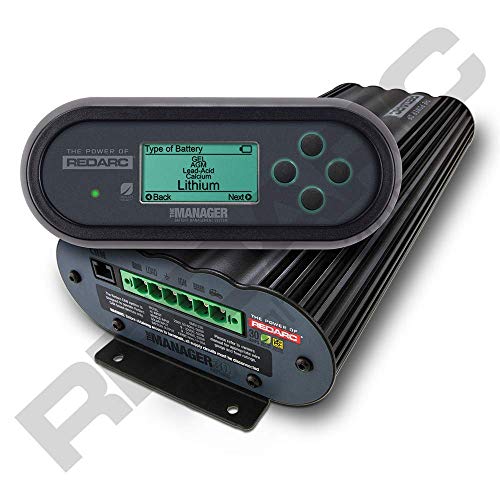
Best for Owners running a fridge or other continuous accessory load who need reliable charging.
- 30A rated per listing.
- DC-DC charging with AC input option.

Best for Owners wanting more capacity than an entry-level power station without a full dual-battery install.
- 519.48Wh capacity per listing.
- 500W rated output.
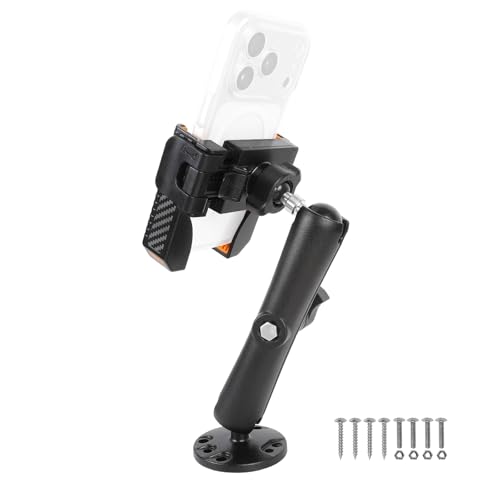
Best for Owners who want one mount that also works across other vehicles (UTV, motorcycle).
- AMPS round base per listing.
- 1-second lock and release mechanism.

GMRS, FRS and CB Compared
| GMRS | FRS | CB | |
|---|---|---|---|
| Band | 462 and 467 MHz (UHF) | Shares GMRS frequencies | 26.965–27.405 MHz |
| Channels | 30 (16 main, 14 interstitial) | 22 | 40 |
| License | Individual FCC license | None | None (authorized by rule) |
| Power limit | 50 W on main channels; 5 W on 462 MHz interstitials; 0.5 W handheld on 467 MHz interstitials | 2 W; 0.5 W on channels 8–14 | 4 W AM/FM; 12 W PEP SSB |
| Repeaters | Yes (467 MHz main channels are inputs) | No | No |
The practical split: FRS handhelds work for spotting and short distances with no paperwork. GMRS gives more power and repeater access for spread-out groups, and CB is license-free on a separate HF band.
Getting a GMRS License
Under 47 CFR 95.1705, operating a GMRS radio requires an individual license. Applicants must be at least 18, and a license normally runs ten years from grant or renewal. It also covers the licensee's immediate family: spouse, children, grandchildren, parents, grandparents, siblings, aunts, uncles, nieces, nephews, in-laws and step-relations. The FCC's application fee for a new GMRS license is $35 (47 CFR 1.1102), and the rules set no exam. Listening needs no license. Transmitting does, including on the app-programmable Baofeng handhelds above.
How a DC-DC Charger Keeps a Second Battery Full
Victron explains why a plain connection to the alternator often isn't enough: "smart" alternators on newer vehicles deliver a variable voltage and shut down when the engine computer doesn't need them. A DC-DC charger regulates that input, and its engine-running detection stops it from draining the starter battery when the alternator isn't charging. It then charges the auxiliary battery in stages (bulk, absorption, float) with separate settings for lead-acid and lithium. REDARC's Manager30 specs:
| REDARC Manager30 | Manufacturer spec |
|---|---|
| Charge output | 30 A continuous, 12 V systems only |
| Inputs | Alternator DC (9–30 V), 110 V AC shore power, built-in MPPT solar regulator |
| Battery types | Standard lead-acid, calcium, gel, AGM, LiFePO4 |
| Fusing | 50 A input, 40 A output |
| Operating range and weight | −40 °F to 158 °F; 12.1 lb |
Sizing a Portable Power Station
A power station is a battery, inverter and charge controller in one box, with no vehicle wiring. Jackery's runtime formula is capacity in watt-hours × 0.85 ÷ the load in watts, where the 0.85 covers conversion losses. For the 519.48 Wh unit above:
| Load | Estimated runtime |
|---|---|
| 15 W (phone and radio charging) | ≈ 29 hours |
| 40 W | ≈ 11 hours |
| 100 W | ≈ 4.4 hours |
| 500 W (its rated maximum output) | ≈ 53 minutes |
To size for a trip, multiply each device's watts by the hours you'll run it each day, add them up and divide by 0.85. That is the daily watt-hours the station has to hold between recharges. The dual battery & portable power hub covers solar recharging and larger systems.
Phone Mounts
A mount with a standard round AMPS base, like the xik above, moves between a truck, UTV or motorcycle that shares the same base. Where you put it is governed by state law: some states limit windshield mounts to small zones in the lower corners, and front seatback airbags rule out mounts on the sides of the seats. The truck interior accessories page covers both.
Sources
- 47 CFR § 95.1763 — GMRS channels (Cornell LII) — 30 GMRS channels (16 main, 14 interstitial) at 462 and 467 MHz; 467 MHz main channels are repeater inputs.
- 47 CFR § 95.1767 — GMRS transmitting power limits (Cornell LII) — 50 W on main channels for mobile, base and repeater stations; 5 W on 462 MHz interstitials; 0.5 W for handhelds on 467 MHz interstitials.
- 47 CFR § 95.1705 — GMRS individual licenses (Cornell LII) — GMRS operation requires an individual license; applicants must be 18 or older; ten-year term; immediate family members listed as eligible operators.
- 47 CFR § 1.1102 — Wireless application fees (Cornell LII) — $35 application fee for a new GMRS license.
- 47 CFR § 95.563 — FRS channels (Cornell LII) — FRS is allotted 22 channels.
- 47 CFR § 95.567 — FRS transmitting power limits (Cornell LII) — FRS capped at 2 W ERP on channels 1–7 and 15–22 and 0.5 W on channels 8–14.
- 47 CFR § 95.905 — Authority to operate CB stations (Cornell LII) — CB stations may be operated without an individual license.
- 47 CFR § 95.963 — CB channel frequencies (Cornell LII) — 40 CB channels from 26.965 MHz (channel 1) to 27.405 MHz (channel 40).
- 47 CFR § 95.967 — CB transmitter power limits (Cornell LII) — CB limited to 4 W mean carrier power (AM/FM) and 12 W peak envelope power (SSB).
- Victron Energy — Orion-Tr Smart DC-DC Charger (Isolated) Manual: Features — Smart alternators deliver variable voltage and shut down when not needed; engine-running detection prevents draining the starter battery; bulk-absorption-float charging with separate lithium settings.
- REDARC — The Manager30 — Manager30: 30 A output, 9–30 V DC and 110 V AC inputs, built-in MPPT solar regulator, lead-acid/calcium/gel/AGM/LiFePO4, 50 A input and 40 A output fusing, −40 to 158 °F, 12.1 lb.
- Jackery — What Can the Explorer 300 Plus Run? — Runtime formula: capacity (Wh) × 0.85 ÷ appliance wattage, with 0.85 allowing for power loss.