
Affiliate disclosure: As an Amazon Associate, we earn from qualifying purchases, at no extra cost to you. We research rather than test, and commissions never change our rankings. This site is reader-supported: those commissions pay for hosting, research and keeping every guide up to date, so if a guide helped you, buying through our links is an easy way to support it. How we rank · Full disclosure
TL;DR
- A locking differential wins decisively in the one-wheel-airborne worst case: it forces both wheels to spin at the same speed, full stop.
- A limited-slip differential (Eaton's Detroit Truetrac is one common example) wins on daily driving and wet-road manners, since it resists slip progressively instead of locking outright.
- Eaton's automatic Detroit Locker unlocks itself in turns; a selectable locker like an ARB Air Locker or Eaton ELocker stays open until the driver switches it on.
- Neither upgrade changes what transfer case is ahead of it, and neither cares whether the axle underneath is a Dana 44, Dana 60 or other family.
- Choose the locker for terrain where one wheel regularly loses contact; choose the LSD for a daily-driven truck with occasional light trail use.
At a Glance
The two systems are compared on four dimensions: maximum off-road traction in a worst-case scenario, on-road and daily-driving feel, cost, and long-term maintenance.
| Dimension | Locking Differential | Limited-Slip Differential |
|---|---|---|
| Worst-case traction (one wheel airborne) | Full lock, maximum traction | Partial resistance, less than a full lock |
| Daily-driving/cornering feel | Neutral when disengaged; can bind if engaged on pavement | Smooth, progressive engagement |
| Wet-road/light-snow street traction | Not engaged for street use | Genuine improvement over open diff |
| Typical cost | Higher for selectable electronic units | Generally lower |
| Maintenance | Minimal if used correctly | Clutch-pack wear on some designs (see FAQ) |
Neither system dominates outright — a locker wins the specific scenario it's built for, while an LSD wins the everyday, mixed-condition scenario most vehicles spend most of their time in.

Maximum Traction: Locker Wins Decisively
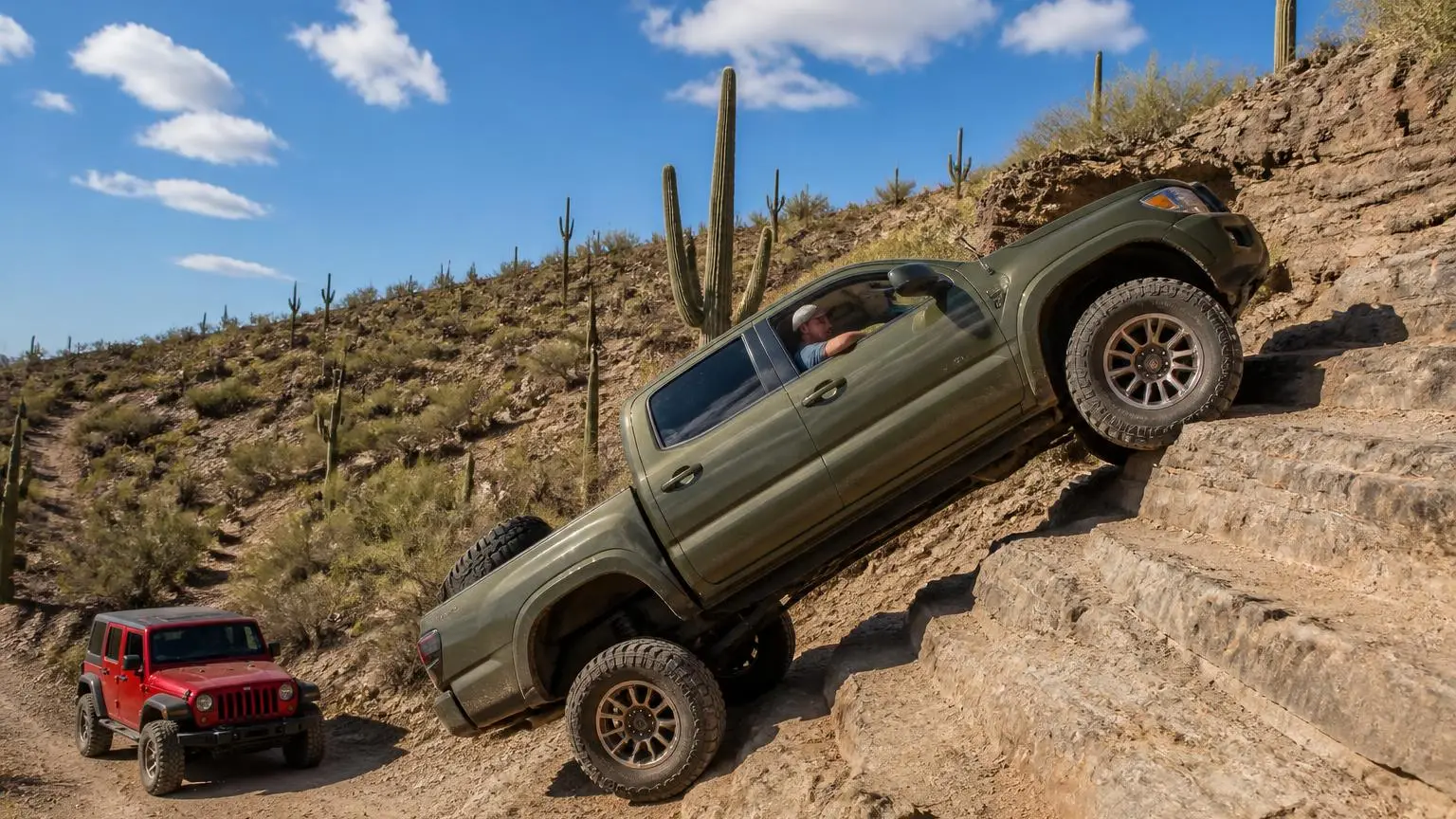
In the specific scenario both systems exist to address — one wheel losing all traction — a locker's full mechanical lock outperforms an LSD's partial resistance every time (see FAQ). This is the deciding factor for builders who regularly face genuinely technical terrain where that scenario is common rather than rare.
Daily Driving: Limited-Slip's Clearest Advantage
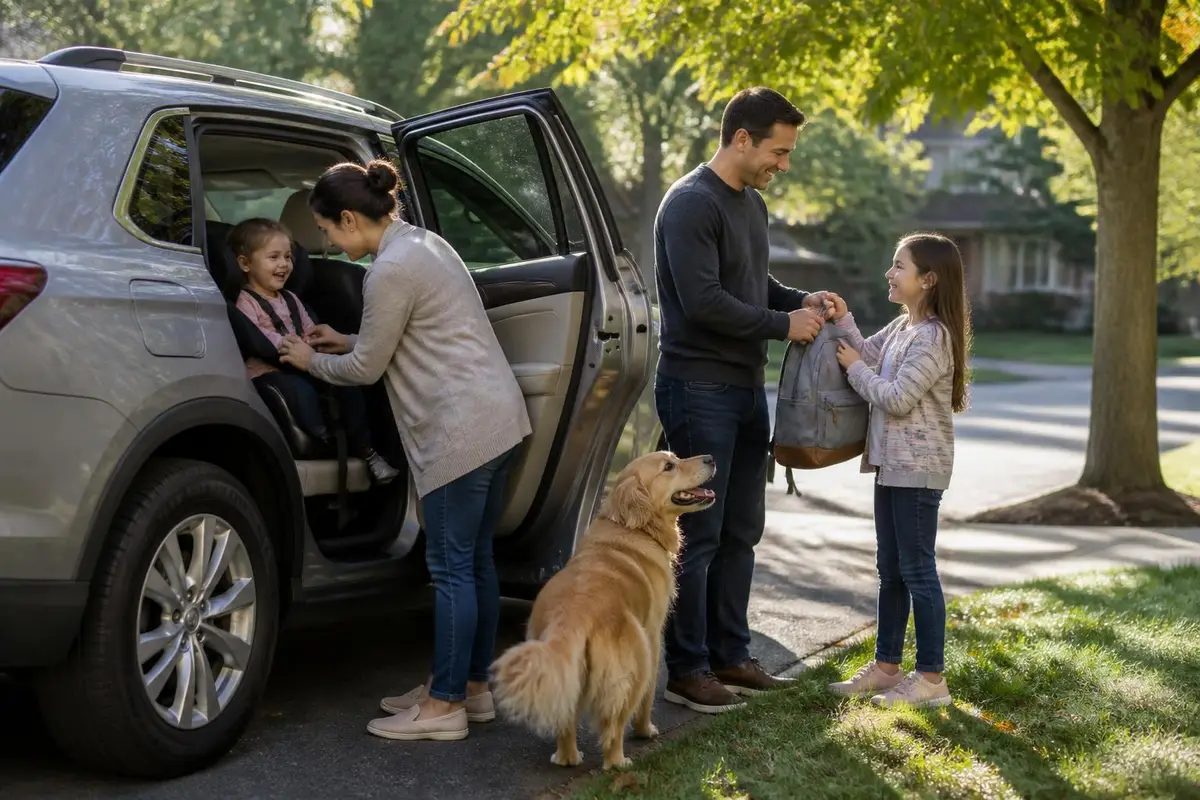
An LSD's progressive, partial engagement delivers noticeably smoother, more predictable handling in daily cornering and mixed-traction street conditions than a locker, which is built to be either fully engaged or fully disengaged rather than blending in gradually. Owners who drive their vehicle daily with only occasional light trail use consistently report the LSD's street manners as the more livable everyday choice.
Cost and Complexity
A limited-slip differential generally costs less than a selectable electronic locker at a comparable quality tier, though both typically require similar professional gear-set installation labor. An automatic (non-selectable) locker sits closer to LSD pricing in some product lines, narrowing this gap — checking specific product pricing rather than assuming a fixed cost relationship between the two categories is worth doing before deciding on cost alone.

Wet Weather and Light Snow: Where LSD Quietly Wins
For everyday wet-road or light-snow traction — situations well short of genuine off-road recovery — an LSD's always-active partial traction improvement helps in the moment it's needed without any driver action. A locker provides no benefit here at all unless manually engaged, and manually engaging a locker for a brief wet on-ramp is not a realistic habit most drivers maintain, making the LSD the more practically useful system for this specific, common scenario.
Electronic Locking Diffs That Blend Both
Some modern electronic differentials offer a middle path: a controller that varies lock strength based on sensed conditions, delivering LSD-like smoothness in normal driving and near-locker traction when the system detects wheel slip. These systems add cost and electronic complexity over either a simple mechanical locker or a simple LSD, and owners report them as a genuine "best of both" option specifically for builds that split time meaningfully between daily driving and technical terrain.
Installation and Upgrade Cost Compared
Both systems generally require the same core installation labor when added aftermarket: opening the axle housing and setting up correct gear backlash. The difference in total upgrade cost comes down mostly to the part itself rather than the labor bill. A selectable electronic locker with a dashboard switch and wiring typically sits at a higher price point than a comparable LSD, while an automatic (non-selectable) locker often lands closer to LSD pricing. Buying a vehicle that already ships with the desired system on a factory off-road trim avoids this installation cost entirely, which is a real consideration when cross-shopping trims rather than planning an aftermarket upgrade later.
Towing and Heavy-Load Considerations
An LSD's smooth, progressive engagement generally suits towing better than a locker for routine highway pulling, since it doesn't introduce the binding risk a locker carries if accidentally left engaged during a long towing stretch on pavement. For a truck that regularly tows AND occasionally needs maximum traction backing a trailer onto a boat ramp or up a steep, loose driveway, a selectable locker's ability to switch on specifically for that moment and off for the rest of the drive offers real flexibility an always-partial LSD doesn't match.
Noise and Drivetrain Feel
A locker, particularly an automatic engaging/disengaging type, produces an audible clunk or click as it locks and unlocks — normal operation, but a noise some owners report finding intrusive on a daily-driven vehicle. An LSD operates essentially silently under normal conditions, its clutch-pack or viscous engagement producing no distinct mechanical sound a driver would notice. Owners sensitive to cabin noise on a primarily-street-driven vehicle report this as a meaningful, if secondary, factor favoring LSD.
Long-Term Reliability Reports
Both systems carry a long, well-established track record across decades of automotive use, and neither shows a widely documented systemic reliability disadvantage against the other when installed and used correctly. Owners report that following manufacturer fluid and maintenance guidance — LSD-specific friction additive where called for, or correct locker engagement habits — matters more for long-term reliability than the fundamental choice between the two systems.
What the Manufacturers Actually Say About Gear Construction
Both categories lean on their gear manufacturing process as a durability argument. Eaton states its Detroit Locker and ELocker both use forged gears, and specifically calls out "net-forged" gears on the ELocker as a strength feature; ARB's Air Locker uses a two-piece nodular steel housing with four forged and hardened pinion gears. On the LSD side, Eaton describes its Detroit Truetrac as a "helical-gear style, limited-slip differential" that is "maintenance-free" with "smooth, automatic operation in forward and reverse" — a gear-type design rather than a clutch-pack unit, which is a genuine maintenance difference within the LSD category itself (clutch-pack LSDs commonly need a friction-modifier additive; a helical-gear design doesn't), not just between LSD and locker.
A Third Option: Two Vehicles, Two Systems
Some builders who genuinely need both — a dedicated technical-trail rig and a separate daily driver — solve this comparison differently. They run a locker on the trail vehicle and an LSD or open differential on the daily driver, rather than compromising one vehicle to serve both roles. This isn't practical for most owners running a single vehicle for everything, but it's worth naming as the cleanest solution for anyone who has the option, since it sidesteps the tradeoff entirely rather than splitting the difference on one truck.
Choose Locker If / Choose Limited-Slip If
Choose a locking differential for regular, genuinely technical off-road use where maximum worst-case traction matters more than daily-driving refinement. Choose a limited-slip differential for a daily-driven vehicle with occasional light trail use, where smooth street manners and wet-weather traction matter more than maximum off-road capability.
The Verdict: Which Is Better for Your Build
Refer back to the spec table above for the pros and cons side by side. For maximum worst-case traction, a locking differential is the better system; for daily-driving smoothness, a limited-slip differential is the better system — which is better depends entirely on use case, not a universal winner. Neither choice changes transfer case type: part-time 4WD and full-time 4WD trucks both accept either upgrade equally. On resale value, a documented locker attracts a narrower but more committed trail-focused buyer, while an LSD's broader daily-driver appeal keeps ownership cost lower through more predictable tire wear and less specialized maintenance. Confirming the vehicle's factory axle ratio before ordering either upgrade avoids an expensive gearing mismatch — resale value and ownership cost both track use case more than raw spec.
The Open Differential Baseline: Transfer Case, Axle Ratio and Use Case
Both systems exist to improve on the same starting point: an open differential, which sends power to whichever wheel spins easiest regardless of which one actually has grip. Neither a locker nor an LSD is required equipment — plenty of owners run an open differential successfully depending on terrain and driving style, which is worth remembering before assuming either upgrade is mandatory. Either upgrade bolts to a Dana 44, a Dana 60, or most other axle families — axle strength is a separate spec from differential type.
Recommended gear
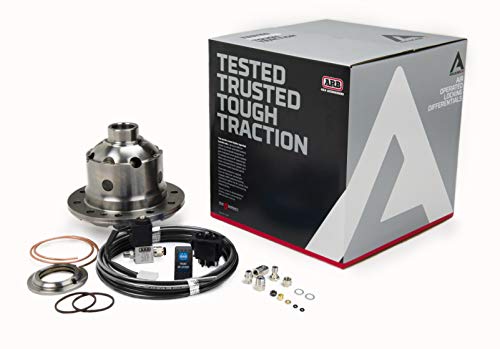
Lockers and hubs for your drivetrain
Affiliate disclosure: As an Amazon Associate, we earn from qualifying purchases, at no extra cost to you. Purchases through these links help keep this site running and up to date. Learn more
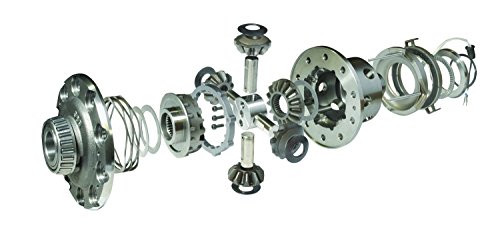
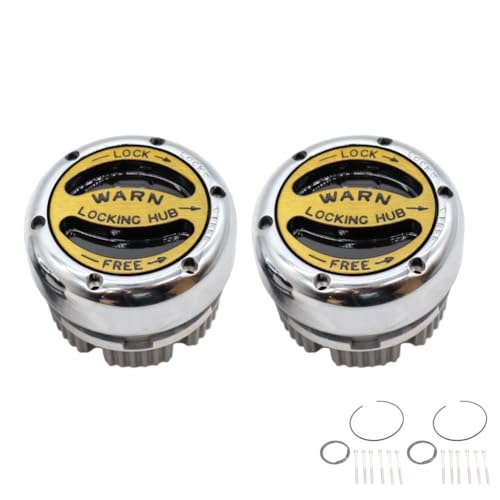
We research products from manufacturer specs and owner feedback; we don't test them ourselves. How we choose.
Sources
- Eaton — Detroit Locker Automatic Locking Differential — A locker sends torque to both wheels equally for maximum traction, with an automatic design unlocking in turns.
- Eaton — Detroit Truetrac Limited-Slip Differential — Truetrac is a helical-gear-style, maintenance-free limited-slip differential with smooth automatic operation forward and reverse — a gear-type design, not clutch-pack.
- ARB — Air Locker — Selectable locker operation: locked on demand via a dash switch, both wheels turning at the same speed until disengaged; construction claims.
- Eaton — ELocker Selectable, Electronic Locking Differential — Net-forged gears cited as a strength feature, used as an example selectable locker alongside ARB's Air Locker.
- Spicer (Dana) — Dana 44 Front Crate Axle — Dana 44 and Dana 60 as example axle families either a locker or an LSD upgrade bolts into.