

Affiliate disclosure: As an Amazon Associate, we earn from qualifying purchases, at no extra cost to you. We research rather than test, and commissions never change our rankings. This site is reader-supported: those commissions pay for hosting, research and keeping every guide up to date, so if a guide helped you, buying through our links is an easy way to support it. How we rank · Full disclosure
TL;DR
A sway bar disconnect lets a driver decouple the front sway bar at low speed to allow significantly more suspension articulation over uneven terrain, then reconnect it for stable, controlled highway driving — a genuine capability trade that only works because it's temporary.
What a Sway Bar Does in the First Place
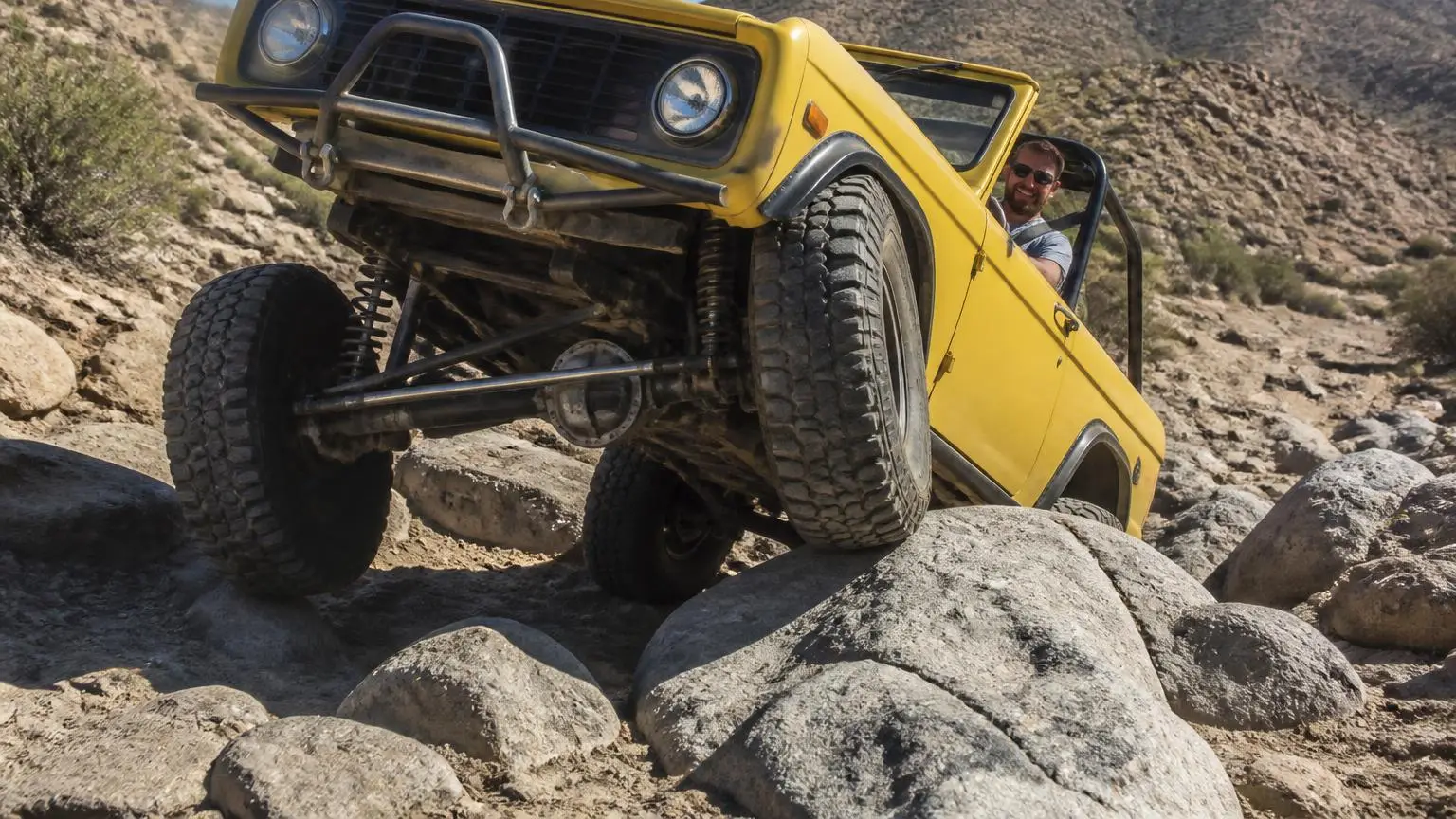
A sway bar (anti-roll bar) connects the left and right sides of a suspension, resisting independent up-and-down movement between them to limit how far a vehicle's body rolls during cornering. This is a genuine safety and handling benefit on pavement. Off-road, that same resistance becomes a limitation: it prevents the suspension from fully articulating over an uneven obstacle, since the bar actively fights the exact independent wheel movement that keeps tires planted on rough terrain. Jeep's own capability page describes the Rubicon's system as remotely disconnecting the sway bar "so the front wheels can drop and compress," directly improving articulation on tough terrain.

How a Disconnect Actually Works
A sway bar disconnect decouples the bar's end link from the suspension, temporarily removing its roll-resistance effect so each side of the front suspension can move independently and articulate further. Electronic systems disconnect via a dashboard switch at low speed and reconnect on their own past a set threshold — Jeep states the Wrangler Rubicon's electronic front sway bar disconnect operates under 18 mph in 4 Low, while Ford's published how-to for the Bronco's front stabilizer bar disconnect states it engages below 20 mph and automatically reconnects above 20 mph. Manual systems, common in the aftermarket, require physically pulling a pin or unbolting a quick-disconnect link at the trailhead before a technical section, with no speed sensor to force a reconnect.

When to Actually Use a Disconnect
A sway bar disconnect earns its value specifically on technical, uneven terrain — rock crawling, deep ruts, off-camber trail sections — where keeping all four tires in contact with the ground meaningfully improves traction and control. It offers no benefit on graded gravel or smooth dirt roads, where the sway bar's normal stabilizing function isn't the limiting factor anyway.

Why Reconnecting Before Pavement Is Non-Negotiable
Driving at any meaningful speed with the sway bar disconnected removes a real stability system (see FAQ), and every disconnect system — electronic or manual — is designed to be temporary. Electronic systems generally auto-reconnect above a certain speed as a safety measure; manual systems rely entirely on the driver remembering to reconnect before leaving the trail, which is why forgetting to reconnect is one of the more commonly reported post-trail mistakes among owners running manual disconnect kits.
Published Disconnect Speed Thresholds
| Vehicle / system | Disconnects below | Source |
|---|---|---|
| Jeep Wrangler Rubicon (electronic front disconnect, 4 Low) | 18 mph | Jeep 4x4 systems page |
| Ford Bronco (front stabilizer bar disconnect) | 20 mph | Ford support how-to |
Both thresholds exist for the same reason: past a certain speed, a disconnected sway bar's stability loss starts to outweigh its articulation benefit, so the system either won't engage or auto-reconnects.
Factory Electronic vs Aftermarket Manual Systems
A factory electronic disconnect (see FAQ) offers the most convenience — a dashboard switch, no getting out of the vehicle — at a cost baked into the vehicle's price and limited to specific trims that offer it. An aftermarket manual disconnect kit brings similar articulation benefits to a wider range of platforms at a lower cost, trading convenience for a genuine price and complexity advantage over adding an electronic system aftermarket, which is rarely a realistic retrofit.
Measuring the Gain: RTI, Not Just "More Articulation"
Off-road builders typically quantify a disconnect's benefit with Ramp Travel Index (RTI) — a wheelbase-normalized score from driving one front tire up a standardized ramp until another tire lifts — rather than a raw inches figure. Ford's own published specifications for the Bronco Badlands give real before/after numbers: RTI rises from 560 to 700 on the 2-door and from 500 to 620 on the 4-door with the front stabilizer bar disconnected, a jump of roughly 20-25%.
Does the Rear Sway Bar Matter Too?
Most disconnect systems, factory and aftermarket, target the front sway bar specifically, since front-axle articulation matters more for the steering and obstacle-clearance benefits most off-road driving is chasing. Some factory systems do address the rear, too: Ford's Bronco Raptor pairs its HOSS 4.0 suspension with a rear stabilizer bar disconnect alongside the front one, per Ford's own spec sheet, though this remains less common than a front-only disconnect and carries a more noticeable on-road handling tradeoff. Most owners find front-only disconnect delivers the large majority of the articulation benefit they're actually chasing without that added rear-handling compromise, which is why it remains by far the more common setup across both factory and aftermarket systems on the market today.
Related Reading
See 4WD drivetrain systems for how a sway bar disconnect fits alongside locking differentials and transfer-case range, and suspension and lift kits for how a lift changes baseline articulation independent of the sway bar.
Recommended gear
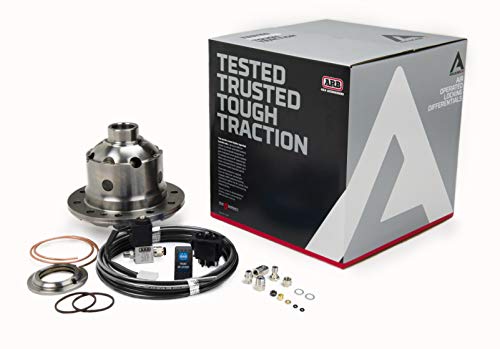
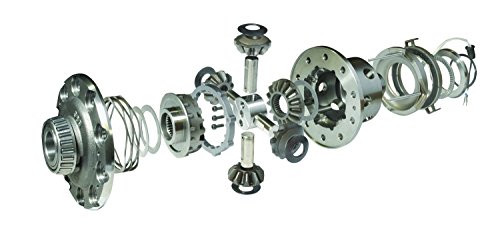
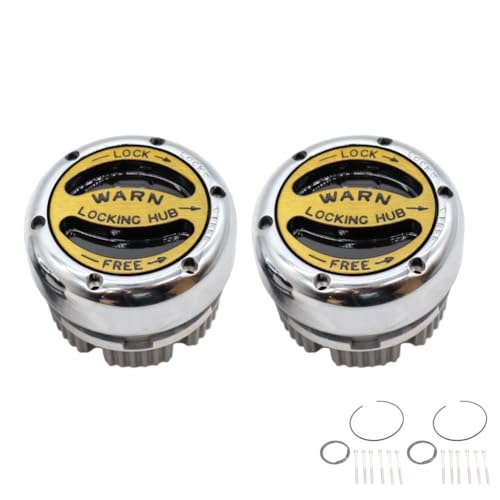
Lockers and hubs for your drivetrain
Affiliate disclosure: As an Amazon Associate, we earn from qualifying purchases, at no extra cost to you. Purchases through these links help keep this site running and up to date. Learn more
We research products from manufacturer specs and owner feedback; we don't test them ourselves. How we choose.
Sources
- Jeep — 4x4 Systems (Command-Trac, Rock-Trac, Selec-Trac) — Wrangler Rubicon electronic front sway bar disconnect, operating under 18 mph in 4 Low so the front wheels can drop and compress for articulation.
- Ford Support — Bronco: How to Disconnect the Front Stabilizer Bar — Bronco stabilizer bar disconnect on Badlands and First Edition trims, disconnecting below 20 mph and automatically reconnecting above 20 mph.
- Jeep — Wrangler Capability — Rubicon's electronic sway bar disconnect remotely disconnects the sway bar so the front wheels can drop and compress, improving articulation.
- Ford Media — 2026 Ford Bronco Order Guide — Front stabilizer bar disconnect availability by trim: standard on Stroppe Edition and Raptor, optional on Badlands, included with Badlands Sasquatch/Wildtrak.
- Ford Media — 2026 Ford Bronco SUV Technical Specifications — Badlands RTI with stabilizer bar connected/disconnected (2-door 560/700, 4-door 500/620); Raptor HOSS 4.0 rear stabilizer bar with disconnect.