

Affiliate disclosure: As an Amazon Associate, we earn from qualifying purchases, at no extra cost to you. We research rather than test, and commissions never change our rankings. This site is reader-supported: those commissions pay for hosting, research and keeping every guide up to date, so if a guide helped you, buying through our links is an easy way to support it. How we rank · Full disclosure
TL;DR
- The entry license is Technician: pass a 35-question exam with at least 26 correct, given by Volunteer Examiners (47 CFR §97.503).
- Cost: a VE session fee ($15 with ARRL VEC in 2026) plus a $35 FCC application fee. The license lasts 10 years.
- A Technician gets every amateur band above 50 MHz, including 2 m and 70 cm, plus limited HF, including 10 m voice.
- Each operator needs their own license. Unlike GMRS, it doesn't cover family members.
- Choose ham radio if you want more bands, power and modes than GMRS allows, and are willing to study for an exam.
An amateur ("ham") radio license gives far more frequency, power and mode options than GMRS, but it's exam-based and issued per person. Here is what the license requires, what each class allows and how it compares with GMRS for trail use.
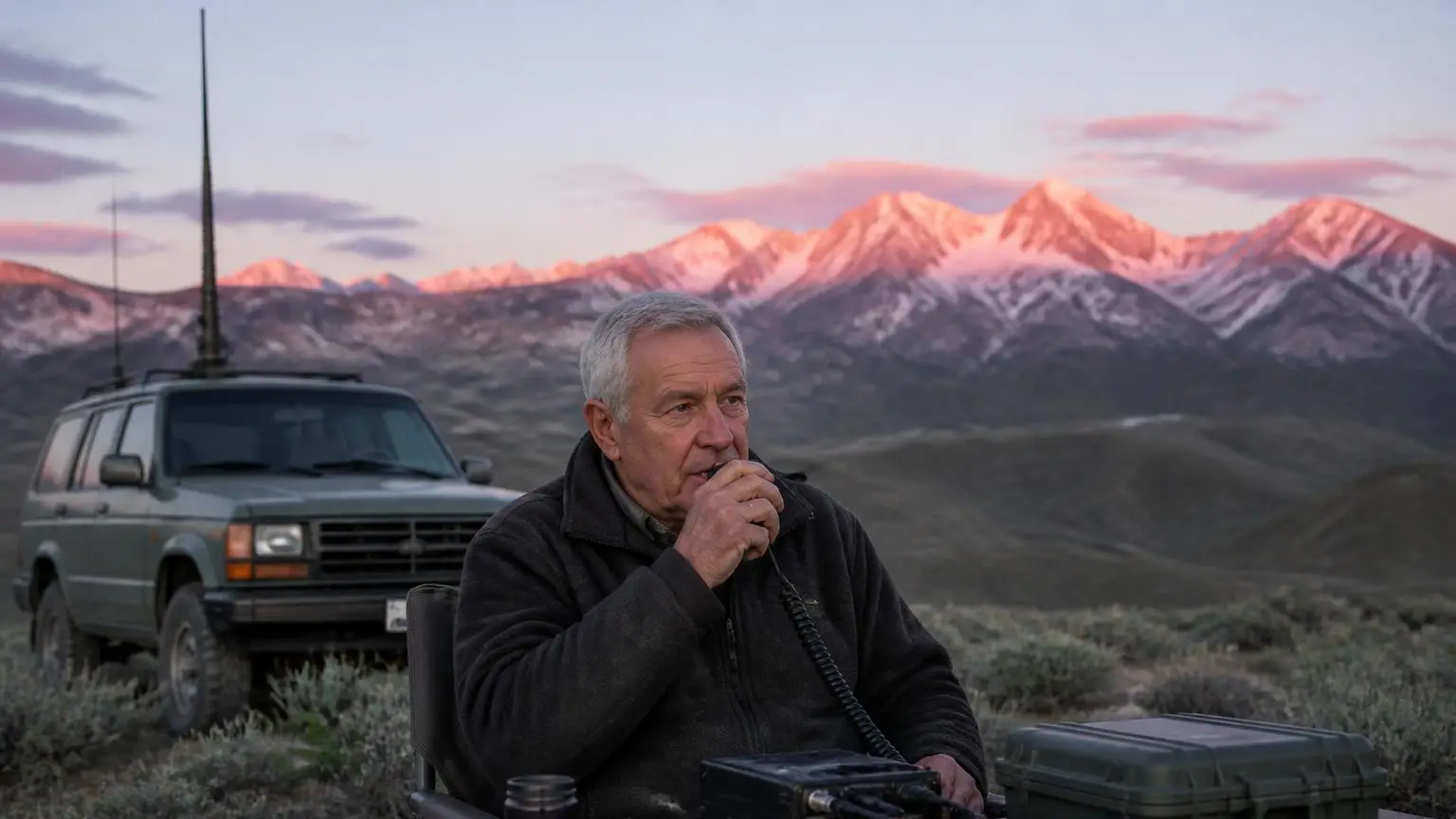
The Exam: Ham Radio's Entry Bar
Amateur radio is governed by 47 CFR Part 97. The FCC says operating an amateur station requires a license grant, and that before a grant you must pass an exam given by a team of Volunteer Examiners (VEs). A Volunteer Examiner Coordinator (VEC) can help you find a local VE team. The VEs build each written exam from question pools that are published, so every question you could be asked is available to study. Section 97.503 sets the size of each exam element:
| License class | Exam element | Questions | Needed to pass |
|---|---|---|---|
| Technician | Element 2 | 35 | 26 (74%) |
| General | Element 3 | 35 | 26 (74%) |
| Amateur Extra | Element 4 | 50 | 37 (74%) |
The question pools are revised on a four-year cycle. The current 2026–2030 pool took effect for exams from July 1, 2026. ARRL reports it holds 409 questions, down from 412, plus three diagrams. The FCC says VEs give credit for the class you already hold, so upgrading means passing only the next element.

License Classes and What They Allow
The FCC says most new operators start at Technician and may advance to General or Amateur Extra, with each class adding privileges. For trail use the Technician privileges are the ones that matter:
| Band | Frequencies | Technician privileges |
|---|---|---|
| 6 m (VHF) | 50–54 MHz | Full access (§97.301(a)) |
| 2 m (VHF) | 144–148 MHz | Full access; voice, data and more from 144.1 MHz (§97.305) |
| 70 cm (UHF) | 420–450 MHz | Full access |
| 10 m (HF) | 28.0–28.5 MHz | Data 28.0–28.3; voice 28.3–28.5; 200 W PEP limit (§97.313) |
| 80, 40, 15 m (HF) | 3.525–3.600, 7.025–7.125, 21.025–21.200 MHz | Limited segments, 200 W PEP limit |
Outside those 200-watt segments, §97.313 sets the general limit at 1,500 watts peak envelope power. Amateur rules also require using only the power needed for the contact. The FCC notes that its equipment authorization program doesn't generally apply to amateur transmitters, unlike CB and GMRS radios, which must be FCC-certified.
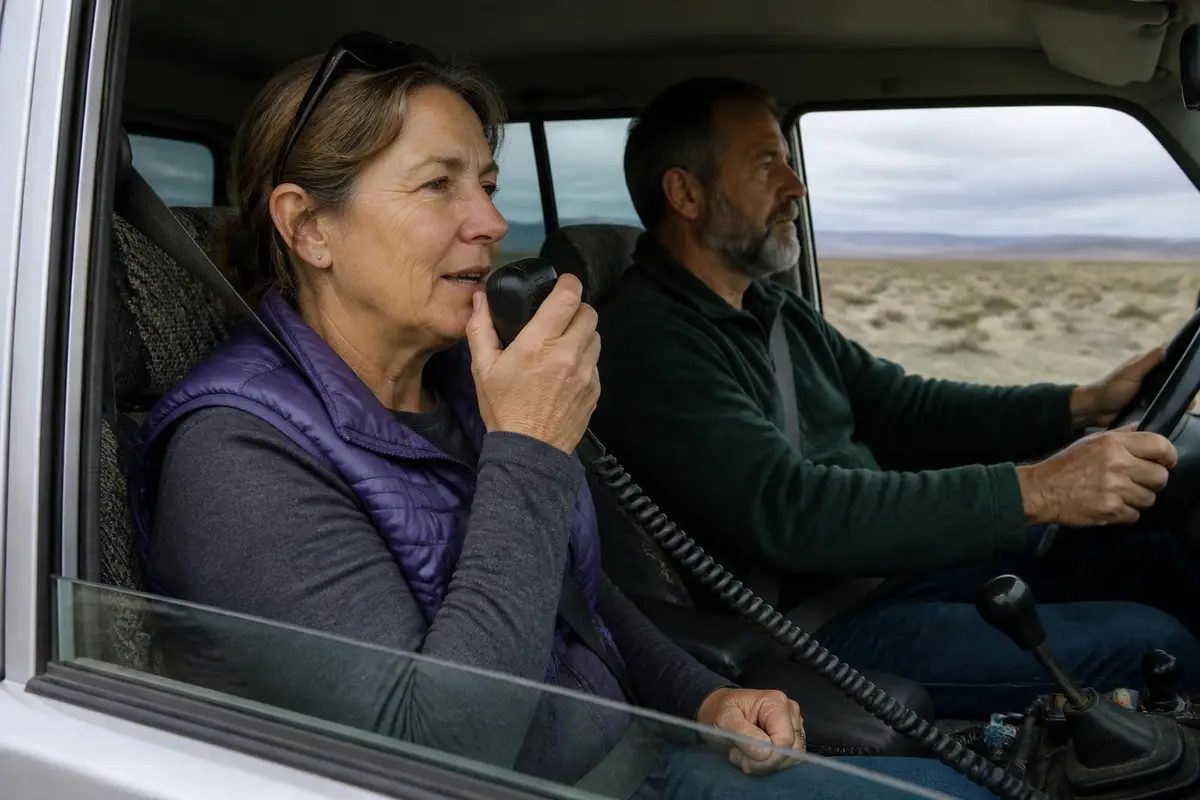
Cost, Timing and the Application Process
- Get an FCC Registration Number (FRN) in the FCC's CORES system; you'll use it for the exam paperwork and to pay.
- Book an exam session with a VE team. ARRL's VEC charges $15 in 2026, which covers one attempt at each of the three elements in that session. Candidates under 18 pay $5.
- Pass the exam. The VEC screens the paperwork and forwards it to the FCC.
- Pay the FCC's $35 application fee in CORES. ARRL says the FCC emails payment instructions, and you have 10 calendar days from the application file number to pay. If you miss that window the application is dismissed, though you don't need to retake the exam.
- Start transmitting once your grant appears in the FCC's ULS licensee database. The FCC says your operating authority begins then.
The $35 fee has applied since April 19, 2022, to new licenses, renewals and vanity call sign requests. Upgrades and address changes are free. ARRL's Youth Licensing Grant Program reimburses the $35 FCC fee for new licensees under 18. A license lasts 10 years (§97.25). If it expires, §97.21 allows renewal during a 2-year grace period, but you have no operating privileges until the renewal is granted.
Individual License vs GMRS's Family Coverage
| Ham (Technician) | GMRS | |
|---|---|---|
| Exam | Yes: 35 questions, 26 to pass | No |
| Minimum age | None | 18 to apply |
| Who's covered | The licensee only | Licensee plus immediate family, any age |
| FCC fee and term | $35, 10 years | $35, 10 years |
| Frequencies | All amateur bands above 50 MHz plus limited HF | 30 channels near 462 and 467 MHz |
| Maximum power | 1,500 W PEP (200 W on Technician HF segments) | 50 W on main channels |
| Radios | Certification generally not required | Must be FCC-certified for GMRS |
For a group where every member wants to talk, the licensing load is the biggest difference: one GMRS license can cover a whole family, while ham radio needs a passed exam and a license for each operator.
2-Meter Simplex and Repeaters on the Trail
A Technician license gives full access to 2 meters (144–148 MHz). On a trail run, radios can talk simplex (radio to radio on one frequency) or through a repeater that retransmits from a high site. The FCC says no amateur frequency is assigned for exclusive use; operators cooperate in choosing channels. Before a trip on an unfamiliar route, look up the repeaters along it in advance. Remember that anyone in the group without a license can't transmit on them.
When Ham Radio Is Worth the Exam
If everyone in your group wants to talk and nobody wants to study, GMRS's no-exam family license is the simpler path; see our GMRS license guide. Ham radio is worth the exam when you want the wider bands, higher power, HF or data modes, or when your group's operators are willing to license individually. For more, see what is GMRS radio and our GMRS radio range guide. This page summarizes FCC rules and ARRL guidance and is not legal advice; we don't operate this equipment ourselves (see how we rank).
Recommended gear
Radios for trail communication
Affiliate disclosure: As an Amazon Associate, we earn from qualifying purchases, at no extra cost to you. Purchases through these links help keep this site running and up to date. Learn more


We research products from manufacturer specs and owner feedback; we don't test them ourselves. How we choose.
Sources
- FCC — Amateur Radio Service — License grant required after passing a VE exam; VEC forwards results; operating authority begins when the grant appears in ULS; public question pools; Technician then General and Extra; open to persons of any age; no frequency assigned for exclusive use; equipment authorization generally doesn't apply to amateur transmitters.
- 47 CFR §97.503 — Element standards — Element 2 (Technician) and Element 3 (General): 35 questions, 26 to pass; Element 4 (Extra): 50 questions, 37 to pass.
- 47 CFR §97.301 — Authorized frequency bands — Technician access to bands above 50 MHz (6 m, 2 m 144–148 MHz, 70 cm 420–450 MHz) and HF segments on 80, 40, 15 and 10 m.
- 47 CFR §97.305 — Authorized emission types — 10 m: data on 28.0–28.3 MHz and phone on 28.3–28.5 MHz; 2 m phone and data from 144.1 MHz.
- 47 CFR §97.313 — Transmitter power standards — Minimum power necessary; 1.5 kW PEP general limit; 200 W PEP for Technicians on the 80, 40, 15 and 10 m segments.
- 47 CFR §97.25 — License term — Amateur licenses are normally granted for 10 years.
- 47 CFR §97.21 — Application for a modified or renewed license — 2-year grace period to renew an expired amateur license, with no privileges until renewal is granted.
- ARRL — FCC Application Fee — $35 FCC amateur fee effective April 19, 2022 for new, renewal and vanity applications; no fee for upgrades or address changes; paid in CORES within 10 calendar days of the file number or the application is dismissed.
- ARRL — ARRL VEC Exam Fees — 2026 ARRL VEC exam session fee of $15 covering all three elements in one session; $5 for candidates under 18.
- ARRL — New Technician Question Pool Takes Effect July 1 — 2026–2030 Technician pool effective July 1, 2026, with 409 questions (down from 412) and three diagrams.
- ARRL — Youth Licensing Grant Program — Reimburses the $35 FCC fee for new licensees under 18.
- 47 CFR §1.1102 — Wireless Telecommunications Bureau application fees (Cornell LII) — $35 fee for personal license applications (new, renewal and amateur vanity call sign).
- FCC — General Mobile Radio Service (GMRS) — License required; 10-year term (raised from 5 in 2017); renewal from 90 days before expiry to the expiration date, new license after that; 18+ and not a foreign-government representative; family members of any age may operate; individual-only new licenses; 30 channels; radio service code ZA; 1–25 mile typical range; ban on linking repeaters over the internet; data messaging since 2017.
- 47 CFR §95.1705 — GMRS individual licenses — Individual license required; applicant at least 18; 10-year term; immediate-family definition; emergency use by anyone; licensee controls who operates; pre-1987 non-individual licenses grandfathered.
- 47 CFR §95.1767 — GMRS transmitting power limits — 50 W output on main channels for mobile, repeater and base stations (15 W fixed); 5 W ERP on 462 interstitial; 0.5 W ERP on 467 interstitial.