
Affiliate disclosure: As an Amazon Associate, we earn from qualifying purchases, at no extra cost to you. We research rather than test, and commissions never change our rankings. This site is reader-supported: those commissions pay for hosting, research and keeping every guide up to date, so if a guide helped you, buying through our links is an easy way to support it. How we rank · Full disclosure
TL;DR
- Fog droplets and dust are too large for color to change how much light they scatter; NOAA describes this kind of scattering as treating all colors the same.
- Amber's real difference is less blue light, and glare research finds blue content adds to discomfort glare, so haze lit in amber can feel less glaring.
- Evidence that amber lets you see farther is weak: yellow-lens glasses didn't improve pedestrian detection in a 2019 simulator study.
- An amber lens absorbs part of a white LED's output; in clear air, white gives more light for the same power.
- Color doesn't make a light bar road-legal: FMVSS 108 bars added lamps that impair required lighting, and state codes such as California's limit auxiliary lamps by number and mounting height.
What the Physics Says About Scattering
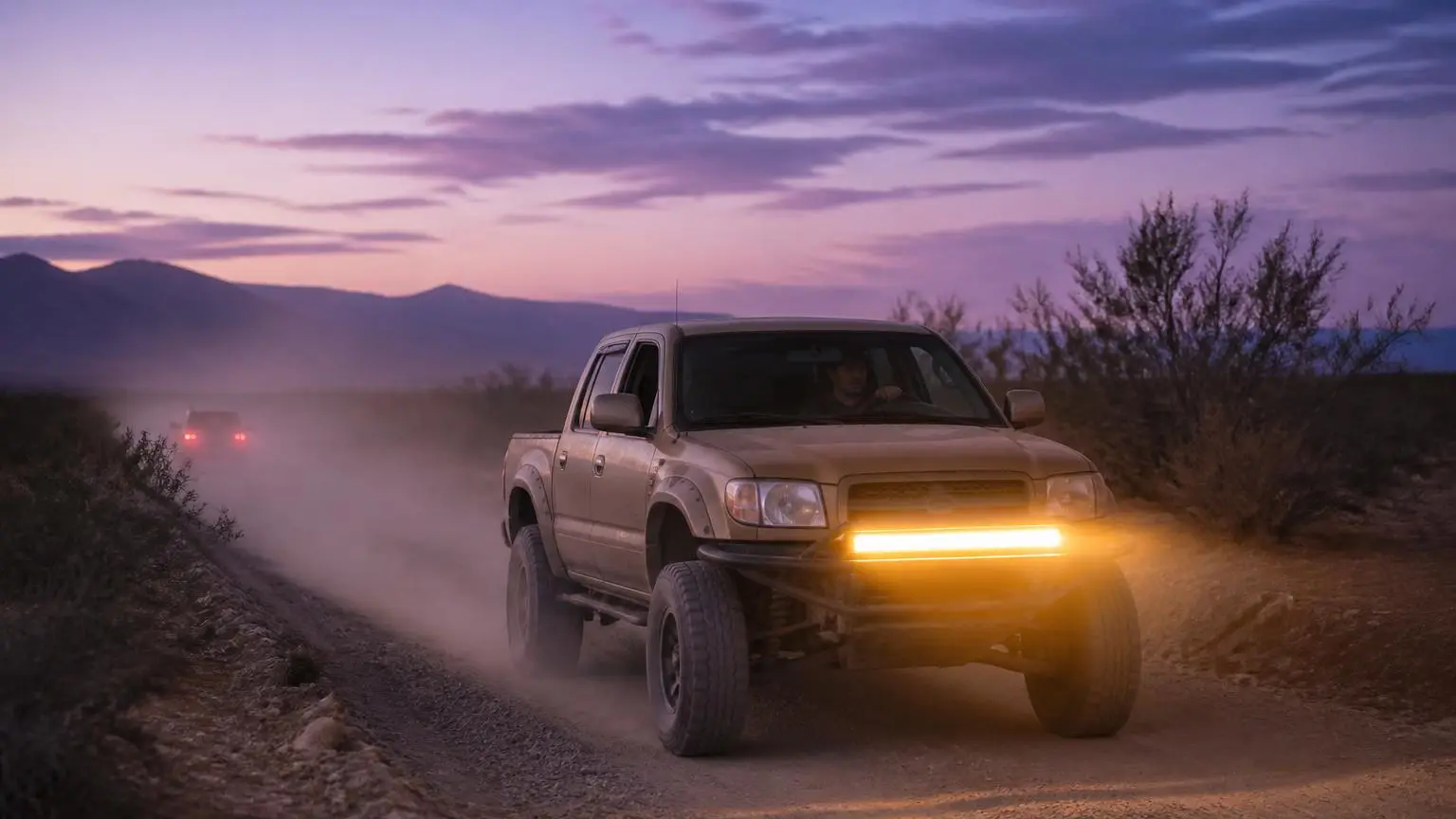
There are two kinds of scattering at play. NOAA's JetStream weather school explains that gas molecules, which are much smaller than a light wave, scatter short wavelengths far more than long ones. That is Rayleigh scattering, and blue light scatters about four times more strongly than red, which is why the sky is blue. Cloud droplets are a different case. They are about the same size as the wavelength of light, and NOAA says the resulting Mie scattering "does not differentiate" by color and scatters all wavelengths about the same. That is why clouds look white.
The National Weather Service defines fog as water droplets suspended in the air at the Earth's surface, so it is droplet haze like a cloud's. Dust is coarser: the EPA notes that dust particles are often large enough to see with the naked eye, while visible light spans only 380 to 700 nanometers, per NASA. Falling snow is larger again. So in the conditions amber is sold for, the particles are too large for color to change how much light scatters back. An amber beam reflects off fog about as much as a white one of the same intensity.
What Amber Does Change: Glare
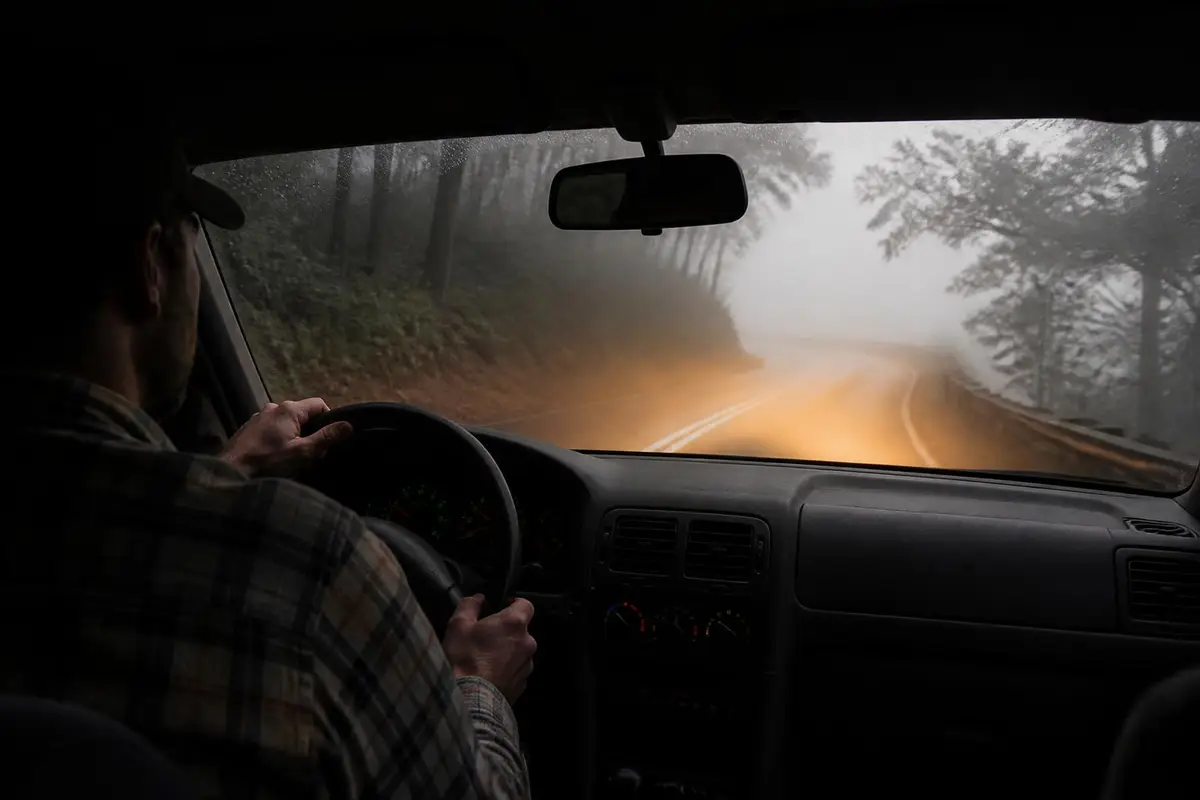
Where amber differs is in how the reflected light feels. A 2010 study by Fekete, Sik-Lányi and Schanda in Ophthalmic & Physiological Optics measured discomfort glare from single-color light and found that people's sensitivity to it could not be described by brightness sensitivity alone; the short-wavelength (blue) cone and the eye's color channels also played a part. Amber light contains little blue, so haze lit by it may feel less glaring than the same haze lit by cool white LEDs of the same brightness.
That is a comfort benefit, not proof of better vision. A 2019 driving-simulator study in JAMA Ophthalmology tested yellow-lens night-driving glasses, which filter blue light out of everything the driver sees, and found no improvement in how quickly drivers spotted pedestrians, with or without oncoming headlight glare. RIGID Industries says yellow or amber light cuts through particles and reduces eye strain; treat the first part as a manufacturer claim, and the second as consistent with the glare research.
The Trade-Offs of an Amber Lens
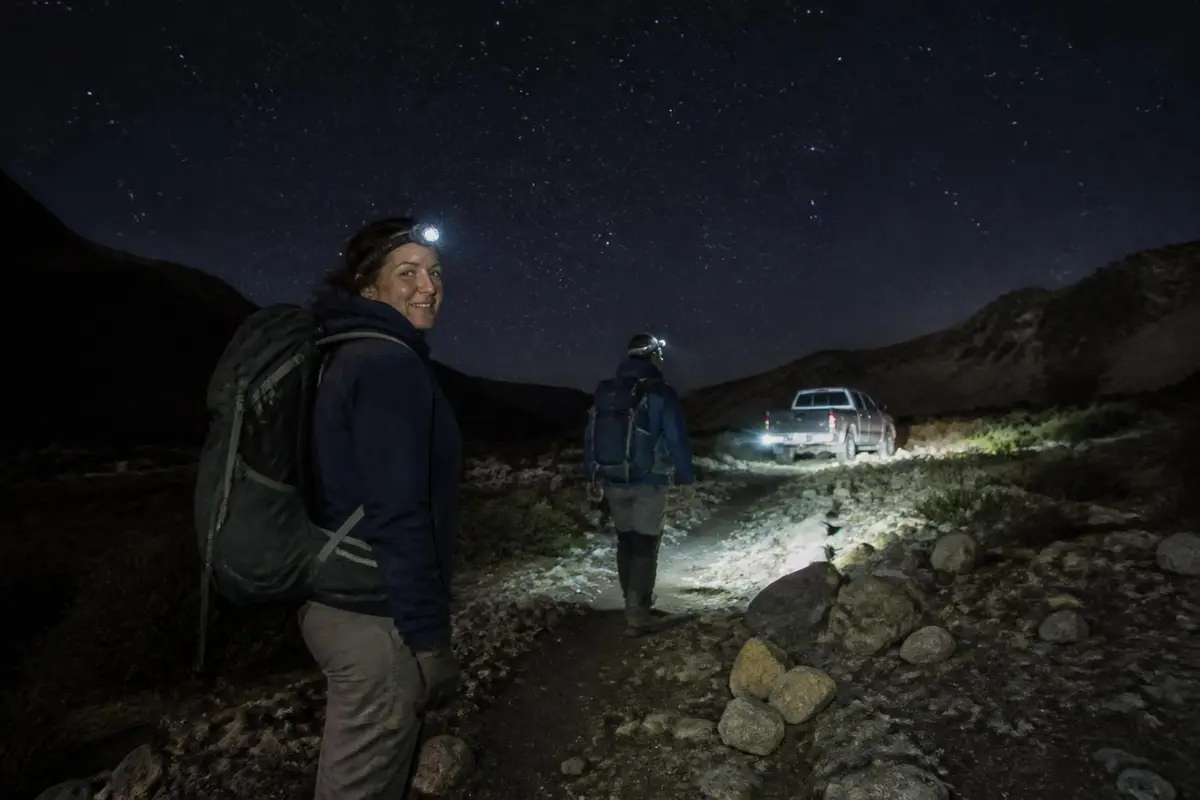
An amber lens over a white LED works by absorbing the blue part of that LED's output, so some of the lamp's light never leaves the housing. In clear air, where there is little haze to cause glare, a white beam gives more light and truer color for the same power. For how beam angle, not color, sets reach, see spot vs flood vs combo beam.
When to Choose Amber
- Following other vehicles in dust: your lights are pointed into the densest haze, where glare coming back is the main problem.
- Fog and falling snow: use low-mounted amber pods and keep a roof-mounted white bar off, since it lights up the haze across your whole view.
- Clear nights at speed: white wins. Reach comes from candela and beam angle, as the off-road lighting hub explains.
Many builds pair a white bar for reach with a pair of amber pods for bad weather, rather than choosing one color for everything.
Amber Fog Lights vs Amber Light Bars
A fog lamp is a road lamp with a defined place on the vehicle. California Vehicle Code §24403, for example, allows no more than two, mounted 12 to 30 inches above the ground, aimed low, and used with the headlamps, never instead of them. Federal Motor Vehicle Safety Standard 108 doesn't set fog-lamp requirements at all: fog lamps are not among the lamps it requires or permits in its tables, and the standard mentions them only in passing, for example to bar them from being wired as daytime running lamps. An amber light bar is neither. It is auxiliary off-road lighting, usually sold for off-highway use, whatever its color. A lamp certified to FMVSS 108 may carry a "DOT" marking, which the standard defines as the maker's certification of compliance.
Color Rules on the Road
FMVSS 108 treats amber and yellow as the same color and specifies amber for front turn signals and front side markers; it allows daytime running lamps in white, yellow or selective yellow. State codes then decide what a driver may add. California's Vehicle Code §25950 requires light visible from the front to be white or yellow, so amber passes that test, but §24402 separately limits auxiliary driving and passing lamps to two of each at set mounting heights. Color doesn't exempt a light bar from those limits. The state-by-state picture is in are off-road light bars legal.
Dual-Color and Snap-In Lens Options
Two designs let one light do both jobs. Dual-color lights carry separate white and amber LEDs that can be switched from the cab, which takes a second switch and relay channel. Lens kits change the pod itself: Baja Designs, for example, sells Baja Amber replacement lens kits for its S2 pods, which means stopping to swap lenses. For ranked picks, see best light bars. This explainer draws on NOAA, EPA and NASA science pages, peer-reviewed glare studies, FMVSS 108 and state code; we don't install or test lighting ourselves (see how we rank).
Recommended gear
Lighting for trail camp and night driving
Affiliate disclosure: As an Amazon Associate, we earn from qualifying purchases, at no extra cost to you. Purchases through these links help keep this site running and up to date. Learn more

Best for road-legal SAE/DOT auxiliary lighting.
- Pair of SAE/DOT-compliant white LED pods.
- Street-legal auxiliary lighting with amber backlight.
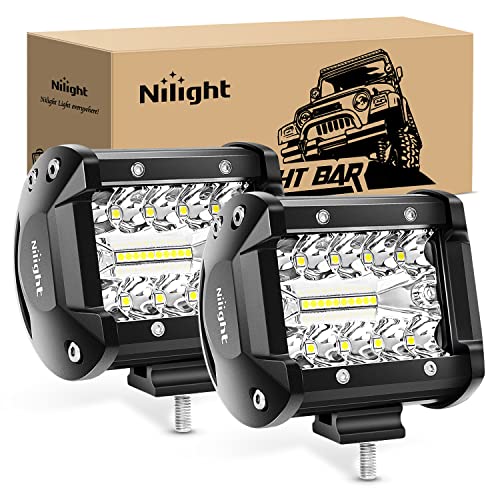
Best for affordable extra light for trail camp and night driving.
- Pair of 4 in, 60W flood/spot combo LED pods.
- Budget lighting for camp and slow trail driving.

Best for a compact compressor for tires up to 33".
- Compact 12V compressor, 120 PSI, for tires up to 33 in.
- Small enough to keep in the vehicle full-time.

Best for plugging a tread puncture on the trail.
- Reamer-and-plugger kit for tread punctures.
- Lets you plug a tire on the trail instead of changing it.
We research products from manufacturer specs and owner feedback; we don't test them ourselves. How we choose.
Sources
- NOAA JetStream — The Color of Clouds — Rayleigh scattering by molecules favors short wavelengths (blue about four times red); cloud droplets are similar in size to light's wavelength and Mie scattering scatters all colors the same.
- National Weather Service — Glossary: Fog — Fog is water droplets suspended in the air at the Earth's surface.
- U.S. EPA — Particulate Matter (PM) Basics — Dust particles can be large enough to see with the naked eye.
- NASA Science — Visible Light — The human eye detects wavelengths from about 380 to 700 nanometers.
- Fekete, Sik-Lányi & Schanda — Spectral discomfort glare sensitivity investigations, Ophthalmic & Physiological Optics (2010) — Discomfort glare sensitivity isn't described by luminous sensitivity alone; the short-wavelength cone and chromatic channels contribute.
- Hwang, Tuccar-Burak & Peli — Pedestrian detection with and without yellow-lens glasses, JAMA Ophthalmology (2019) — Yellow-lens night-driving glasses did not improve pedestrian detection or reduce the effect of headlight glare in a driving simulator.
- RIGID Industries — EnLIGHTening Information — Manufacturer claim that yellow or amber light cuts through particles and reduces eye strain, marketed for fog, dust, rain and snow.
- 49 CFR 571.108 (FMVSS 108) — Lamps, reflective devices and associated equipment — Amber is identical to yellow (S6.1.2); amber front turn signals and side markers and DRL colors in Table I-a; fog lamps absent from the required and permitted lamp tables and mentioned only in passing (S6.1.4); DOT marking as certification (S6.5.1).
- California Vehicle Code §24403 (foglamps) — No more than two foglamps, mounted 12 to 30 inches high, aimed low, used with and not instead of headlamps.
- California Vehicle Code §25950 (lamp colors) — Light visible from the front must be white or yellow.
- California Vehicle Code §24402 (auxiliary driving and passing lamps) — Limits auxiliary driving and passing lamps to two each at set mounting heights.
- Baja Designs — S2 Sport Universal Chase Light Kit — Baja Amber lens option and S2 pod lens kit in Baja Amber.