

Affiliate disclosure: As an Amazon Associate, we earn from qualifying purchases, at no extra cost to you. We research rather than test, and commissions never change our rankings. This site is reader-supported: those commissions pay for hosting, research and keeping every guide up to date, so if a guide helped you, buying through our links is an easy way to support it. How we rank · Full disclosure
TL;DR
- A 20 L jerry can holds about 5.3 US gallons: roughly 79 extra miles at 15 mpg.
- In California a fuel can and spout must be CARB-certified: self-closing spout, no leaks, 0.3 g per gallon per day emissions, and red, yellow or blue for gasoline, diesel or kerosene.
- Federal rules now require child-resistant closures on gas cans made since December 22, 2022 (16 CFR 1460) and flame mitigation devices on portable fuel containers (16 CFR 1461).
- Fill only to the marked line, fill the can on the ground, and carry it outside the passenger compartment, mounted low.
- Never put drinking water in a fuel can.

Best for Long-term exterior mounting and owners who want an authentic steel NATO can.
- 20 L / 5.28 gal, 0.9 mm steel, per Wavian.
- Bayonet latch closure.
- CARB/EPA compliant spout with breather tube, per Wavian.
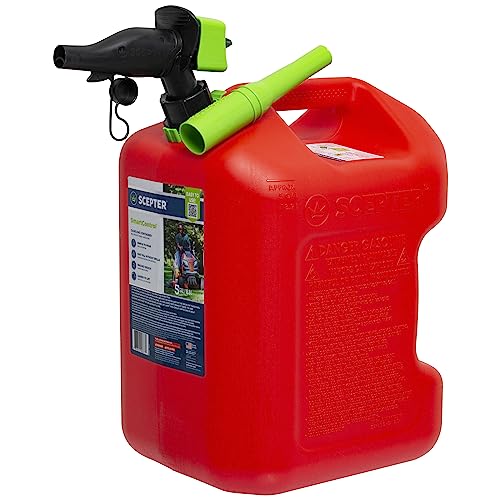
Best for Everyday fuel carrying where light weight and a spill-proof spout matter.
- 5 gal.
- Spill-proof SmartControl spout and extender, per the listing.

Best for Storing fuel at home or in a shop; confirm capacity on the listing, as several sizes are sold.
- Type II safety can.
- Galvanized steel.
- FM Approved, per the listing.

Best for Home fuel storage where a classic Type I safety can is preferred.
- 5 gal Type I safety can.
- For gasoline.

Best for Adding a small fuel reserve on a rack or carrier using RotopaX mounts.
- 2 gal gasoline pack.
- Leakproof design, per the listing.
- RotopaX mounting system.

Best for Budget buyers who want a metal jerry-style can; confirm CARB compliance for your state with the seller.
- 5.3 gal metal can.
- Spout and comfort handle, per the listing.

Best for Securing two jerry cans outside the cabin on a rack or carrier; confirm fit with your cans and rack.
- Holds two cans.
What Is a Jerry Can?
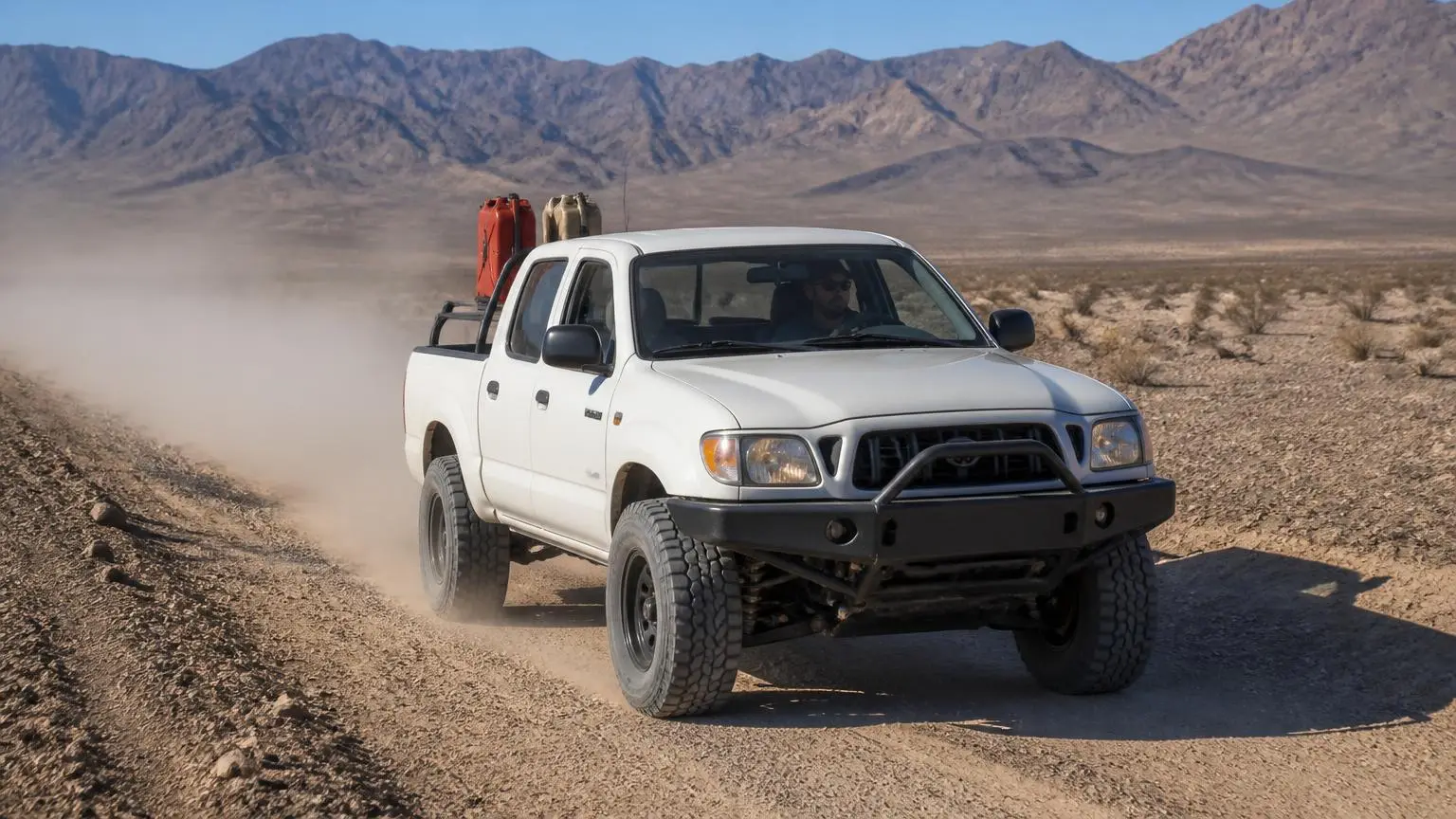
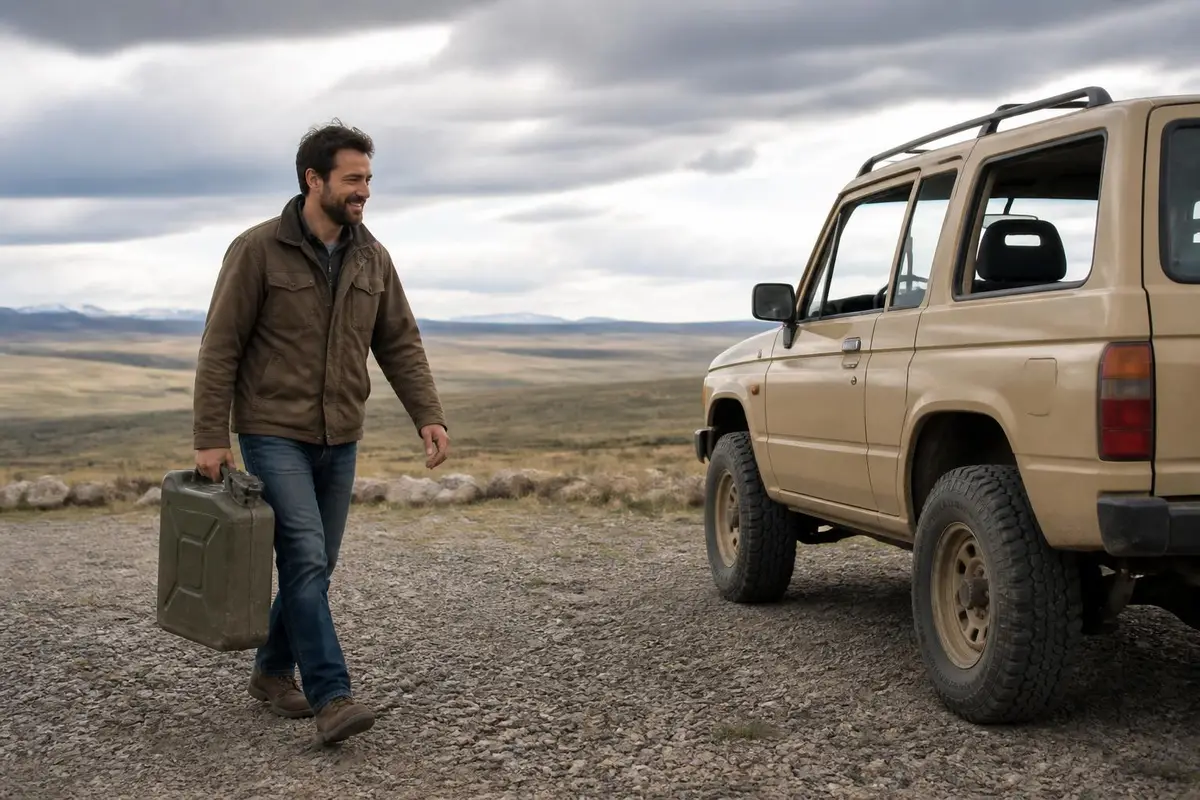
A jerry can is the flat-sided, three-handled fuel container you see strapped to expedition vehicles. Wavian, which makes steel cans in Latvia, says every can it builds follows the original NATO specification. The flat sides stack tightly, the three handles let one or two people carry a full can, and the shape fits standard holders. Today "jerry can" also covers plastic cans of the same shape, and separate food-grade water versions. Never use a fuel can for drinking water; Wavian says its steel body and lining are fuel-specific and sells a separate 22 L food-grade water can.
CARB and Federal Rules on Fuel Cans
Four sets of rules shape what a modern fuel can looks like:
| Rule | What it requires | Applies to |
|---|---|---|
| CARB CP-501 (California) | Spout closes and seals automatically; no leakage; no more than 0.3 g of hydrocarbons per gallon per day for systems made since January 1, 2009; any secondary vent closes automatically; red for gasoline, yellow for diesel, blue for kerosene, with the fuel name embossed or labeled | Portable fuel containers and spouts sold in California |
| EPA, 40 CFR 59.611 | No more than 0.3 g of hydrocarbons per gallon per day; containers leak-free in any orientation; any manual pressure relief closes automatically | Portable fuel containers nationwide |
| CPSC, 16 CFR 1460 | Child-resistant closures meeting ASTM F2517-22e1 | Portable gasoline containers made on or after December 22, 2022 |
| CPSC, 16 CFR 1461 | Flame mitigation devices meeting ASTM F3326-21 (UL 30 safety cans are an alternative) | Portable fuel containers sold empty; CPSC says the requirement took effect July 12, 2023 |
These rules are why current cans use self-closing spouts, which some owners find slower to pour. A flame mitigation device is a screen or insert in the opening that keeps a flame outside from reaching the fuel-air mixture inside. Keep the original compliant spout, and check that a can is sold as compliant for your state; Wavian says its cans and spout meet CARB and EPA standards.
Jerry Cans vs Type I and Type II Safety Cans
OSHA's general-industry rule, 29 CFR 1910.106, defines a safety can as an approved container of no more than 5 gallons with a spring-closing lid and spout cover, designed to relieve internal pressure safely in a fire. Justrite, which makes them, explains the two types: a Type I can has a single opening for filling and pouring, while a Type II has two, a large fill opening and a second fitted with a flexible metal hose for controlled pouring. Both carry flame arresters that dissipate heat before a spark can reach the vapor inside. Safety cans suit garage and shop storage; a jerry can is built to be carried and mounted on a vehicle.
Steel vs Plastic
Steel cans are strong, puncture-resistant and hold their shape. Wavian lists its 20 L can at 0.9 mm steel with fully welded, recessed seams, a fuel-resistant internal coating rated for gasoline, diesel and kerosene, a bayonet latch that seals in any orientation, and a 9.5 lb empty weight. Its FAQ says to protect the powder coating and keep water out of the can, because water damages the internal lining. Plastic cans are lighter and cannot rust. Owners report that some swell in the heat, which can make them tight in a holder.
Capacity, Range and Color Coding
Wavian's 20 L can holds about 5.3 US gallons and its 10 L can about 2.6 gallons. The range a can adds is its capacity times your fuel economy:
| Can | At 15 mpg | At 20 mpg |
|---|---|---|
| 10 L (about 2.6 gal) | about 39 miles | about 52 miles |
| 20 L (about 5.3 gal) | about 79 miles | about 106 miles |
| Two 20 L cans (about 10.6 gal) | about 159 miles | about 212 miles |
Color tells you what is inside: CARB's certification rules and Wavian both use red for gasoline, yellow for diesel and blue for kerosene. Wavian notes that black and olive-drab cans aren't offered to California buyers. Using the right color prevents a costly misfuel.
Mounting: Outside the Cabin, Secure and Low
A jerry can should ride outside the passenger compartment in a holder matched to its size. Wavian's guidance is that the can must be snug, supported and unable to rub or bounce, and kept closed, upright and away from heat and ignition sources. Common spots are a rear tire carrier, a bed rack or a dedicated bumper mount. Height matters: NHTSA rollover information notes that any load on the roof sits above the center of gravity and increases the likelihood of rolling over, so mount full cans as low as practical, and count their weight against your payload.
Filling and Pouring Safely
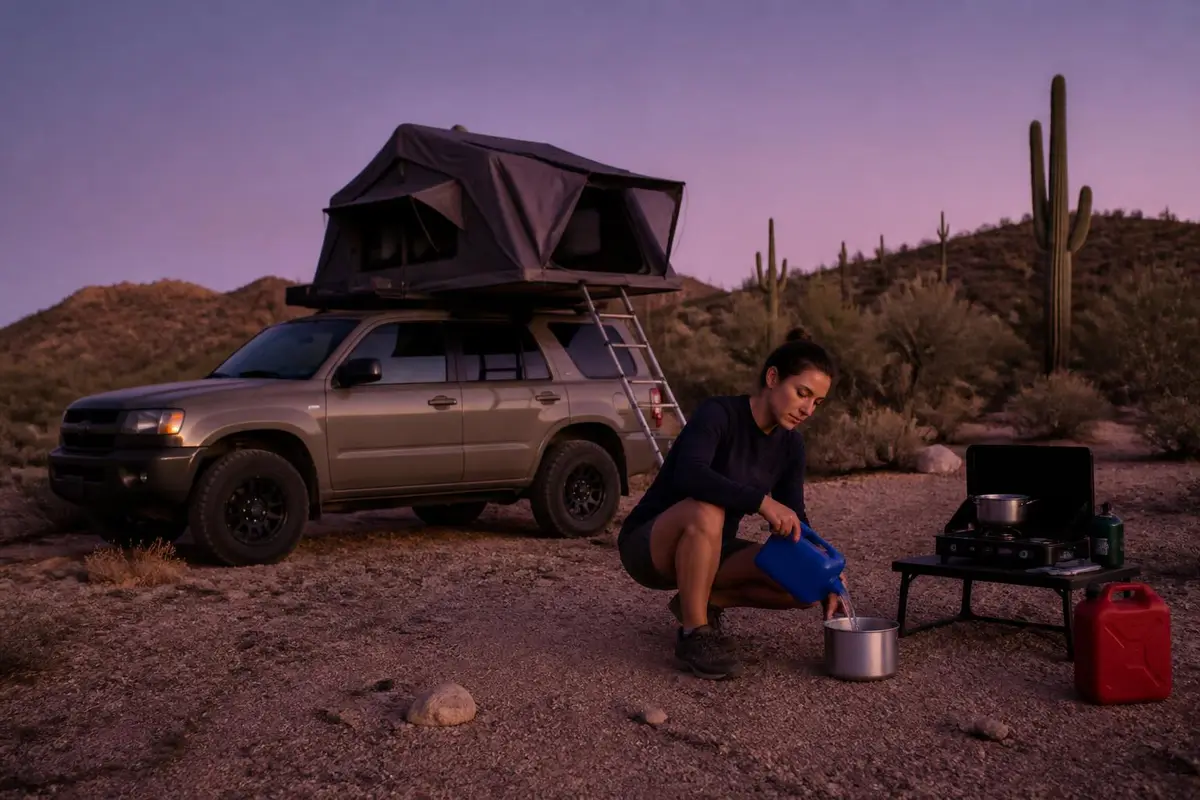
Take the can out of the vehicle and place it on the ground to fill it, as the CPSC advises. Fill only to the can's marked capacity line; Wavian says the space above is intentional expansion space. When pouring, use the supplied spout, go slowly, and never refuel near a flame, hot exhaust or a running camp stove.
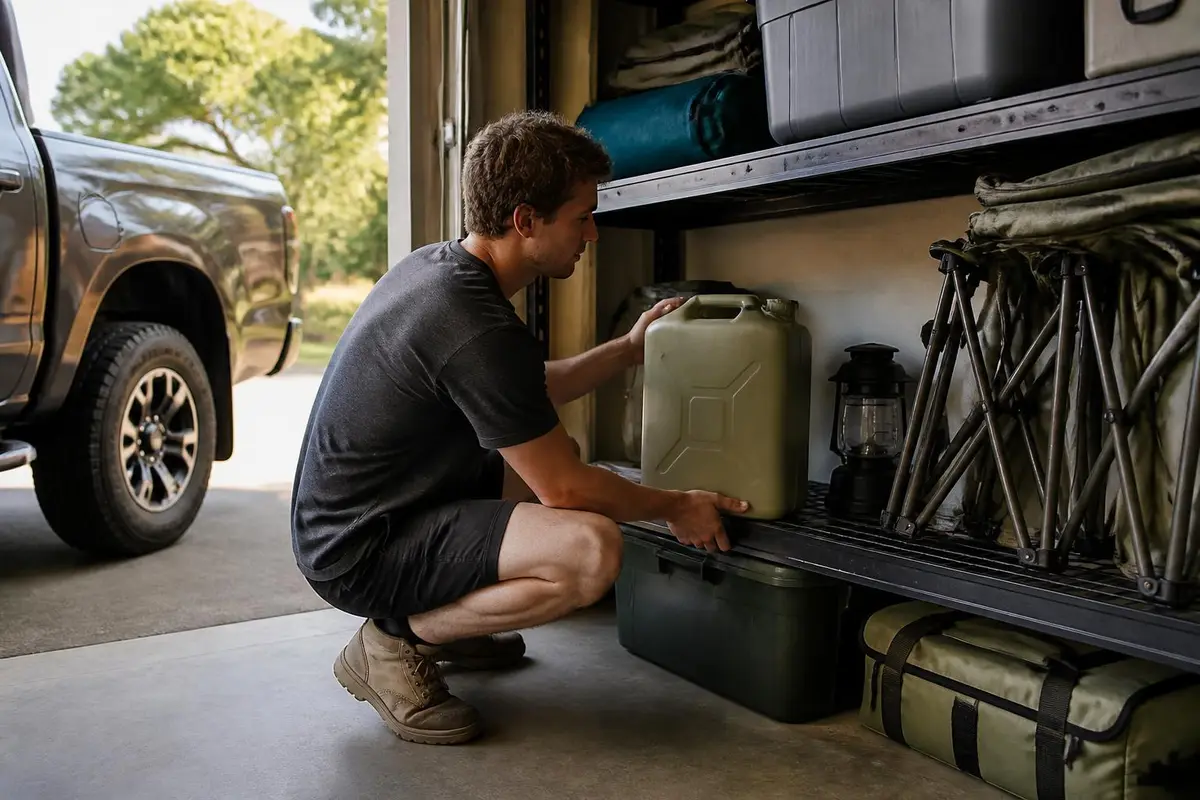
Storage Between Trips
At home, follow the CPSC's advice: cool, well-ventilated storage away from the house and any ignition source, caps on, out of reach of children. Wavian adds that stored fuel's useful life depends on fuel type, formulation, temperature and treatment, so rotate your stock and inspect it before use.
How We Rank Jerry Cans
Every can on this page is weighed against its maker's stated capacity, material, spout and compliance claims, cross-referenced with owner reviews on leaks, spout usability and durability. We do not buy or physically test fuel cans ourselves; see how we rank for the full method and affiliate disclosure for how the site is funded. For a closer look at one can, read our Wavian jerry can review.
Sources
- CPSC — Fuel Container, Gasoline and Other Liquid Fuel Safety — Store fuel containers in cool, well-ventilated areas away from ignition sources, fill cans on the ground, keep caps on, choose child-resistant cans; flame jetting definition; flame mitigation requirement in effect July 12, 2023 under the Portable Fuel Container Safety Act of 2020.
- CPSC — Consumers Warned Against Storing Gasoline (news release) — Never store gasoline in the house or automobile.
- California Air Resources Board — Certification Procedure 501 for Portable Fuel Container Systems (PDF) — Current California requirements: automatic closing and sealing spout, no leakage, 0.3 g/gal/day diurnal emissions for systems made since January 1, 2009, self-closing secondary openings, red/yellow/blue color coding for gasoline/diesel/kerosene with embossed or labeled fuel names.
- California Air Resources Board — Portable Fuel Containers (Gas Cans) — CARB's program page: amended regulation and certification procedures effective April 1, 2017, and the list of certified containers.
- 40 CFR 59.611 — Portable fuel container emission standards (Cornell LII) — Federal limit of 0.3 g hydrocarbons per gallon per day, leak-free in any orientation, manual pressure relief must close automatically.
- 16 CFR 1460.3 — Child-resistance requirements for portable gasoline containers (Cornell LII) — Portable gasoline containers made on or after December 22, 2022 must meet ASTM F2517-22e1 child-resistance requirements.
- 16 CFR 1461.3 — Flame mitigation devices on portable fuel containers (Cornell LII) — Containers sold empty must meet ASTM F3326-21, with UL 30 section 18 safety cans as an alternative.
- 29 CFR 1910.106 — Flammable liquids (Cornell LII) — OSHA definition of a safety can: approved container of not more than 5 gallons with a spring-closing lid and spout cover that relieves internal pressure in a fire.
- Justrite — Safety Cans for Flammable Liquids: Type I vs Type II — Type I has one opening for filling and pouring; Type II has a fill opening and a separate hose outlet; flame arresters dissipate heat to keep sparks from the vapor space.
- U.S. Department of Energy AFDC — Fuel Properties Comparison (PDF) — Gasoline flash point of about −45°F.
- Wavian — 20L NATO Jerry Can — 20 L / 5.3 gal, 0.9 mm steel with welded recessed seams, 9.5 lb empty, fuel-resistant lining for gasoline, diesel and kerosene, bayonet latch sealing in any orientation, CARB/EPA compliant spout.
- Wavian — FAQ — Fill only to the embossed line; store upright, sealed and secured; protect the coating and keep water out; never use for drinking water; holders must stop rubbing and bouncing; fuel life depends on type and storage; 10 L ≈ 2.6 gal; color coding; black and olive drab not sold in California.
- Wavian — Home — Cans made in Latvia to the original NATO specification; trusted since 1937.
- National Academies (TRB Special Report 265) — Rollover Information from NHTSA — Any roof load sits above the center of gravity and increases rollover likelihood.