

Affiliate disclosure: As an Amazon Associate, we earn from qualifying purchases, at no extra cost to you. We research rather than test, and commissions never change our rankings. This site is reader-supported: those commissions pay for hosting, research and keeping every guide up to date, so if a guide helped you, buying through our links is an easy way to support it. How we rank · Full disclosure
Select a tier for each build category below to see an estimated total cost range — a starting budget, not a quote for specific products.
How This Is Estimated
Total = sleep system + recovery kit + power system + suspension/tires + camp kitchen, shown as a ±15% range to reflect brand and sale-price variation.
Category price bands reflect commonly reported street pricing across each product tier.
This is a budgeting estimate, not a quote for specific products. Actual cost varies by brand, region and sale timing — treat the total as a planning range.
TL;DR
- Every tier adds weight, and the whole build has to fit the payload on the door placard (49 CFR 575.6): occupant-and-cargo limit minus the people riding.
- A rooftop tent counts against the rack's dynamic load and raises the center of gravity, which NHTSA ties to rollover risk.
- Size a winch at GVWR × 1.5 (WARN): a 5,600 lb GVWR needs at least 8,400 lb of pull.
- A compressor fridge uses under 24 Ah a day (Dometic), so three days parked needs about 72 Ah for the fridge alone.
- Going from 31- to 33-inch tires makes the speedometer read about 6% low until recalibrated.
Every Tier Adds Weight: Start With Payload
Everything in the calculator (tent, recovery kit, batteries, fridge, kitchen, bigger tires and wheels) comes out of the same payload as the people in the vehicle. Federal rule 49 CFR 575.6 requires the owner's manual to explain the calculation: find the combined occupant-and-cargo limit on the door placard, subtract the weight of everyone riding, and what remains is your cargo capacity for the whole build. Add up the published weights of the gear in each tier you choose before buying.
Sleep System: Ground Tent vs Rooftop Tent
The jump from a ground tent to a rooftop tent is also a jump in roof load. Thule defines the dynamic load a roof rack must carry as the combined weight of the tent and the racks while driving, and that figure has to fit within both the rack's rating and the vehicle's roof rating in its manual. Rollover information from NHTSA explains that any load on the roof sits above the center of gravity and increases the likelihood of rolling over, so a rooftop tent changes handling as well as the budget. The roof racks and rooftop tents hub compares the options.
Recovery Kit: Sizing a Winch
The "full kit with winch" tier is sized by the vehicle's weight. WARN's formula is GVWR × 1.5 = minimum pulling capacity, using the gross vehicle weight rating from the door placard. WARN's own example is a 2016 Toyota Tacoma with a 5,600 lb GVWR, which needs a winch rated for at least 8,400 lb. A heavier build needs a bigger winch, and the winch and its bumper add weight at the front axle. See recovery gear for the basic-kit items.
Power System: Size It to the Fridge
A 12V fridge is what usually pushes a build into the dual-battery tier, because it runs around the clock. Dometic's comparison of its own coolers gives a compressor fridge (CFX 40W) at under 24 Ah a day on 12 V, against about 94 Ah for a thermoelectric cooler and about 168 Ah for an absorption cooler. At two dozen amp-hours a day, a three-day stop without driving needs about 72 Ah of usable capacity for the fridge alone, before lights and charging devices. The dual-battery and portable power hub covers battery sizing and charging.
Suspension and Tires: What Changes Beyond Cost
Larger tires change more than ground clearance. A tire's circumference is its diameter times pi, so moving from a 31-inch to a 33-inch tire adds about 6.5% to the distance traveled per revolution; a speedometer calibrated for the original size then reads about 6% low (showing about 60 mph at a true 64 mph) until it is recalibrated. Lifting a vehicle also raises its center of gravity, which NHTSA's rollover ratings tie directly to rollover resistance. The all-terrain and mud tires hub and the suspension guides cover sizing.

Staging a Build Over Time
Buying in stages lets real trips inform the later tiers. A daily amp-hour figure measured on a first trip with a cooler or a single battery sizes a later power system more accurately than an estimate. See how to start overlanding on a budget for which categories to prioritize and the overland build guide for the build order.
Costs Outside the Calculator
The five categories leave out items that belong in the same budget: an awning and its mounting hardware, water storage, fuel cans and their mounts, a roof rack if the vehicle doesn't have one, and professional installation and alignment. Modifications can also affect insurance, so ask your insurer how aftermarket equipment is covered before a large build, and keep receipts for major components.
How We Research This
The sizing rules on this page come from federal regulations, NHTSA rollover information and manufacturer guidance (Thule, WARN, Dometic). The calculator's category bands are planning ranges, not quotes for specific products. See how we rank for the site's research method.
Recommended gear
Camping essentials
Affiliate disclosure: As an Amazon Associate, we earn from qualifying purchases, at no extra cost to you. Purchases through these links help keep this site running and up to date. Learn more

Best for a classic ground tent for campgrounds and dispersed sites.
- Sets up in about 10 minutes, rainfly included.
- Weatherproof dome design in 2- to 6-person sizes.

Best for cool nights at campgrounds.
- Rated to 30°F for cool-weather camping.
- No-snag zipper.
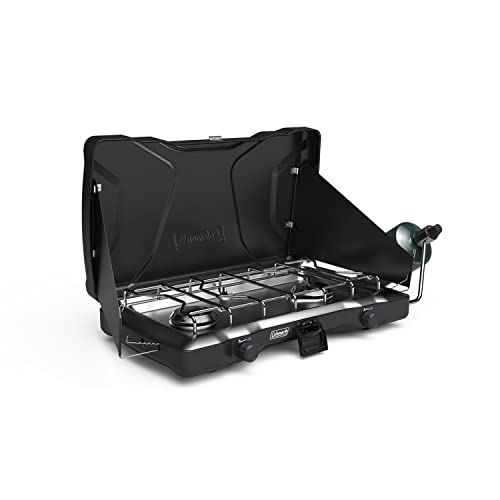
Best for cooking real meals at camp.
- Two-burner portable propane cooktop.

Best for mosquitoes and ticks on skin.
- 20% picaridin pump spray, 3 oz bottles.
- Two-pack.
We research products from manufacturer specs and owner feedback; we don't test them ourselves. How we choose.
Sources
- 49 CFR 575.6 — Owner's manual load-limit steps (Cornell LII) — How to find cargo capacity from the door-placard occupant-and-cargo limit.
- Thule — What Roof Racks Do I Need for a Rooftop Tent? — Dynamic load is the combined weight of the tent and racks while driving.
- National Academies (TRB Special Report 265) — Rollover Information from NHTSA — Rollover resistance depends on center-of-gravity height and track width; roof loads increase rollover likelihood.
- WARN Industries — Determine the Right Winch Capacity for Your Truck or SUV — GVWR × 1.5 = minimum pulling capacity; 2016 Tacoma example (5,600 lb GVWR → 8,400 lb).
- Dometic Support — What Is the Most Energy Efficient Cooler? — Compressor fridge under 24 Ah a day; thermoelectric about 94 Ah; absorption about 168 Ah.