

Affiliate disclosure: As an Amazon Associate, we earn from qualifying purchases, at no extra cost to you. We research rather than test, and commissions never change our rankings. This site is reader-supported: those commissions pay for hosting, research and keeping every guide up to date, so if a guide helped you, buying through our links is an easy way to support it. How we rank · Full disclosure
TL;DR
- Payload decides first: a Four Wheel Campers Hawk is about 1,200 lb dry and close to 1,400 lb with its 20 gallons of water and two full 10 lb propane tanks, before people and gear.
- Federal rules (49 CFR 575.103) require slide-in camper makers to label the camper's maximum loaded weight and truck makers to publish a cargo weight rating and camper center-of-gravity zone.
- Four Wheel Campers matches each model to a bed length, from the Swift for 5.0–5.5 ft midsize beds to the Grandby for 8 ft full-size beds.
- Go Fast Campers builds each platform camper for a specific truck model; its V2 Pro roof is rated for 500 lb closed and 75 lb open.
- Never run a fuel-burning heater or lantern while sleeping in a camper; the CPSC warns of carbon monoxide, especially at altitude.
The Main Types of Overlanding Camper
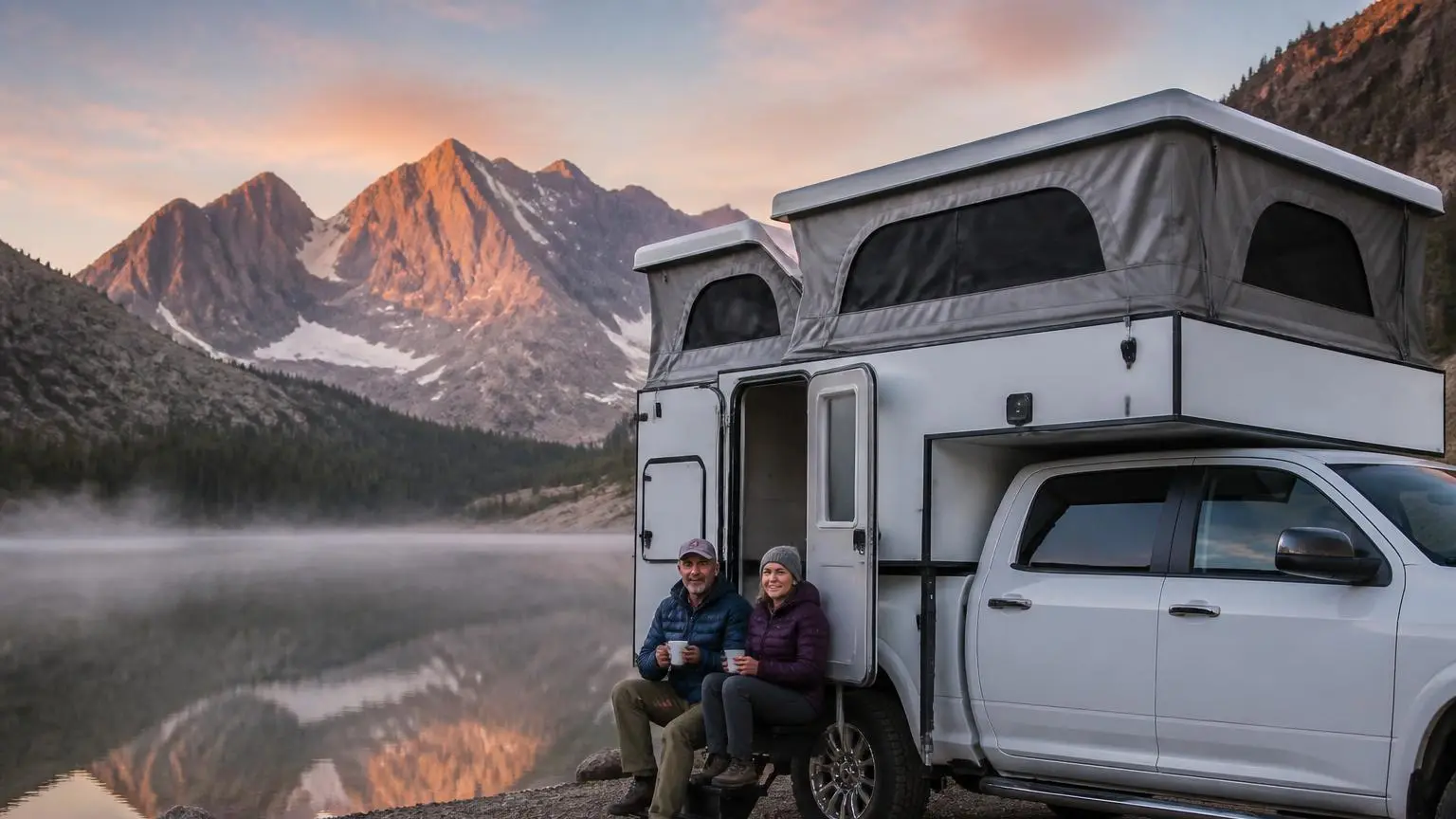
Pop-up slide-in campers sit in the truck bed and have a roof that lifts at camp; the Four Wheel Campers Hawk goes from 62 inches tall lowered (on most trucks) to 6 ft 6 in of interior height raised. Flatbed campers mount to a flatbed after the factory bed is removed, which gives more floor and storage space. Platform campers and toppers bolt to the bed rails, stay low, and open into a sleeping platform above the bed, leaving the bed below for gear. Hard-sided campers exist too, but their extra height and weight rule out more trails.
Payload Comes Before Anything Else
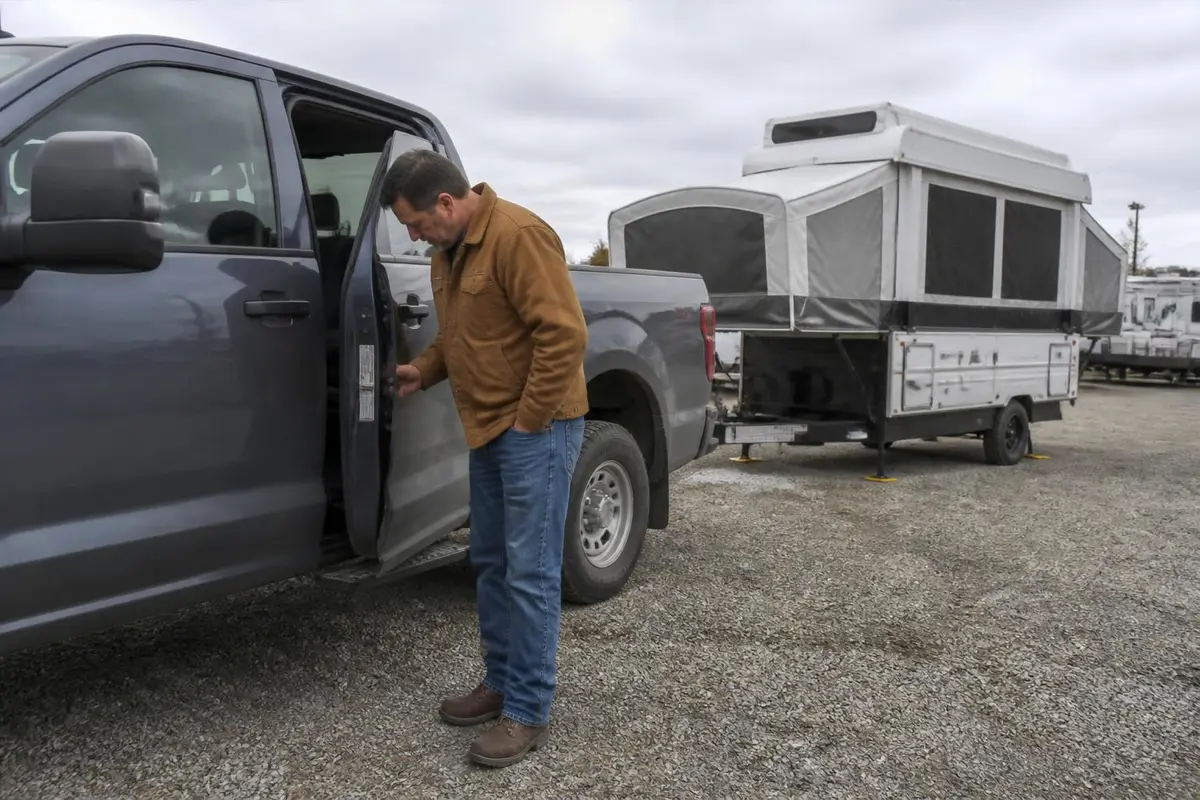
A camper is often the heaviest thing you will ever put on a truck, and two federal rules tell you how to check it. Under 49 CFR 575.6, the owner's manual explains how to use the door placard: take the maximum combined weight of occupants and cargo and subtract the people riding along; what remains has to cover the camper and everything in it. Under 49 CFR 575.103, a truck built to carry a slide-in camper must come with its cargo weight rating and a picture of the recommended center-of-gravity zone for a camper, and every slide-in camper must carry a label stating its maximum weight with standard equipment, a stated amount of water, bottled gas and the refrigerator. Its owner's manual must show where the camper's center of gravity sits, so you can check that it falls inside the truck's zone.
A worked example with the Hawk: 1,200 lb dry, plus 20 gallons of fresh water at about 8.34 lb per gallon (USGS) is about 167 lb, plus 20 lb of propane in its two 10 lb tanks, gives roughly 1,390 lb before food, clothing, recovery gear, a second battery or passengers. If a truck's placard allows 1,800 lb of occupants and cargo and two occupants weigh 350 lb, only about 60 lb would be left, which is why the camper and the truck have to be chosen together.
Four Wheel Campers: Slide-In, Flatbed and Project M
Best for: owners who want a pop-up with a full interior.
Four Wheel Campers, founded in 1972, lists campers for Toyota, Chevrolet, GMC, Ram, Ford, Jeep and Nissan trucks and matches each model to a truck size and bed length:
| Model | Truck | Bed length | Approx. dry weight |
|---|---|---|---|
| Project M (topper) | Midsize / full size | Bolts to bed rails | 375 lb / 400 lb |
| Swift | Midsize | 5.0–5.5 ft | 950 lb |
| Fleet | Midsize | 6.0–6.7 ft | 1,050 lb |
| Raven | Full size | 5.5–5.8 ft short bed | 1,050 lb |
| Hawk | Full size | 6.5 ft | 1,200 lb |
| Grandby | Full size | 8 ft | 1,300 lb |
| Fleet Flatbed | Midsize flatbed | — | 1,300 lb |
| Hawk Flatbed | Full-size flatbed | 6.5 ft | 1,325 lb |
| Grandby Flatbed | Full-size flatbed | 8 ft | 1,395 lb |
The Hawk spec sheet lists sleeping for three to four adults, aluminum framing and exterior, an 80-inch body width, a 20-gallon fresh-water tank with an electric pump, a 65-liter two-way fridge-freezer, a flush-mount two-burner propane stove with two 10 lb propane tanks, a 135 Ah lithium battery with truck charging, a sliding passenger-side safety-exit window, and a fire extinguisher, LP/CO detector and smoke detector as standard. A furnace, water heater and toilet are options.
Where it's sold: through the Four Wheel Campers dealer network, which the company says typically has 2 to 3 month lead times.
Go Fast Campers V2 Pro
Best for: keeping the truck low and light while still sleeping off the ground.
Go Fast Campers builds its V2 Pro platform camper in Montana from a tubular aluminum frame, honeycomb composite panels and CNC-machined hardware. Each camper is built for a specific truck model rather than a generic bed size; the company's own example is that a Tacoma camper won't fit a Colorado. The platform is 96 inches long, with a 50 × 90 in sleeping area on midsize trucks and 56 × 90 in on full-size trucks, and it sleeps two adults plus a child or pet. The roof is rated for 500 lb closed and 75 lb open, which matters if you plan to carry a rooftop load. A longer V2 MAX, a V2 Pro Topper and a V2 Pro RTT are also offered.
Where it's sold: direct from Go Fast Campers.
Choosing Between Them
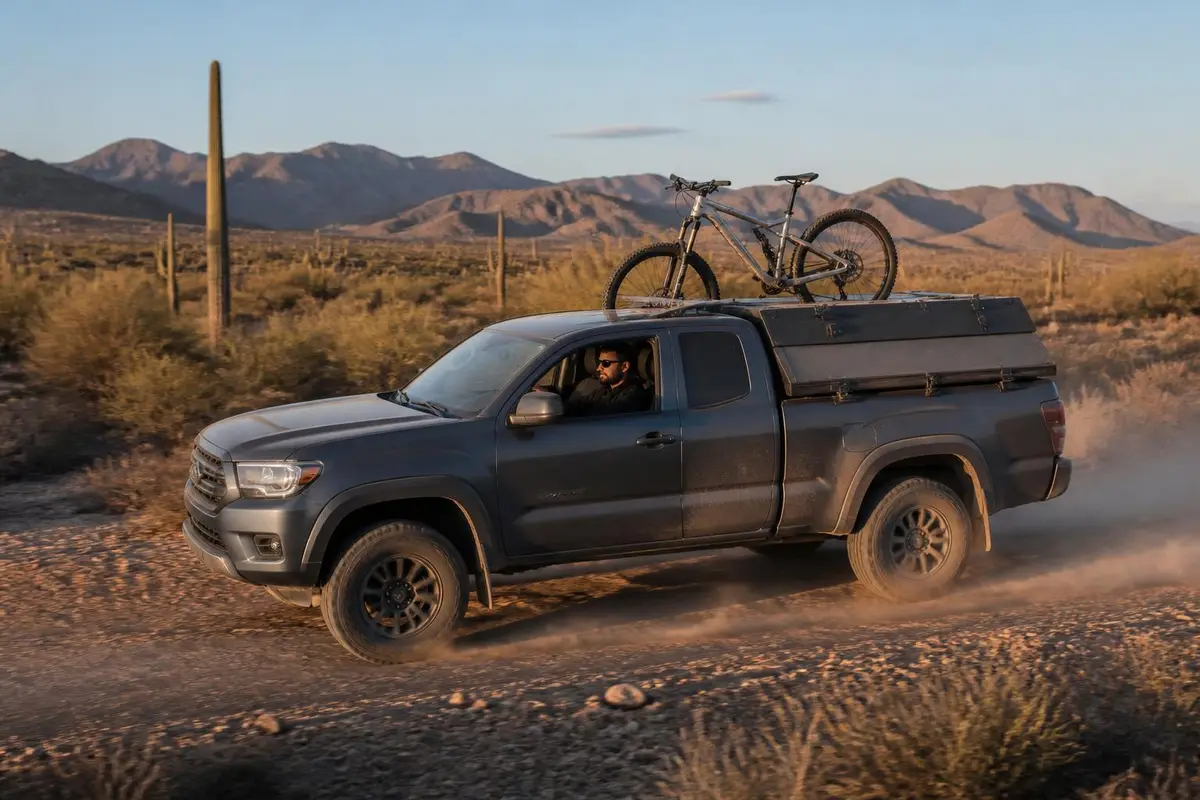
Start with the payload math above, then decide how you will use camp. If you want to cook, sit and sleep inside out of the weather, a pop-up slide-in gives you a small living space with water and a fridge, at 950 to 1,400 lb dry. If you mainly want a fast, flat bed and cook outside, a platform camper or the Project M keeps weight and height much lower. A flatbed camper adds storage but also weight, and means replacing the factory bed.

Heat and Carbon Monoxide
A camper's enclosed space changes the safety picture for anything that burns fuel. The CPSC warns never to use fuel-burning portable heaters or lanterns while sleeping in enclosed areas such as tents, campers and vehicles, notes that the risk rises at higher altitude, and lists headache, dizziness, weakness, nausea, vomiting, sleepiness and confusion as warning signs. The Hawk ships with an LP/CO detector as standard, which is worth checking for on any camper you consider. Follow the camper maker's instructions for any installed appliance, and keep portable heaters and stoves out of the sleeping space.
Alternatives to a Camper
If a camper is more weight than your truck can carry, a rooftop tent or an off-road camping trailer spreads the load differently. The roof racks and rooftop tents hub covers tents, and our overland build guide helps you decide where a camper fits in the build order.
How We Cover Overlanding Campers
We compare campers on the weights, fitment and equipment their makers publish. We do not buy, install or physically test campers ourselves; see how we rank and our affiliate disclosure. Confirm fitment for your exact year, cab and bed length with the manufacturer or dealer.
Toyota, Chevrolet, GMC, Ford, Jeep, Ram and Nissan are trademarks of their respective owners. 4x4 & Overlanding is an independent publication and is not affiliated with, sponsored or endorsed by any vehicle manufacturer.
Recommended gear
Camping essentials
Affiliate disclosure: As an Amazon Associate, we earn from qualifying purchases, at no extra cost to you. Purchases through these links help keep this site running and up to date. Learn more

Best for a classic ground tent for campgrounds and dispersed sites.
- Sets up in about 10 minutes, rainfly included.
- Weatherproof dome design in 2- to 6-person sizes.

Best for cool nights at campgrounds.
- Rated to 30°F for cool-weather camping.
- No-snag zipper.
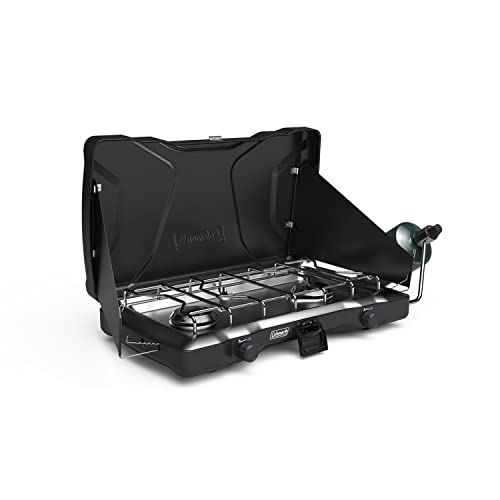
Best for cooking real meals at camp.
- Two-burner portable propane cooktop.

Best for mosquitoes and ticks on skin.
- 20% picaridin pump spray, 3 oz bottles.
- Two-pack.
We research products from manufacturer specs and owner feedback; we don't test them ourselves. How we choose.
Sources
- Four Wheel Campers — Midsize vs Full-Size Truck Campers — Truck class, bed length and approximate dry weight for Swift, Fleet, Fleet Flatbed, Raven, Hawk, Grandby, Hawk Flatbed, Grandby Flatbed and Project M.
- Four Wheel Campers — Hawk Spec Sheet (PDF) — Hawk 1,200 lb dry, sleeps 3–4 adults, 20 gal water, 6 ft 6 in raised interior, 62 in lowered height, 80 in body width, aluminum framing, 65 L fridge, two-burner stove, two 10 lb propane tanks, 135 Ah lithium battery, safety-exit window, extinguisher, LP/CO and smoke detectors; furnace, water heater and toilet optional.
- Four Wheel Campers — Home — Founded 1972; slide-in, Project M, flatbed and CampOut lines; dealer network with typical 2–3 month lead times; truck makes supported.
- Go Fast Campers — V2 Pro Camper — Built in Montana; tubular aluminum frame and honeycomb composite panels; truck-specific fitment; 96 in platform, 50 × 90 in and 56 × 90 in sleeping areas; sleeps 2 adults plus child or pet; roof rated 500 lb closed and 75 lb open; V2 MAX, V2 Pro Topper and V2 Pro RTT variants.
- 49 CFR 575.103 — Truck-camper loading (Cornell LII) — Camper label must state maximum weight with standard equipment, water, bottled gas and refrigerator; camper manual must show center of gravity; trucks for slide-in campers must list cargo weight rating and recommended center-of-gravity zone.
- 49 CFR 575.6 — Owner's manual load-limit steps (Cornell LII) — How to read the door-placard occupant-and-cargo limit and subtract occupant weight to find remaining cargo capacity.
- U.S. Geological Survey — Water Density — Water weighs about 8.34 lb per gallon, used for the tank-weight example.
- CPSC — Portable Heaters & Camping Equipment (Carbon Monoxide) — Do not use fuel-burning heaters or lanterns while sleeping in campers or vehicles; higher risk at altitude; CO symptoms.