
Affiliate disclosure: As an Amazon Associate, we earn from qualifying purchases, at no extra cost to you. We research rather than test, and commissions never change our rankings. This site is reader-supported: those commissions pay for hosting, research and keeping every guide up to date, so if a guide helped you, buying through our links is an easy way to support it. How we rank · Full disclosure
Lay the chain out, drape it over the tire, connect the inner and outer fasteners, then drive a short distance and check it. SCC's own Super Z6 cable-chain instructions call that check step out directly: drive a short distance right after installing, and stop immediately if any part of the chain contacts the vehicle. Skipping that check is a common cause of a chain working loose, rubbing the wheel well, or coming off later in the drive.
Before You Start
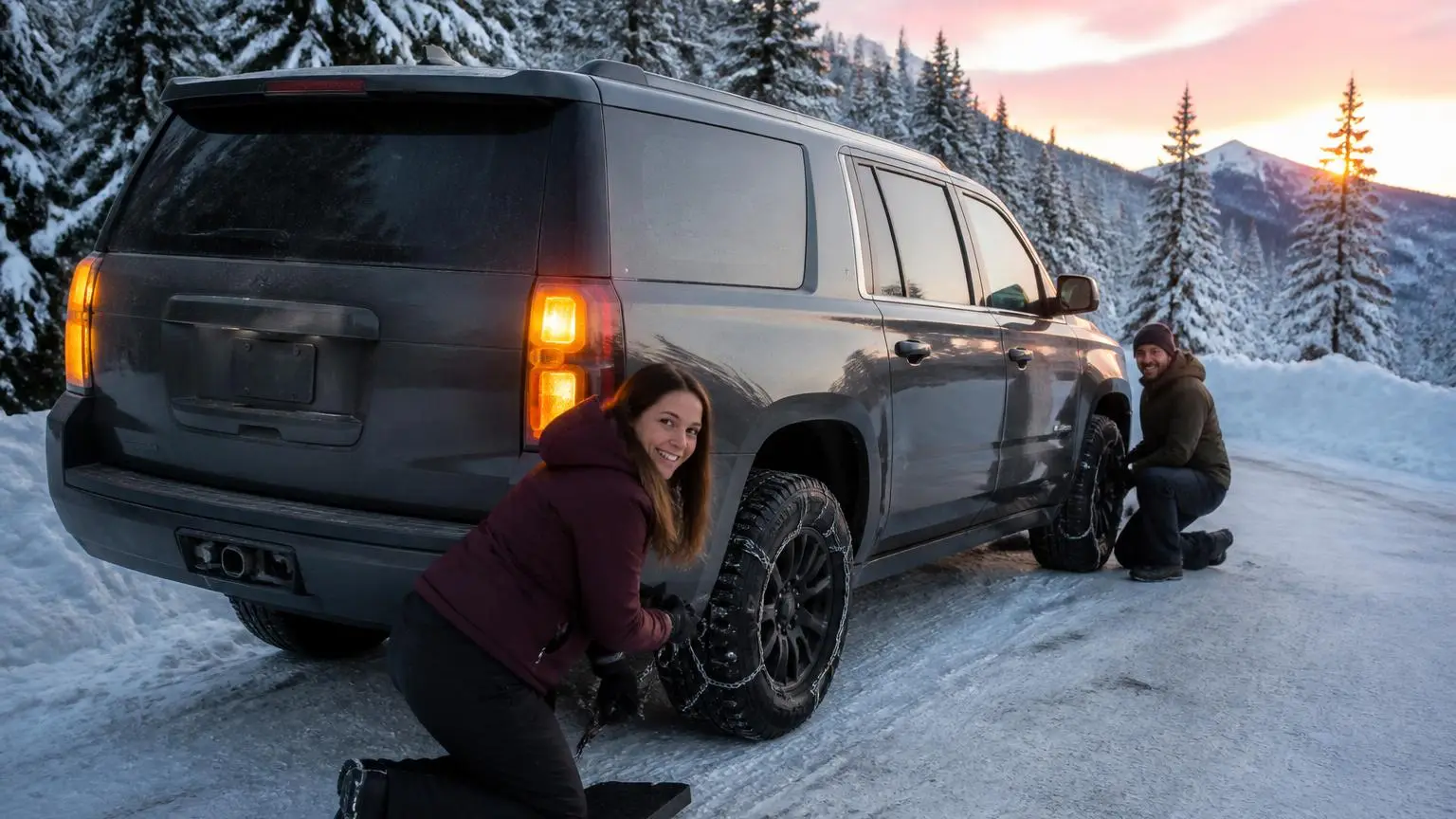
Confirm chain fitment before a storm, not during one. Chains are built to SAE clearance classes — Class S needs at least 1.46 in of tread-face and 0.59 in of sidewall clearance, Class U needs 1.97 in and 0.91 in, and Class W (the light-truck class) needs 2.5 in of tread-face and 1.5 in of sidewall clearance (Laclede Chain) — and a set built for the wrong class either won't seat correctly or rubs suspension components at full lock. Caltrans's own chain requirements guidance recommends practicing installation before a storm arrives. Find a flat, well-lit area to work, and lay out both chains fully to check for tangles before doing it roadside in the snow.
Lay the Chain Out Flat
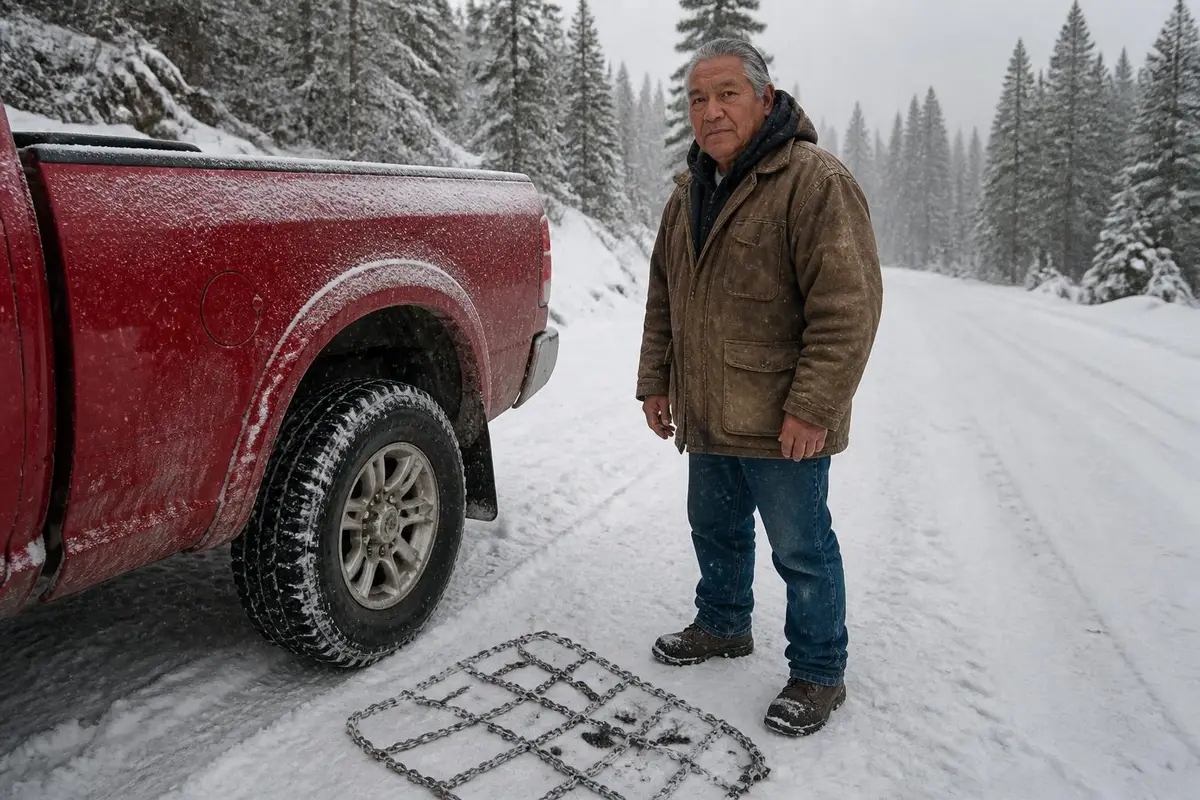
Drape the chain over the top of the tire first if the set allows it, or lay it flat on the ground directly behind the tire so it can be pulled up and over while reversing slightly onto it — the method depends on the specific chain design. Cable-style and traditional link chains install slightly differently, so the manufacturer's own instructions for the exact set in hand take priority over any general method.
Connect the Inner and Outer Fasteners
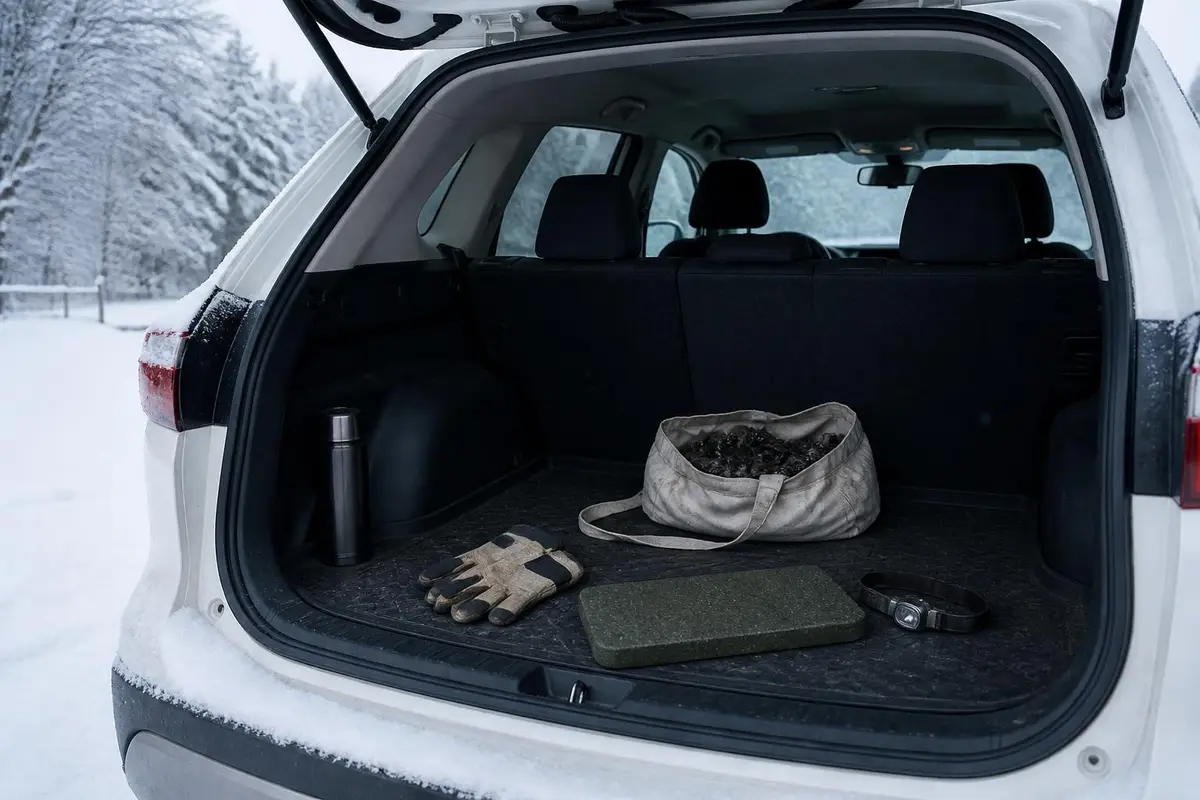
Work the chain around the back of the tire first, then bring the inner side around and connect its fastener, followed by the outer side. Most modern sets use a cam-lock or bungee-style tensioner rather than the older lever-bar tool, which is one reason cable chains have become a more common choice for drivers who don't chain up often.
Drive a Short Distance, Then Check It
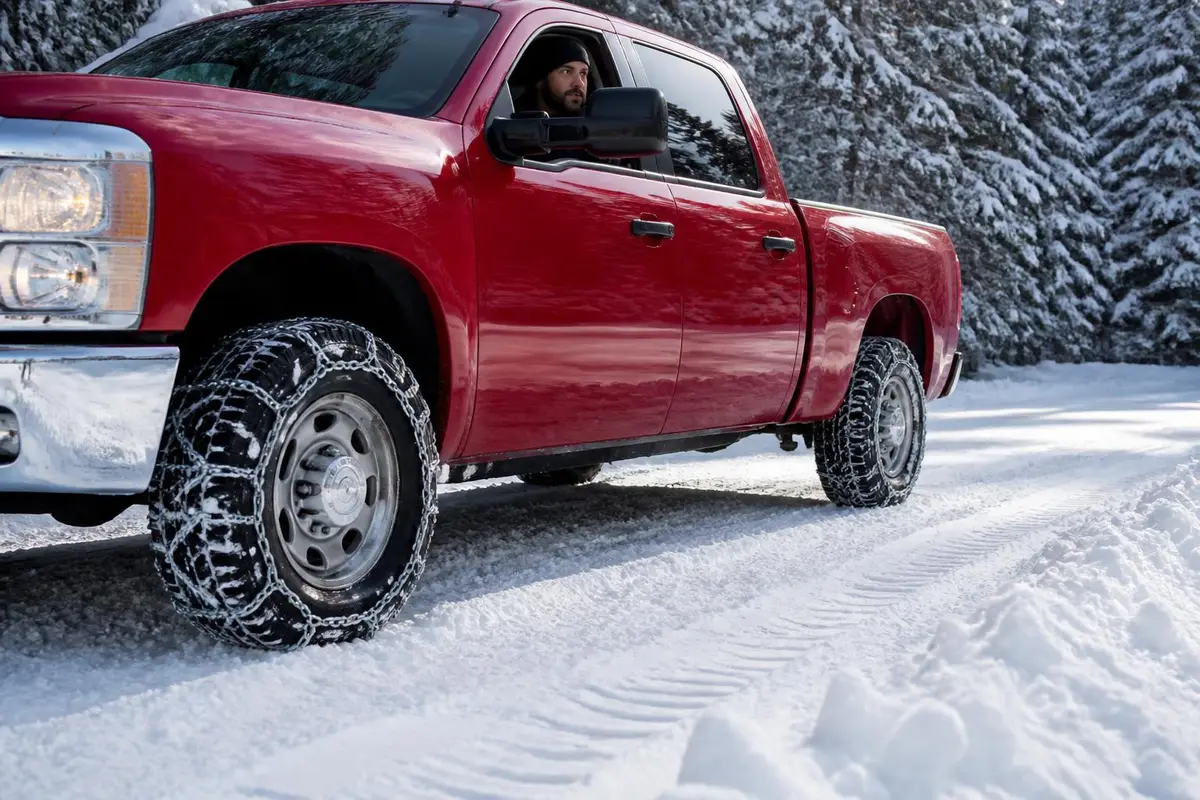
Drive forward or back a short distance and stop to check the fit — the chain settles onto the tire once it's actually rotating under load, and SCC's own Super Z6 instructions say to remove the chain immediately if any part contacts the vehicle. Re-tightening the tensioner if slack has developed, and confirming nothing rubs, before continuing at speed catches the settling that happens in the first few hundred feet of driving.
Speed Limits and Removal
Caltrans posts a 25–30 mph speed limit wherever chain controls are active, since chains are a traction aid for snow and ice, not a device rated for highway speed. Remove chains once back on clear, dry pavement — Caltrans's guidance is to pull off only after passing an "End of Chain Control" sign — since running chains on bare pavement wears them out fast and can damage both the road surface and the vehicle.
Common Mistakes
Buying a chain set without confirming its SAE class matches the vehicle's actual clearance is the most consequential failure, often discovered only at a checkpoint. Skipping the re-tighten-after-driving step is a close second. A chain installed with the tensioner on the inside, where it can't be reached without jacking the vehicle, is a smaller but real annoyance on a first attempt.
Some Parks Require Chains Carried, Not Just Installed
Mount Rainier National Park's own chain-requirement guidance goes further than a state chain-control law: every vehicle must carry tire chains or a state-approved alternative traction device at all times from November 1 through May 1, regardless of the day's weather, road conditions or drivetrain — a stricter, standing rule rather than one triggered only by a posted storm requirement. Confirming a specific destination's own rule, not just the state's general chain law, matters for a winter mountain trip.
Recommended gear
Gear for snow and winter trips
Affiliate disclosure: As an Amazon Associate, we earn from qualifying purchases, at no extra cost to you. Purchases through these links help keep this site running and up to date. Learn more

Best for getting unstuck from sand, mud or snow without another vehicle.
- Nylon recovery boards that give spinning tires grip in sand, mud or snow.
- Double as a shovel to clear sand from in front of the tires.

Best for a kinetic rope with matching soft shackles.
- 7/8 in x 30 ft kinetic rope plus two 7/16 in soft shackles.
- Comes with a waterproof storage bag.

Best for a compact compressor for tires up to 33".
- Compact 12V compressor, 120 PSI, for tires up to 33 in.
- Small enough to keep in the vehicle full-time.

Best for plugging a tread puncture on the trail.
- Reamer-and-plugger kit for tread punctures.
- Lets you plug a tire on the trail instead of changing it.
We research products from manufacturer specs and owner feedback; we don't test them ourselves. How we choose.
Sources
- Security Chain Company (SCC) — Super Z6 Passenger Cable Chain Installation Instructions — Drive a short distance immediately after installing and stop if any part of the chain contacts the vehicle; SAE Class S clearance requirement; 30 mph maximum speed with chains installed.
- Caltrans — Chain Controls / Chain Installation — Chains are required on the drive axle at minimum under R-1 controls; practice installation before a storm; 25-30 mph speed limit; remove only past "End of Chain Control" signs.
- Laclede Chain — SAE Classifications — SAE chain clearance classes S, U and W and their tread-face/sidewall clearance minimums.
- National Park Service — Mount Rainier Tire Chain FAQ — All vehicles must carry tire chains or a state-approved alternative traction device at all times from November 1 through May 1, regardless of weather, road conditions or drivetrain.
- Colorado DOT — Passenger Vehicle Traction and Chain Laws — Colorado's Chain Law requires chains or an approved alternative traction device on every vehicle, tire rating aside, once activated.