

Affiliate disclosure: As an Amazon Associate, we earn from qualifying purchases, at no extra cost to you. We research rather than test, and commissions never change our rankings. This site is reader-supported: those commissions pay for hosting, research and keeping every guide up to date, so if a guide helped you, buying through our links is an easy way to support it. How we rank · Full disclosure
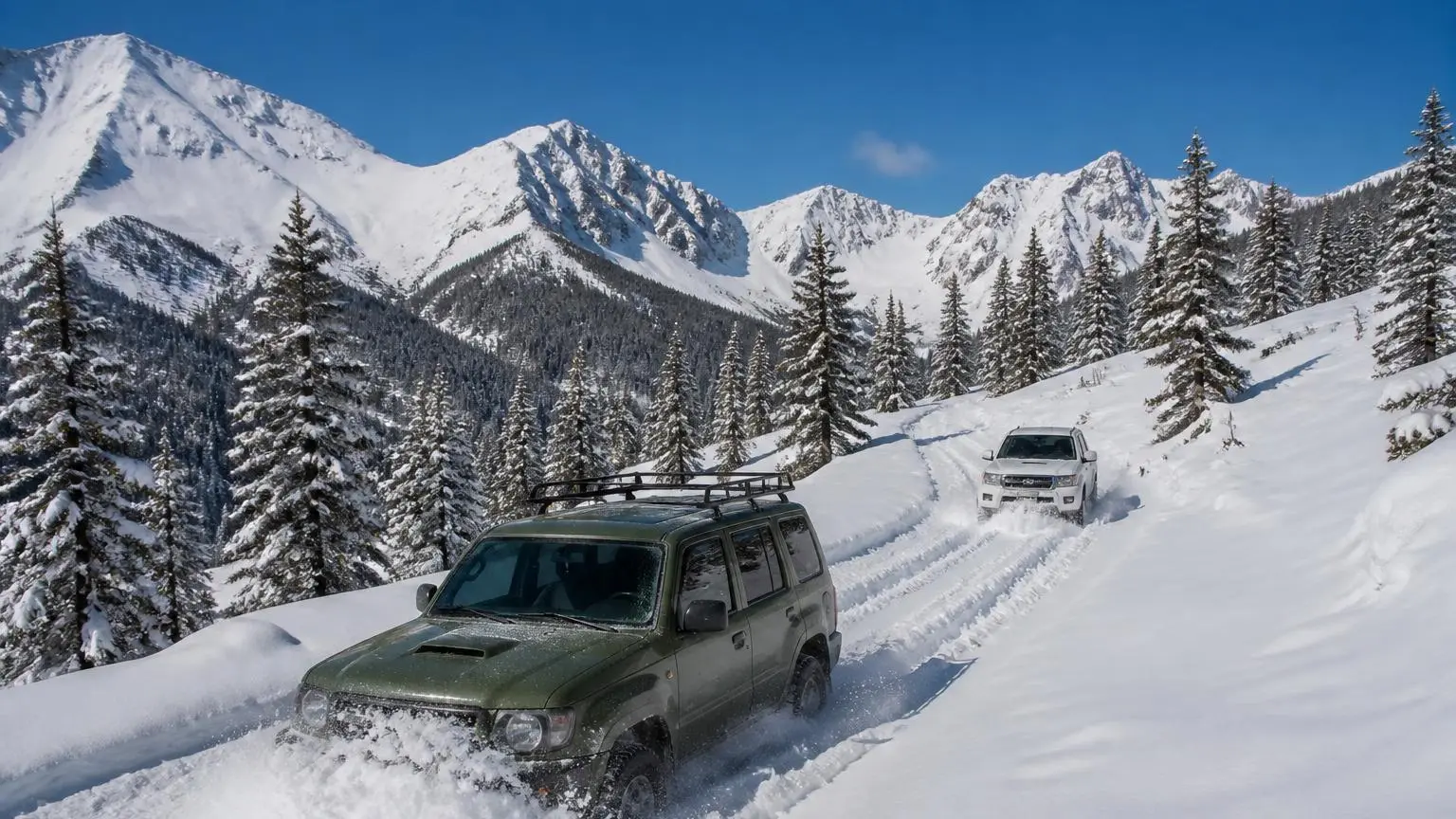
Snow wheeling uses the same fundamentals as summer off-roading — momentum, line choice, tire pressure — but snow hides the actual trail surface underneath it. A rock, rut, or the edge of a frozen creek that would be visible and plannable-around in summer is invisible under even a few inches of snow, which is the core reason winter trail runs call for more conservative technique and more redundancy than the same trail run in July.
Snow Hides What's Actually Under It
A snow-covered trail conceals rocks, ruts, ice patches and water crossings that would be visible in summer conditions. The safer approach is reading a snow-covered trail more conservatively than a summer one — treating any unusual-looking feature (a slight depression, a discolored patch, a line of exposed grass or reeds that suggests water underneath) as a possible obstacle rather than assuming a flat white surface is flat ground.
Momentum Helps, But Hidden Obstacles Cut Both Ways
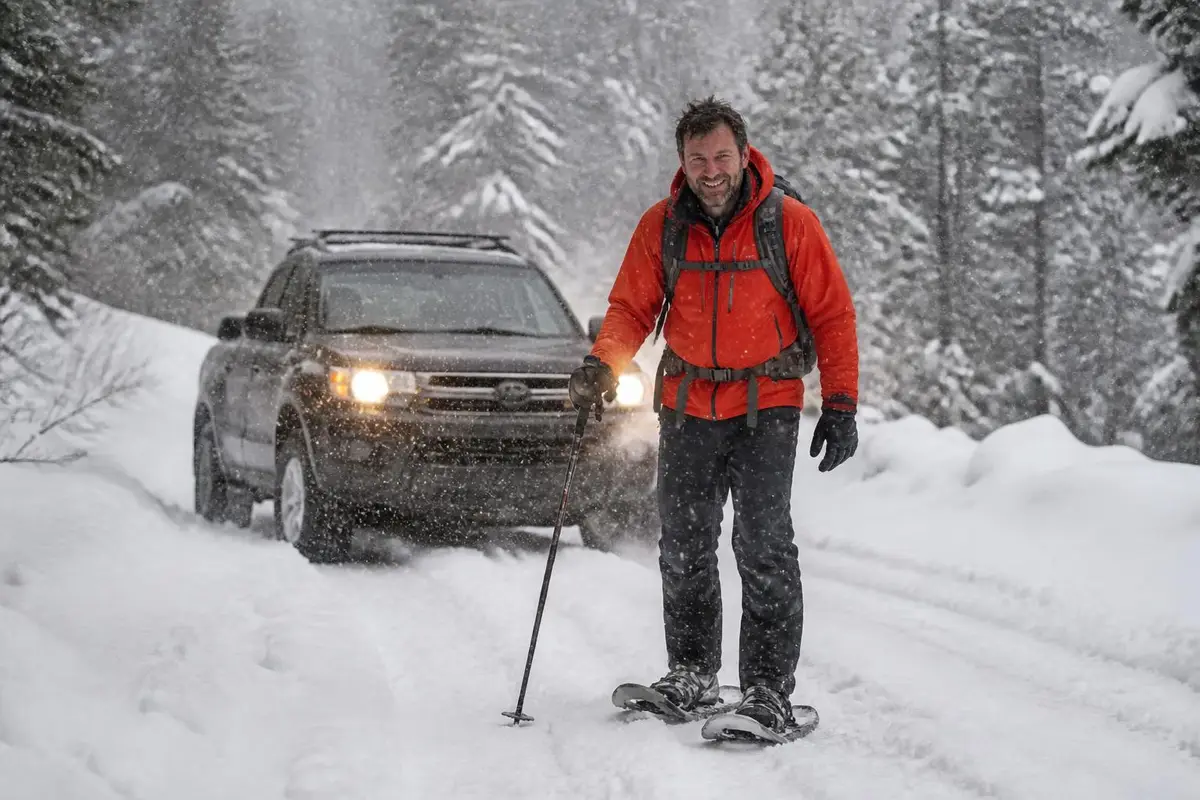
Controlled momentum helps a vehicle carry through soft or drifted snow much as it does through sand, but snow's unpredictable depth and the obstacles hidden underneath make excess speed riskier than in a summer sand wash, where the surface itself is at least visible. A hidden rock or rut struck at speed can cause real vehicle damage, or a rollover, that the same obstacle — visible in summer — would let a driver steer around in time. A measured, steady pace that leaves room to react to what a tire suddenly hits is the more conservative trade in snow.
Tire Pressure: Airing Down, Plus a Temperature Effect
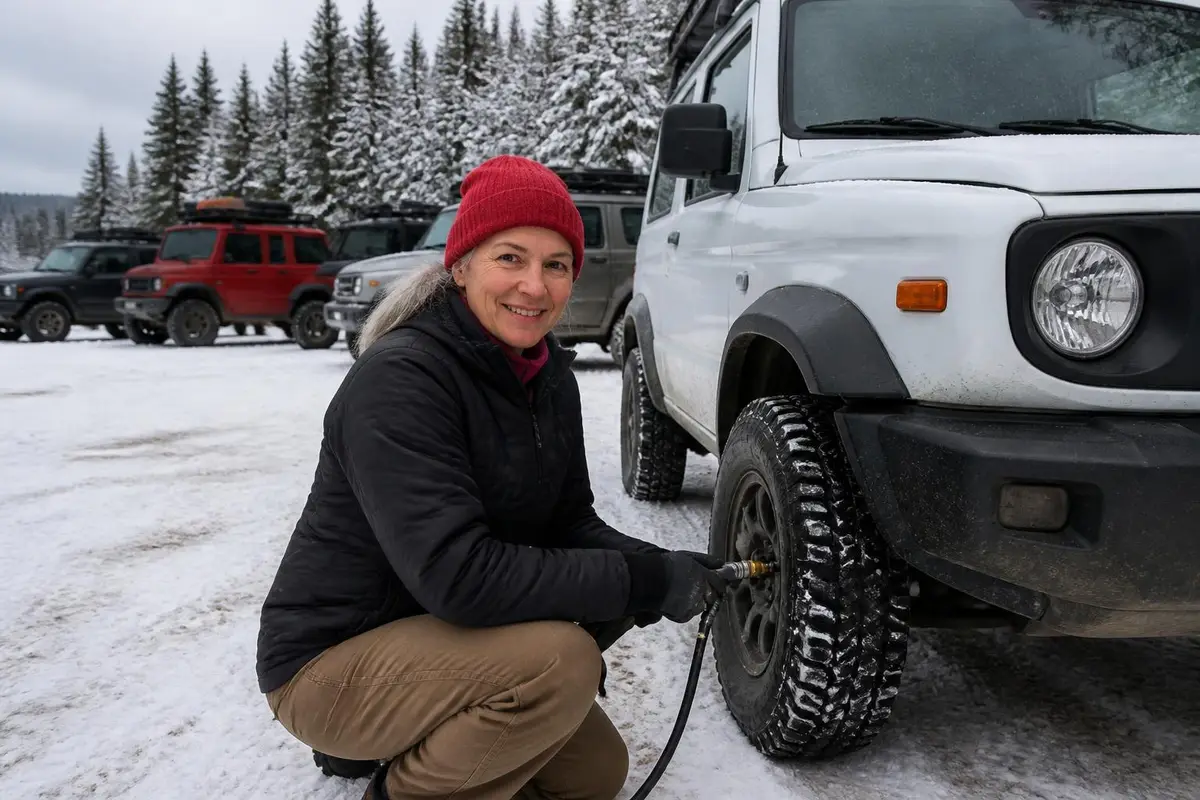
Airing down increases a tire's footprint and flotation in snow the same way it does in sand. Cold adds a second, independent effect: tire pressure drops by roughly 1 psi for every 10°F the ambient temperature falls, whether or not there's an actual leak. A tire aired down and checked at the trailhead in the morning can read several psi lower by afternoon in a cold snap, so recheck pressure more often on a winter run than a summer one. See airing down for the general method.
Ice and Hidden Water Crossings
A frozen or partially thawed water crossing carries different risk than the same crossing in summer, because ice can conceal both the crossing's actual depth and its current. Maine's Department of Inland Fisheries and Wildlife guidance puts safe new, clear ice at 8-12 inches for a car or small pickup and 12-15 inches for a medium truck, and cautions that ice can be a foot thick in one spot and only an inch or two a few yards away on the same body of water. Treat an unmarked frozen crossing on a trail as unverified rather than assuming it holds; see water crossing and sealing for the broader technique.
Cold Exposure Raises the Stakes of Getting Stuck
A stuck or disabled vehicle is a more serious situation in winter than in summer because of exposure risk. The National Weather Service's wind-chill chart shows exposed skin can freeze in about 30 minutes at 0°F with a 15 mph wind, and in as little as 10 minutes at a wind chill of −35°F. The CDC notes hypothermia — a core body temperature below 95°F — can also set in at temperatures above freezing if a person is wet or exposed long enough, not only in extreme cold. Both are reasons a stuck vehicle on a remote winter trail carries real time pressure that the same situation in July doesn't.
Why a Buddy Vehicle Matters More in Winter
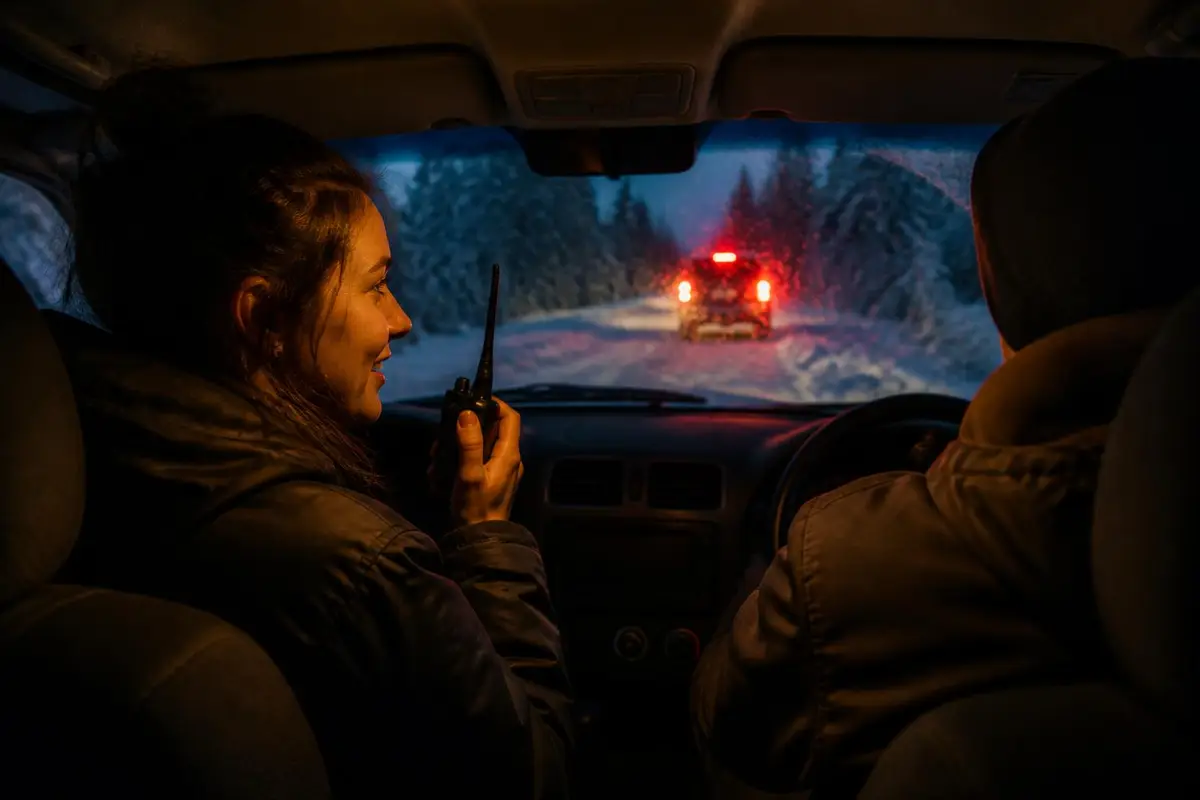
Given that exposure risk, a second vehicle carrying its own recovery gear is closer to mandatory than optional for a winter trail run, since it removes the worst-case scenario of a single stuck vehicle with no way to summon help in a remote area with poor cell signal. See recovery kit checklist for what each vehicle should carry.
Recommended gear
Gear for snow and winter trips
Affiliate disclosure: As an Amazon Associate, we earn from qualifying purchases, at no extra cost to you. Purchases through these links help keep this site running and up to date. Learn more

Best for getting unstuck from sand, mud or snow without another vehicle.
- Nylon recovery boards that give spinning tires grip in sand, mud or snow.
- Double as a shovel to clear sand from in front of the tires.

Best for a kinetic rope with matching soft shackles.
- 7/8 in x 30 ft kinetic rope plus two 7/16 in soft shackles.
- Comes with a waterproof storage bag.

Best for a compact compressor for tires up to 33".
- Compact 12V compressor, 120 PSI, for tires up to 33 in.
- Small enough to keep in the vehicle full-time.

Best for plugging a tread puncture on the trail.
- Reamer-and-plugger kit for tread punctures.
- Lets you plug a tire on the trail instead of changing it.
We research products from manufacturer specs and owner feedback; we don't test them ourselves. How we choose.
Sources
- NHTSA — Winter Driving Tips — General winter driving hazard guidance, extended here to off-road trail conditions.
- Maine Department of Inland Fisheries and Wildlife — Ice Safety Tips — Recommended new, clear ice thickness to support a car or small pickup (8-12 in) or a medium truck (12-15 in), and that thickness can vary sharply within the same body of water.
- National Weather Service — Understanding Wind Chill — Wind-chill chart showing exposed skin can freeze in about 30 minutes at 0°F with a 15 mph wind, and in about 10 minutes at −35°F wind chill.
- CDC — Preventing Hypothermia — Hypothermia (core body temperature below 95°F) can occur even above freezing given wind, wet clothing or prolonged exposure.
- Goodyear — Impacts to Tire Pressure During Cold Weather — Tire pressure drops roughly 1 psi per 10°F of temperature drop, independent of airing-down.