

Affiliate disclosure: As an Amazon Associate, we earn from qualifying purchases, at no extra cost to you. We research rather than test, and commissions never change our rankings. This site is reader-supported: those commissions pay for hosting, research and keeping every guide up to date, so if a guide helped you, buying through our links is an easy way to support it. How we rank · Full disclosure
Factory fluid-change intervals assume normal on-road driving: moderate temperatures, dry pavement, no water at axle height. Off-road use adds three stresses those intervals don't plan for. Water can reach the axle breathers. Low-speed towing runs the gear hotter. Dust clogs the air filter faster than street miles do.
Manufacturers that publish a "severe-service" schedule (a shorter set of intervals for hard use) size it around towing and dust. Water submersion is different: it's an inspection trigger, not a mileage interval.
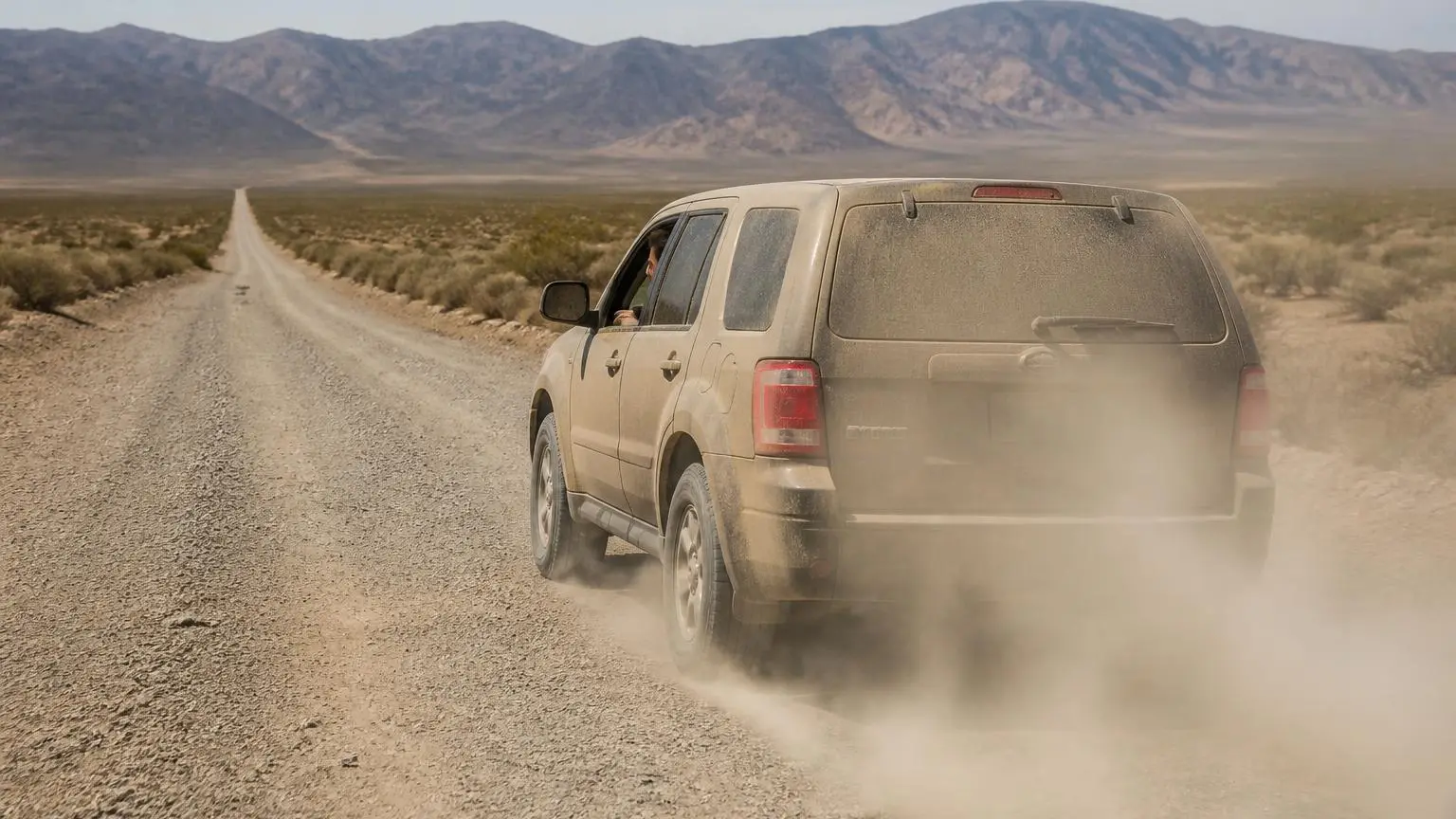
Water Crossings: Change Fluid After Submersion, Not on a Schedule
Check your fluid right after any deep water crossing — don't wait for the next scheduled change.
Here's why. Axle and transfer case housings vent through a small breather. A hot housing cooled suddenly by cold water creates a vacuum inside it. If the breather or a seal is underwater at that moment, it can draw water in instead of air. That water contaminates the fluid. (See diy diff breathers for the full mechanism and the fix.)
Ford's own factory maintenance guidance treats this as an inspection trigger, not a mileage interval. For axles filled with lifetime synthetic lubricant, Ford calls for no scheduled change at all — only a change "anytime the axle and PTO have been submerged in water," or if a leak turns up. After any crossing deep enough to reach the axle housing, check the differential and transfer case fluid. A cloudy or milky look means water got in, no matter what the mileage-based schedule says.
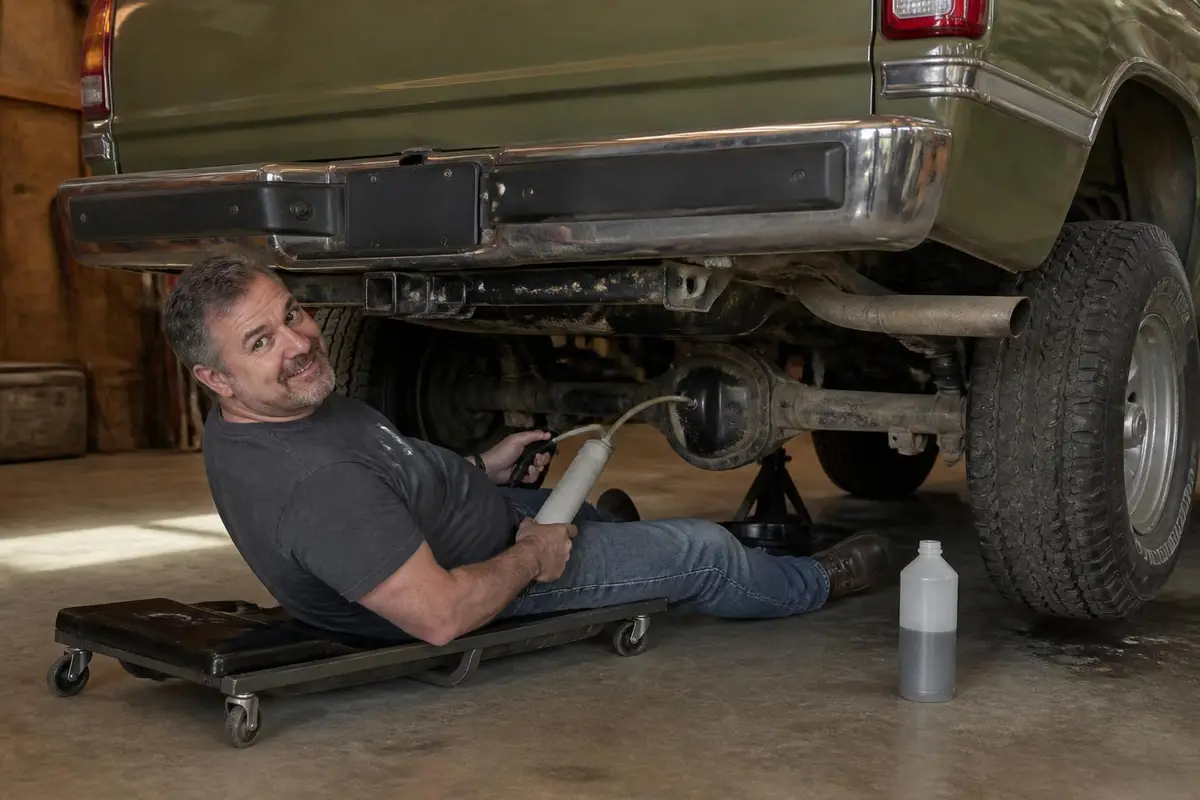
Towing and Sustained Load: One Documented Severe-Service Example
Towing hard runs your gear oil hotter than steady highway cruising does. That's why towing gets its own trigger on manufacturer severe-service schedules.
Ford gives a specific, documented example for trucks running non-synthetic rear axle lubricant. Ford calls for changing that lubricant every 3,000 miles or 3 months, whichever comes first. That shortened interval only applies "during extended trailer tow operation above 70°F (21°C) ambient and wide open throttle for extended periods above 45 mph." Run 75W140 synthetic gear lubricant to Ford's own spec instead, and the shortened interval goes away.
The lesson goes beyond Ford. If you regularly tow near your truck's rated capacity in hot weather, your axle fluid is working harder than the factory mileage number assumes. That's true even if your own manual doesn't spell out the same numbers.
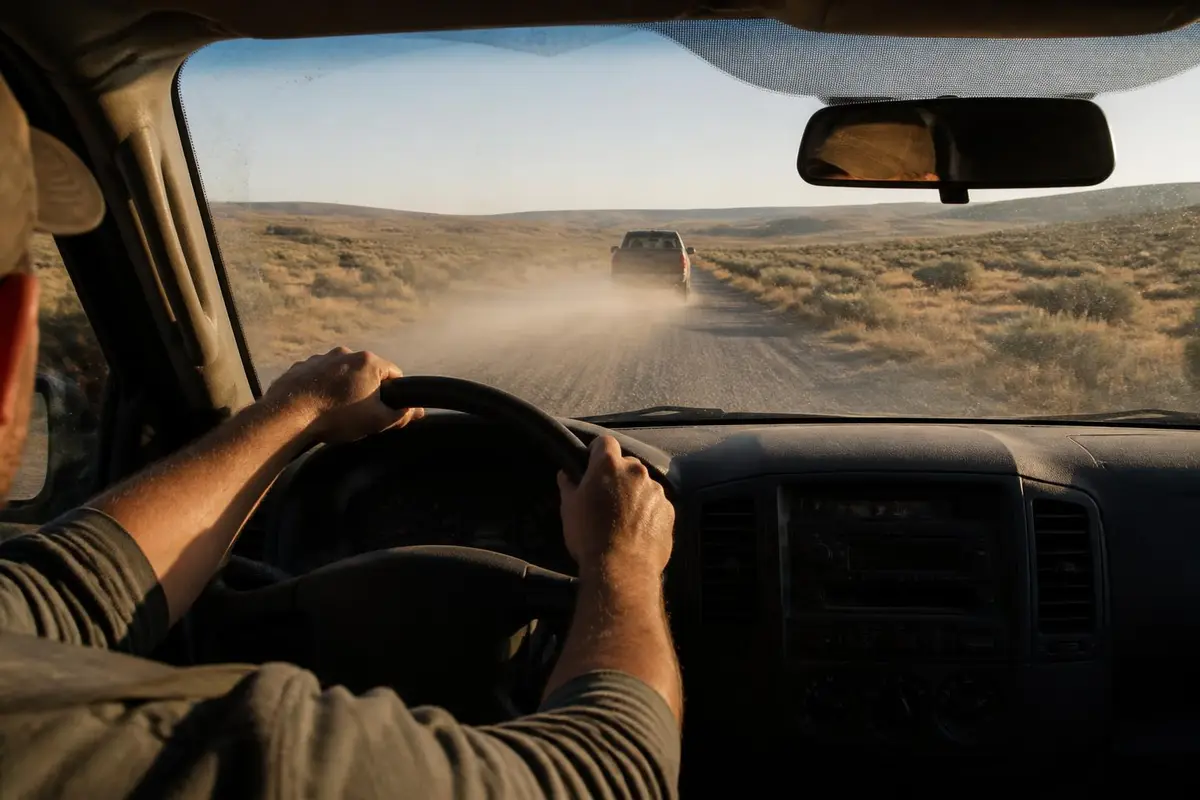
Dust: The Air Filter Interval Comes First
Dusty driving loads your air filter faster than a mileage-based interval expects. A filter that's saturated or torn lets abrasive dust into the intake, and eventually the oil.
Ford's own F-150 owner's manual puts real numbers on this. Under its off-road and dusty-condition "special operating conditions," Ford calls for the engine air filter to be inspected as often as needed — not on the fixed mileage schedule. It also calls for oil changes every 7,500 miles, instead of the longer interval the vehicle's oil-life monitor would otherwise allow.
Check the air filter against how much dust you've driven through, not just mileage. Change it early when it looks loaded. That catches the problem before dust gets into the oil — an oil change on the usual schedule won't fix a bad filter upstream of it.
Coolant: A Separate Severe-Service Number on Diesel Trucks
Heavy towing shows up in your coolant schedule too, not just your axle fluid.
Ford's F-150 owner's manual gives a diesel-specific coolant flush interval. The first change comes at 60,000 miles or 2,400 engine hours. After that, it's every 45,000 miles or 1,800 engine hours. The engine-hours half of that number matters for a truck that spends a lot of time towing or idling at low speed, rather than covering distance. Gasoline engines run on a different, longer coolant schedule — check your own owner's manual rather than assuming the diesel numbers apply.
Brake Fluid: A Separate, Universal Aging Process
Brake fluid is hygroscopic — it soaks up moisture from the air over time, no matter the terrain. That moisture lowers its boiling point, and can reduce pedal feel under hard, repeated braking, like a long descent.
This aging runs on the same clock for every vehicle. Dust and dry off-road driving don't speed it up. A wheel-well water crossing is one more path for moisture to reach the fluid at a seal, but it's not the main driver. Follow your vehicle's own recommended brake fluid interval, rather than tying it to off-road mileage.
A Practical, Exposure-Based Schedule
| Trigger | What to check | Action |
|---|---|---|
| Water crossing reaching the axle or transfer case | Fluid color and clarity at the drain plug | Change if cloudy or milky, regardless of mileage |
| Sustained towing at or near rated capacity in hot weather | Fluid condition, or the vehicle's own severe-service interval | Follow the manufacturer's severe-service schedule if one is published |
| Regular dusty or off-road driving | Air filter condition; oil change interval | Inspect the filter as needed, not on mileage; Ford's own off-road schedule shortens oil changes to every 7,500 miles |
| Diesel truck used for sustained towing | Coolant condition | Ford's diesel coolant flush interval: 60,000 mi/2,400 hrs initial, then 45,000 mi/1,800 hrs |
| Every vehicle, regardless of terrain | Brake fluid moisture content | Follow the manufacturer's brake fluid interval |
Checking Fluid Is a DIY Task; Diagnosing Contamination Isn't Always
Draining a small sample to check color, or checking the level and condition at the fill plug, needs only basic tools and safe access underneath the vehicle. If a drained sample looks cloudy or milky, or shows visible water separation, that confirms contamination. Change the fluid right away — don't wait for the next scheduled interval.
Get a shop to do it if a water crossing was deep enough to reach the axle housing, and you're not set up to safely support the vehicle and reach the drain plug yourself.
Log Off-Schedule Changes Separately
Keep a simple record of which fluids you changed after which water crossing or towing trip, separate from your normal mileage-based service log. That's the only way to show a future buyer, or a warranty adjuster, that you dealt with a submersion or a heavy tow when it happened — not that you ignored it until the next scheduled interval.
Sources
- Ford — 2007 Model Year Scheduled Maintenance Guide — Documented severe-service axle fluid interval (3,000 mi / 3 months under extended trailer tow above 70°F and sustained wide-open throttle above 45 mph, waived on 75W140 synthetic); rear axle/PTO lubricant is lubricated for life and changed only after a leak, service, or water submersion.
- ARB — Diff Breathers explanation — Why a water crossing risks drawing water into a differential or transfer case through the breather or a seal, and why fluid is checked after submersion rather than on a fixed schedule.
- FMVSS Standard 116 — Motor vehicle brake fluids (49 CFR 571.116, via Cornell LII) — DOT 3 and DOT 4 minimum dry and wet equilibrium reflux boiling points, underpinning why brake fluid ages the same way regardless of terrain.
- API — Gear Oil Specifications (GL-4, GL-5, MT-1) — API GL-5 hypoid gear oil is rated for high-speed/shock-load and low-speed/high-torque service, the category axle and transfer case fluid falls under; SAE J306 sets the separate viscosity-grade scale.
- Ford — 2020 F-150 Owner's Manual (Maintenance Information, Special Operating Conditions) — Off-road/dusty special-operating-condition numbers: engine air filter inspected as frequently as needed rather than on the fixed schedule, oil changes shortened to every 7,500 miles under off-road driving, and diesel coolant flush intervals of 60,000 mi/2,400 engine hours (initial) then 45,000 mi/1,800 engine hours.