

Affiliate disclosure: As an Amazon Associate, we earn from qualifying purchases, at no extra cost to you. We research rather than test, and commissions never change our rankings. This site is reader-supported: those commissions pay for hosting, research and keeping every guide up to date, so if a guide helped you, buying through our links is an easy way to support it. How we rank · Full disclosure
TL;DR
A Dana 44 is a mid-duty axle assembly — the "44" is a Dana/Spicer model designation, not a ring-gear diameter (the actual ring gear is roughly 8.9 inches / 226 mm) — widely used on Jeeps and some trucks. It's strong enough for a meaningful lift and tire upsize for most builds, with a well-established upgrade path once a build's power or tire size pushes past what the stock internals comfortably handle.
What "Dana 44" Actually Refers To
Dana is a long-established axle and driveline manufacturer, and its axle families are named by a model number that functions as a relative size/strength class rather than a literal measurement (see FAQ) — the Dana 44's actual ring gear measures about 8.9 inches (226 mm; 220 mm on the AdvanTEK version), per Dana/Spicer's own AdvanTEK specifications. A Dana 44 sits in a popular mid-duty range: stronger than a Dana 30, commonly found on lighter-duty applications, but lighter and less bulky than a Dana 60, used on heavier-duty trucks and serious rock-crawling builds. This naming convention gives builders a quick, widely understood reference point for comparing axle strength across different vehicles and generations, even though the number itself isn't a dimension.
Where a Dana 44 Shows Up
The Jeep Wrangler is the most commonly cited factory application across multiple generations and trims (see FAQ), and various trucks and SUVs have used Dana 44s in specific configurations over the decades as well. Spicer's own Crate Axle catalog lists a genuine Dana 44 front replacement for the Wrangler JK (2007–2018), the AdvanTEK version for the Wrangler JL (2018+) and the Gladiator JT (2020+) — confirming the platform span directly rather than by generation name alone. Exact factory application — front, rear, or both — and specific internal gearing vary by model year and trim, which is why checking the axle tag on a specific vehicle, rather than assuming based on nameplate, is the reliable way to confirm what's actually underneath.
Dana 44 vs Dana 30 vs Dana 60: How the Family Actually Compares
Spicer's own AdvanTEK spec page puts the Dana 44's ring gear at 226 mm (8.9 in) standard, or 220 mm on the general AdvanTEK version — though the specific AdvanTEK front axle Spicer sells for the Wrangler JL uses a smaller 210 mm ring gear than a classic solid-axle Dana 44, which Spicer states is "for greater strength" given the JL's independent front-axle geometry. A Dana 30 sits below the 44 in the same naming convention — smaller and lighter-duty, typically the Wrangler's non-Rubicon front axle — while a Dana 60, used on heavier-duty trucks and dedicated rock-crawling builds, steps up to a larger ring gear (Dana doesn't publish the exact figure alongside the 44's) with 35-spline, SAE-4340 nickel-chromoly axle shafts on Spicer's Ultimate Dana 60 rear crate axle, per Dana's own newsroom specifications for that product. The Dana 44 itself ships from Spicer with 30-spline shafts on the classic Wrangler JK application (per ARB's own Air Locker installation guide for that axle, model RD116, "Dana 44, 30 Spline, 3.92 & Up"), with a 35-spline upgrade available on some aftermarket internals.
| Axle | Ring gear | Common shaft spline | Typical duty class |
|---|---|---|---|
| Dana 30 | Smaller than the 44 (Spicer doesn't publish an exact figure) | — | Light-duty (e.g. standard Wrangler front) |
| Dana 44 (solid-axle, e.g. JK) | 226 mm (8.9 in) | 30-spline standard | Mid-duty |
| Dana 44 AdvanTEK front (JL/JT) | 210–220 mm | 29–32-spline | Mid-duty, IFS-style geometry |
| Dana 60 rear | Larger than the 44 (exact figure not published alongside it) | 35-spline | Heavy-duty |

Real-World Strength: What It Handles Before Needing an Upgrade
A stock Dana 44 comfortably handles a moderate lift and a tire upsize into the low-to-mid-30-inch range on most factory-power builds without significant concern. Spicer's own Ultimate Dana 44 crate axle for the JK is rated with an increased gross axle weight rating (GAWR) specifically to cover suspension upgrades, bumpers, winches and tires "through 37-inch" sizes — a manufacturer-stated ceiling for an upgraded (not stock) Dana 44. Pushing into 35-inch and larger tires on stock internals, especially on a higher-horsepower or heavier vehicle driven hard, is the point where owners increasingly report considering upgraded internals or a full axle swap, since larger tires and more torque both increase the shock and twisting load the axle shafts and gears absorb.
The Common Upgrade Path Before a Full Swap
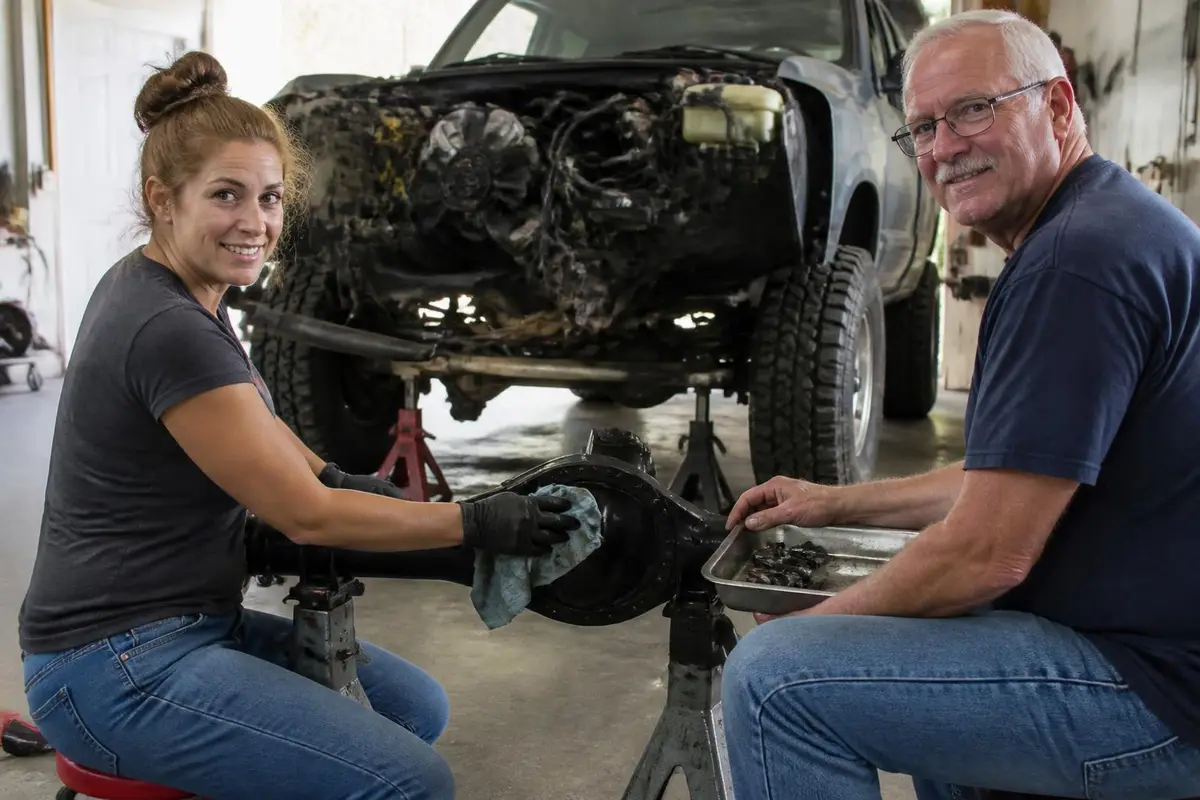
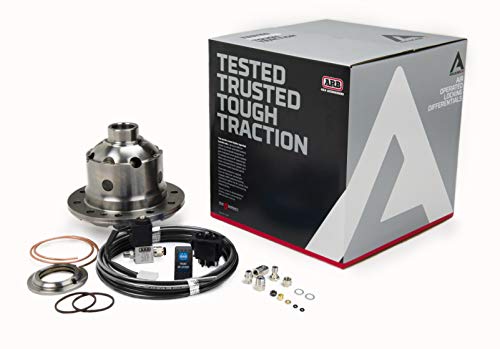
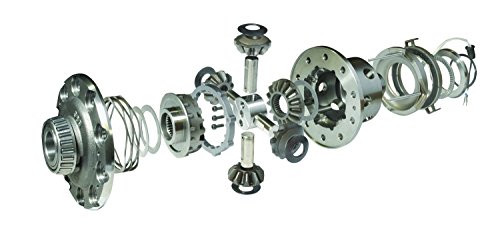
Rather than replacing an entire Dana 44 housing, most builders upgrade internals first: stronger aftermarket axle shafts — Currie Enterprises publishes tensile-strength figures for the common shaft materials: 1040 steel (OEM stock) at 120,000 psi, 1541H at 181,000 psi (about 50% stronger than stock), 4340 chromoly at 228,000 psi (about 90% stronger than stock) and 300M at 290,000 psi (about 141% stronger than stock) — a re-gear to a ratio matched to larger tires — Spicer's own crate-axle listings for the Dana 44 span 3.73, 4.10, 4.56, 4.88, 5.13 and 5.38 ratios (see the regear calculator for matching a ratio to tire size) — and a locking differential for traction, available factory-installed from Spicer as either its own electric locker or an ARB Air Locker. This path meaningfully increases real-world durability at a fraction of the cost and labor of a full Dana 60 swap, and covers the needs of the large majority of builds that don't run extreme tire sizes or dedicated competition-level rock crawling.
When a Full Axle Swap Actually Makes Sense
A full swap to a larger, higher-capacity axle family makes sense specifically for builds running 37-inch-plus tires, high horsepower, or dedicated competition rock-crawling use, where even upgraded Dana 44 internals reach their practical limit. For the majority of moderate trail builds, this is a significant, often unnecessary expense — most builders reach a Dana 44's practical ceiling well before their actual use case genuinely requires a bigger axle.
Identifying What Axle a Vehicle Actually Has
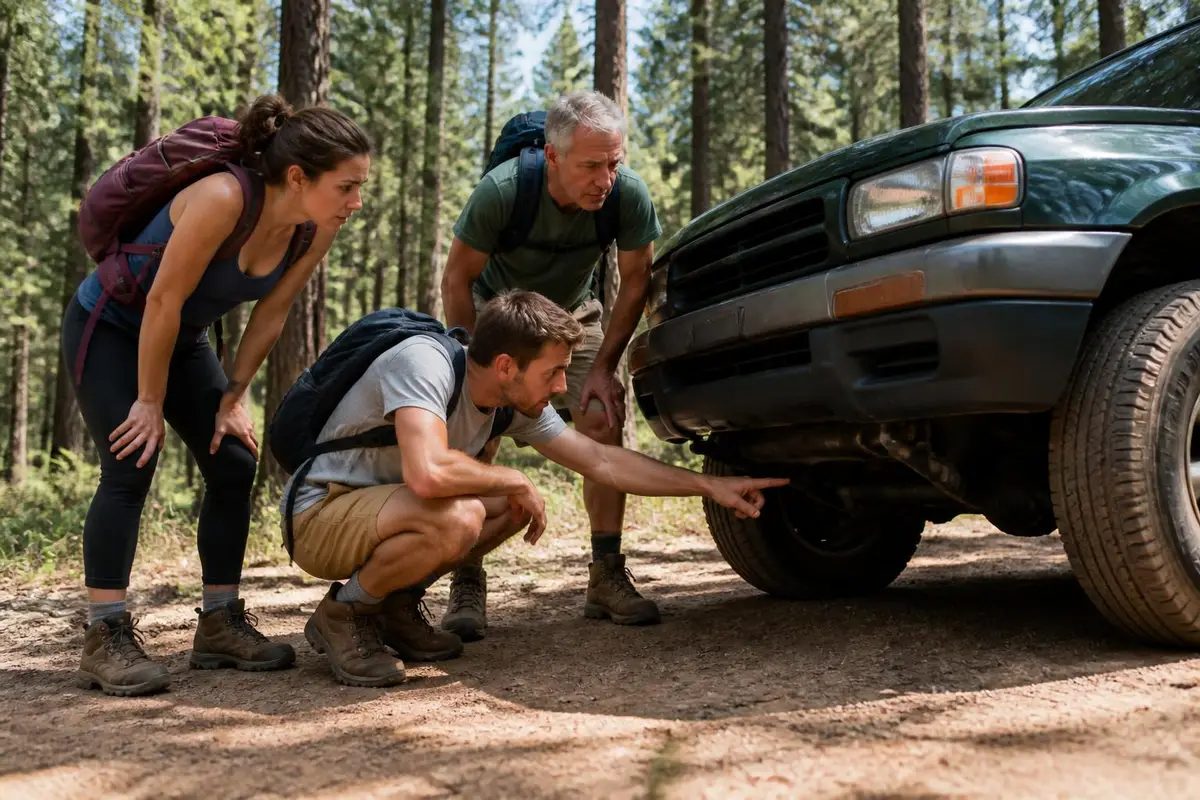
The most reliable way to confirm a vehicle's exact axle is the metal tag riveted to the axle housing itself, which states the axle model and gear ratio directly. This is a more reliable source than a general spec sheet, since axle assignment sometimes varies by trim, engine option or model year in ways a general spec sheet doesn't always capture cleanly. Counting ring-gear bolts and measuring housing dimensions are fallback identification methods for a vehicle missing its tag, though these require more mechanical familiarity than simply reading a tag.
Related Reading
See 4WD drivetrain systems for how axle strength fits alongside locking differentials and gearing, and suspension and lift kits for how tire size and lift height interact with axle load in the first place.
Axle Strength Doesn't Change Differential Behavior
A stronger axle housing and shafts change how much torque and shock the axle survives; they don't change what's inside it. A Dana 44 with an open differential still sends power to whichever wheel spins easiest, the same as any other axle family — see what is a locking differential for the separate upgrade that actually changes that behavior.
Recommended gear
Lockers and hubs for your drivetrain
Affiliate disclosure: As an Amazon Associate, we earn from qualifying purchases, at no extra cost to you. Purchases through these links help keep this site running and up to date. Learn more
We research products from manufacturer specs and owner feedback; we don't test them ourselves. How we choose.
Sources
- Jeep — 4x4 Systems (Command-Trac, Rock-Trac, Selec-Trac) — Front Dana 44 heavy-duty axle is standard on the Wrangler Rubicon, with the lighter Dana 30 front axle on other Wrangler models.
- Spicer (Dana) — Dana 44 Front Crate Axle — Dana 44 applications for the Jeep Wrangler JK (2007-2018), Wrangler JL (2018+) and Gladiator JT (2020+).
- Spicer (Dana) — AdvanTEK Axle Technology — The Dana 44 / Spicer AdvanTEK 44 axle's ring gear measures 226 mm (8.9 in) standard, 220 mm on the AdvanTEK version, both at 8,200 Nm torque capacity — the '44' designation is a model number, not a ring-gear diameter.
- Spicer — Ultimate Dana 44 AdvanTEK Front Axle for the Jeep Wrangler JL — This specific AdvanTEK front unit uses a 210 mm ring gear (smaller than the classic Dana 44) for greater strength; gear ratio options 3.73-5.38; ring gear backlash 0.003-0.006 in; ring gear bolt torque 135-155 ft-lbs; pinion nut 160 ft-lbs min; SAE-4340 nickel-chromoly axle shafts; u-joint ratings of 3,000 Nm (1350 series) and 3,600 Nm (1410 series).
- Spicer — Ultimate Dana 44 Front Axles for the Jeep Wrangler JK — Increased GAWR specifically to cover tires through 37 inches; gear ratio options 3.73, 4.10, 4.56, 4.88, 5.13, 5.38; available with electric locker, ARB Air Locker or standard differential.
- ARB — Air Locker Installation Guide RD116 (Dana 44, 30 Spline, 3.92 & Up) — Confirms the Dana 44 (3.92 & up) application uses a 30-spline axle.
- Dana Newsroom — Ultimate Dana 60 Axles Now Available Without Brackets — Ultimate Dana 60 axle shafts are 35-spline, SAE-4340 nickel-chromoly steel, for comparison against the Dana 44's spline count.
- Currie Enterprises — Axle Size/Strength Chart — Tensile strength by axle-shaft material: 1040 steel (OEM stock) 120,000 psi; 1541H 181,000 psi (+50%); 4340 chromoly 228,000 psi (+90%); 300M 290,000 psi (+141%).