
Affiliate disclosure: As an Amazon Associate, we earn from qualifying purchases, at no extra cost to you. We research rather than test, and commissions never change our rankings. This site is reader-supported: those commissions pay for hosting, research and keeping every guide up to date, so if a guide helped you, buying through our links is an easy way to support it. How we rank · Full disclosure
TL;DR
A limited-slip differential uses clutch packs or a viscous coupling to send more power to whichever wheel has more traction, without fully locking both wheels together the way a true locker does — a genuine traction improvement over an open differential that keeps smoother, more predictable on-road handling than a full lock.
The Problem an LSD Partially Solves
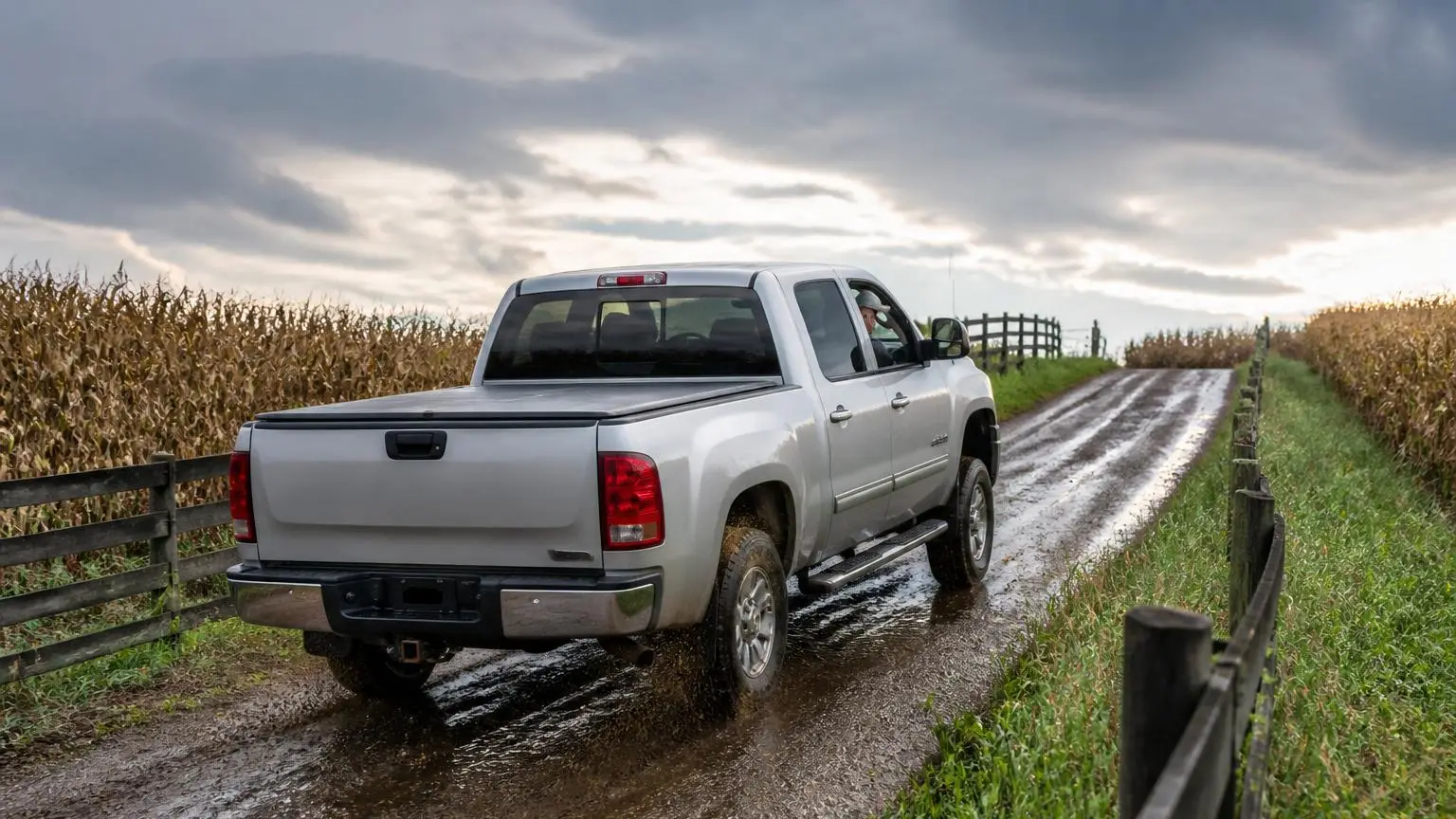
An open differential, standard on most vehicles, always sends power to whichever wheel spins easiest — the wrong behavior the moment one tire loses grip, since it gets all the power while the wheel that could actually move the vehicle gets none. A limited-slip differential resists that imbalance without eliminating it entirely, redirecting more torque toward the wheel with better grip once a speed difference between the two wheels develops.
How a Limited-Slip Differential Actually Works
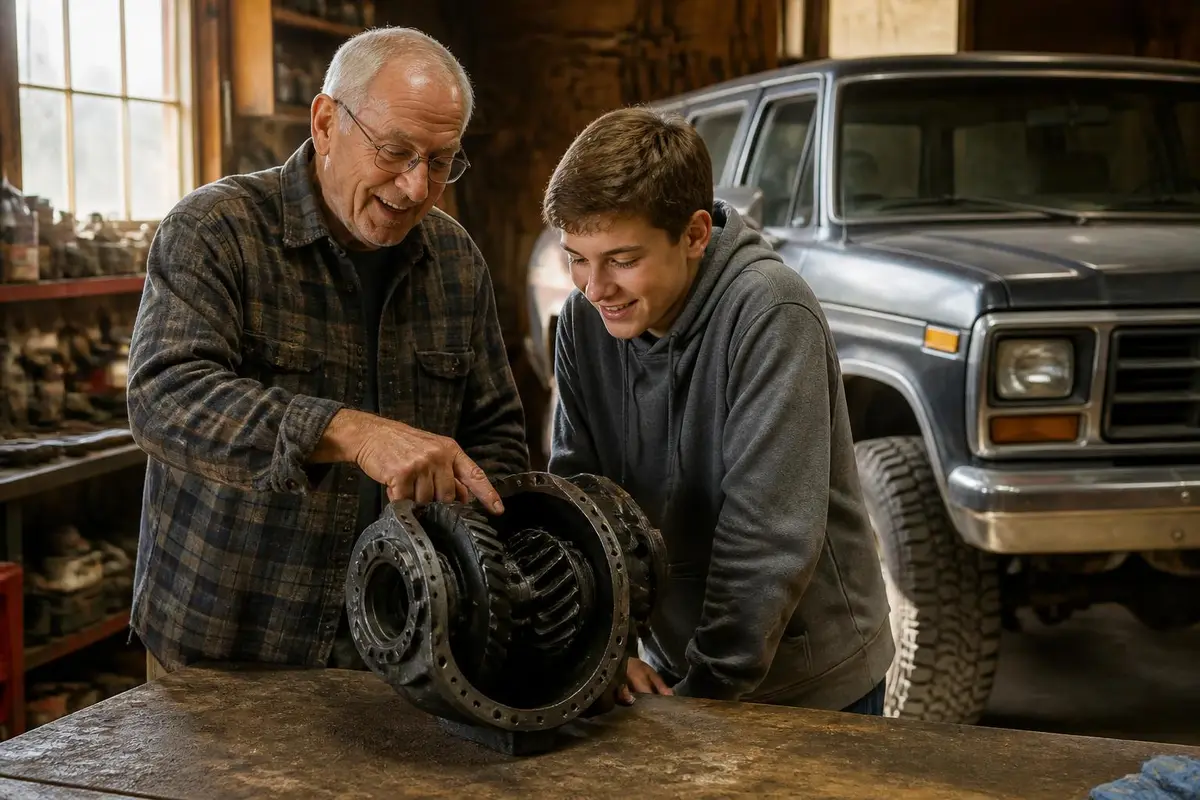
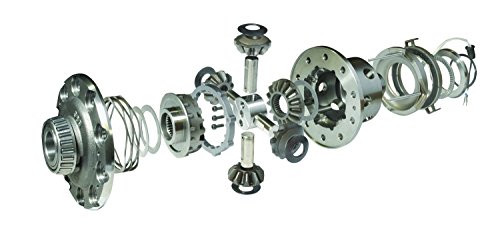
Most limited-slip differentials use one of two mechanisms. A clutch-pack design uses a stack of friction plates that resist relative rotation between the two axle shafts, engaging progressively as torque or speed difference increases. A gear-type (helical) design uses shaped internal gears instead of a clutch stack — Eaton describes its own Detroit Truetrac this way, as a "helical-gear style, limited-slip differential" that is "maintenance-free" with "smooth, automatic operation in forward and reverse," which is why it needs no periodic friction-modifier top-up the way a clutch-pack unit does. A viscous-coupling design, a third approach, uses a thick fluid between internal plates that stiffens as the speed difference between the two sides grows, resisting slip without a mechanical clutch. All three approaches deliver a genuine, partial traction improvement over an open differential while never fully locking the two wheels together the way a true locker does.
Limited-Slip vs Locking Differential
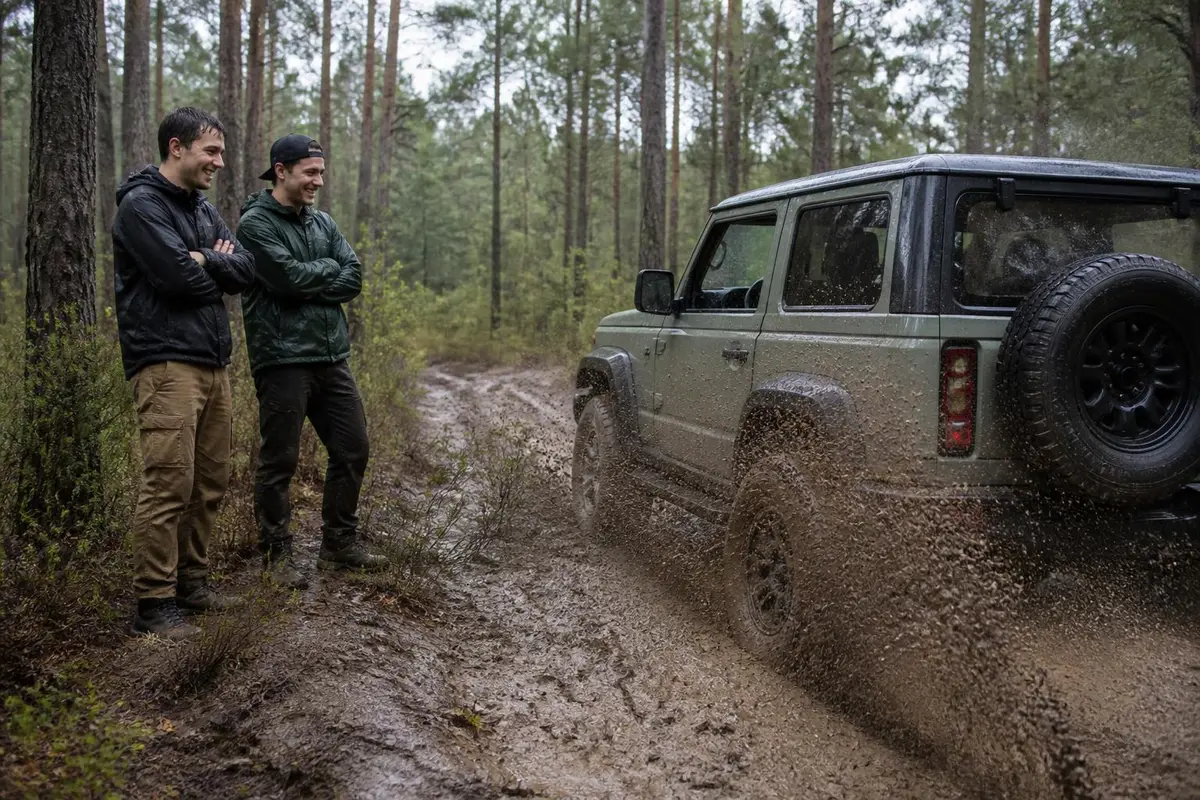
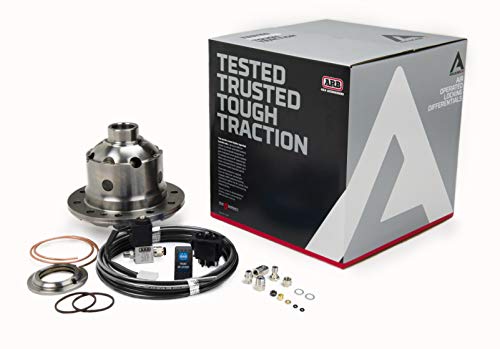
The core difference is completeness: an LSD partially resists wheel-speed difference, while a true selectable locker — an ARB Air Locker or Eaton ELocker, for example — forces both wheels to spin at exactly the same speed when engaged, delivering more traction in a genuine worst-case scenario — one wheel fully airborne or on ice — where an LSD's partial resistance can still let that wheel spin freely enough to lose forward progress. In exchange, an LSD delivers smoother, more predictable daily-driving and wet-road handling than a locker, which is designed to be either fully engaged or fully disengaged rather than blending in gradually. See locking differential vs limited-slip for the full comparison.
Maintenance: Fluid, Chatter and Wear
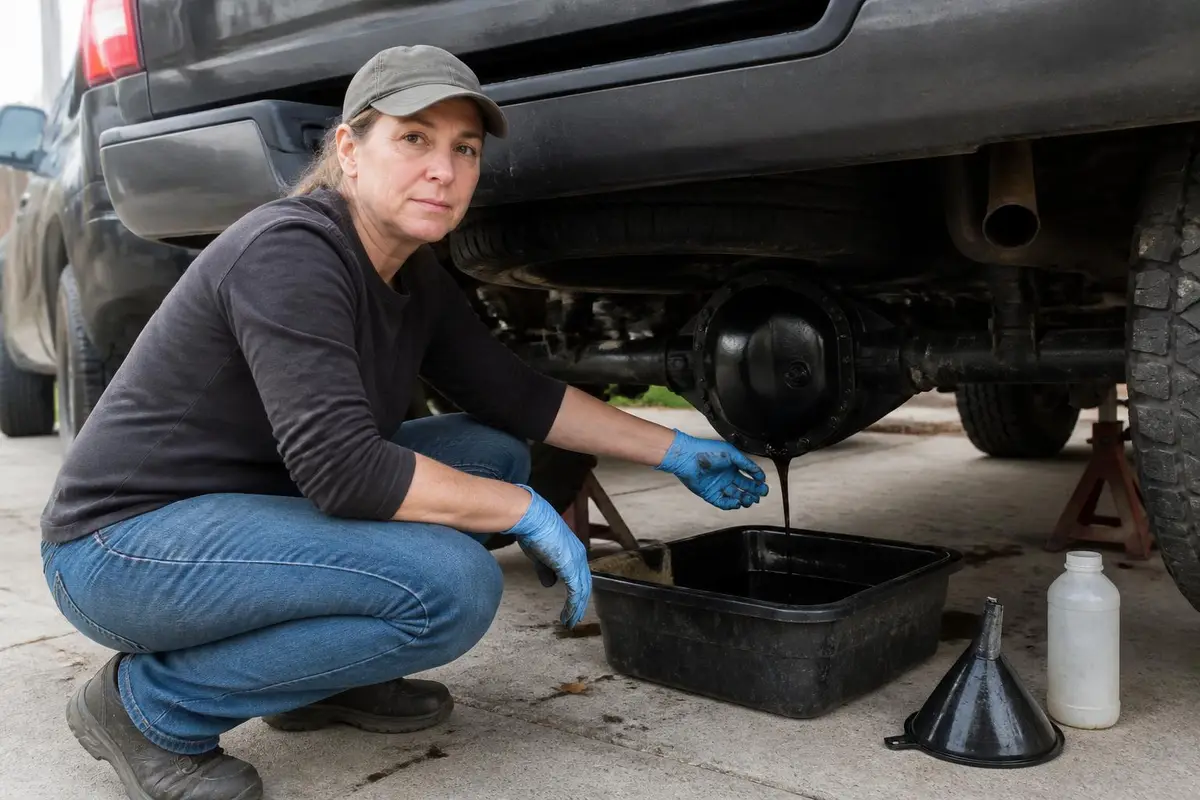
A clutch-pack LSD commonly requires a specific friction-modifier additive mixed into the gear oil, and running standard gear oil without it is a frequently reported cause of chattering or grabbing during tight, low-speed turns (see FAQ). Clutch material wears gradually with use, and a periodic fluid change on the manufacturer's interval helps maintain consistent clutch-pack grip over the unit's service life. Viscous-coupling designs need less routine maintenance but can lose effectiveness as the internal fluid degrades with age and repeated heat cycling, a wear pattern that shows up as gradually reduced traction rather than a sudden failure.
The Three LSD Designs, Compared
| Design | How it resists slip | Routine maintenance |
|---|---|---|
| Clutch-pack | Friction plates squeeze together as torque/speed difference rises | Needs a friction-modifier gear-oil additive; clutch material wears over time |
| Gear-type (helical), e.g. Eaton Detroit Truetrac | Shaped internal gears bind against each other under torque, no clutch material | Eaton states its Truetrac is maintenance-free |
| Viscous coupling | Thick fluid between plates stiffens as wheel-speed difference grows | Fluid can lose effectiveness with age and heat cycling |
Factory LSDs vs Aftermarket Upgrades (Dana 44 and Dana 60 Compatible)
Many trucks not built as dedicated off-road trims ship with a factory LSD as a mid-tier option between a base open differential and a locker-equipped off-road trim. Aftermarket LSD units are also a common upgrade path for an owner who wants a meaningful traction improvement over open without committing to a full locker's on-road tradeoff (see FAQ), and are commonly available for popular axle families like the Dana 44 (Spicer's own Crate Axle program covers it) and Dana 60 (Spicer's Ultimate Dana 60 crate axle, with 35-spline SAE-4340 nickel-chromoly shafts, per Dana's own newsroom specifications). Installation generally requires the same gear-set labor a locker swap needs, so the choice between LSD and locker at upgrade time comes down to intended use rather than installation difficulty.
How to Tell If You Have a Limited-Slip Differential
The most reliable way to know if you have a limited-slip differential is to check the paperwork rather than guess from how the truck drives. Look at the window sticker or the original build sheet for wording like "limited slip," "posi" or, on Ram trucks, "anti-spin differential." If you don't have either, a dealer can look up the factory build from your VIN. Your owner's manual helps too: Ram's, for example, lists the limited-slip differential as "if equipped," and says an axle with one needs Mopar Limited Slip Additive whenever its gear oil is changed. So a service record that mentions a limited-slip additive is a strong hint. The surest answer is to have a shop open the axle cover and look at the carrier.
One safety note if you're tempted to test it yourself: Ram's manual warns never to run the engine with one rear wheel off the ground on a vehicle with a limited-slip or locking differential, because the truck can drive through the wheel still on the ground. Skip any test that has a running engine and a lifted wheel.
Welded Differential vs Limited-Slip
A welded differential locks both wheels together permanently, while a limited-slip differential still lets them turn at different speeds in a corner. That's the whole trade. Yukon Gear, which sells spools as well as limited-slips, explains that with a welded or spooled axle there's no allowance for the tires to turn at different speeds, so the tires chirp in turns and the rubber takes the abuse. Even without chirping, any wheel-speed difference is scrubbed off by the tires. Yukon also says the binding puts extra stress on the axles, can make a spooled vehicle unforgiving on wet or snowy roads, and can reduce turning radius.
Welding adds its own risk: Yukon notes that a poor weld, or too much heat, can leave the gears brittle so they break and take other parts with them. It recommends spools only for dedicated off-road and drag racing vehicles, and suggests a locker or limited-slip for anything driven on the street. If you want an LSD's manners with more bite than a stock open axle gives you, a limited-slip is the safer middle ground. See the locking differential vs limited-slip page if you're weighing a full locker instead.
When an LSD Is the Right Call
An LSD suits a daily-driven vehicle with occasional light trail use, where smoother street manners and genuine wet-road or light-snow traction improvement matter more than maximum worst-case off-road capability. For regular, technical off-road use where one wheel commonly loses all contact with the ground, a true locker's complete lock delivers more reliable traction than an LSD's partial resistance can match. See 4WD drivetrain systems for how a limited-slip differential fits alongside the other systems that affect off-road traction.
Recommended gear
Lockers and hubs for your drivetrain
Affiliate disclosure: As an Amazon Associate, we earn from qualifying purchases, at no extra cost to you. Purchases through these links help keep this site running and up to date. Learn more
We research products from manufacturer specs and owner feedback; we don't test them ourselves. How we choose.
Sources
- Eaton — Detroit Truetrac Limited-Slip Differential — Truetrac is described by Eaton as a helical-gear-style, maintenance-free limited-slip differential with smooth automatic operation forward and reverse.
- Eaton — Detroit Locker Automatic Locking Differential — Contrast with a true locker, which drives both wheels equally.
- Spicer (Dana) — Dana 44 Front Crate Axle — Dana 44 as an axle family LSD upgrades are commonly available for.
- Dana Newsroom — Ultimate Dana 60 Axles Now Available Without Brackets — Dana 60 crate axle with 35-spline SAE-4340 nickel-chromoly shafts, as an axle family LSD upgrades are also available for.
- ARB — Air Locker — Example of a true selectable locker contrasted against an LSD's partial resistance.
- Eaton — ELocker Selectable, Electronic Locking Differential — Second example of a true selectable locker contrasted against an LSD.