

Affiliate disclosure: As an Amazon Associate, we earn from qualifying purchases, at no extra cost to you. We research rather than test, and commissions never change our rankings. This site is reader-supported: those commissions pay for hosting, research and keeping every guide up to date, so if a guide helped you, buying through our links is an easy way to support it. How we rank · Full disclosure
Quick answer: a string-plug kit with sturdy T-handle tools is the standard trail fix for a tread puncture, and the best kit for you depends mostly on how many flats you need to be ready for and how much space you have. The picks below range from an 11-piece classic kit to an 86-piece set, ranked from aggregated owner reviews and manufacturer listings — not first-hand testing.
What a Plug Kit Can and Cannot Fix
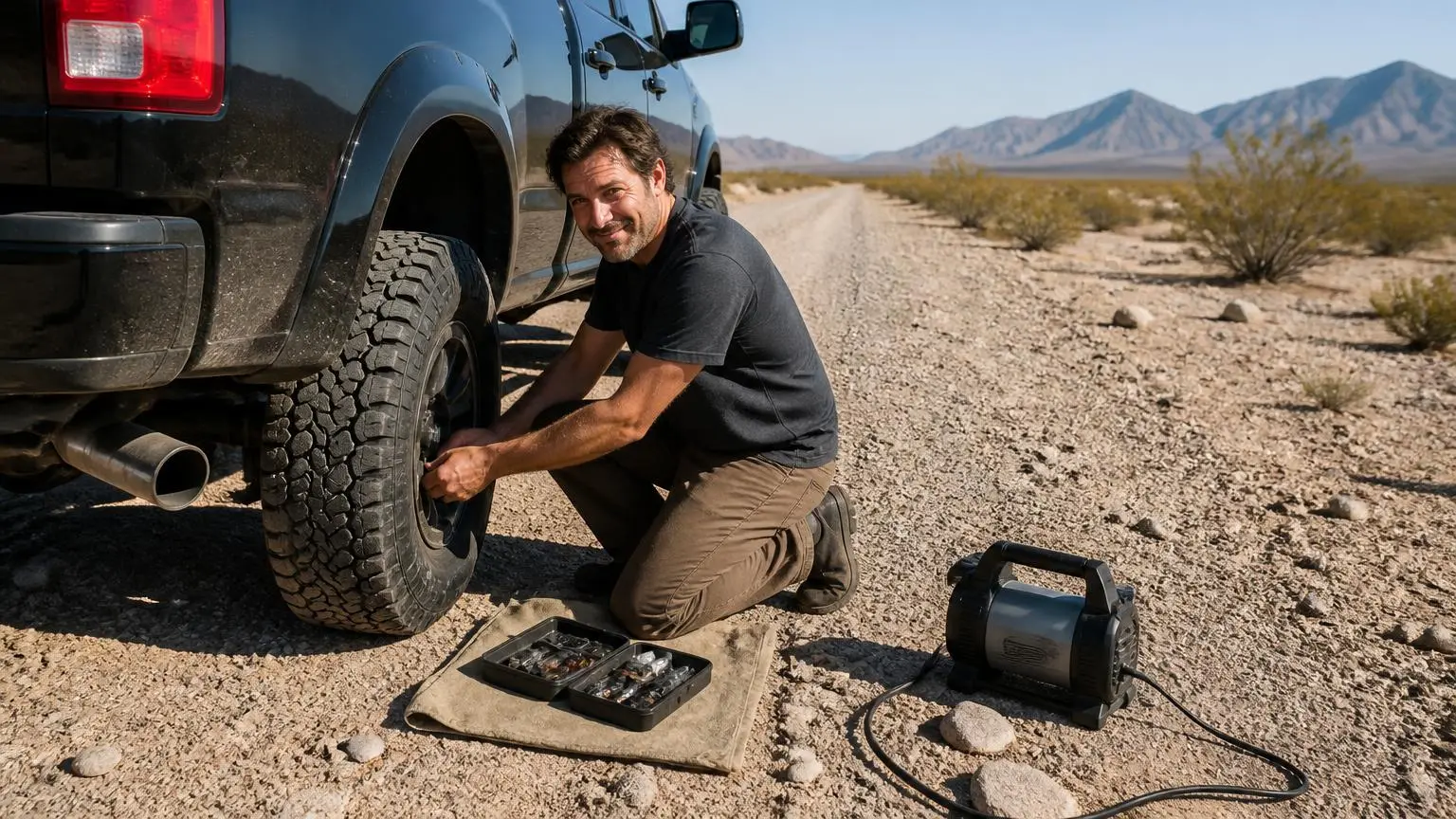
This matters more than which kit you buy. The Tire Industry Association's published consumer standard puts a number on it: a puncture up to ¼ inch (6mm), located in the tread area, can be repaired; the shoulder, sidewall and bead cannot be repaired at all, by plug or patch, because those areas flex constantly and a repair there is far more likely to fail, per TIA and the U.S. Tire Manufacturers Association. Two punctures close enough for their repairs to overlap, or directly opposite each other, or a tire already worn to 2/32-inch tread depth, are also outside what the industry standard allows. On the trail, a sidewall tear or an oversize puncture means fitting the spare. A plugged tire should be treated as a get-you-home repair and inspected by a tire professional afterwards, who can tell you whether it needs a proper internal patch or replacement.
Piece Count Is Mostly Plug Count
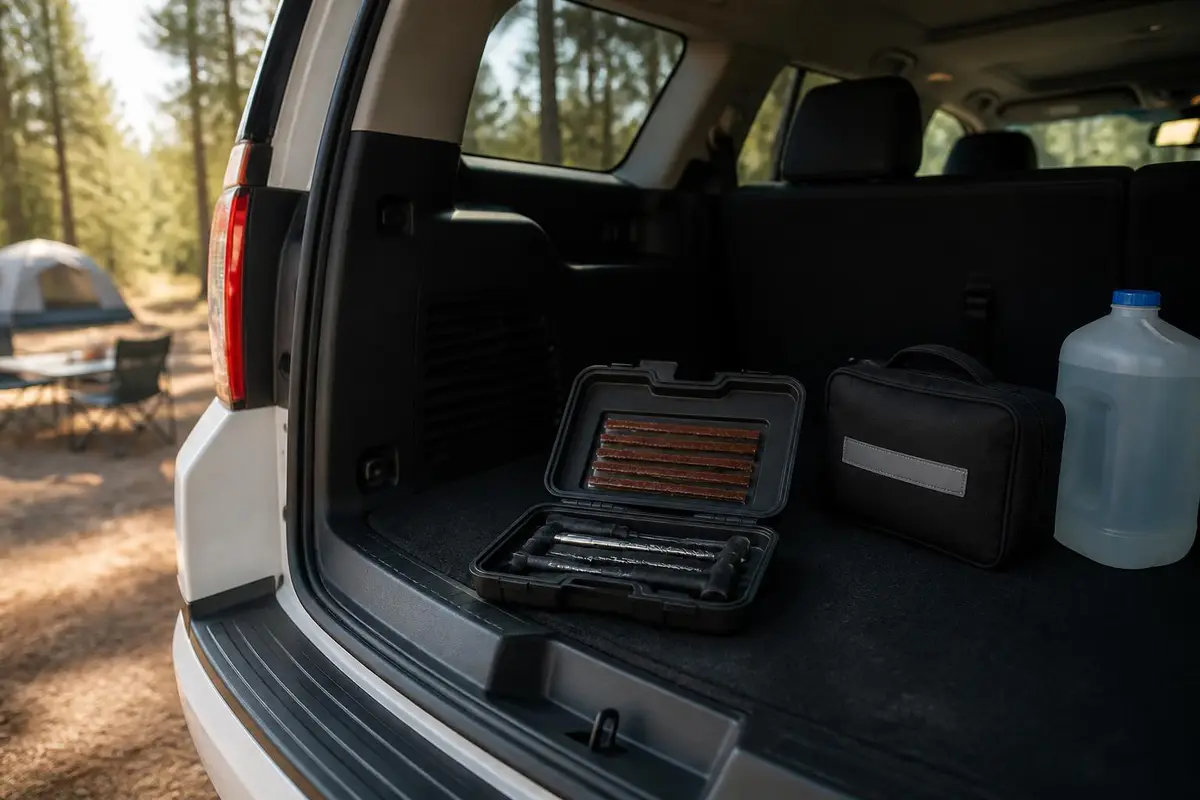
An 86-piece kit is not eight times more useful than an 11-piece one. The piece count in a listing usually includes every plug, valve core and cap, so a big number mostly means more spare plugs. That is genuinely valuable for groups or long trips — owners in convoys report that one kit ends up fixing several vehicles — but a solo driver on weekend trails may never use more than a handful. What matters more than the count is the quality of the two core tools: the reamer that cleans the hole and the insertion needle that pushes the plug in.
Tire Repair Kits, Ranked

Best for Overlanders and multi-vehicle groups who want enough plugs to handle several punctures.
- 86-piece kit per the listing title.
- Heavy-duty tire plug kit.
- A frequently recommended option in aggregated owner reviews for this category.

Best for Owners who want a well-stocked kit to keep in the truck year-round.
- 68-piece kit per the listing title.
- Heavy-duty tire plug kit.
- Listed for fixing punctures.

Best for Tight storage — a door pocket, under-seat bin or motorcycle-style small kit.
- 14-piece compact kit per the listing title.
- Tire plug kit format.
- Small footprint for limited storage.

Best for A middle ground between a compact kit and a full-size overland kit.
- 31-piece kit per the listing title.
- Marketed as a professional tire plug kit.
- Includes plugs for flat tire repair.

Best for A low-cost backup kit for a second vehicle or trailer.
- 16-piece kit per the listing title.
- Heavy-duty tire plug kit.
- Includes plugs.

Best for Owners who want a simple, familiar kit with glue included.
- 11-piece deluxe kit per the listing title.
- Contains strings, tools and glue.
- Slime-branded plug kit.

Tool Quality Is Where Kits Differ
Pushing a reamer into a stiff light-truck or mud-terrain tire takes real force. The most common complaint in owner reviews of cheaper kits is a handle that bends, cracks or twists under that load, or a needle eye that shreds the plug on the way out. Kits marketed as heavy-duty generally pitch metal T-handles for this reason. Whichever kit you choose, open it at home before you need it, confirm the tools feel solid, and check that the plug strings have not dried out — old plugs stiffen and are harder to insert.
What Else to Carry With a Plug Kit
A plug kit fixes the hole; it does not put air back in. You need a compressor to reinflate — see our best off-road air compressors for portable options. Owners also recommend pliers for pulling out the object, a knife to trim the plug flush, gloves, a tire gauge and spare valve cores. Storing all of it together in one bag means it is ready when you are tired, dirty and losing daylight.

Learn It Before You Need It
Plugging a tire is not difficult, but the first attempt is best done in a driveway, not in mud. Our step-by-step guide on how to use a tire plug kit walks through finding the leak, reaming, inserting and checking the seal.
How We Rank Tire Repair Kits
Each kit is weighed against its manufacturer listing — piece count, included tools and consumables — cross-referenced with aggregated owner reviews on tool durability and how well plugs hold on the trail. We do not buy or physically test this gear ourselves — see how we rank for the full method and affiliate disclosure for how the site is funded.
Sources
- U.S. Tire Manufacturers Association — Tire Repair Basics — Tread-area-only repairs, no sidewall or shoulder repairs, a 1/4-inch maximum puncture size, and a plug alone is not an acceptable permanent repair.
- Tire Industry Association — Tire Repair — 1/4-inch (6mm) maximum tread puncture size; no repairs on bead, sidewall or shoulder; overlapping or opposite punctures and tires worn to 2/32-inch tread should not be repaired.
- NHTSA — Tire Safety — General federal guidance distinguishing a repairable tread puncture from tire damage requiring replacement.
- Goodyear — Service Bulletin PSB2022-11: Proper Puncture Repair Procedures for Passenger and Light Truck Tires — Manufacturer-level puncture repair procedure and size/location limits consistent with the TIA/USTMA standard.
- Cooper Tire — Service Bulletin #108: Puncture Repair Procedures for Passenger and Light Truck Tires — Manufacturer puncture repair procedure confirming tread-area-only repair and quarter-inch size limit.