

Affiliate disclosure: As an Amazon Associate, we earn from qualifying purchases, at no extra cost to you. We research rather than test, and commissions never change our rankings. This site is reader-supported: those commissions pay for hosting, research and keeping every guide up to date, so if a guide helped you, buying through our links is an easy way to support it. How we rank · Full disclosure
TL;DR
- No license needed: the FCC doesn't require an individual CB license, but the radio must be FCC-certified.
- Every legal CB transmits the same power: 4 W carrier on AM or FM, 12 W peak on SSB (47 CFR §95.967). Amplifiers are banned.
- Channel 9 is for emergencies and traveler assistance only (§95.931). Channel 19 is the highway drivers' convention, not a rule.
- FM has been legal on CB only since October 28, 2021, as an extra mode alongside AM. AM and FM users can't understand each other on the same channel.
- Because output is capped, the antenna and its tuning decide most of the range difference between installations.
A CB (Citizens Band) radio is the one two-way radio a driver can install and use with no FCC license. The eight radios below are ranked from aggregated owner reviews and each manufacturer's listed feature set, not first-hand testing.

Best for Owners wanting a full-featured, widely used 40-channel CB with SWR calibration built in.
- Full 40-channel AM/FM CB radio with instant access to Channel 9.
- Adjustable receiver and built-in SWR calibration per the manufacturer's listing.
- 4-watt output, the FCC-set maximum for CB radio.

Best for Owners who want the same 29 LTD feature set in a chrome-faced unit.
- Same core 40-channel, instant Channel 9 and SWR calibration feature set as the Classic.
- Chrome front-panel finish per the manufacturer's listing.
- 4-watt output, the FCC-set maximum for CB radio.

Best for Night driving where a clearly lit display matters.
- Instant Channel 9 and 19 access alongside the full 40-channel set.
- NightWatch illuminated display per the manufacturer's listing.
- Built-in SWR calibration.
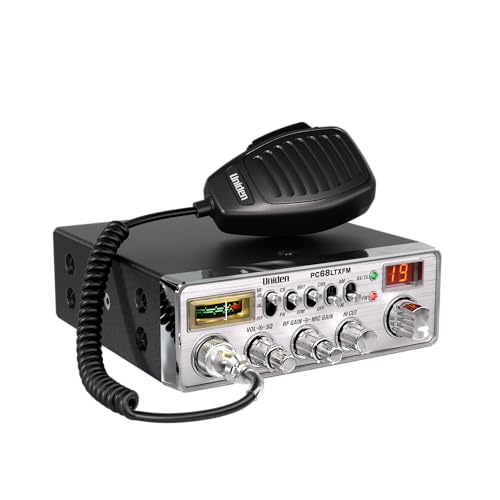
Best for Owners wanting dual AM/FM modulation with an integrated SWR meter at a lower price point.
- Dual-mode AM/FM operation with an integrated SWR meter.
- PA/CB function and adjustable RF/mic gain.
- Instant Channel 9 access.
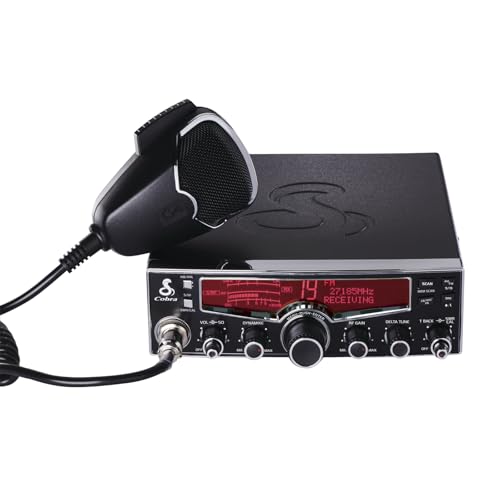
Best for Owners wanting a more compact dash footprint without giving up core features.
- Full 40-channel AM/FM CB radio.
- Compact chassis compared with the larger 29 LTD models.
- 4-watt output, the FCC-set maximum for CB radio.
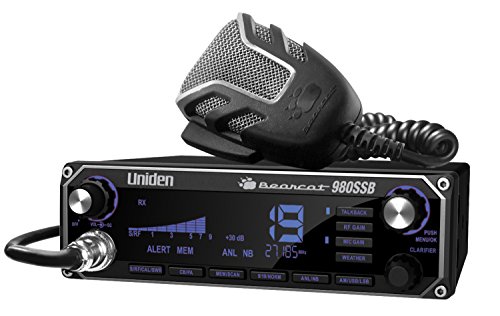
Best for Owners who specifically want single-sideband (SSB) mode for extended range.
- Sideband (SSB) capability alongside standard AM, which the FCC permits at a higher power ceiling than AM-only CB.
- 7-color digital display and NOAA weatherband per the manufacturer's listing.
- Noise-cancelling mic and wireless-mic compatibility.

Best for Budget-conscious buyers wanting a simple, compact 40-channel CB.
- Compact design with ANL and PA/CB switching.
- Instant Channel 9 access.
- 7 watts of audio output per the manufacturer's listing (audio amplifier power, distinct from the 4-watt RF transmit limit).

Best for Owners with limited dash space wanting a simple, smaller recreational-grade unit.
- Compact recreational-grade chassis.
- Dual-mode AM/FM operation.
- Full 40-channel set.
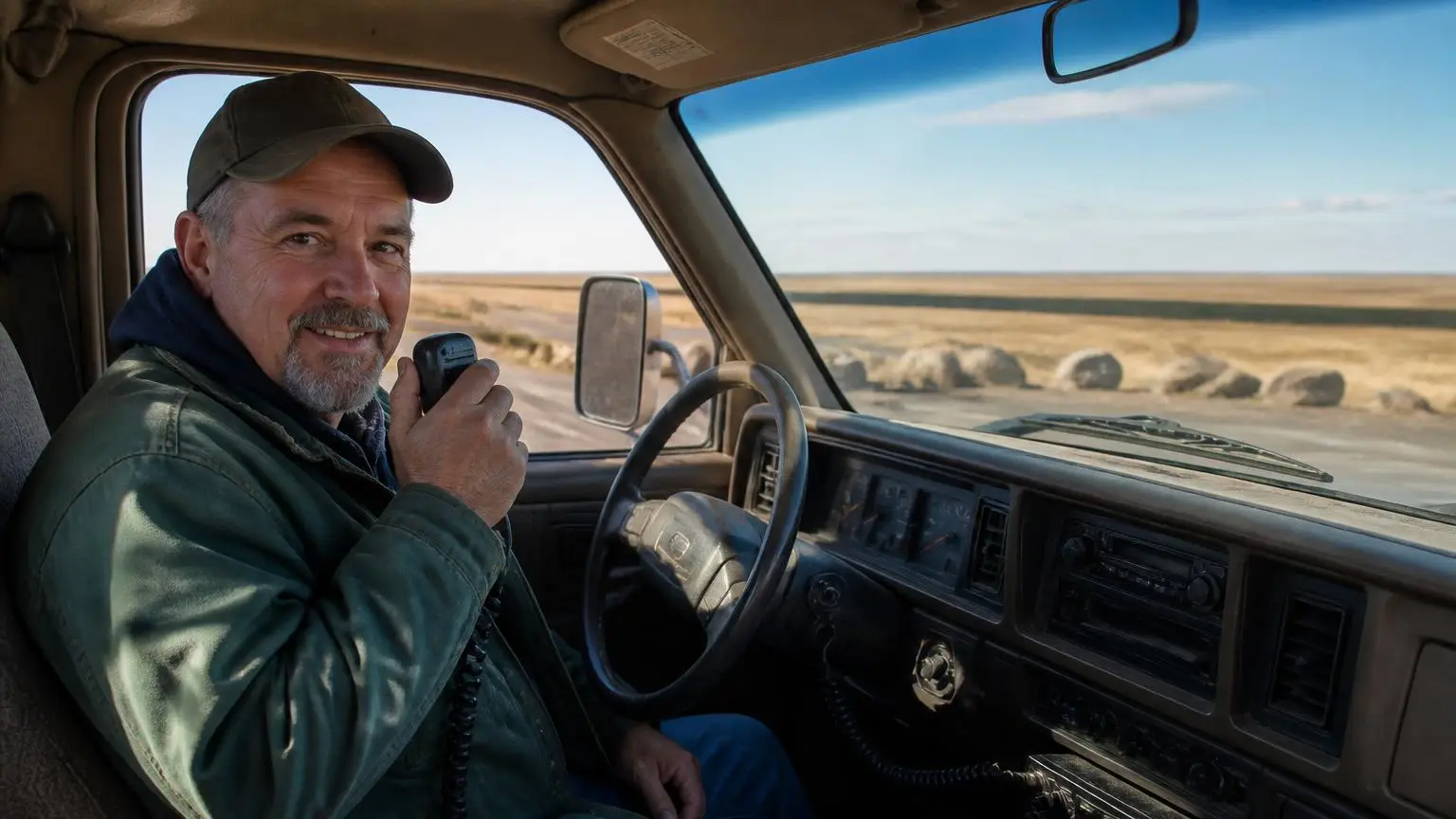
No License, but Rules Still Apply
The FCC describes the CB Radio Service as a private, two-way, short-distance voice service for personal or business use. It says an individual license is not required to operate a CB station and that it no longer renews the CB licenses it once issued. Anyone may operate one regardless of age, except a foreign government or its representative, a federal agency, or someone under an active FCC cease-and-desist order. The rules are in 47 CFR Part 95, Subpart D. The transmitter must be FCC-certified for CB, and certified models can be looked up in the FCC's equipment authorization database. For the licensed alternative, see our GMRS vs CB radio comparison.
The operating rules a driver actually meets are short. Under the FCC's rules you can't transmit continuously for more than 5 minutes, and you must then wait at least one minute before starting another transmission. No channel belongs to any one user. You may use an on-air "handle" of your choosing. Every channel must give priority to emergency traffic.
The 40 Channels, 9 and 19
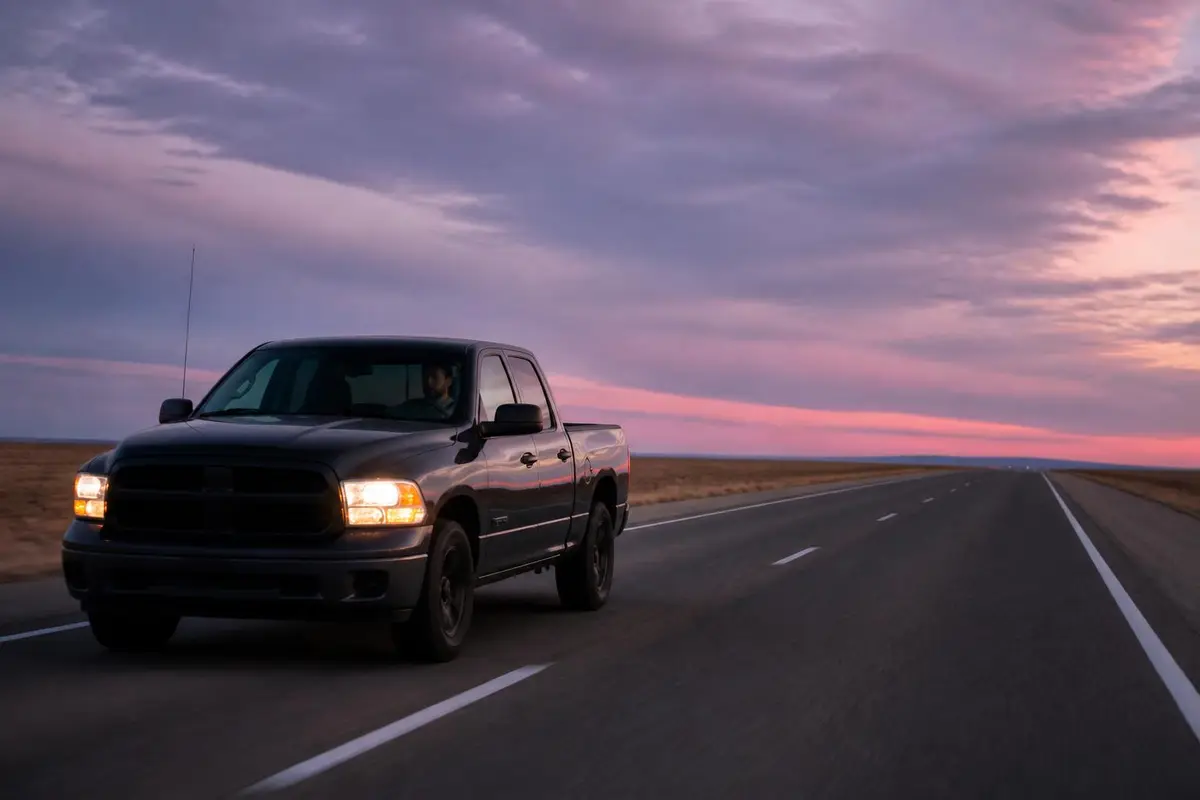
The FCC authorizes 40 CB channels, from 26.965 MHz (channel 1) to 27.405 MHz (channel 40). The numbering has one historical quirk in §95.963: channel 23 sits at 27.255 MHz, above channel 24 at 27.235 MHz. Channel 9 is the only channel with a legal restriction. Under §95.931 it may be used only for emergency communications or traveler assistance. Channel 19 has no legal status; it is the channel highway drivers conventionally monitor for traffic and road reports. Cobra's 29 NW includes an instant 9/19 key for that reason, and the Uniden PRO520XL has an instant channel 9 alert.
Power Output: 4 Watts for Everyone
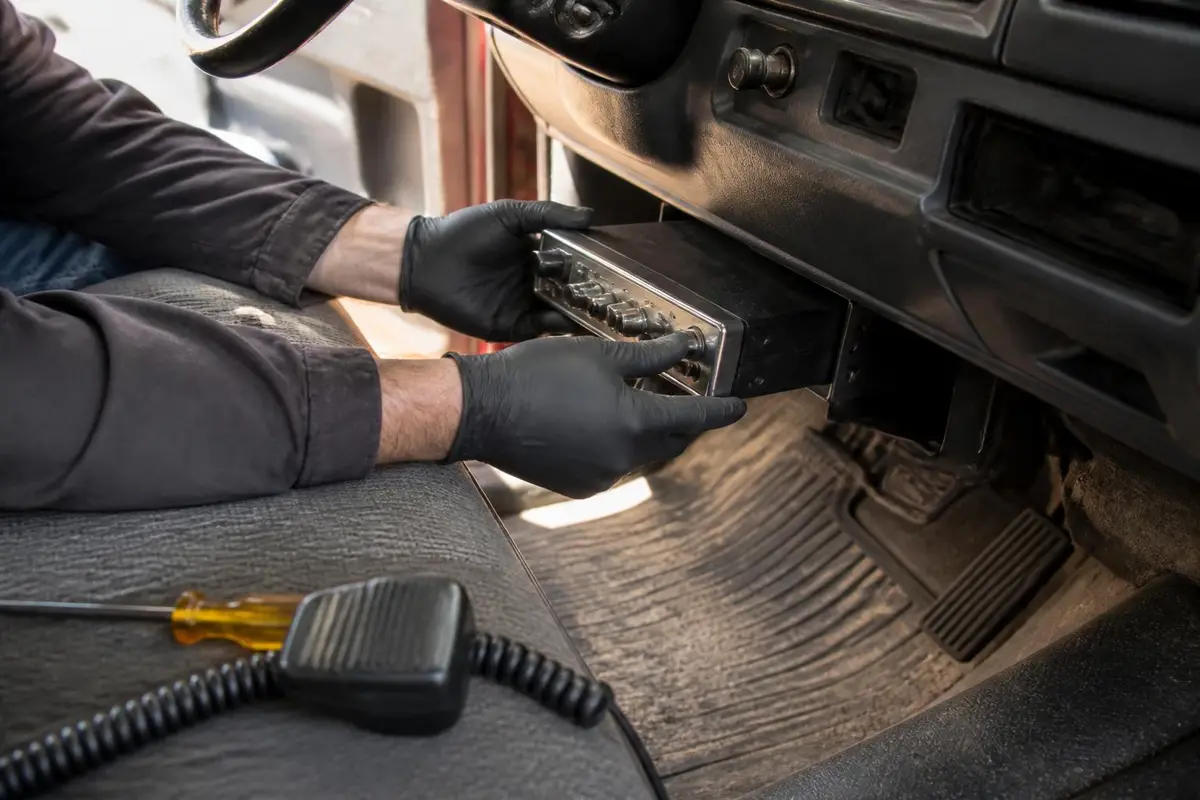
Section 95.967 caps mean carrier power at 4 watts for AM and FM voice, and peak envelope power at 12 watts for SSB voice. Section 95.939 bars external RF power amplifiers, and the FCC may presume a violation if an amplifier is found with evidence of over-power operation. The FCC's CB guidance says the same in plain terms: you may not raise a transmitter's output, and you may not attach a "linear" or any other power amplifier. The practical result is that a budget radio and a premium radio transmit the same legal power on AM. They differ in receiver controls, displays, modes and build quality. A spec-sheet figure for "audio output" or "PA" watts describes the speaker or public-address amplifier, not transmit power.
AM, FM and SSB: What Each Mode Means
| Mode | Legal power | Status | Who you can talk to |
|---|---|---|---|
| AM | 4 W carrier | The base CB mode (§95.971) | Every CB user on AM |
| FM | 4 W carrier | Optional second mode alongside AM, legal since Oct 28, 2021 | Other FM-equipped radios on FM |
| SSB (upper/lower sideband) | 12 W peak envelope | Optional; SSB radios must be able to transmit upper sideband | Other SSB radios on the same sideband |
Section 95.971 sets AM and SSB as the CB voice modes and allows FM as an addition. FM came from a petition by Cobra, which the FCC granted in an order effective October 28, 2021, as an optional dual-mode scheme so a radio could offer both AM and FM. The FCC reasoned that FM would give clearer audio and that users who hear unintelligible audio on a channel can switch channels or modes. That describes the tradeoff: an FM radio and an AM radio on the same channel won't understand each other, so a group using FM needs to agree on it first. Single sideband packs its power into one narrow sideband, and Uniden lists upper and lower sideband on the Bearcat 980SSB.

Receiver Controls That Matter
Most of the useful differences between CB radios are on the receive side. Cobra's control guide explains the common ones. RF gain sets receiver sensitivity and is normally turned all the way up for maximum range. You turn it down to cut strong nearby signals. Squelch mutes background static until a signal arrives; turn it up just until the hiss stops. ANL/NB (automatic noise limiter and noise blanker) filters engine and ignition noise, and Cobra recommends leaving it on. Uniden lists RF gain, mic gain and ANL/noise blanker on the Bearcat 980SSB, and RF gain, dynamic squelch and an ANL switch on the PRO520XL.
Built-In SWR Meters and the Antenna
Standing wave ratio (SWR) measures how well the antenna system matches the radio. Cobra says the 29 LTD has SWR calibration with an indicator that shows when the antenna needs checking, and Uniden lists integrated SWR antenna calibration on the Bearcat 980SSB. Cobra's guide asks for a reading below 3. Antenna maker Firestik targets below 2:1 on channels 1 and 40 and warns that running above 3:1 can damage a radio's circuits. It also says built-in meters are fine for general readings but rarely precise enough for fine tuning. See our best CB antennas guide for the tuning procedure.
Because output power is capped, the antenna does most of the work. Firestik's advice for a limited budget is a cheap radio and a good antenna, because a good antenna on an inexpensive radio will almost always outperform a bad antenna on an expensive one.
Feature Notes on Four Radios
| Radio | Modes | Instant channels | Other listed features |
|---|---|---|---|
| Cobra 29 LTD | AM/FM, 40 channels, 4 W | Channel 9 | SWR calibration, RF gain, squelch, antenna-check indicator |
| Cobra 29 NW | AM/FM, 40 channels, 4 W | Channels 9/19 | NightWatch illuminated front panel with dimmer |
| Uniden Bearcat 980SSB | AM plus upper/lower SSB, 40 channels, 4 W AM | — | 7-color LCD, NOAA weather scan and alerts, integrated SWR calibration, noise blanker |
| Uniden PRO520XL | AM, 40 channels, 4 W | Channel 9 alert | ANL switch, RF gain, PA output for an external speaker |
Features are as each manufacturer lists them on its product pages.
Installation Basics
Firestik says a whine from the radio while the engine runs usually means "dirty" power. Under-dash power is more convenient, but it recommends running the radio's power leads straight to the battery for the cleanest supply. Never key the microphone without an antenna or dummy load connected, and check the SWR after any antenna or mount change. The FCC sets no antenna height limit for vehicles. Its §95.941 height limits apply only to antennas on buildings and other structures.
When to Consider GMRS Instead
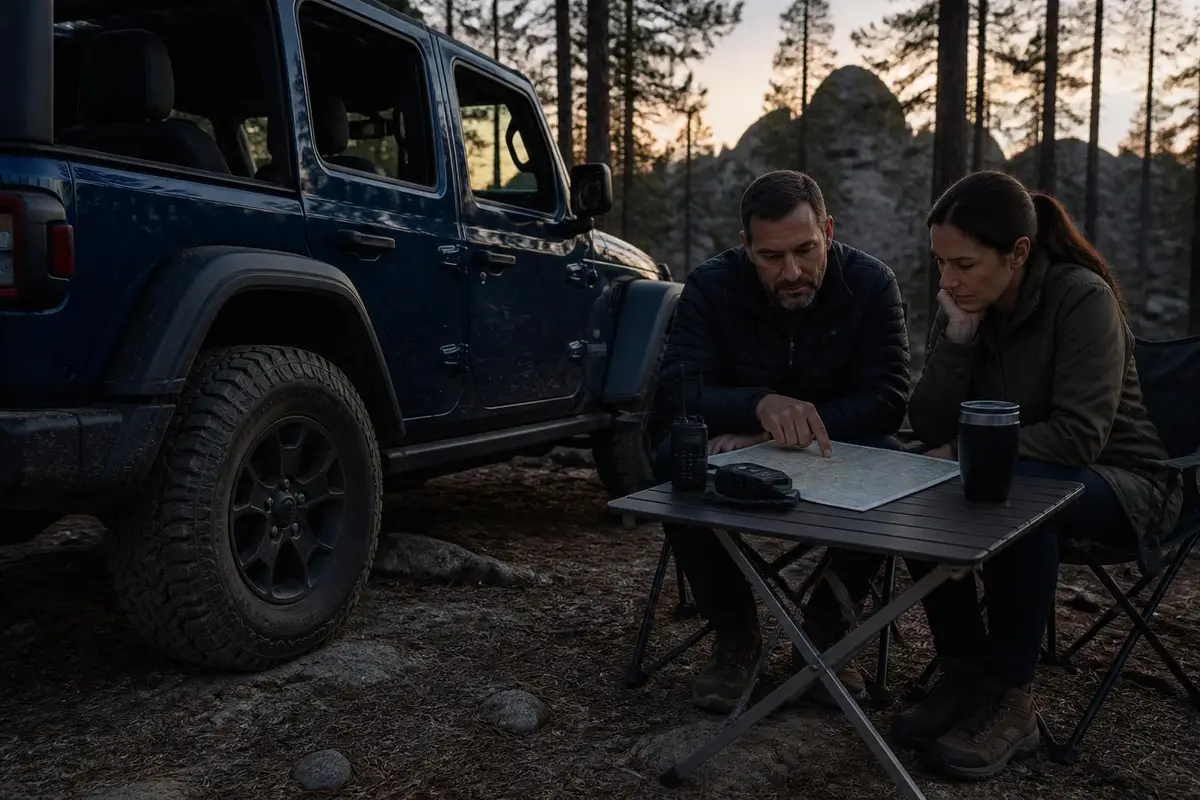
GMRS uses FM on UHF channels near 462 and 467 MHz. It allows up to 50 watts on its main channels and supports repeaters, but it needs an FCC license: $35 for ten years, covering the licensee's immediate family. CB and GMRS radios can't talk to each other, so a trail group has to pick one. See how to apply for a GMRS license and the GMRS radios hub. These picks are weighed on published specifications and owner-reported reliability; we don't buy or test radios ourselves (see how we rank).
Sources
- FCC — Citizens Band Radio Service (CBRS) — 40 CB channels from 26.965 to 27.405 MHz; no individual license required and who may operate; 5-minute transmission limit; no raising power or adding amplifiers; no height limit for vehicle antennas and the 20 ft / 60 ft structure limits; handles; priority for emergency traffic; no channel assigned for exclusive use.
- 47 CFR §95.963 — CBRS channel frequencies — Channel 1 at 26.965 MHz to channel 40 at 27.405 MHz; channel 23 (27.255 MHz) sits above channel 24 (27.235 MHz).
- 47 CFR §95.931 — Permissible CBRS uses — Channel 9 may be used only for emergency communications or traveler assistance.
- 47 CFR §95.967 — CBRS transmitter power limits — CB mean carrier power limited to 4 W on AM and FM; SSB peak envelope power limited to 12 W.
- 47 CFR §95.939 — External RF power amplifiers prohibited — Bans external RF power amplifiers on CB stations and lets the FCC presume a violation from possession plus evidence of over-power operation.
- 47 CFR §95.971 — CBRS emission types — CB voice modes are AM (A3E) and SSB (J3E, R3E, H3E), with FM (F3E) allowed as an addition; SSB transmitters must be able to transmit upper sideband.
- Federal Register — Review of the Commission's Personal Radio Services Rules (FCC 21-90) — FM permitted on CB as an optional dual AM/FM scheme at Cobra's request, effective October 28, 2021; FCC reasoning that users hearing unintelligible audio can switch channels or modes.
- 47 CFR §95.941 — CBRS antenna height limits — Structure-mounted CB antennas limited to 20 ft above the building or tree or 60 ft above ground, whichever is greater.
- Cobra Electronics — CB Control Settings — Channel 9 instant access; RF gain, squelch and ANL/NB explained; Cobra's guidance that SWR should read below 3.
- Cobra — 29 LTD Professional CB Radio — 29 LTD: 4 W, 40 channels, dual-mode AM/FM, SWR calibration, antenna warning indicator, instant channel 9, RF gain and squelch.
- Cobra — 29 NW (NightWatch) Professional CB Radio — 29 NW: dual-mode AM/FM, 40 channels, 4 W, NightWatch illuminated panel with dimmer, instant channel 9/19.
- Uniden — BEARCAT 980SSB — 980SSB: 40 channels, upper and lower sideband, 4 W on AM, 7-color LCD, NOAA weather scan and alerts, integrated SWR calibration, RF/mic gain, ANL/noise blanker.
- Uniden — PRO520XL — PRO520XL: 40 channels, 4 W, instant channel 9 alert, ANL switch, RF gain, dynamic squelch, PA output for an external speaker.
- Firestik Antenna Co. — Measuring SWR and Things Every CB'er Should Know — Manufacturer guidance: tune on the vehicle; SWR below 2:1 target and above 3:1 can damage radios; physical quarter wave is 108 in; top/center/base loading and taller-is-better; ground plane and insulated mounts; 60% above roofline; 50-ohm RG-58/RG-8X and 72-ohm RG-59 for co-phase; 18-ft coax; coil no smaller than 12 in; magnetic mounts for temporary use; 24-in spacing; co-phase pattern and 4-ft spacing; built-in and standalone meter accuracy; power leads to battery; good antenna beats expensive radio.
- FCC — General Mobile Radio Service (GMRS) — License required; 10-year term (raised from 5 in 2017); renewal from 90 days before expiry to the expiration date, new license after that; 18+ and not a foreign-government representative; family members of any age may operate; individual-only new licenses; 30 channels; radio service code ZA; 1–25 mile typical range; ban on linking repeaters over the internet; data messaging since 2017.
- 47 CFR §95.1767 — GMRS transmitting power limits — 50 W output on main channels for mobile, repeater and base stations (15 W fixed); 5 W ERP on 462 interstitial; 0.5 W ERP on 467 interstitial.
- 47 CFR §1.1102 — Wireless Telecommunications Bureau application fees (Cornell LII) — $35 fee for personal license applications (new, renewal and amateur vanity call sign).