
Affiliate disclosure: As an Amazon Associate, we earn from qualifying purchases, at no extra cost to you. We research rather than test, and commissions never change our rankings. This site is reader-supported: those commissions pay for hosting, research and keeping every guide up to date, so if a guide helped you, buying through our links is an easy way to support it. How we rank · Full disclosure
TL;DR
- Worth it: solo or remote travel, and terrain that removes all traction, such as ledges and deep mud. A winch needs an anchor, not a second vehicle.
- Not first: group trips on sand, snow and mud, where a kinetic rope and traction boards do most recoveries. ARB's order is strap first, winch if that fails.
- Size: at least 1.5 × GVWR (WARN), and the rating applies only on the first rope layer; the ZEON 8 drops from 8,000 lb to 5,189 lb by layer four.
- Weight: Smittybilt's 9,500 lb XRC Gen2 weighs 99 lb before the bumper, and it all comes out of front-axle margin and payload.
- Power: WARN recommends at least a 650 CCA battery and warns an idling engine may not keep up.
What Each Recovery Tool Needs to Work
The decision comes down to what each tool depends on:
| Tool | What it needs to work | Where it falls short |
|---|---|---|
| Traction boards | A tire that can grip; MAXTRAX says all-terrain or mud-terrain tires, in sand, snow, mud, slush or pea gravel | A vehicle high-centered with its wheels unloaded, or wheelspin, which MAXTRAX says burns the teeth off |
| Kinetic rope or strap | A second vehicle, rated recovery points on both, and room to drive away | Solo travel, or a line where the recovery vehicle has no traction or room |
| Winch | An anchor (tree, rock, buried spare or another vehicle), a rated mount and a strong battery | Cost, front-axle weight, and a first-layer rating that falls as rope stacks on the drum |
ARB puts them in order: where a properly used snatch strap doesn't free the vehicle, use a recovery winch of the right size.
When a Winch Is Worth It
- Solo or remote travel. A kinetic rope needs a second vehicle, while a winch needs only an anchor.
- Terrain that removes traction. When the axles or frame carry the weight, as on a rock ledge or deep mud, the tires have nothing to push against and boards can't help. A winch pulls regardless.
- Controlled pulls. A winch moves the vehicle slowly and can stop mid-pull, where a kinetic recovery depends on momentum. With a snatch block it can also pull from an angle when the only anchor isn't straight ahead.
When It Isn't Worth It (Yet)
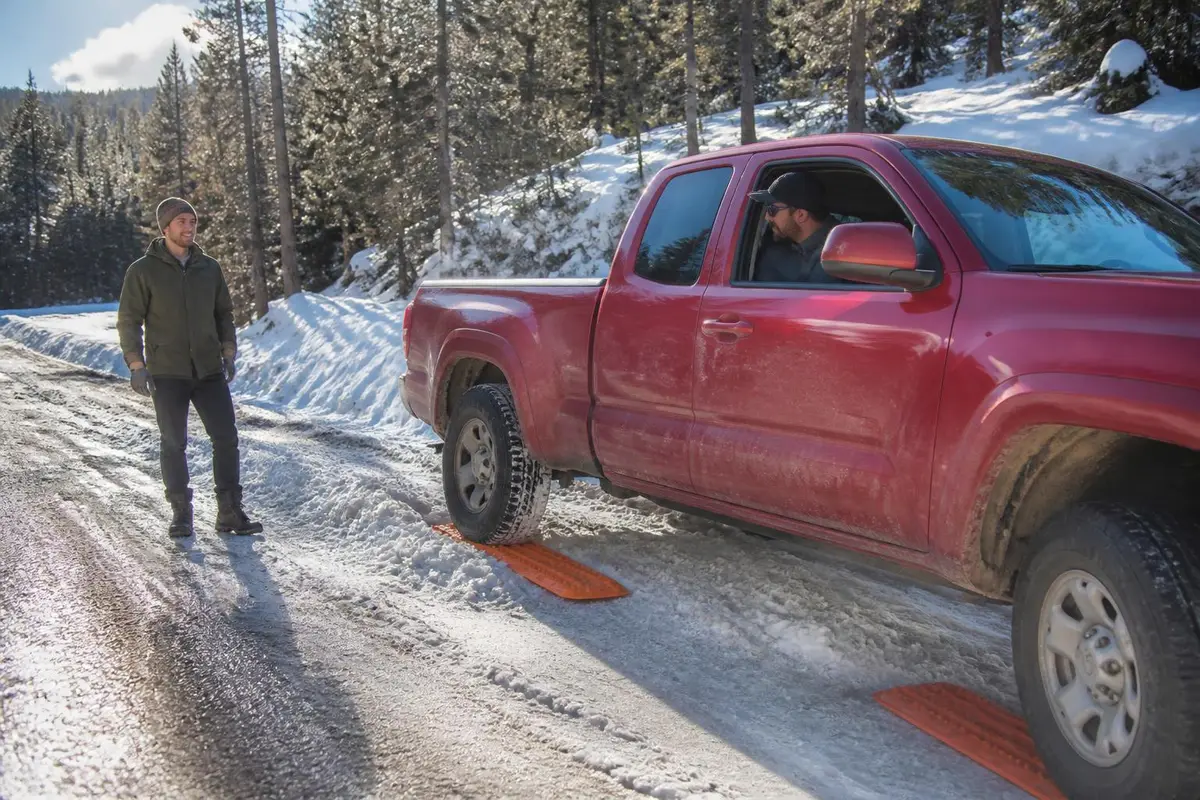
If you travel with other vehicles on trails where stucks mean sand, snow or mud rather than ledges, the kinetic rope and board combination does most of the work. It is also far lighter. MAXTRAX lists its MKII board at 7.5 lb each, and a rope and shackles add a few pounds more. Compare that with about 100 lb for a winch before its mount. In that case the stronger first purchases are the rope, boards, rated shackles and rated recovery points; the recovery gear hub sizes each one.
How Much Winch You Would Need
WARN's rule is GVWR × 1.5 as the minimum rated line pull, using the GVWR on the door-jamb label rather than curb weight, and it says going up from the minimum is fine. The rating also only applies on the first layer of rope. WARN's ZEON 8 is rated 8,000 lb on layer one but only 5,189 lb on layer four, about 15% less per layer. A winch sized exactly at the minimum is therefore under the minimum once a few layers are on the drum. Pulling out more rope, or doubling the line through a snatch block, gets it back toward full rating.
| GVWR | Minimum rated line pull (× 1.5) |
|---|---|
| 5,000 lb | 7,500 lb |
| 5,600 lb (WARN's 2016 Tacoma example) | 8,400 lb |
| 7,000 lb | 10,500 lb |
| 7,800 lb (2026 Ram 1500 RHO) | 11,700 lb |
| 9,900 lb (WARN's Silverado 2500 example) | 14,850 lb |
See what size winch do I need for more vehicle examples.
The Weight Trade-Off, With Real Numbers
Smittybilt's XRC Gen2 9,500 lb winch weighs 99 lb on its own. A steel bumper or mounting plate adds more, and all of it hangs ahead of the front axle. Two ratings on the door-jamb label decide whether that matters: the front gross axle weight rating (GAWR) and payload. Take Ram's 2026 towing chart for a Ram 1500 4x4 Crew Cab 5'7" with the standard straight-six. It lists a front GAWR of 3,900 lb against a base front-axle weight of 3,100 lb, which leaves 800 lb of front-axle margin. It also lists 1,840 lb of payload. A 99 lb winch plus a heavy bumper uses a real share of that 800 lb before any passengers, and every pound comes out of payload whether or not the winch is used on the trip. On a lighter vehicle with less margin, that share is larger. See Ram 1500 payload capacity for how payload is counted.
Electrical Demands
A winch motor draws heavy current, which is why WARN recommends a fully charged battery of at least 650 cold cranking amps for peak performance. Smittybilt gives the same 650 CCA minimum for its XRC Gen2. WARN warns that an idling engine may not keep up, so the battery can drain faster than it charges; watch the voltage gauge. WARN also says longer pulls build more heat, and prolonged winching without letting the motor cool will damage it. Doubling the line with a snatch block also helps. WARN says its heavy-duty snatch block reduces heat buildup and amp draw on the winch motor as well as doubling pulling power.
Middle-Ground Options
- Winch-ready bumper now, winch later. This spreads the cost and adds rated recovery points right away. Check the bumper's maximum winch rating (ARB's Summit for the 2020–2023 Tacoma is rated for low-mount winches up to 10,000 lb) against 1.5 × your GVWR.
- A hitch-mounted winch. One winch moves between front and rear receivers, and it only rides along when the trip needs it. The receiver's own rating becomes the limit; CURT rates its front hitches at 9,000 lb straight-line pull. See hitch mount winch.
The Verdict
Buy a winch when you travel solo or remote, or when your terrain regularly strands the vehicle with no traction. Size it to at least 1.5 × GVWR, mount it on something rated for that load, and budget for the rigging and a strong battery. If you travel in groups on sand, snow and mud trails, put the money first into a properly rated kinetic rope, traction boards, shackles and recovery points, and revisit the winch when your trips change. For the full kit and how each piece is sized, see the recovery gear hub.
Recommended gear
Core recovery gear
Affiliate disclosure: As an Amazon Associate, we earn from qualifying purchases, at no extra cost to you. Purchases through these links help keep this site running and up to date. Learn more

Best for a complete strap, shackle and glove kit in one bag.
- Straps, shackles, gloves, damper and a recovery bag in one kit.
- Covers most vehicle-to-vehicle recoveries without buying parts separately.

Best for getting unstuck from sand, mud or snow without another vehicle.
- Nylon recovery boards that give spinning tires grip in sand, mud or snow.
- Double as a shovel to clear sand from in front of the tires.

Best for vehicle-to-vehicle snatch recoveries.
- 1 in x 30 ft kinetic rope that stretches to ease a stuck vehicle out.
- Gentler on recovery points than a static tow strap.
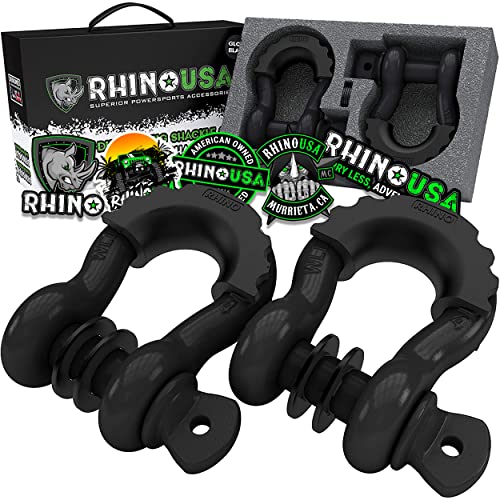
Best for rated connection points for straps and ropes.
- 3/4 in D-ring shackles, 41,850 lb listed break strength (2-pack).
- Connect straps to rated recovery points.
We research products from manufacturer specs and owner feedback; we don't test them ourselves. How we choose.
Sources
- WARN — Determine the Right Winch Capacity for Your Truck or SUV — Minimum winch line pull = GVWR × 1.5, using GVWR rather than curb weight; worked examples for a 2016 Tacoma (5,600 lb → 8,400 lb) and a Silverado 2500 (9,900 lb → 14,850 lb); going above the minimum is fine.
- WARN — Winch Performance Specifications: Pulling Capacity by Layer — ZEON 8 rated pull by drum layer (8,000 / 6,777 / 5,878 / 5,189 lb), about 15% lost per layer; minimum 5 wraps steel and 10 wraps synthetic.
- WARN — Basic Guide to Winching — Maximum pull on the first layer; snatch block doubles the line and increases pull; 5/10 minimum wraps; 650 CCA battery; rope must wind off the bottom of the drum; pull straight ahead; damper midway; leather gloves; idling engine may not keep the battery charged; motor heat on long pulls.
- WARN — Heavy-Duty Snatch Block (15640) — 18,000 lb WLL for vehicle recovery, 36,000 lb minimum breaking strength, winches up to 9,000 lb, wire rope up to 1/2 in; doubles pulling power and reduces heat and amp draw.
- ARB — Getting Started: Recovery Techniques & Equipment — Snatch strap MBS of 2–3× gross vehicle mass; 8,000/11,000/15,000 kg straps; shackles of at least 3.25 t (4.75 t for two strap ends); no tow balls or tie-downs as recovery points; damper in the middle third; bystanders 1.5× strap length; 2–3 m slack; up to 20% strength loss when wet; 12,000 kg tree-trunk protector; winch when a snatch strap fails.
- MAXTRAX USA — FAQs — Boards work in sand, snow, mud, slush and pea gravel with AT/MT tires; designed for 4x4s of about 10,000 lb; MKII 3.77 ft × 13 in, 7.5 lb; Mini 4.4 lb; Xtreme 10 lb; not a bridge, ramp or jack base; wheelspin burns the teeth off.
- Smittybilt — XRC Gen2 9,500 lb Winch — 9,500 lb rated line pull, 99 lb winch weight, series-wound motor, 650 CCA minimum battery.
- ARB USA — Summit Bumper Kit 3423160K2 (2020–2023 Tacoma) — A winch bumper carries its own limit: compatible with most electric low-mount winches up to 10,000 lb.
- Stellantis Media — 2026 Ram 1500 Trailer Towing Charts — Worked weight example: 4x4 Crew Cab 5'7" straight-six, front GAWR 3,900 lb vs 3,100 lb base front weight, 1,840 lb payload; RHO GVWR 7,800 lb.
- CURT Manufacturing — Front Hitch Receivers — Every CURT front hitch carries a 9,000 lb straight-line pull rating for a tow hook or winch mount.