

Affiliate disclosure: As an Amazon Associate, we earn from qualifying purchases, at no extra cost to you. We research rather than test, and commissions never change our rankings. This site is reader-supported: those commissions pay for hosting, research and keeping every guide up to date, so if a guide helped you, buying through our links is an easy way to support it. How we rank · Full disclosure
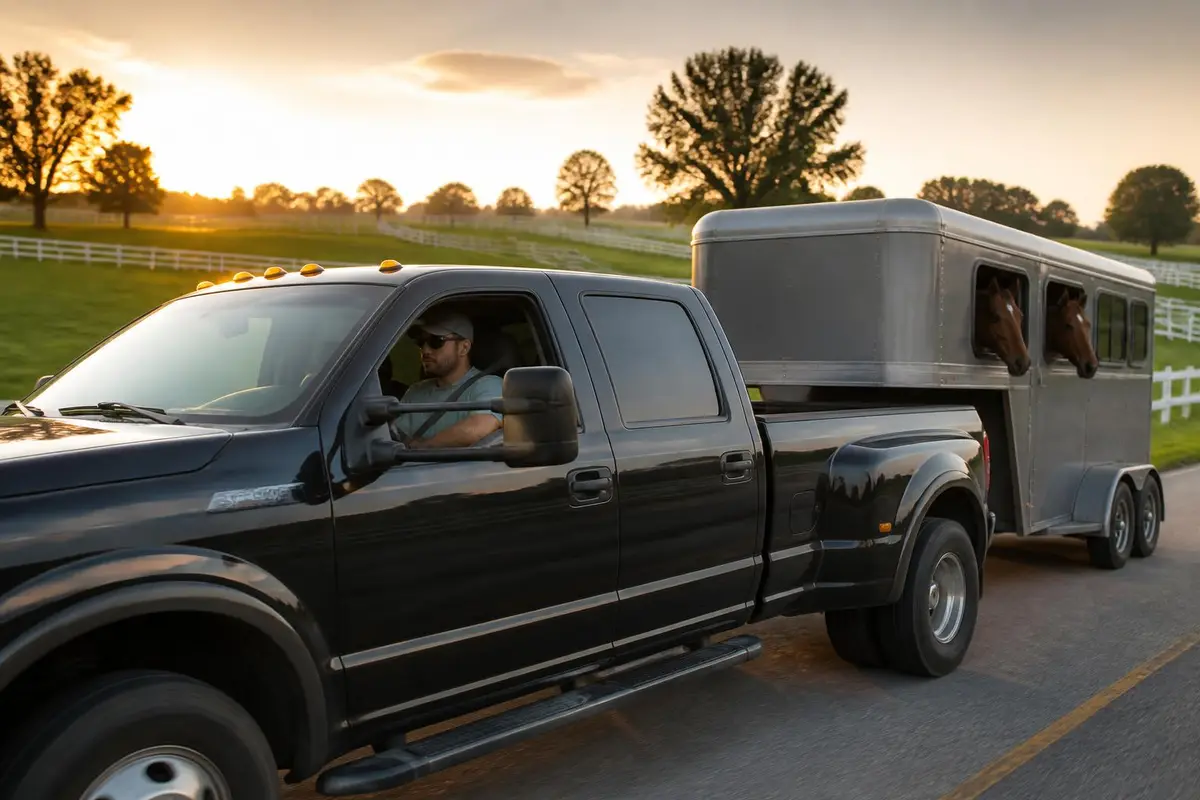
Towing mirrors push the view past the sides of a trailer wider than the truck. The picks below are either custom-fit mirrors shaped for one model’s factory housing (K Source Snap & Zap, CIPA’s custom pair) or universal clip-on and extension mirrors (CIPA 11950, the Jeep extensions). They are ranked from manufacturer fitment listings and aggregated owner reviews, not first-hand testing.

At a Glance
| Type | How it attaches | Best suited to |
|---|---|---|
| Truck-maker tow mirrors (e.g. Ford’s telescoping mirrors) | Replace the standard mirrors; slide out when towing | Frequent towing; sold by the truck maker |
| Custom-fit clip-on (e.g. K Source Snap & Zap) | Snaps over one model’s factory mirror housing | Regular towing on a truck a custom model exists for |
| Universal strap-on (e.g. CIPA 11950) | Rubber straps around most factory mirrors | Occasional or light towing; CIPA doesn’t recommend it for full-time heavy towing |
What the Law Requires
Factory mirrors are built to FMVSS 111, the federal rear-visibility standard. For trucks and SUVs with a GVWR of 10,000 lbs (4,536 kg) or less, it allows flat (unit-magnification) outside mirrors on both sides, each with at least 126 cm² of reflective surface. Above 10,000 lbs GVWR, it requires flat mirrors on both sides with at least 323 cm² each. Those sizes are set for the vehicle alone, not a trailer behind it.
The towing rule is state law. Oregon requires a clear, unobstructed view at least 200 feet to the rear at all times, and Oregon DOT says a trailer wider than the tow vehicle needs extended side mirrors to see traffic coming from behind and alongside. California Vehicle Code §26709 requires at least two mirrors, including one on the left. When a load blocks the rear view, it requires mirrors on both sides, each showing the highway at least 200 feet behind. Other states have similar rules, so check your own.
| Rule | What it says |
|---|---|
| FMVSS 111 (federal, applies to the vehicle as built) | Flat outside mirrors on both sides; at least 126 cm² each under 10,000 lbs GVWR, 323 cm² each above it |
| Oregon | Clear view at least 200 ft to the rear at all times; extended mirrors if the trailer is wider than the truck |
| California VC §26709 | Mirrors on both sides showing 200 ft behind when the load blocks the rear view |
The Rankings

Best for Owners who want a mirror engineered specifically for their exact truck model and year range.
- Custom-fit design for a specific model/year range, not a universal clamp.
- Snap & Zap mounting per K Source’s own product line.

Best for Silverado 1500 and Sierra 1500 owners wanting a model-specific mirror rather than a universal clamp-on.
- Custom-fit for 2019-2024 Silverado 1500 / Sierra 1500.
- Snap & Zap mounting per K Source’s own product line.

Best for Owners who want a universal mirror that clips over an existing side mirror without model-specific fitment.
- Clip-on design fits over most existing side mirrors.
- 15.75 in length per CIPA’s own listing.

Best for Owners wanting a wider, custom-fit mirror sold as a matched pair rather than a single clip-on.
- Custom fit for Chevy/GMC/Cadillac per CIPA’s own compatibility listing.
- 18 in length, sold as a pair.

Best for Wrangler JL/JLU and Gladiator JT owners needing towing-mirror extension specific to the Jeep’s mirror mount.
- 360-degree rotation adjustment per the listing.
- Fits Jeep’s integrated tactical-rail mirror mount.
Universal Clip-On Mirrors: What the Specs Mean
CIPA describes its 11950 as a universal towing mirror with a 5 × 7.5-inch face. It straps to the vehicle’s existing mirror with rubber straps, fits mirrors up to 10 inches, and works on either side. CIPA says it extends the view with a total extension of 7 inches, installs without tools, and suits temporary or light towing but not full-time heavy-duty towing. Replacement straps are sold separately. That combination is typical of universal mirrors: quick to fit and remove, but held on by straps rather than shaped to the housing.
Custom-Fit Mirrors: Check the Model-Year Range
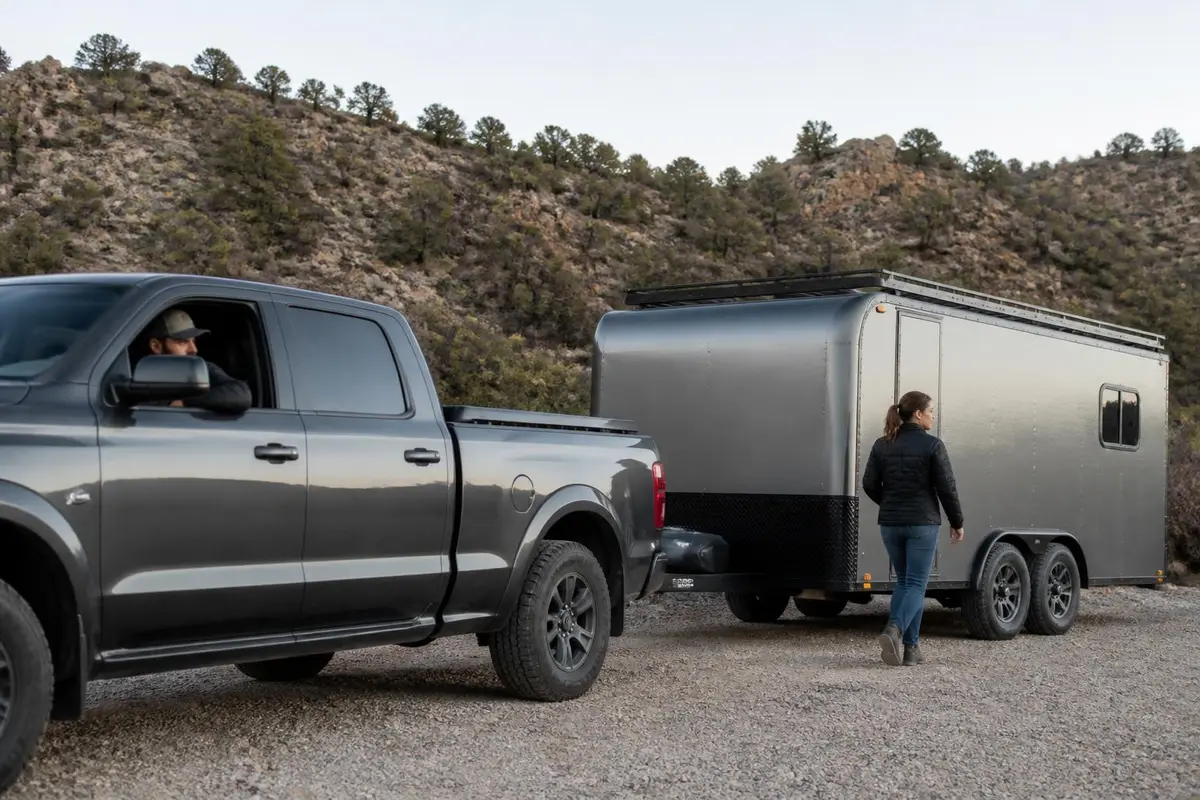
A custom-fit mirror is shaped for one generation’s factory housing. The K Source listing above is for the 2021-and-later F-150, and the Chevy/GMC listing is for the 2019–2024 Silverado 1500 and Sierra 1500. A redesign can change the housing, so a mirror for an adjacent generation may not seat. Match the exact year range on the listing to your truck’s model year, and check whether it is for manual or power mirrors if the listing says so.
Truck-Maker Tow Mirrors
Truck makers also sell their own tow mirrors. Ford’s telescoping trailer tow mirrors, for example, slide out when towing and back in when not, and fold rearward against the vehicle in tight spaces. The power version adds power-adjusted, heated glass, though the telescoping is still manual. Ford notes the power version fits only vehicles already equipped with power mirrors. These mirrors avoid the strap or clip fit of an add-on, but they replace the whole mirror assembly.
How Wide Is Too Wide?
Oregon DOT’s rule of thumb is simple: if the trailer is wider than the tow vehicle, you need extended mirrors. For reference, Oregon’s maximum vehicle width without a special permit is 8 feet 6 inches. Oregon DOT’s pre-departure checklist includes checking side and rear mirrors for good visibility before every trip. See trailer hitch installation cost for how mirrors, wiring and hitch work are usually quoted.
How We Rank Towing Mirrors
Each mirror is weighed against its manufacturer fitment listing and cross-referenced with owner reports. We don’t buy or install this hardware ourselves. See how we rank and our affiliate disclosure.
Sources
- 49 CFR 571.111 — FMVSS 111, Rear visibility (Cornell LII) — Outside mirror requirements for trucks and MPVs: unit-magnification mirrors on both sides with at least 126 cm² each at 10,000 lbs GVWR or less (one option), and 323 cm² each above.
- Oregon DOT — Towing a Trailer: Being Equipped for Safety (developed in part from NHTSA material) — A trailer wider than the tow vehicle needs extended side mirrors; Oregon requires a clear view 200 ft to the rear; 8 ft 6 in width limit; pre-departure mirror check.
- California Vehicle Code §26709 — Mirrors — California requires at least two mirrors including one on the left, and mirrors on both sides showing 200 ft to the rear when a load blocks the rear view.
- Ford — 2026 RV & Trailer Towing Guide — Ford’s telescoping trailer tow mirrors slide out for towing, fold rearward, and in the power version add power-adjusted, heated glass on vehicles already fitted with power mirrors.
- CIPA USA — 11950 Clip-On Towing Mirror — CIPA 11950 is a universal strap-on mirror with a 5 × 7.5-in face that fits mirrors up to 10 in, gives 7 in of extension, installs without tools and is meant for temporary or light towing.
- K Source — Snap & Zap Towing Mirrors — K Source’s Snap & Zap towing mirror line.