

Affiliate disclosure: As an Amazon Associate, we earn from qualifying purchases, at no extra cost to you. We research rather than test, and commissions never change our rankings. This site is reader-supported: those commissions pay for hosting, research and keeping every guide up to date, so if a guide helped you, buying through our links is an easy way to support it. How we rank · Full disclosure
What a hitch installation costs comes down to three things: the parts (receiver, ball mount, ball, pin and wiring), how much of the vehicle has to come apart to fit them, and whether new wiring or a brake controller is added. This page sets out what drives each part using manufacturers’ published installation details. It doesn’t quote prices, which vary by shop and region.
At a Glance: What CURT’s Installation Sheets Show
| Hitch (vehicle) | Rating (trailer / tongue) | Install time and difficulty | What the job involves |
|---|---|---|---|
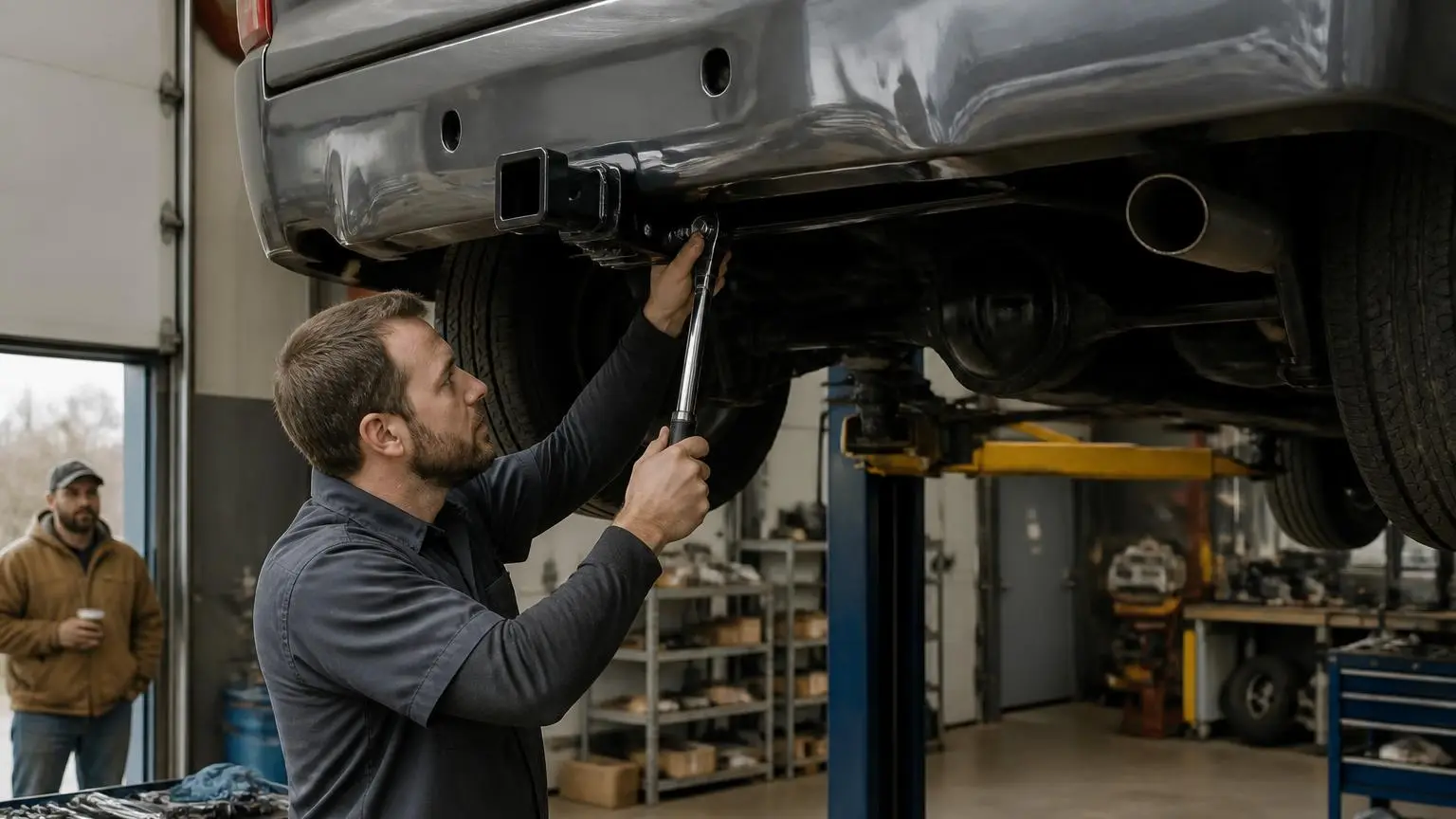
| CURT 13295 (2014+ RAM ProMaster van) | 5,000 / 500 lbs | Pro 20 min, novice 40 min; Easy | Temporarily remove the bumper cover; no drilling |
| CURT 13381 (2018+ VW Tiguan) | 3,500 / 525 lbs | Pro 20 min, novice 30 min; Easy | Lower the exhaust; no drilling |
| CURT 13119 (2012+ Honda CR-V) | 3,500 / 350 lbs | 30 min (pro); Moderate | Lower the exhaust, trim the underbody panel; no drilling |
| CURT 13472 (Class 3) | 6,000 / 900 lbs | Easy | Lower the spare tire; models with a hands-free liftgate need a factory sensor relocation kit |
What Drives Labor Time
CURT rates installation difficulty by time and effort, and its sheets list what each job needs. The common steps that add time are:
- Removing and refitting a bumper cover or fascia.
- Lowering the exhaust by unhooking its hangers or rubber isolators.
- Trimming a plastic underbody panel along molded guides.
- Lowering the spare tire.
- Fishing carriage bolts through frame access holes with a fish wire.
A bolt-on hitch that uses existing weld nuts is the quickest. CURT prints a pro time as low as 20 minutes for some vans and crossovers, with a novice taking 30–40 minutes. Jobs that need trimming or exhaust work move up to CURT’s Moderate rating, and a hitch that needs new holes drilled in the frame takes longer again. Vehicle features add parts too: CURT’s 13472 notes that models with a hands-free liftgate need a separate factory sensor relocation kit.
Torque: The Step You Can’t Skip
Every CURT sheet gives torque values for its hardware, and they differ widely by bolt size:
| Hardware | Torque (CURT sheet) |
|---|---|
| 1/2-in bolts (ProMaster, 13295) | 110 ft-lbs |
| M10 bolts (ProMaster, 13295) | 48 ft-lbs |
| 7/16-in hardware (Tiguan, 13381) | 59 ft-lbs |
| M12 bolts (13470) | 86 ft-lbs |
| M14 bolts (13146) | 139 ft-lbs |
A DIY install needs a torque wrench that covers those ranges, sockets from about 10 to 22 mm, and on some jobs a wire brush to clean weld-nut threads (CURT lists one for its M14 installs). CURT and Oregon DOT both say to check the hitch fasteners periodically after installation.
Parts a Hitch Doesn’t Include
A receiver hitch is only the receiver. Oregon DOT notes that towing packages rarely include the draw bar (ball mount) or hitch ball, and Ford says its factory receivers include neither. Plan for a ball mount with the right drop or rise, a ball sized to the trailer coupler, and a hitch pin. CURT specifies a 5/8-inch pin at least 3 inches long for a 2-inch receiver. For hitch-mounted cargo carriers and other wheel-less loads, CURT recommends its stabilizing straps.
Wiring Is a Separate Job
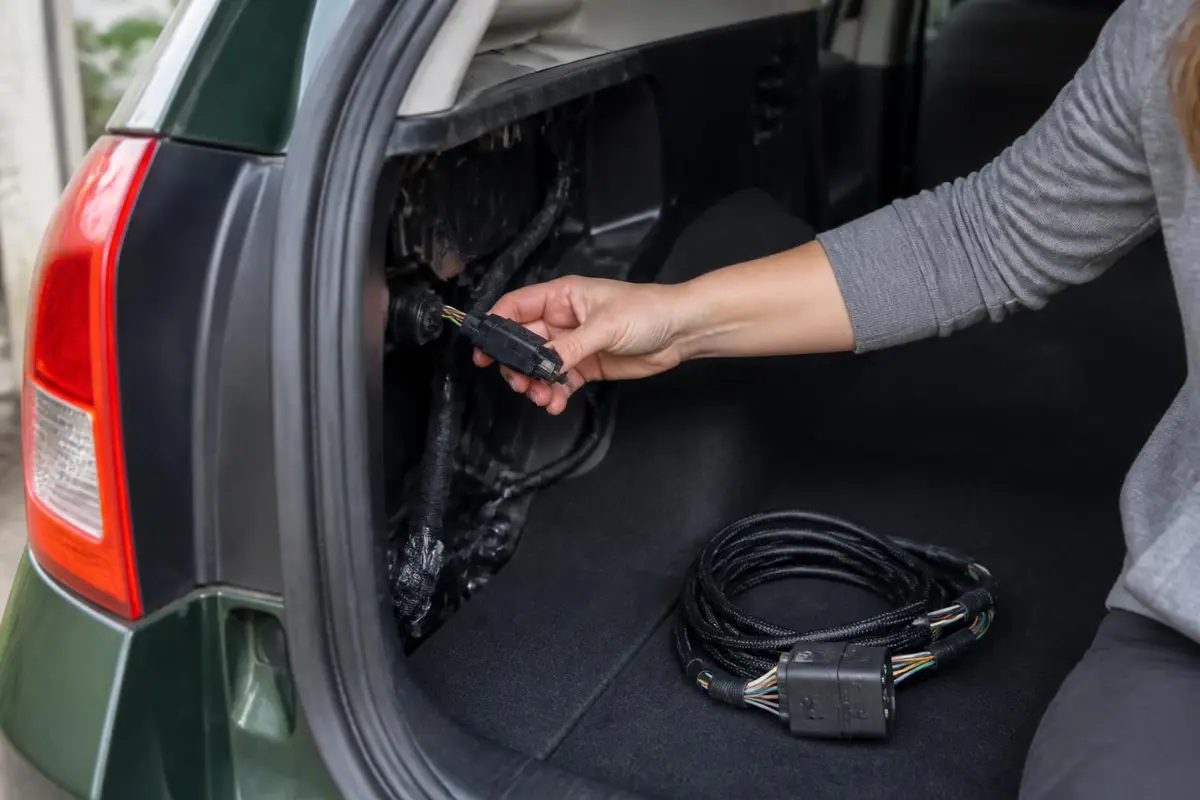
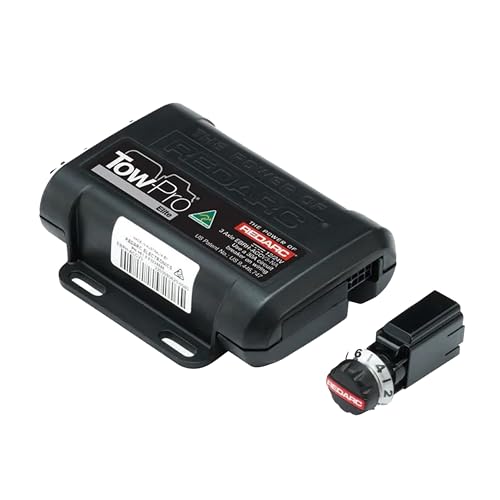
A 4-way flat connector covers tail, stop and turn lights. Ford’s 4-pin harness doesn’t support trailers with electric brakes; its 7-pin harness does. Oregon DOT notes that a 7-way connector may add an electric brake signal, a power supply and backup lights to the four lighting functions. Oregon DOT notes that many vehicles use separate wires for turn signals and stop lights and need a tail-light converter to match a trailer’s combined circuits. It adds that most factory tow packages include a harness that handles this, and Ford says some factory tow packages include a wiring kit with jumper harnesses. A vehicle without factory tow wiring needs a harness routed to the rear, and a brake controller if the trailer has electric brakes.
DIY vs Shop Installation
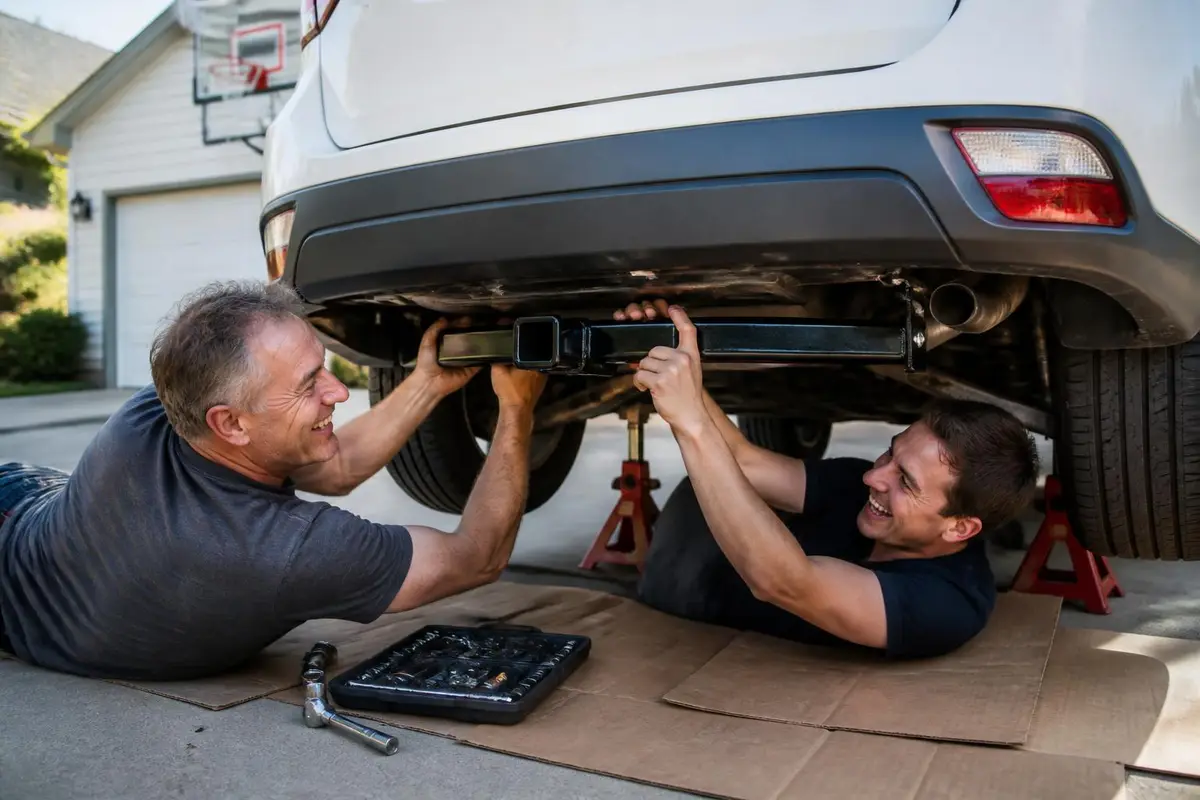
CURT rates most of the jobs above as Easy and notes that two people may be needed to lift the hitch into place. The rest is time, a torque wrench and access. CURT suggests an authorized installer for anyone hesitant about the job. A shop makes more sense when the install involves drilling the frame, trimming panels, relocating sensors or adding wiring and a brake controller.
Related Add-Ons
A weight-distribution hitch, towing mirrors and a brake controller are separate purchases with their own setup. A weight-distribution hitch also needs the receiver to carry a weight-distributing rating. See trailer hitch classes explained, best towing mirrors and best brake controllers.
How We Cover This Topic
This page is built from CURT’s published installation sheets and class ratings, Ford’s towing guide and Oregon DOT’s towing brochure. It isn’t a quote, and we don’t install this hardware ourselves. See how we rank and the towing and payload hub.
Recommended gear
Towing gear worth knowing
Affiliate disclosure: As an Amazon Associate, we earn from qualifying purchases, at no extra cost to you. Purchases through these links help keep this site running and up to date. Learn more



We research products from manufacturer specs and owner feedback; we don't test them ourselves. How we choose.
Sources
- CURT Manufacturing — Installation instructions, hitch #13295 (2014+ RAM ProMaster) — ProMaster hitch: 5,000/500 lbs, 20-minute pro and 40-minute novice install, Easy, bumper cover removal, no drilling, 110 ft-lbs for 1/2-in and 48 ft-lbs for M10 hardware, two people may be needed.
- CURT Manufacturing — Installation instructions, hitch #13381 (2018+ Volkswagen Tiguan) — Tiguan hitch: 3,500/525 lbs, 20-minute pro and 30-minute novice install, Easy, exhaust lowered, no drilling, 45 ft-lbs M10 and 59 ft-lbs 7/16-in hardware.
- CURT Manufacturing — Installation instructions, hitch #13119 (2012+ Honda CR-V) — CR-V hitch: 3,500/350 lbs, 30-minute professional install, Moderate, exhaust lowered and underbody panel trimmed, no drilling; stabilizing straps for wheel-less loads.
- CURT Manufacturing — Installation manual, hitch #13472 — Hitch #13472: 6,000/900 lbs, Easy, spare tire lowered, hands-free liftgate models need a sensor relocation kit.
- CURT Manufacturing — Installation manual, hitch #13470 — Hitch #13470: 3,500/350 lbs, underbody panel trimmed, no drilling, 86 ft-lbs M12 bolts.
- CURT Manufacturing — Installation manual, hitch #13146 — Hitch #13146: no drilling, 139 ft-lbs M14 bolts, 22 mm socket and wire brush for weld nuts; difficulty based on time and effort.
- CURT Manufacturing — The Complete Guide to 2" Receiver Hitches — A 2-in receiver takes a 5/8-in pin at least 3 in long.
- Oregon DOT — Towing a Trailer: Being Equipped for Safety (developed in part from NHTSA material) — Towing packages rarely include the ball mount or ball; 7-way connector functions; tail-light converters for separate turn and stop circuits; check hitch fasteners periodically.
- Ford — 2026 RV & Trailer Towing Guide — Factory receivers don’t include a ball or ball mount; the 4-pin harness doesn’t support electric brakes and the 7-pin does; some tow packages include a wiring kit.
- CURT Manufacturing — Types of Trailer Hitches and Hitch Classes — Hitch class ratings and receiver sizes.